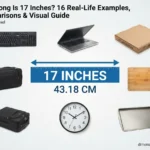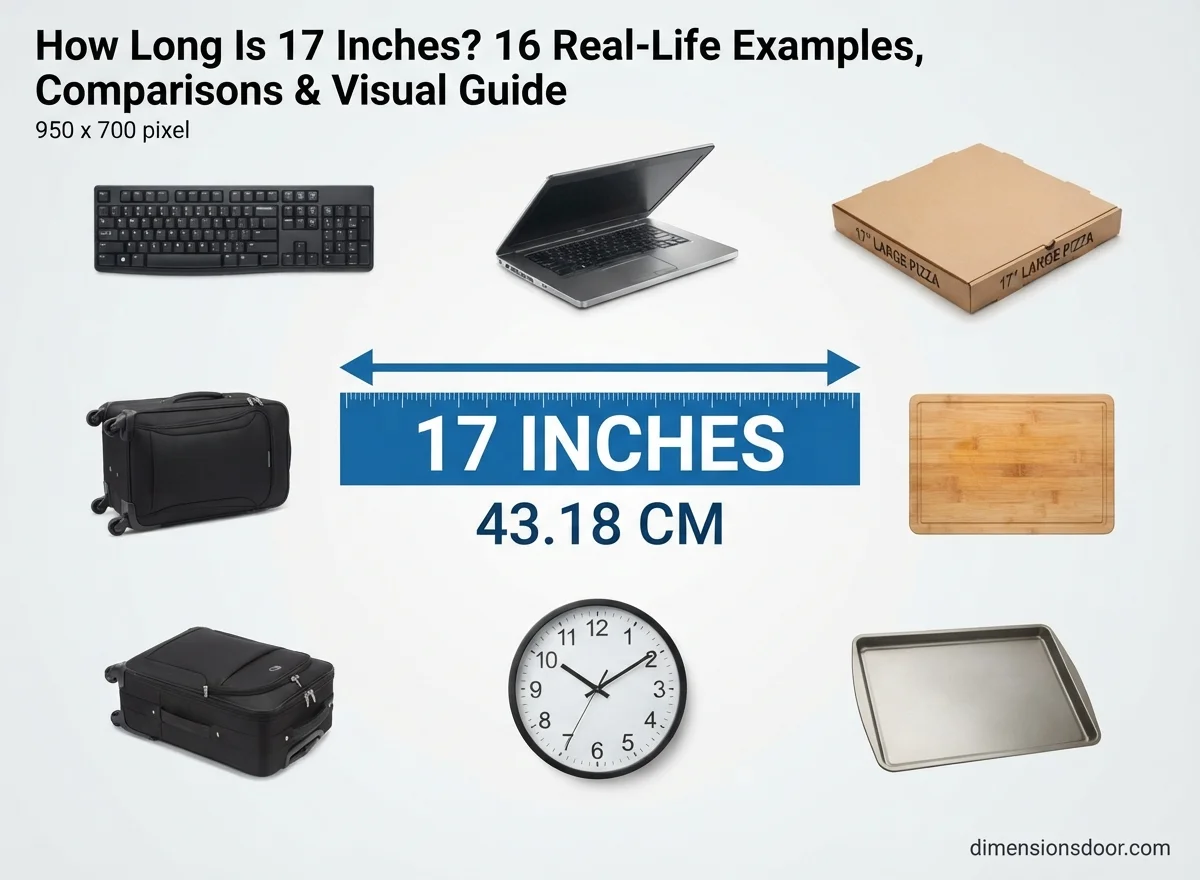
17 inches equals 43.18 centimeters, or about 1.42 feet. That’s five inches longer than a standard 12-inch ruler and just a bit longer than a laptop’s diagonal screen.
Numbers alone don’t tell you much, though. This guide shows you exactly how long 17 inches is using real objects, body-based comparisons, and simple finger tricks — so you can picture it without ever touching a tape measure.
Table of Contents
How Long Is 17 Inches? (Quick Conversion Answer)
17 inches = 43.18 cm = 1.42 feet = 431.8 mm = 0.4318 meters.
This exact figure isn’t rounded guesswork. Since 1959, the inch has been legally defined as exactly 2.54 centimeters, under the International Yard and Pound Agreement signed by the US, UK, Canada, Australia, and other nations (NIST, Special Publication 1038). So 17 × 2.54 = 43.18 cm on the nose, with zero rounding error.
| Unit | Value |
|---|---|
| Centimeters | 43.18 cm |
| Feet | 1.42 ft (1 ft 5 in) |
| Millimeters | 431.8 mm |
| Meters | 0.4318 m |
| Yards | 0.47 yd |
How tall is 17 inches in feet? It comes out to 1 foot and 5 inches — just under a foot and a half. If you’re stacking two rulers end to end, 17 inches stops about five inches short of the second one.
How Long Is 17 Inches Visually?
Numbers on a page don’t stick. Your brain remembers shapes and comparisons far better than decimals, so here’s how 17 inches actually looks and feels next to things you already know.
A ruler plus a hand. A standard school ruler is 12 inches. Add roughly one adult hand-width (about 5 inches across the knuckles), and you’ve landed on 17 inches. Picture the ruler, then picture your hand laid flat right after it — that’s the full length.
Halfway to a yardstick. A yardstick measures 36 inches. Seventeen inches lands just under the halfway mark — close, but a hair short of half a yard.
Slightly bigger than a laptop screen. Most 15-inch and 16-inch laptops are measured diagonally, so 17 inches sits right at the upper edge of “large laptop” territory — this is where 17-inch gaming laptops get their name.
How Big Is 17 Inches Compared to a Human?
This is where the comparison gets useful, because your own body is a built-in measuring tool.
Forearm length. The average adult forearm — elbow to wrist — measures close to 10 inches, according to anthropometric sizing data used in ergonomic design. Seventeen inches is roughly that forearm plus another 7 inches, or about elbow-to-mid-palm on a taller adult.
Knee height. For most adults, 17 inches lands just below the kneecap when measured from the floor. It’s a common reference point in furniture design — many step stools and ottomans sit close to this height for that exact reason.
Two hand-spans. An adult hand-span (thumb tip to pinky tip, stretched) averages 8 to 9 inches. Two stacked spans get you almost exactly to 17 inches — a handy trick when nothing else is nearby.
Use our Inches to Feet Converter to instantly convert inches into feet with precise results, making measurements simple and hassle-free.
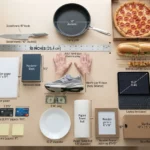
How Long Is 17 Inches? 16 Real-Life Examples, Comparisons & Visual Guide
Seeing familiar objects makes the number concrete. These items are commonly manufactured at or near 17 inches, spanning tech, home, kitchen, and travel categories.
Full-size desktop keyboard.
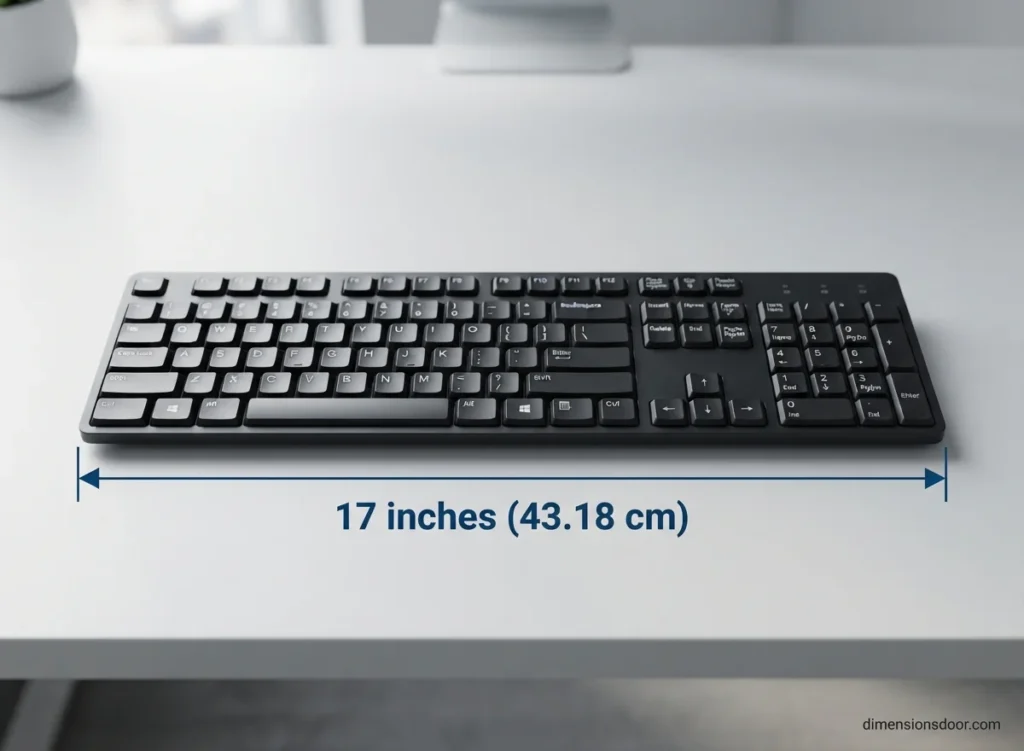
Most keyboards with a numeric keypad run close to 17 inches wide, giving your hands room to move without cramping.
17-inch laptop.
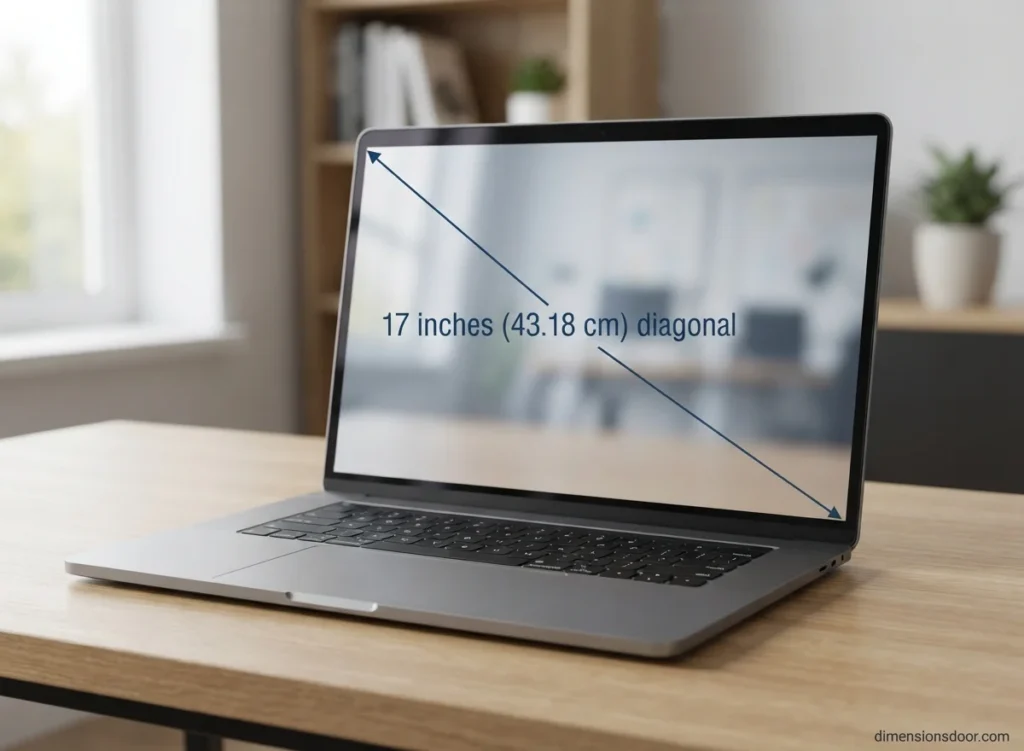
Measured diagonally, this is the largest common laptop screen size, popular for gaming and video editing.
Medium pizza box.
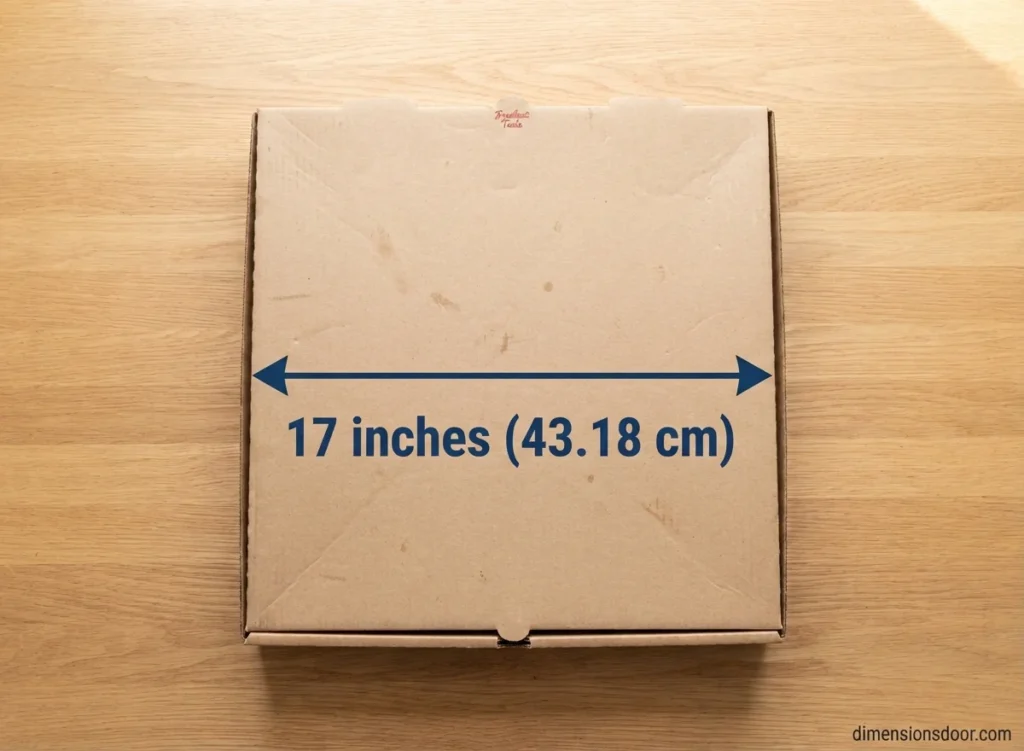
The shorter edge of a standard pizza box is usually built around 17 inches, leaving breathing room around the pie.
Carry-on suitcase width.
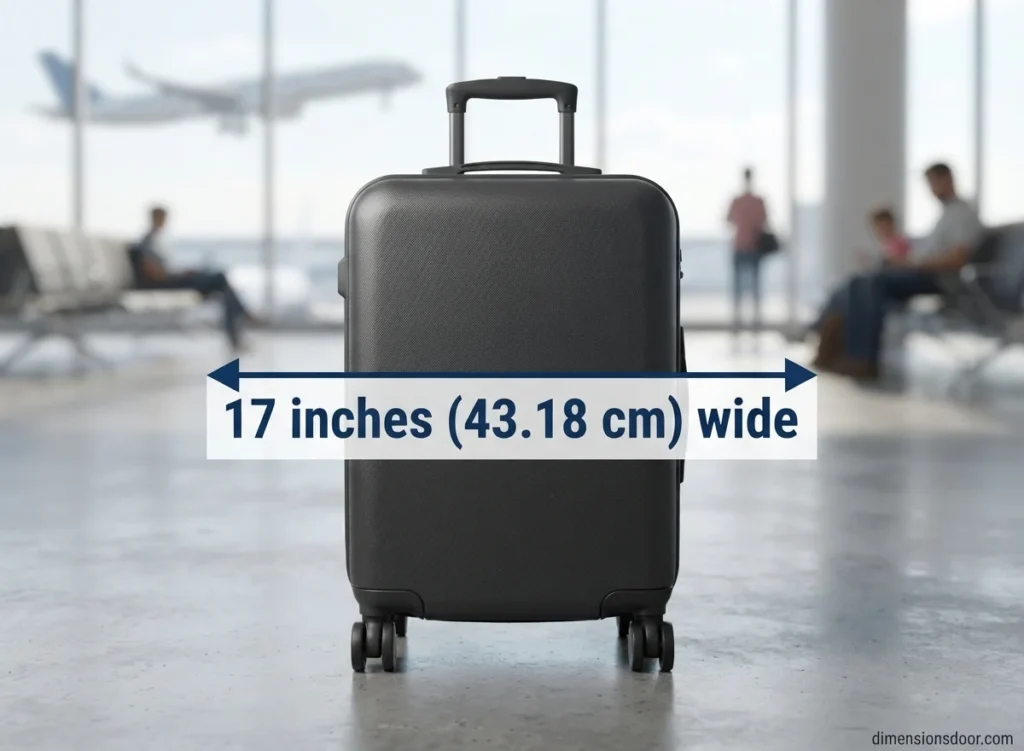
Many airline-compliant carry-on bags measure close to 17 inches across, balancing packing space against cabin restrictions.
Guitar fretboard section
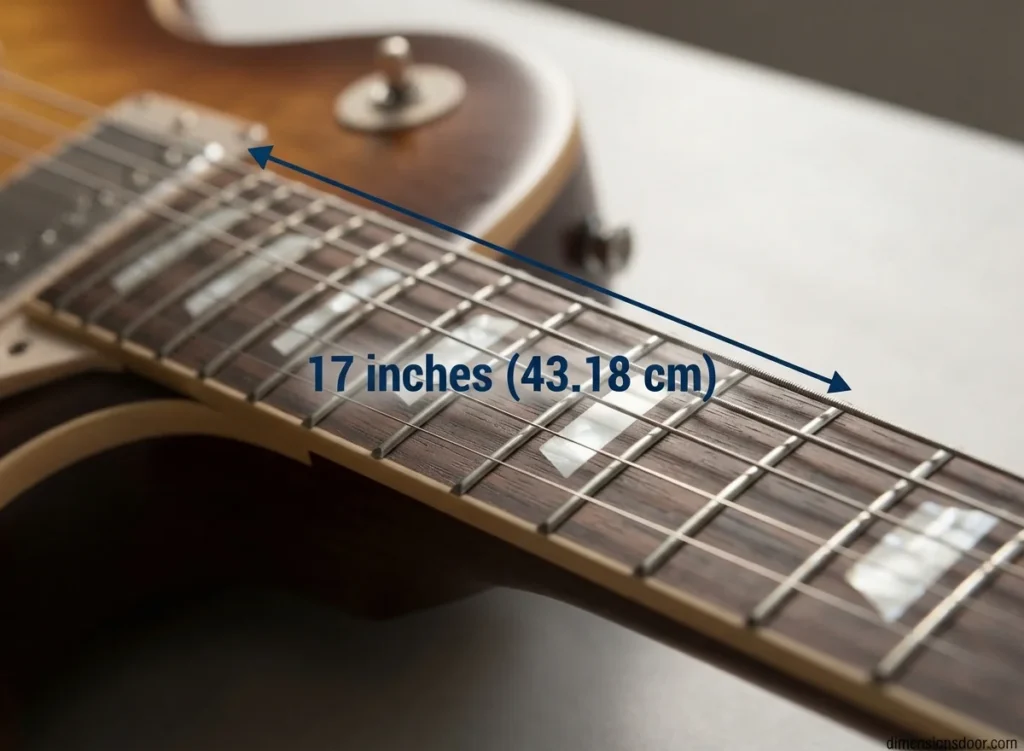
From the nut to roughly the twelfth fret on a standard guitar neck runs close to 17 inches.
Bathroom step stool.
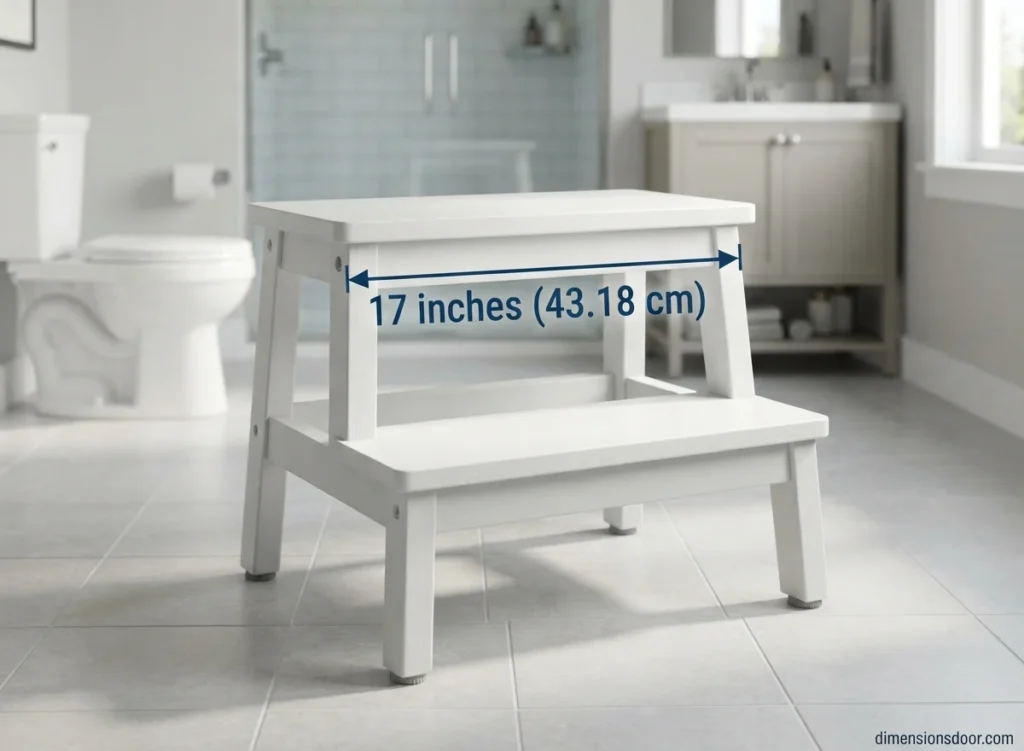
A common height for step stools used by kids or for reaching cabinets — tall enough to help, low enough to stay stable.
Large floor tile.
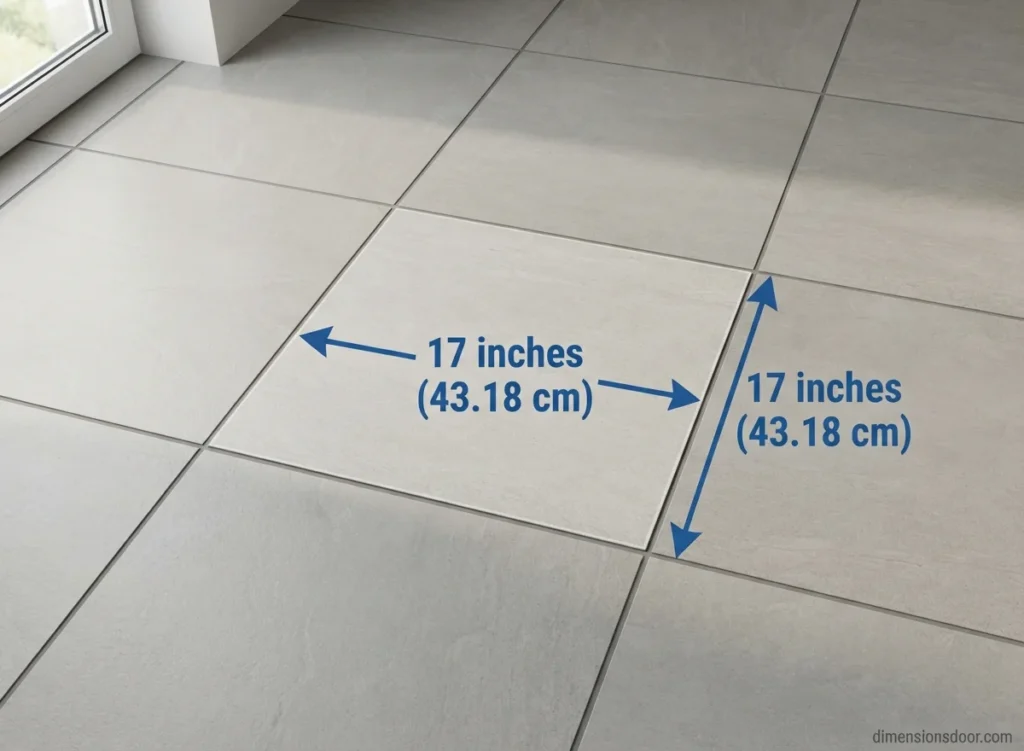
Big-format tiles used in modern kitchens and bathrooms are frequently cut to 17-inch squares to minimize grout lines.
Cutting board.
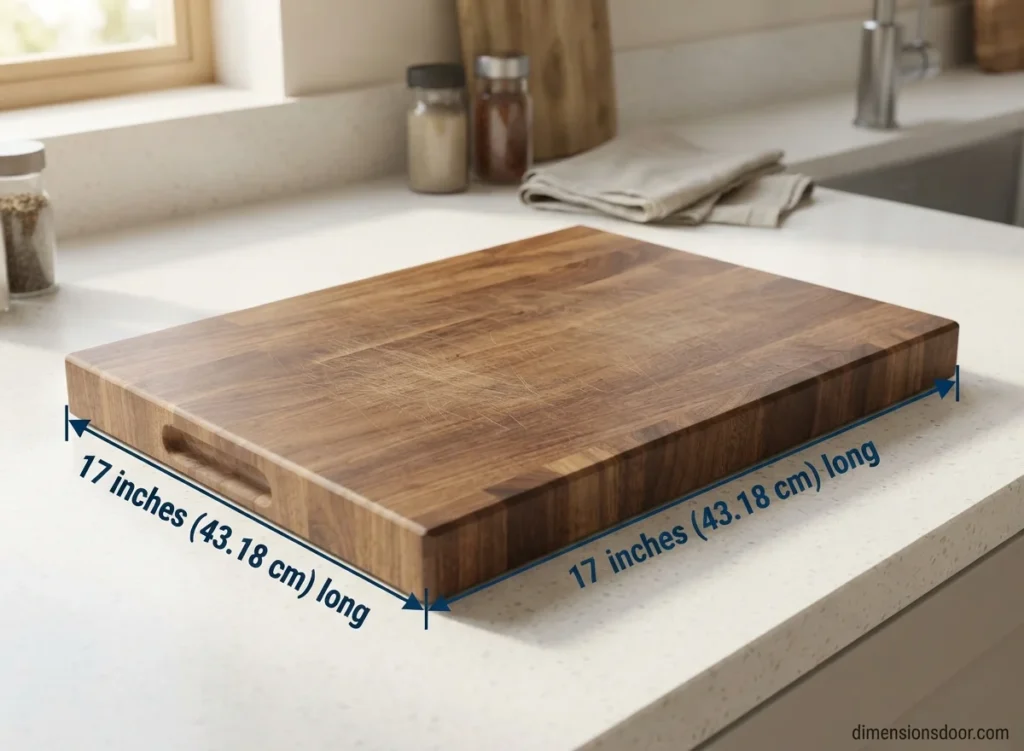
Rectangular kitchen boards built for meal prep often run 17 inches long, enough space to work without crowding.
Monitor stand platform.
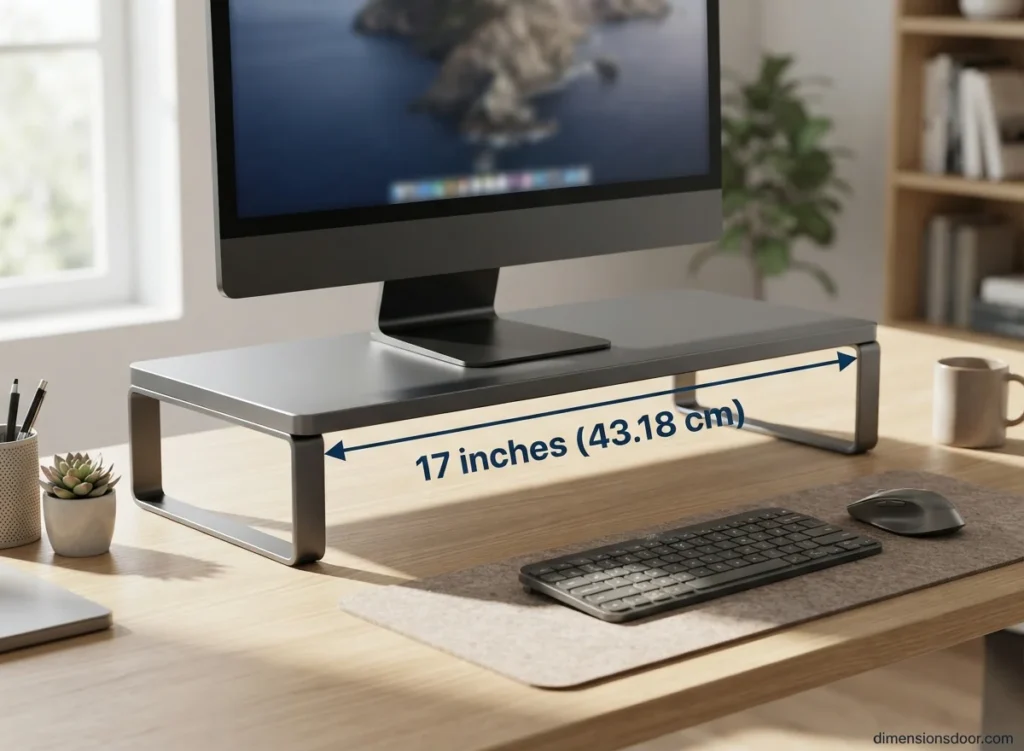
Desk-mounted stands supporting a screen and keyboard riser are commonly sized around 17 inches wide.
Wall clock diameter.
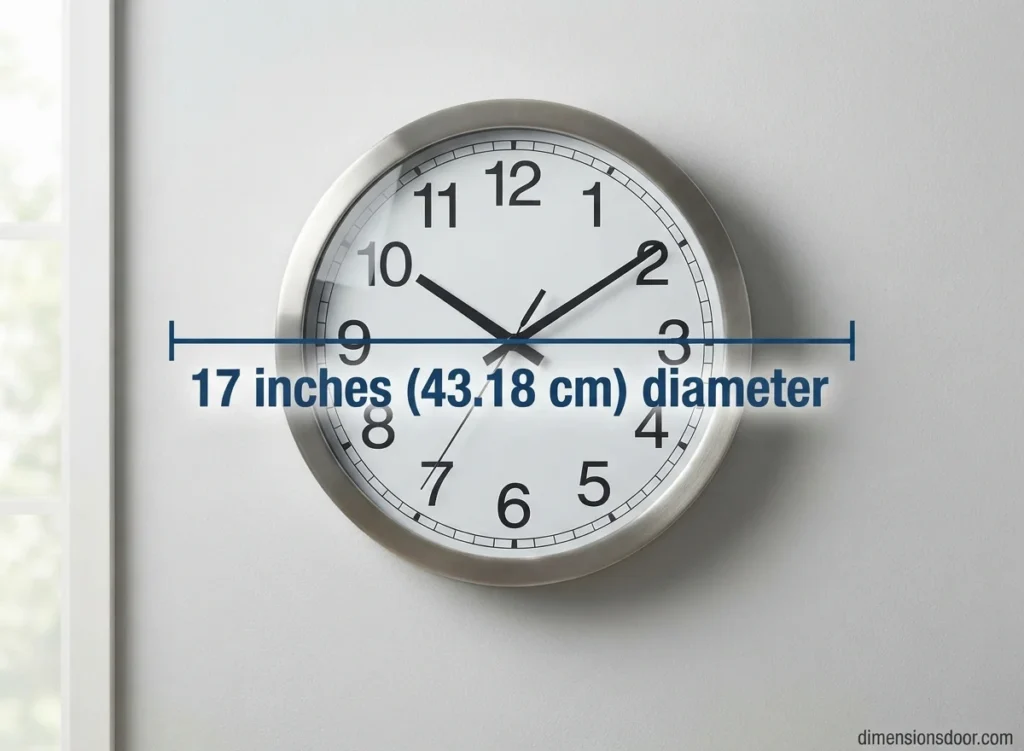
Mid-sized wall clocks meant to be read from across a room are often built to a 17-inch face.
Pet carrier width.
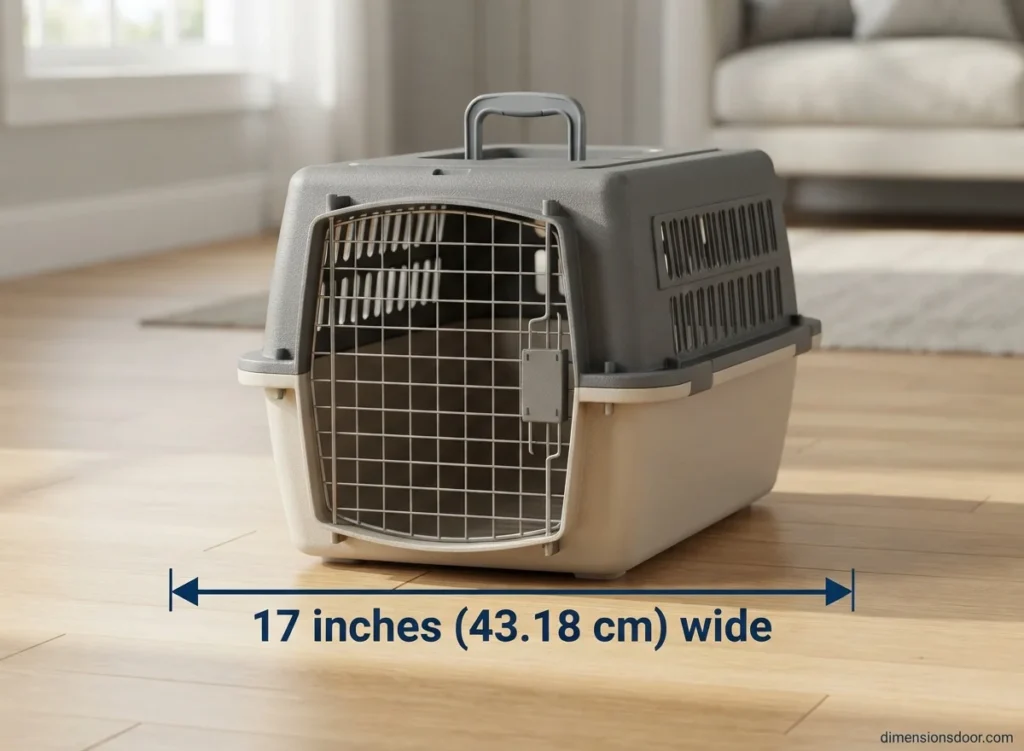
Small-to-medium pet carriers use roughly 17 inches of interior width so a cat or small dog can turn around.
Baking tray
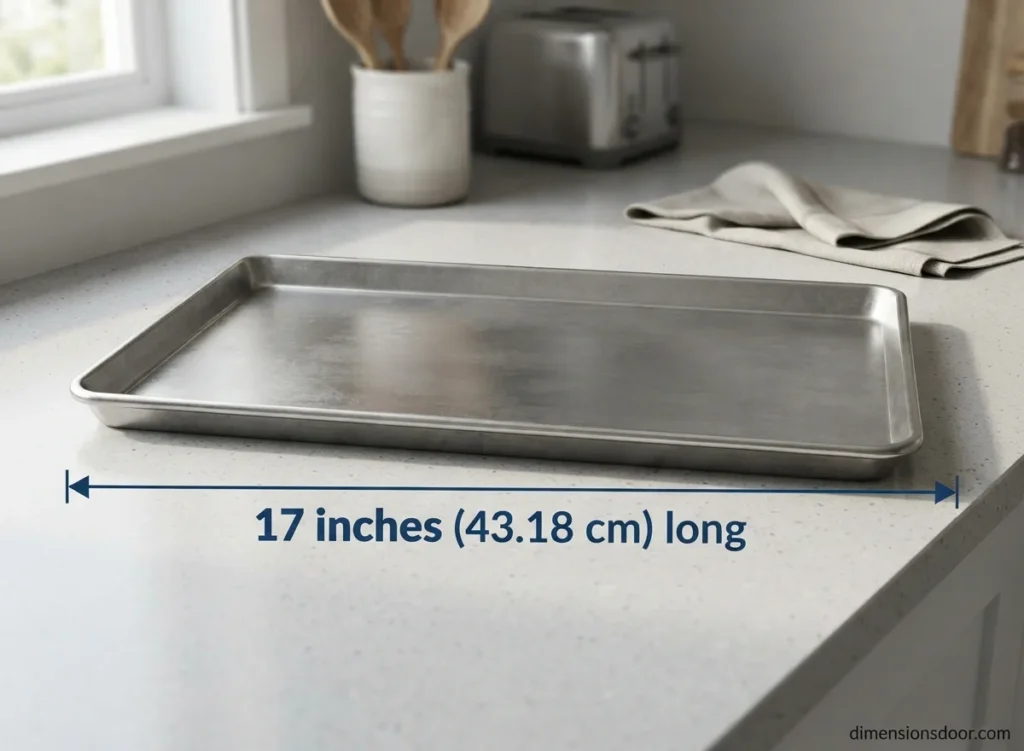
Compact rectangular trays sized for home ovens frequently measure 17 inches on the long side.
Foam roller (travel size).
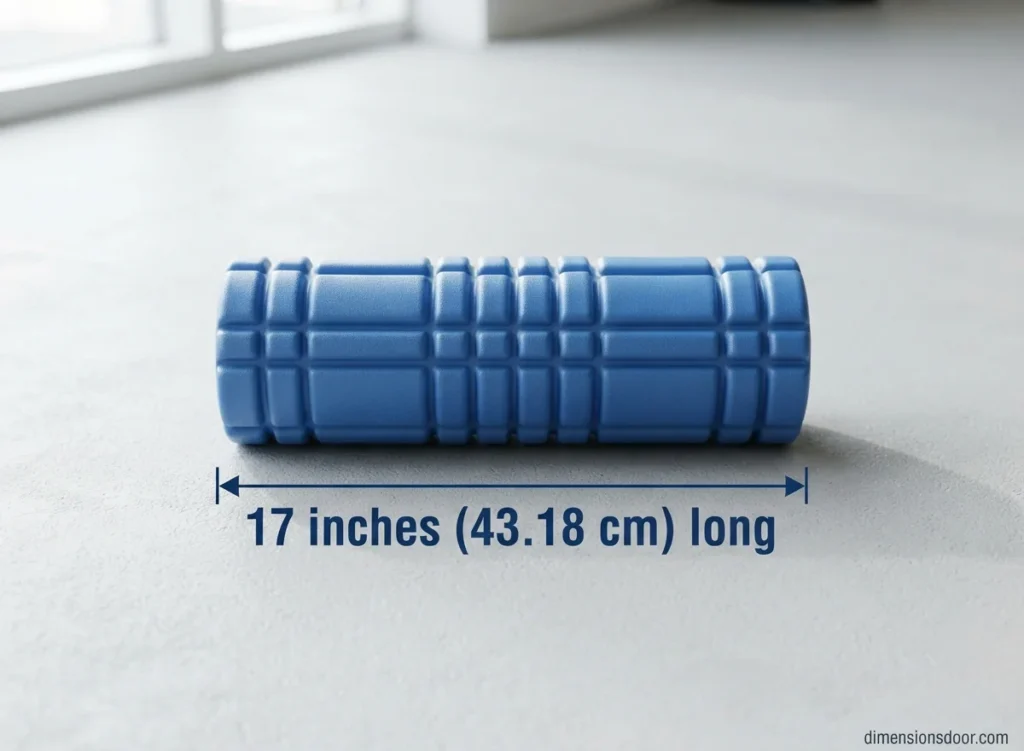
Compact rollers built for packing in a suitcase are usually shortened to about 17 inches.
Decorative picture frame.
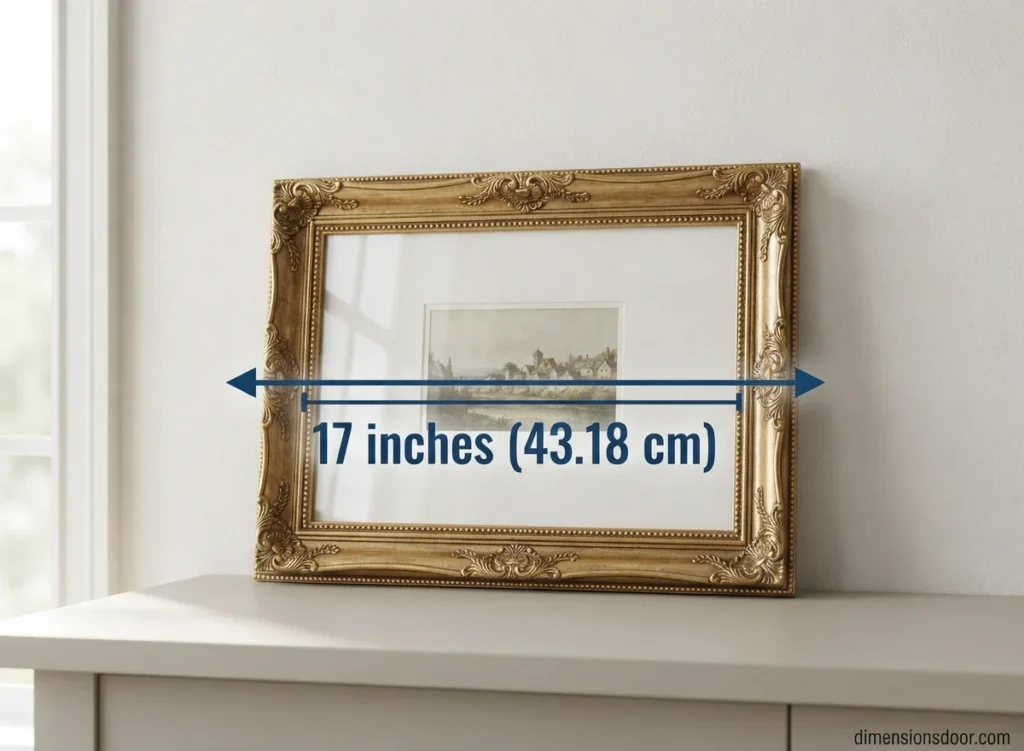
A frame built for medium art or posters, large enough to anchor a wall display, often runs 17 inches on one side.
Drawer organizer.
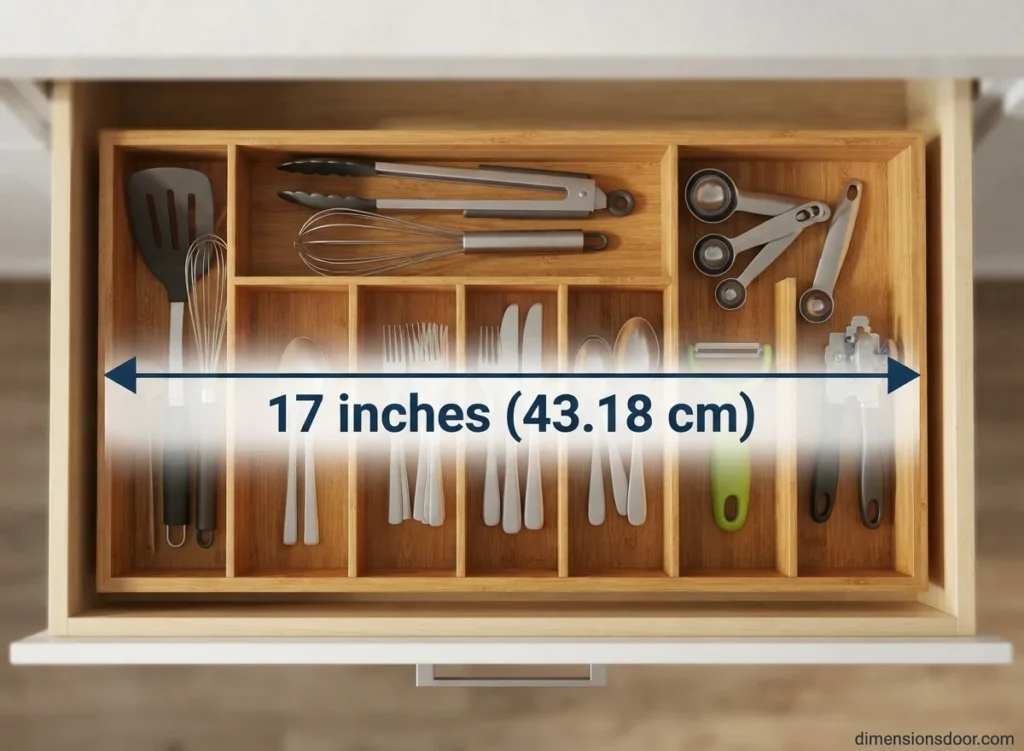
Kitchen and office drawer inserts sized to fill standard drawer widths land close to 17 inches.
Windshield wiper blade.
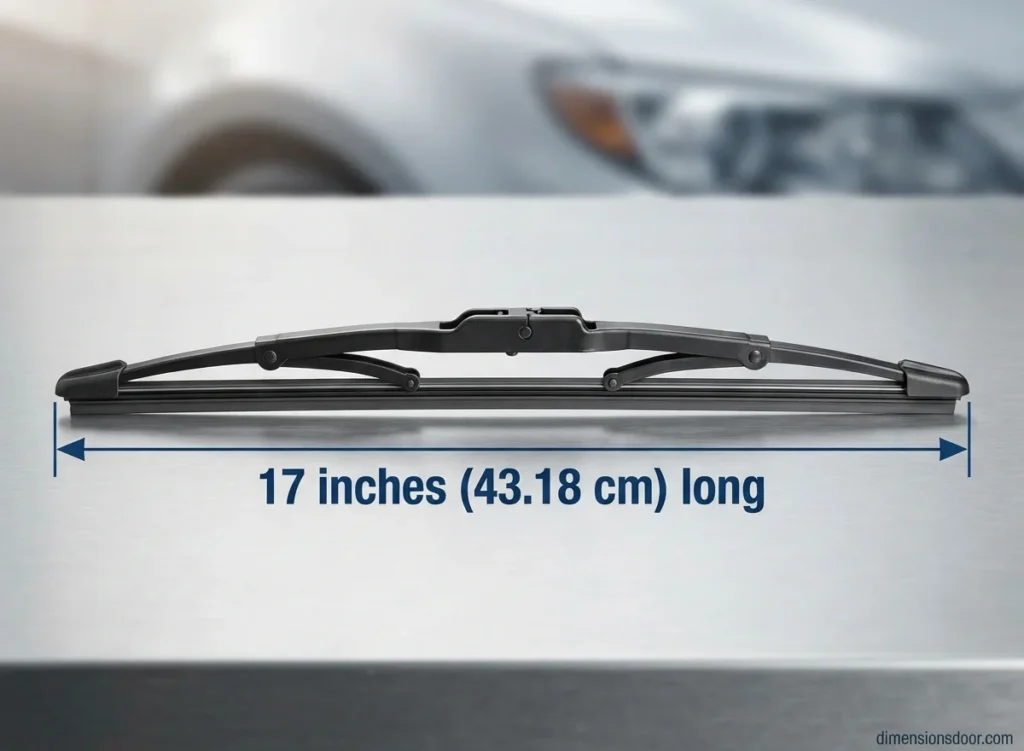
Compact car models commonly use a 17-inch wiper to clear the windshield efficiently.
How Long Is 1 Inch? A Finger & Hand Measuring Guide
Once you can picture a single inch, scaling up to 17 becomes far easier — and this is the trick most measuring guides skip entirely.
How long is 1 inch by example? It’s roughly the length from the tip of your thumb to the first knuckle crease. It’s also close to the width of a US quarter (0.955 inches) or a standard paperclip laid flat.
How long is 1 inch by fingers? Hold up your thumb and measure from the tip to the first joint — for most adults, that distance lands within a few millimeters of one full inch. It’s not perfectly exact, but it’s accurate enough for quick estimates.
How big is an inch in fingers? Beyond the thumb trick, the width of an average adult index finger (across the middle knuckle) also lands close to 1 inch. Comparing both — thumb-tip-to-joint and finger width — gives you a built-in cross-check.
Scaling it up to 17 inches. Since one thumb-length is close to an inch, you’d need roughly 17 thumb-lengths laid end to end to reach the full measurement. A faster shortcut: two adult hand-spans (about 8.5 inches each) get you there in just two motions instead of seventeen.
Must Visit: How Long Is 16 Inches? 20 Real-Life Examples, Comparisons & Visual Guide
How to Measure 17 Inches Without a Tape Measure
When no ruler is around, everyday objects with known, consistent sizes work as reliable stand-ins.
A dollar bill. US paper currency measures exactly 6.14 inches long. Line up close to three bills end to end, and you’ll land near 17 inches (18.42 inches — close enough for a rough estimate).
A sheet of printer paper. Standard US letter paper measures 11 inches on the short side. Add roughly one thumb-to-joint’s worth (about 6 inches from a hand-span reference), and you’re close to 17.
A keyboard. As noted above, most full-size keyboards already measure close to 17 inches — placing one flat against your target object gives an instant visual check.
Two smartphones stacked. Most phones run 6 to 6.5 inches tall. Roughly three stacked end to end lands you near the 17-inch mark.
FAQs
How long is 17 inches in cm?
17 inches equals 43.18 centimeters exactly, based on the international 2.54 cm-per-inch standard.
How tall is 17 inches in feet?
17 inches equals 1.42 feet, or 1 foot and 5 inches.
Is 17 inches bigger than a foot?
Yes. A foot is 12 inches, so 17 inches is 5 inches longer than one foot.
What everyday object is about 17 inches long?
A full-size desktop keyboard, a 17-inch laptop screen, and a medium pizza box are all common real-world examples.
How can I measure 17 inches without a ruler?
Use three US dollar bills laid end to end, a full-size keyboard, or two adult hand-spans stacked together for a close estimate.
How long is 1 inch on a finger?
Roughly the distance from your thumb tip to the first knuckle crease — a quick, built-in way to estimate small measurements.
Conclusion
17 inches is easier to picture once you tie it to things you already know — a ruler plus a hand, a knee’s height off the floor, or a full-size keyboard on your desk. With the conversions, comparisons, and finger tricks above, you now have several fast, reliable ways to estimate this length anywhere, tape measure or not.

William Ahad is the founder and lead writer at DimensionsDoor, where he researches and publishes verified measurement guides covering doors, furniture, appliances, and everyday objects. With a background in home improvement and product research, William has spent years cross-checking manufacturer specifications, industry standards, and real-world listings to help readers get accurate dimensions before they buy, build, or install anything.