You saw “50 cm” on a product tag and froze. Is that big? Small? About the size of what?
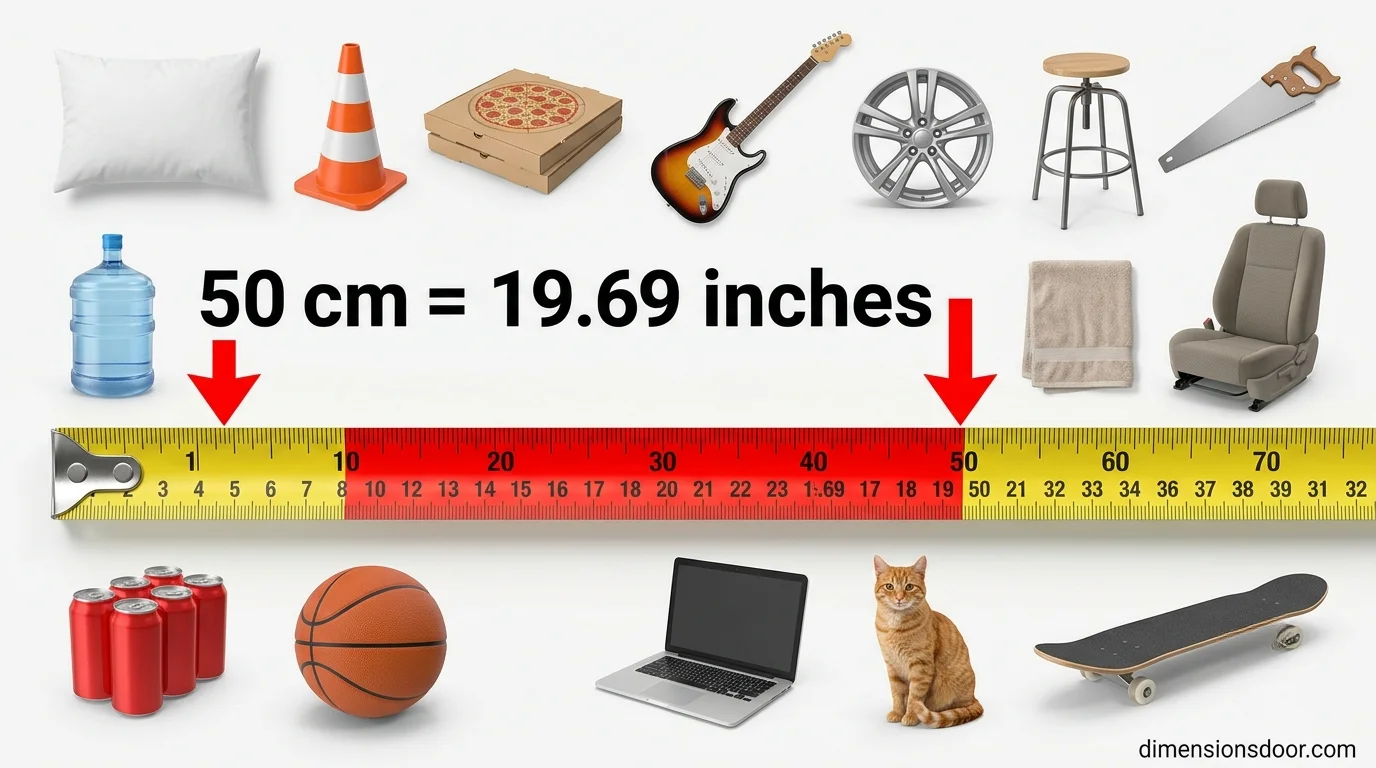
Here’s the short answer:How long 50 cm equals 19.69 inches, or 1.64 feet — just under 20 inches. Once you connect that number to something you’ve actually touched, it stops being an abstract figure and starts being a real, usable size.
Table of Contents
How Long Is 50 cm? Quick Conversion
50 cm is 19.69 inches, which rounds to almost exactly 20 inches. In feet, that’s 1.64 ft, or 1 foot and roughly 7.7 inches. It’s also exactly half a meter, which is why it shows up so often in product specs — furniture makers, textile brands, and appliance manufacturers all lean on the metric system’s clean halves.
| Unit | Value |
|---|---|
| Millimeters | 500 mm |
| Centimeters | 50 cm |
| Meters | 0.5 m |
| Inches | 19.69 in |
| Feet | 1.64 ft |
For a fast mental shortcut: 50 cm is about 2 inches short of 2 feet. That single comparison covers most of what a US shopper needs before clicking “buy.”
Our cm to feet conversion tool provides fast and accurate results, making it easy to convert centimeters into feet for construction, interior design, education, engineering, and everyday measurement needs.
15 Everyday Objects That Are 50 Centimeters Long
Numbers alone don’t stick. Objects do. Below are 15 things that are 50 centimeters long, wide, or tall — a mix of items most guides mention, plus a few nobody else covers.
Standard bed pillow (width)
Grab a pillow off your bed and turn it sideways. That shorter edge is exactly 50 cm, the international standard width for a UK/European pillow. It’s not a random number — a standard double bed measures 135 cm wide, so two pillows sit side by side with a little breathing room left over.
Traffic cone (height)
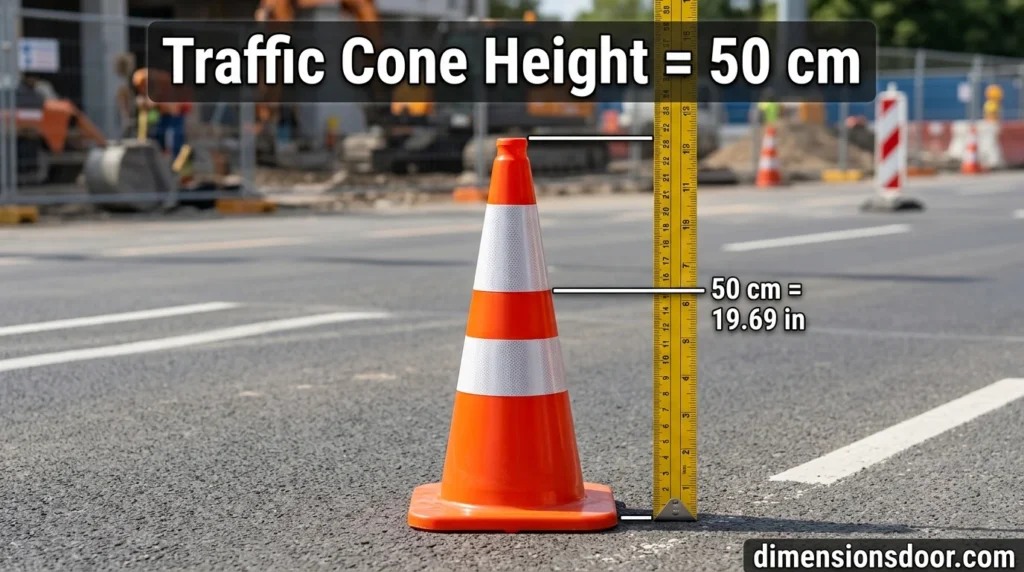
The orange cones directing traffic around a construction zone are almost always 50 cm tall. That height isn’t arbitrary engineering guesswork — it’s tall enough to catch a driver’s eye over a hood, yet short enough to stay stable in wind. This sizing has held steady for over 80 years.
Large pizza delivery box (width)
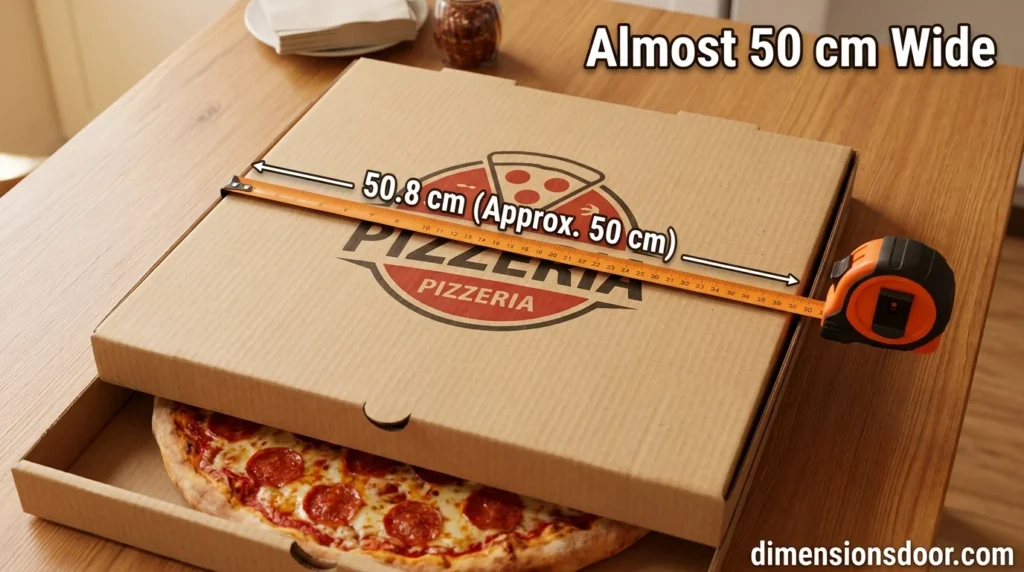
An extra-large pizza box runs about 50.8 cm wide — barely 8 millimeters past the 50 cm mark. The box has to be that big because the pizza itself is roughly 50 cm across, and the crust needs clearance from the walls during a bumpy delivery ride.
Electric guitar body (length)
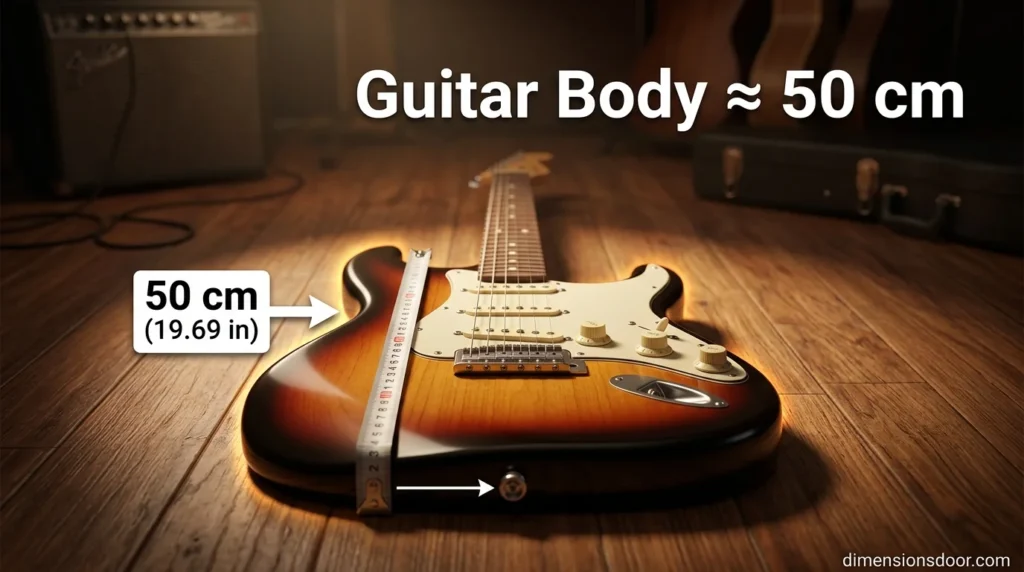
A Fender Stratocaster or Gibson Les Paul body measures roughly 48 to 50 cm from top bout to strap pin, not counting the neck. Guitar makers landed on this size after decades of testing how a body rests against a player’s torso while seated or standing.
19–20 inch car wheel rim (diameter)
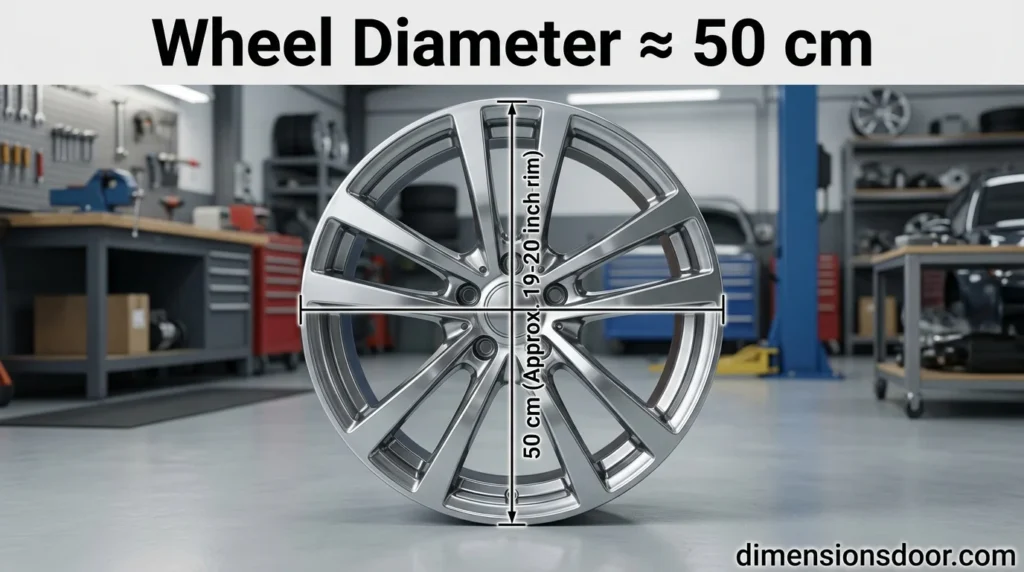
Rim diameters on many modern sedans and SUVs fall between 48.2 and 50.8 cm — right around the 50 cm mark. This size balances two competing needs: enough clearance for brake calipers and a low tire sidewall for sharper handling.
Under-counter workshop stool (seat height)
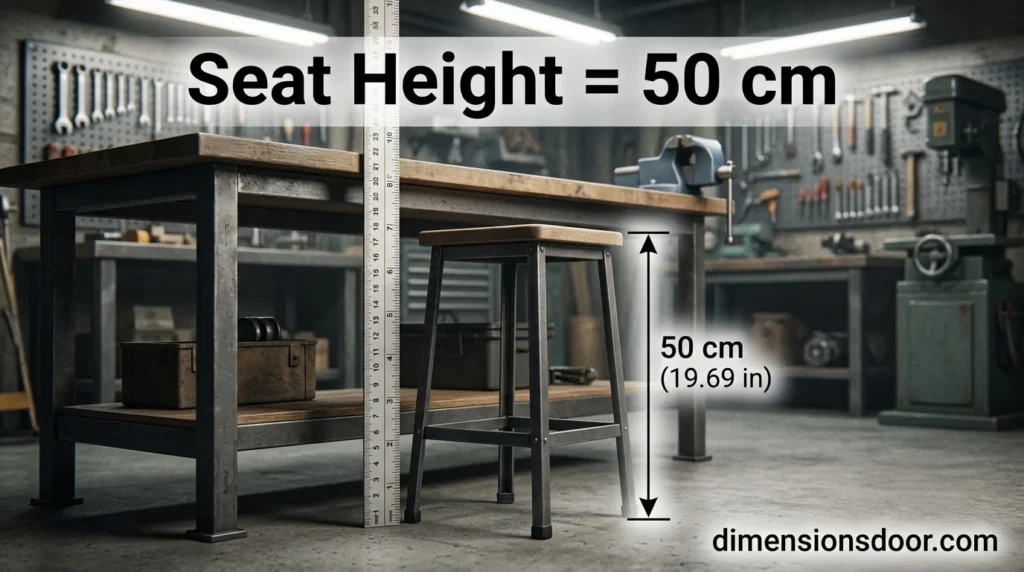
A backless stool built to slide under a workbench typically sits 45 to 50 cm off the ground. At that height, feet rest flat on the floor and thighs stay roughly parallel to it — the exact posture that prevents knee strain during long tasks.
Hand saw blade (length)
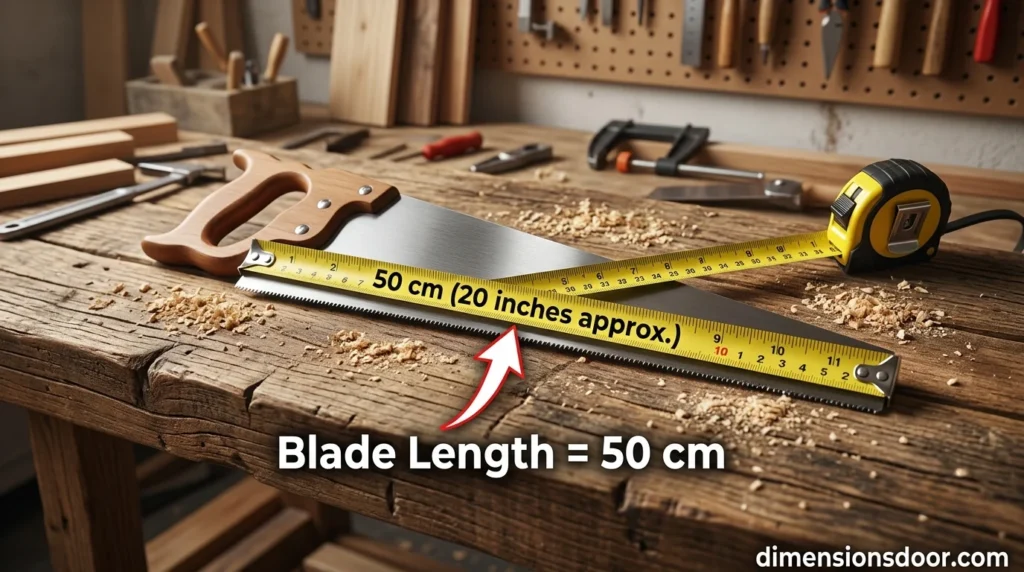
A classic carpenter’s hand saw carries a blade around 50.8 cm long, a size that’s barely shifted in over a century. It matches the natural push-pull stroke of an adult arm, which runs about 45 to 55 cm before the motion turns choppy.
Five-gallon water cooler jug (height)
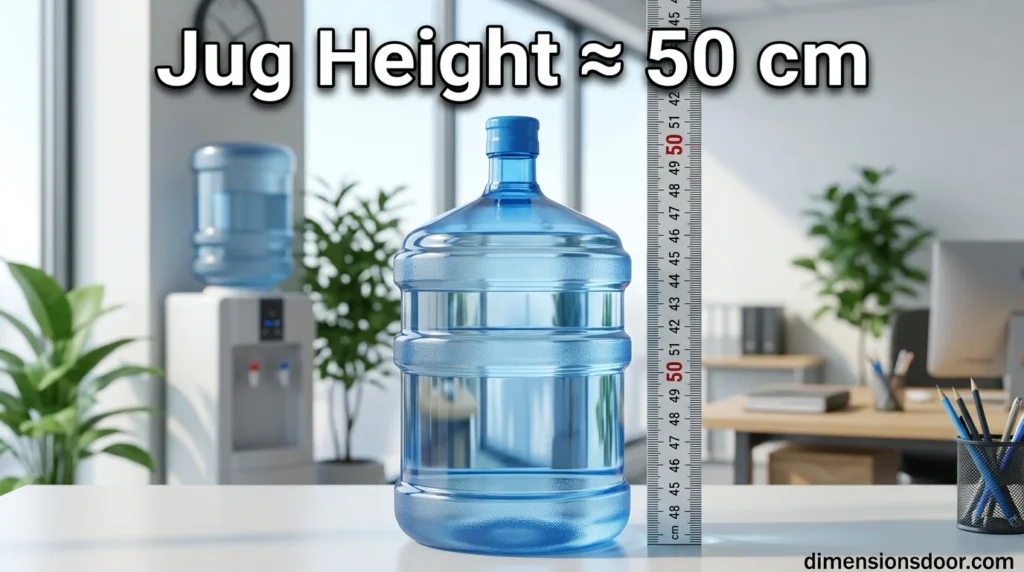
The tall jugs flipped into office water coolers stand about 48.3 cm tall. A full jug weighs close to 19 kg (42 lbs), and ergonomic research pegged that as the upper limit most people can safely lift and flip without back strain.
Standard hand towel (length)
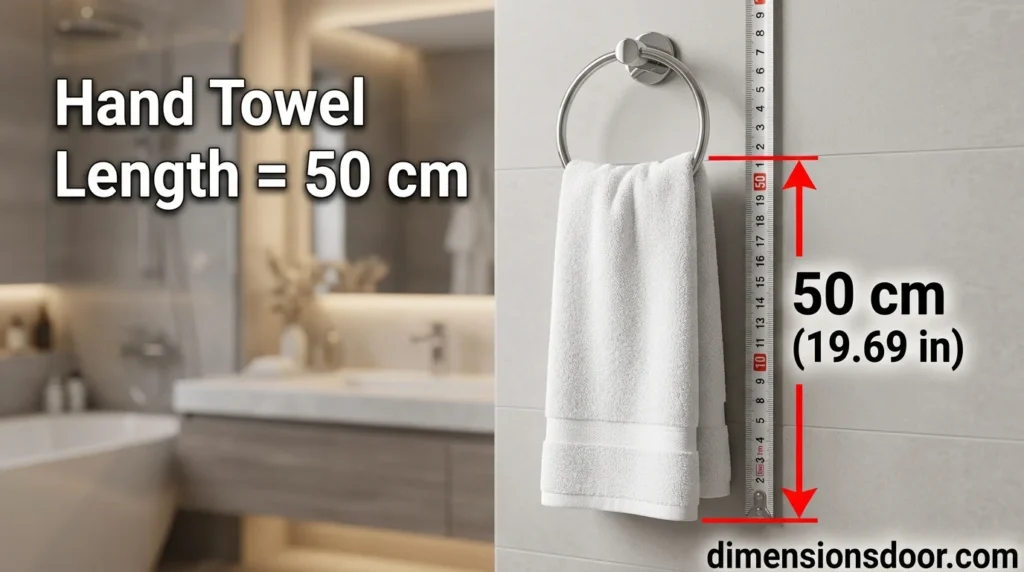
Pull a hand towel off its ring and let it hang. Top to bottom, it runs close to 50 cm — long enough to dry both hands with one towel, short enough to avoid dragging on a low ring.
Car seat cushion depth
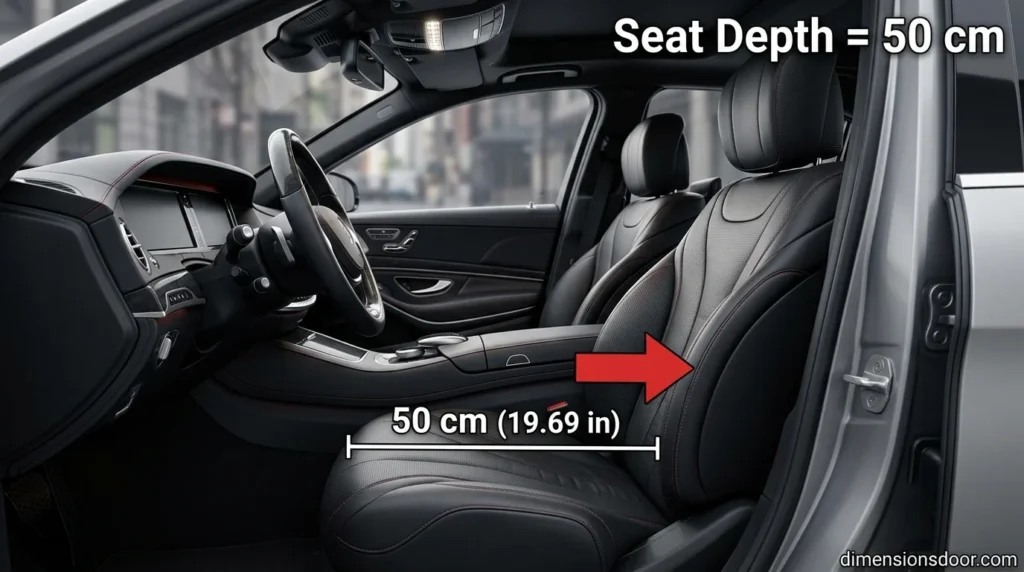
Front edge to backrest, a midsize sedan’s seat cushion measures around 50 cm deep. That depth supports the full length of an average adult thigh — too shallow and legs fatigue fast, too deep and shorter drivers lose contact with the pedals.
Four stacked soda cans (height)
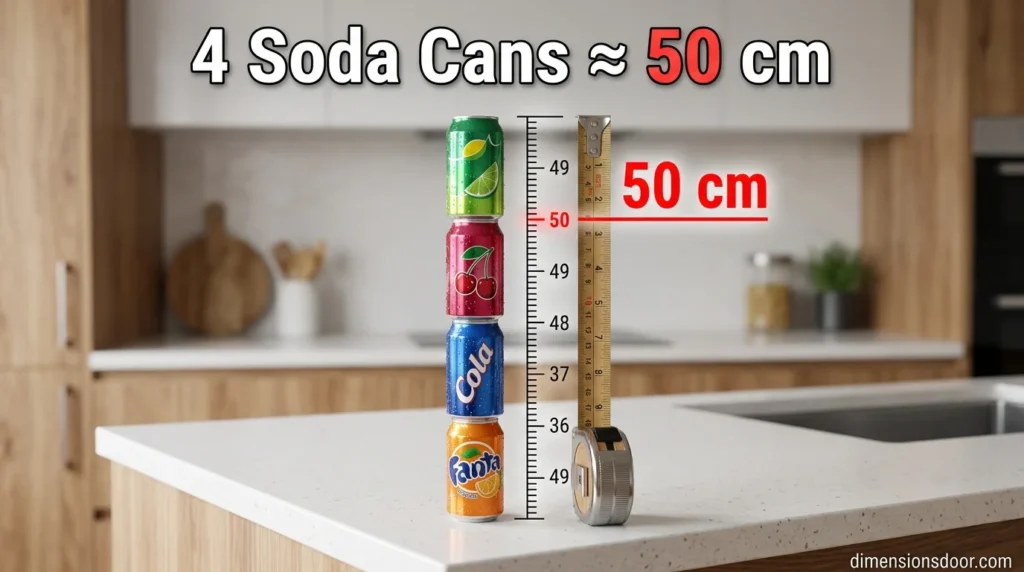
A single 12-ounce can stands about 12.3 cm tall. Stack four and you land at roughly 49.2 cm — a fast, no-ruler way to check the size using stuff already in your fridge.
Two basketballs side by side (width)
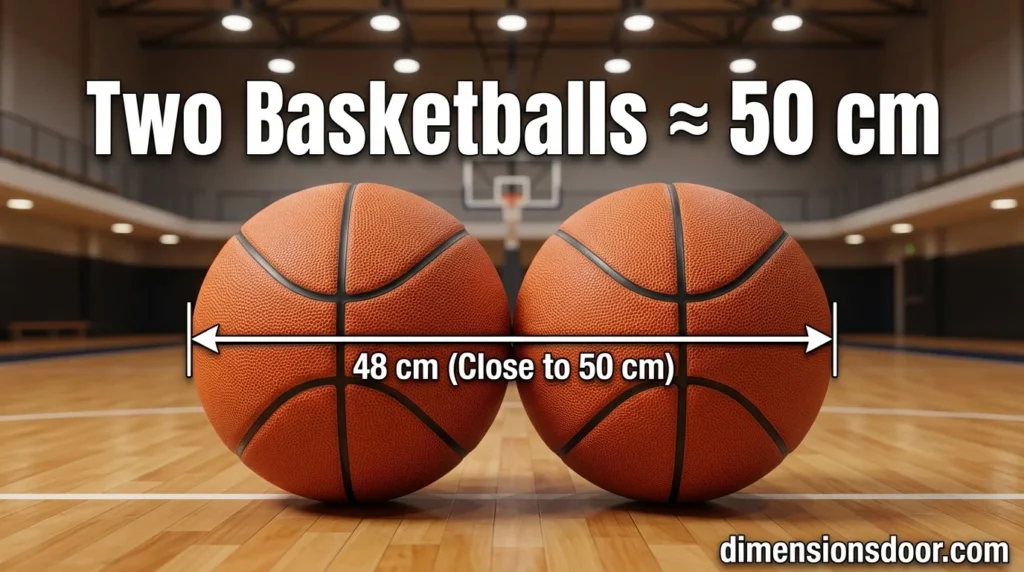
A regulation basketball runs about 24 cm across. Line two up touching and you get roughly 48 cm — a compact, surprisingly small-looking version of 50 cm that most people underestimate until they try it.
A 13-inch laptop, opened flat
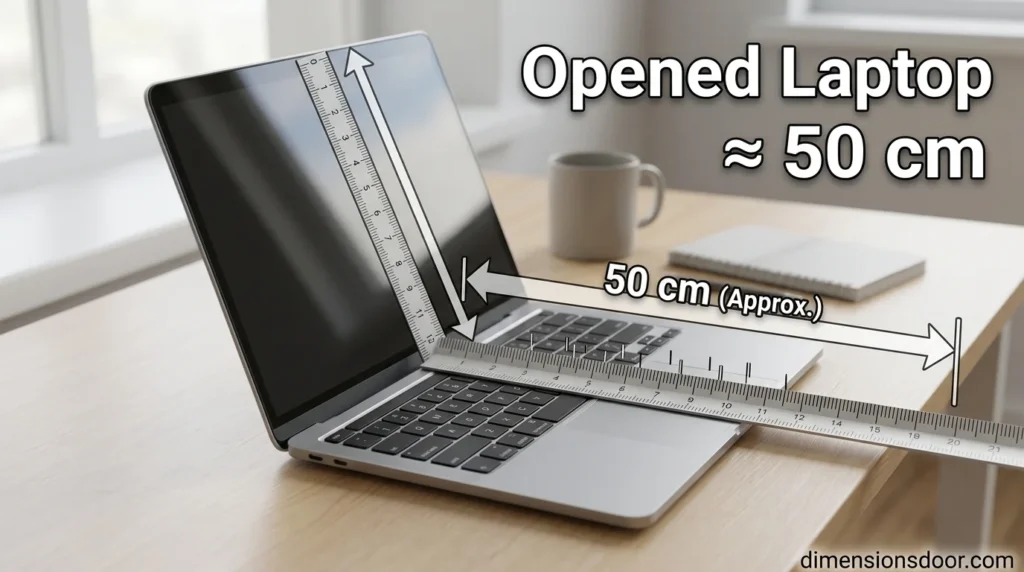
Open a 13-inch MacBook or similar laptop to a comfortable typing angle, and the base plus screen depth adds up to close to 50 cm front to back. This is a size most measurement guides skip entirely, even though it’s one of the most commonly handled objects in a home office.
A housecat, nose to base of tail
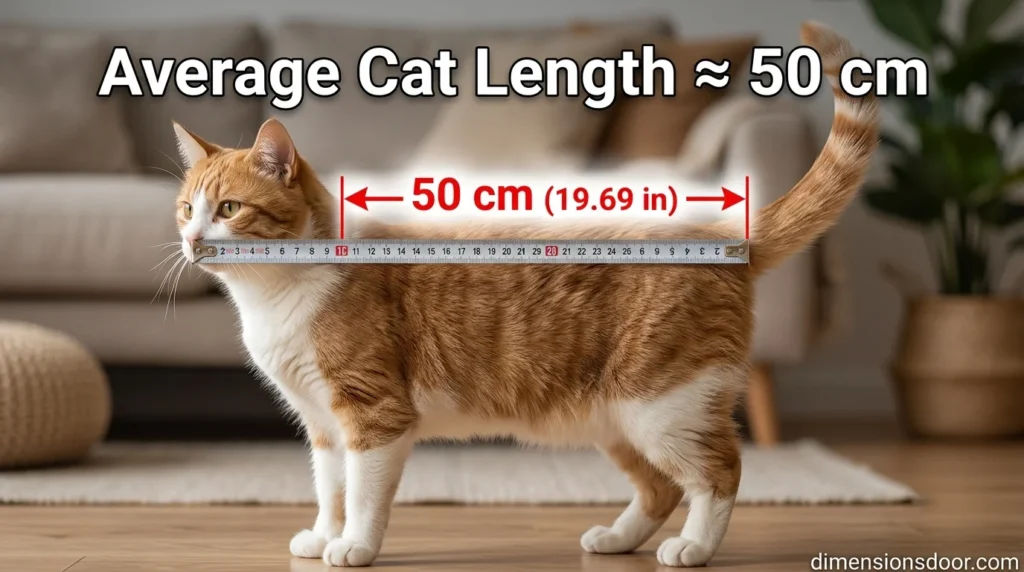
The average adult domestic cat measures roughly 46 to 50 cm from nose to the base of the tail, according to veterinary size charts. It’s one of the most relatable living comparisons for anyone picturing “half a meter” without any tools nearby.
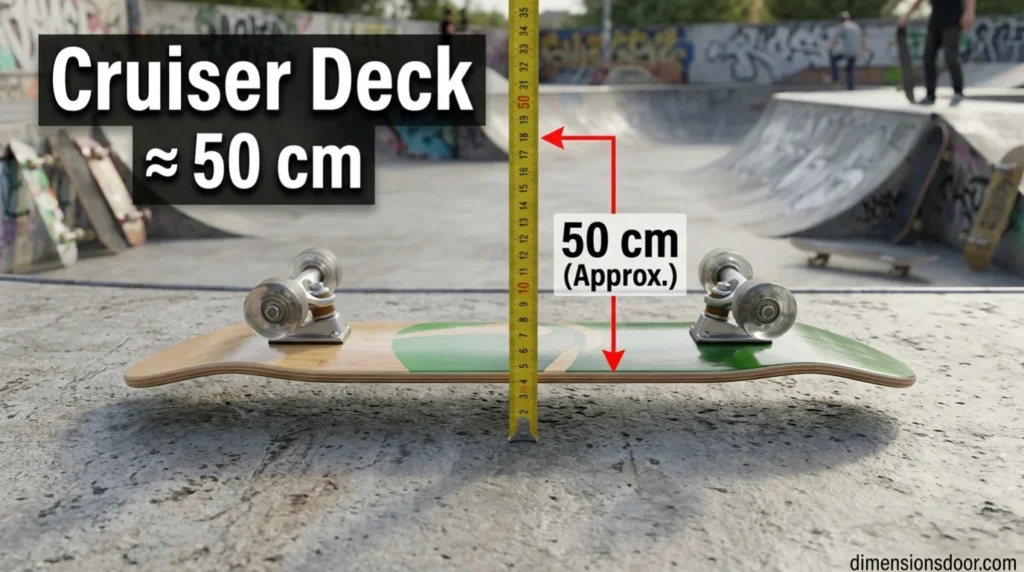
A skateboard deck (length)
A standard skateboard deck runs about 78 to 80 cm total, but the popular “old school” cruiser decks and many kids’ boards land closer to 50 cm, making this a familiar reference for a US audience, especially parents shopping for a first board.
Must Visit:How Long Is 40 cm? 15 Everyday Objects That Are 40 Centimeters Long
How Long Is 50 cm Compared to Humans?
50 cm sits close to the height of an average two-year-old toddler, whose height typically falls in the 80–90 cm range at that age — so 50 cm is noticeably shorter, more like a toddler’s torso length than full height. That comparison alone tells you 50 cm is a modest, hand-manageable size, not a large one.
Measured against the human body directly, 50 cm is close to two forearm lengths. The average adult forearm, wrist crease to elbow, measures about 25 cm. Two of those, placed end to end, land almost exactly on the mark.
It’s also close to an adult’s shoulder width. Average shoulder width for adults in the US falls somewhere between 40 and 48 cm depending on build, per anthropometric data used in furniture and apparel design. That makes 50 cm just a touch wider than most people’s shoulders — a useful visual if you’re picturing width rather than length.
How to Picture 50 cm Without a Ruler
No measuring tape? Your own body works fine.
Use your forearm. From wrist crease to elbow is about 25 cm on an average adult. Hold your forearm out, then mentally double that span. That’s your 50 cm.
Use a sheet of US Letter paper. Standard letter paper measures 27.9 cm long. One sheet plus a little over half of a second sheet gets you to roughly 50 cm — a trick that works on any desk, anywhere.
Use your stride. An average adult step measures somewhere between 66 and 79 cm depending on leg length and sex, so 50 cm is noticeably shorter than one full walking step — closer to a short, deliberate stride.
50 cm Compared to Other Sizes
Context matters. Here’s where 50 cm lands next to nearby measurements:
| Measurement | Compared to 50 cm |
|---|---|
| 30 cm | 40% shorter |
| 40 cm | 20% shorter |
| 50 cm | This is your size |
| 60 cm | 20% longer |
| 75 cm | 50% longer |
| 100 cm | Double (1 full meter) |
Is 50 cm big? Not really, by household standards. It’s smaller than a full meter, shorter than a yardstick, and easily fits on most kitchen counters, desks, or car seats. Compared to a doorway, a dining table, or a full-grown adult, 50 cm reads as a mid-sized, manageable measurement — big enough to notice, small enough to carry with one hand.
FAQs
What object is 50cm long?
A standard bed pillow is one of the most reliable examples — its width is exactly 50 cm. A traffic cone matches it too, standing exactly 50 cm tall in most countries.
How long is 50 cm in real life?
In real-world terms, 50 cm is just under 20 inches — close to the width of a large pizza box, the height of a traffic cone, or two forearm lengths placed end to end.
How long is 50 cm compared to humans?
50 cm is shorter than most toddlers’ full height but close to two forearm lengths or roughly one adult shoulder width. It’s a size you can measure directly against your own arm.
What is 50cm the same as?
50 cm is the same as 19.69 inches, 1.64 feet, 500 millimeters, and exactly half a meter.
How long does 50 cm look like?
Picture a bed pillow turned sideways, or a traffic cone standing at curb height. Both give an accurate, instant mental image of 50 cm without needing a ruler.
Is 50cm big?
No — 50 cm is a mid-sized, everyday measurement. It’s shorter than a meter and easy to hold, carry, or picture using common household objects.
conclusion
Fifty centimeters isn’t an abstract number once you connect it to something real. A bed pillow’s width, a traffic cone at the curb, or two stacked forearm lengths — all of them sit quietly at that 50 cm mark. Next time that measurement shows up on a tag or a tape measure, you’ll have something solid to hold it against.

William Ahad is the founder and lead writer at DimensionsDoor, where he researches and publishes verified measurement guides covering doors, furniture, appliances, and everyday objects. With a background in home improvement and product research, William has spent years cross-checking manufacturer specifications, industry standards, and real-world listings to help readers get accurate dimensions before they buy, build, or install anything.