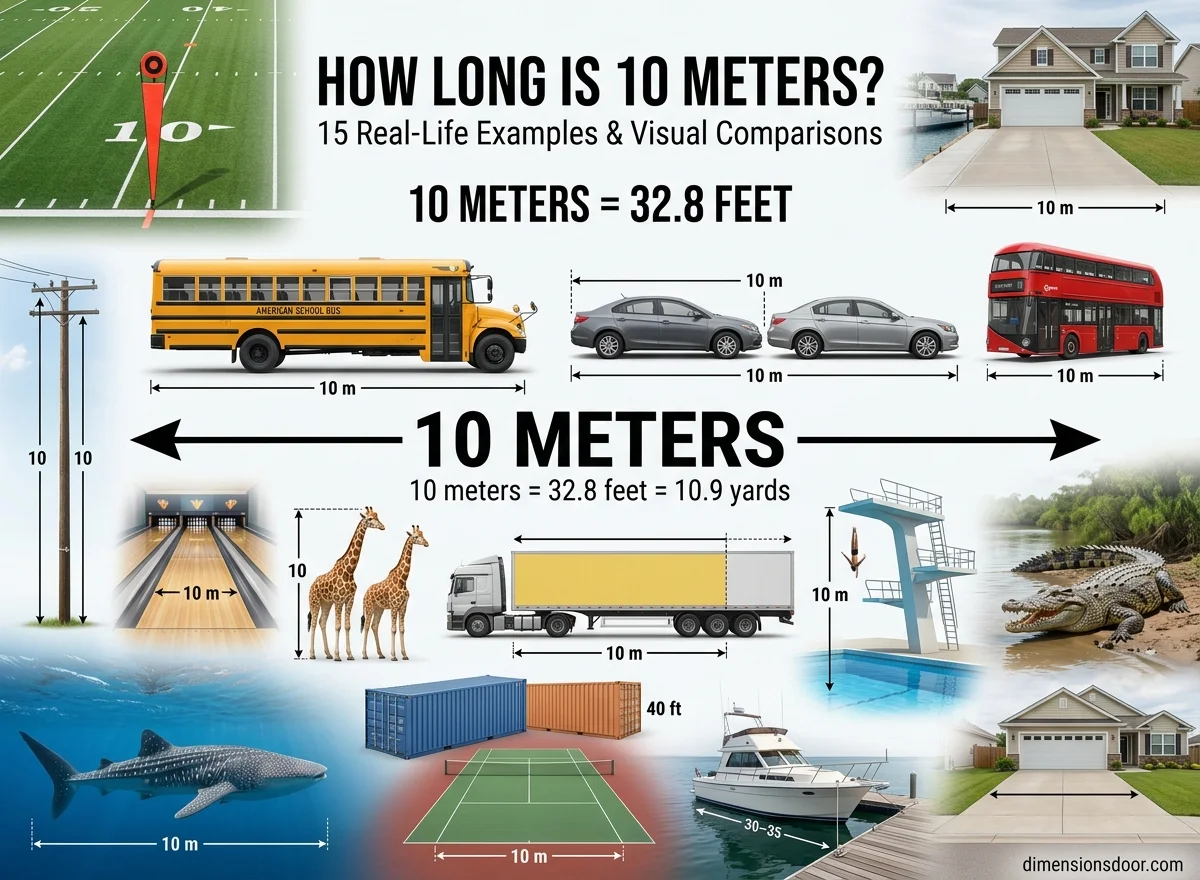
10 meters equals 32.8 feet, or about 10.9 yards. That’s roughly the length of a school bus, or just past the 10-yard first-down marker on a football field. It sounds small on paper. In real life, it’s a distance you walk past every day without noticing.
This guide breaks down how long is 10 meters & 10 meters in feet, explains 15 real-world examples one by one, and gives you a visual guide to picture the distance instantly — no tape measure required.
Table of Contents
10 Meters in Feet, Yards & Inches (Quick Conversion Table)
Before the examples, here’s the math. 10 meters converts cleanly across the US customary units most Americans actually use day to day.
| Unit | Value |
|---|---|
| Millimeters | 10,000 mm |
| Centimeters | 1,000 cm |
| Meters | 10 m |
| Inches | 393.7 in |
| Feet | 32.8 ft |
| Yards | 10.9 yd |
| Kilometers | 0.01 km |
Think of it this way: 10 meters in feet is almost exactly two 16-foot two-car garages parked end to end. Or picture a standard suburban driveway — most run 18 to 20 feet — and you’d need two of them laid nose to tail, with a few feet to spare.
15 Real-Life Examples of Things That Are 10 Meters Long
Numbers alone don’t stick. Objects do. Here’s a closer look at 15 everyday examples of 10 meters, explained one at a time so each comparison actually means something.
A school bus
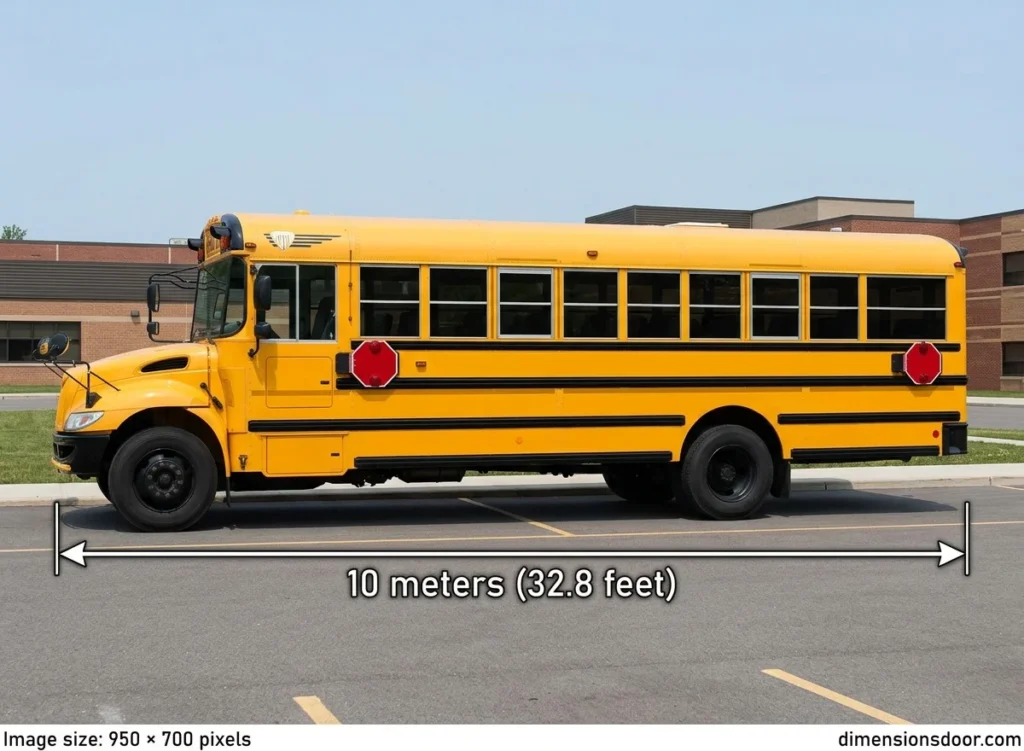
The standard American school bus runs close to 10 meters bumper to bumper, based on federal school bus length standards. This is the single easiest mental yardstick for the distance, because most people see one on the road daily. Next time one passes, picture walking from the front bumper to the very back — that entire stretch is your 10 meters.
Just past the football first-down marker
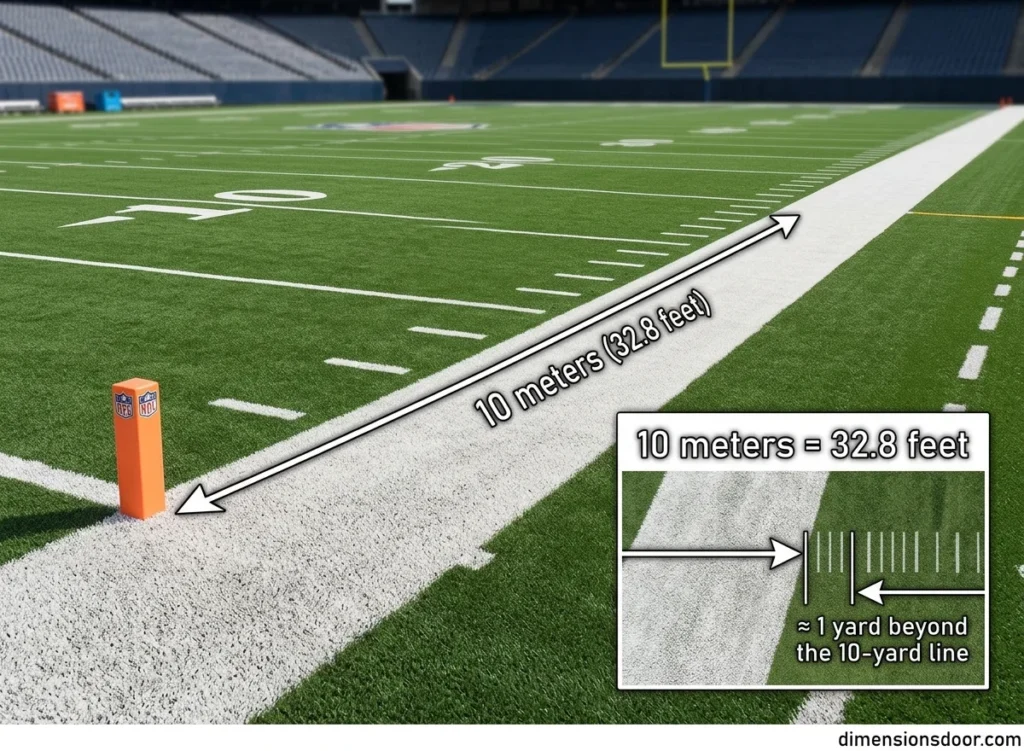
In the NFL, 10 meters lands about a yard beyond the 10-yard line, practically on top of a fresh set of downs. For American sports fans, this is the fastest way to feel the distance without doing any math. Watch a receiver run a quick out-route to the marker, and you’ve watched someone cover almost exactly 10 meters in under two seconds.
Two mid-size sedans, nose to tail
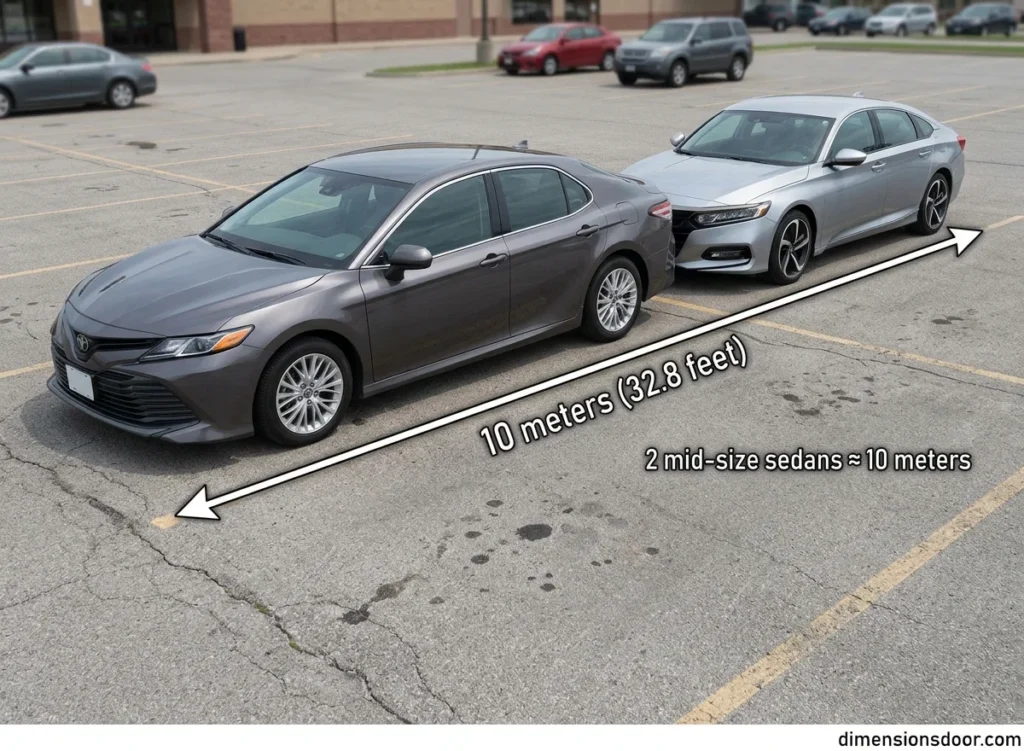
The average sedan measures 15 to 16 feet. Line up two of them, leave about a foot of gap between bumpers, and the total stretch lands right at 10 meters. This comparison works well in parking lots, where two cars parked in a row give you an instant, real-world ruler.
A London double-decker bus
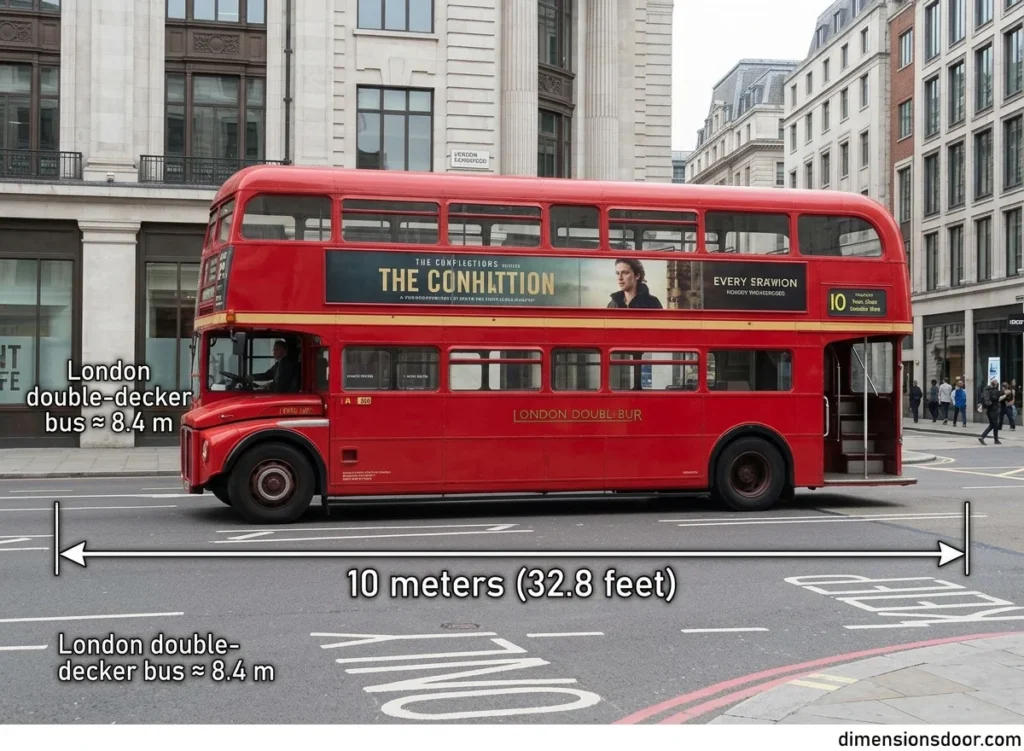
These classic Routemaster buses measure about 8.4 meters, slightly shorter than 10 meters, according to transit specification records. It’s a useful reference if you’ve traveled abroad or watched British television, and it shows that 10 meters is actually a bit longer than one of the most recognizable buses in the world.
A telephone pole
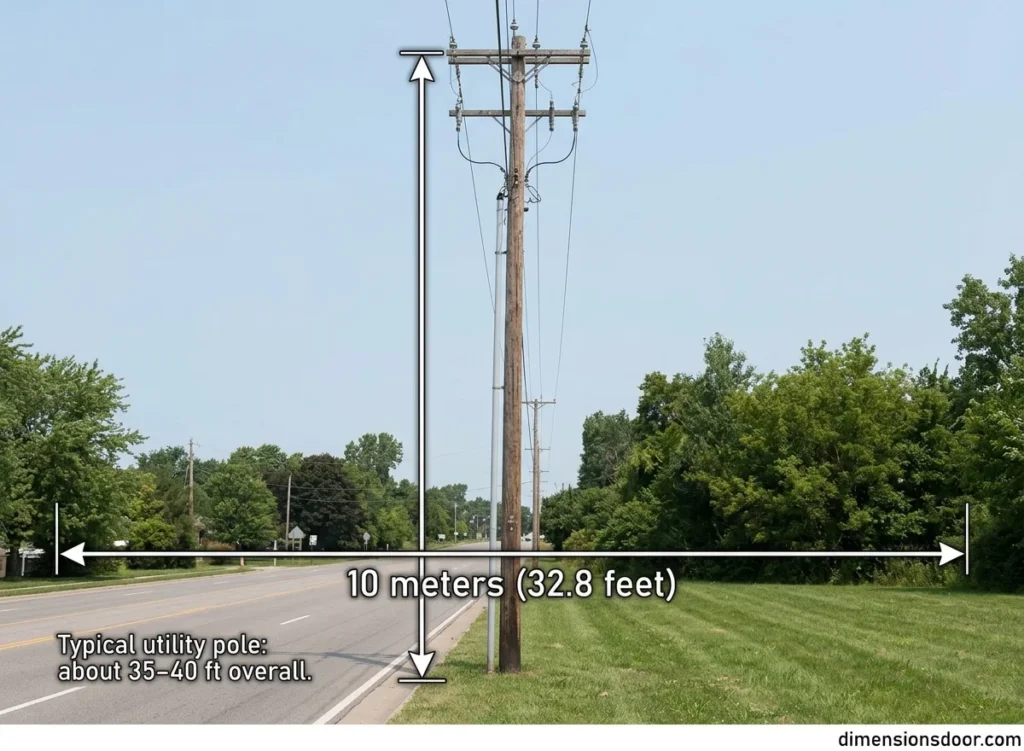
Standard utility poles in the US stand around 35 to 40 feet exposed above ground, per Florida Public Service Commission data. That’s taller than 10 meters overall, but the base section — from the ground up to where the first set of wires attaches — is a close visual match. Look at the bottom third of the next pole you pass.
A bowling lane’s first stretch
From the foul line to roughly the pin deck spans close to 10 meters on a regulation lane, based on USBC lane specifications. Bowlers rarely think about it, but every time the ball crosses that first stretch of polished wood, it has traveled almost exactly 10 meters.
Two adult giraffes, stacked
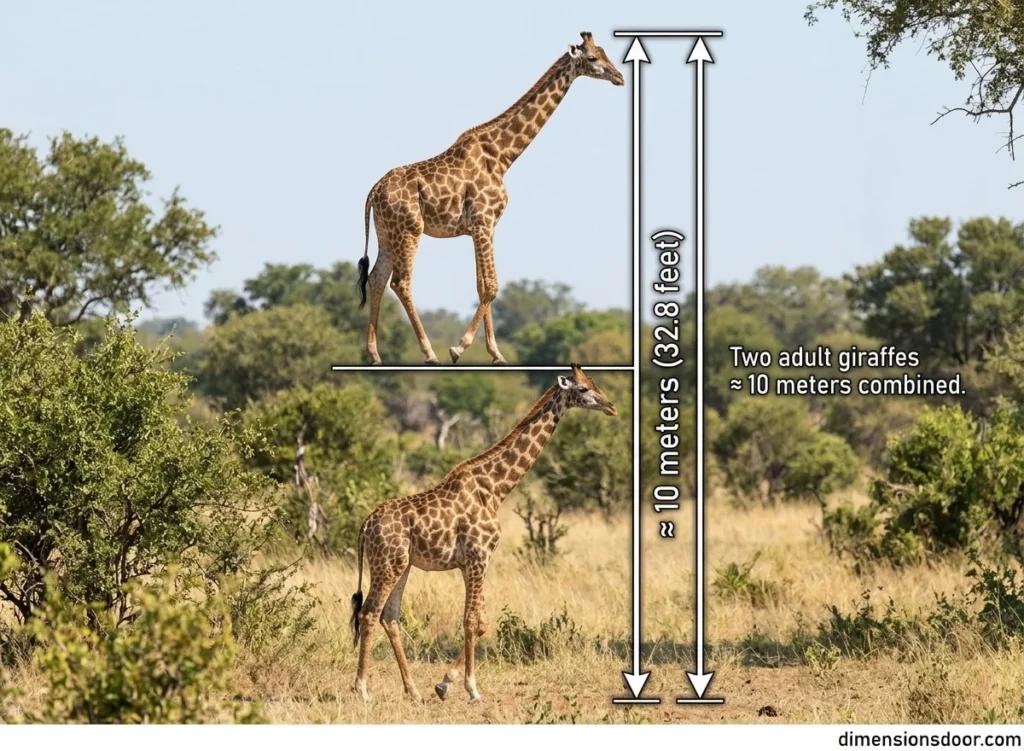
A full-grown giraffe reaches about 5.7 meters tall. Stack two of them head to hoof, and the total just clears 10 meters. It’s an odd comparison, but it sticks in memory precisely because it’s unexpected — and it shows how tall two of the world’s tallest land animals really are when combined.
A semitruck trailer, almost
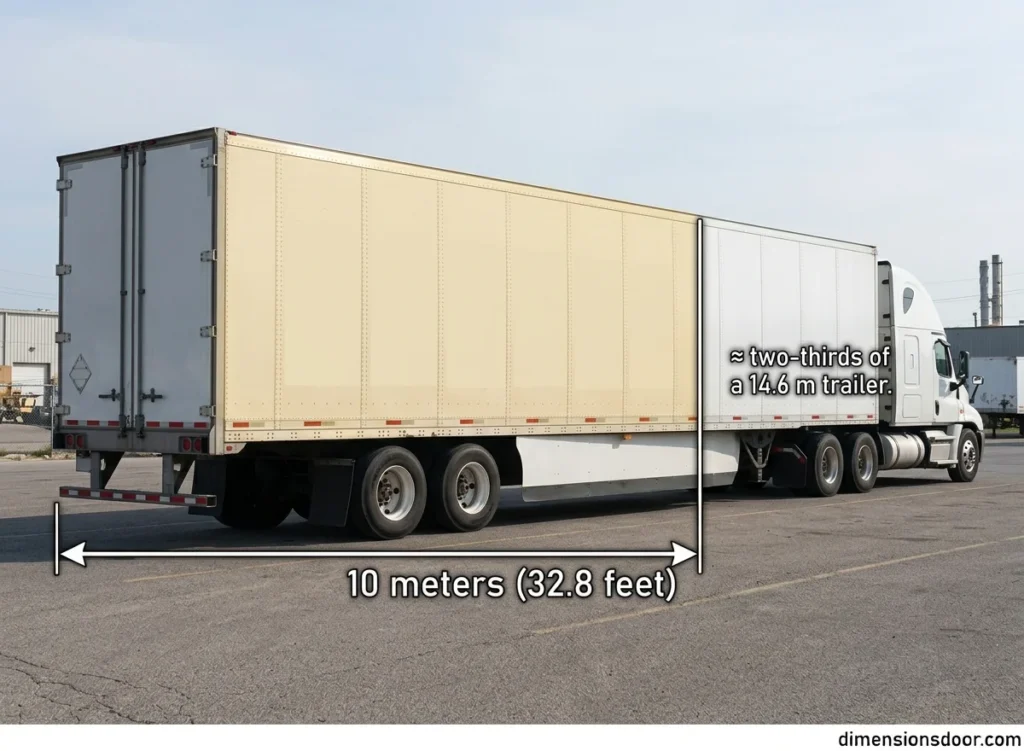
Federal trailer length limits allow up to 14.6 meters, so 10 meters is roughly two-thirds of a full rig. Most people assume a semitruck trailer is closer to 10 meters than it actually is; in reality, you’d need to chop off nearly a third of the trailer to land on the exact figure.
The Olympic 10-meter diving platform
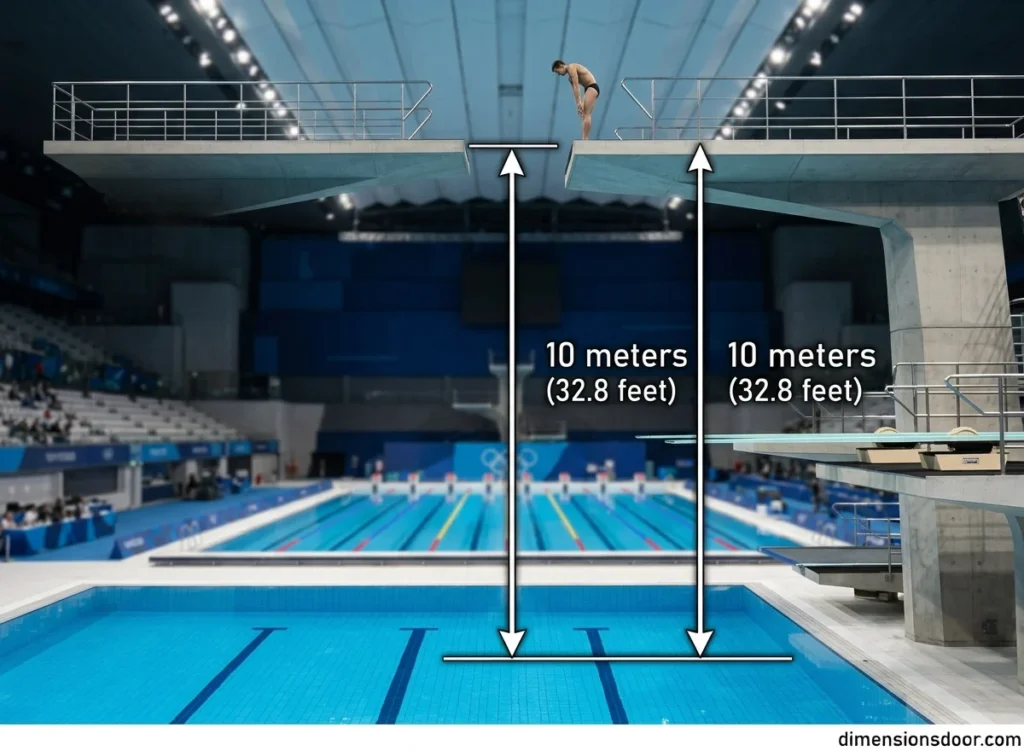
This is the one example that’s exact by design. Divers launch from precisely 10 meters above the water at Olympic and international competitions. It’s also the most dramatic way to feel the distance, since falling 10 meters straight down takes just over a second and a half.
A large saltwater crocodile

Mature saltwater crocodiles typically reach 6 to 7 meters, with rare, record-setting individuals approaching the 10-meter mark. A crocodile that size is exceptionally uncommon, which makes it a striking upper-limit example rather than a typical one.
A whale shark
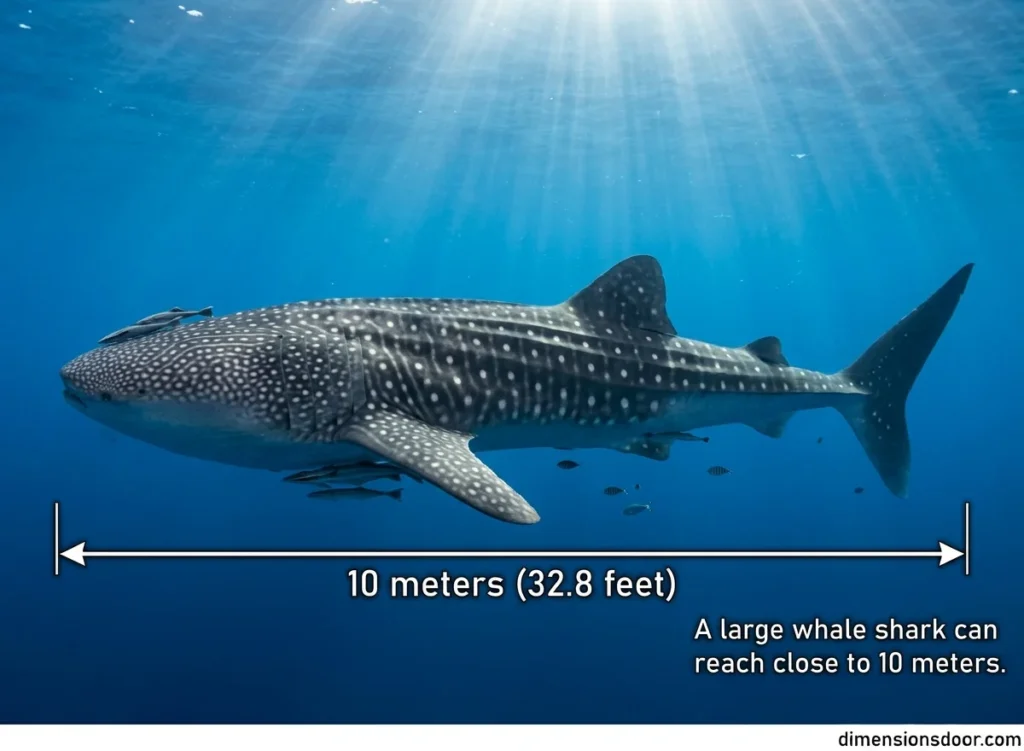
The world’s largest fish species commonly reaches close to 10 meters in length, based on marine biology field records. That makes the whale shark one of the very few living animals whose body length matches this distance almost exactly, without any rounding needed.
A standard shipping container, plus a bit
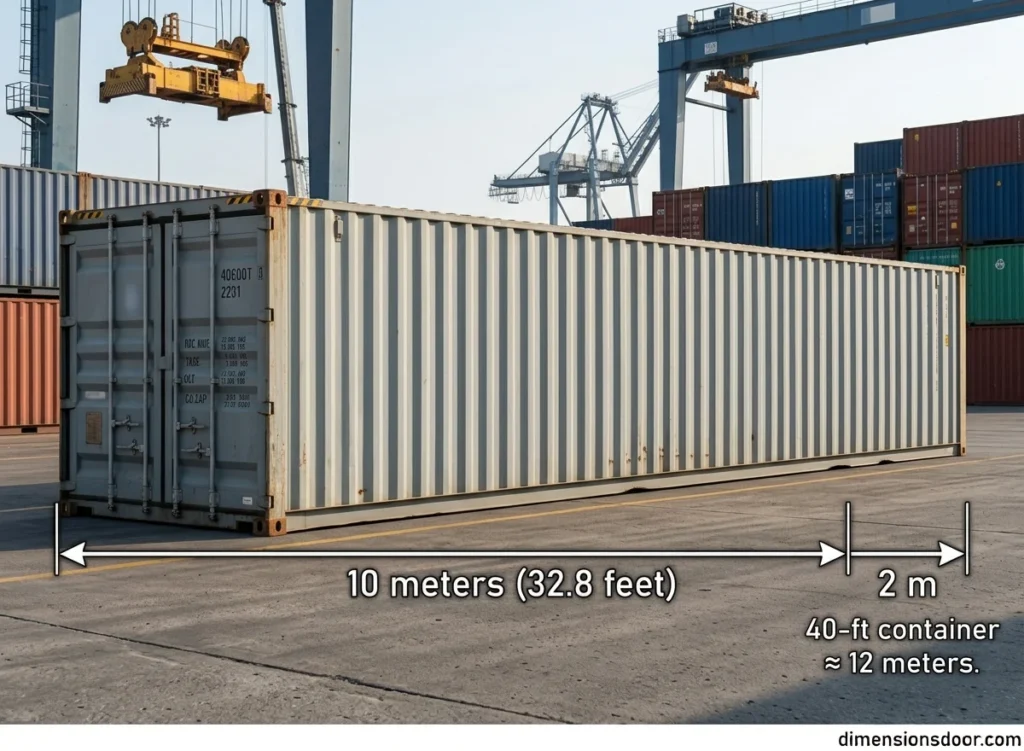
A 40-foot shipping container measures about 12 meters, so 10 meters is a touch shorter. Picture the container with roughly two feet trimmed off the end, and you’re at the right length. This comparison is especially useful for anyone in logistics, moving, or construction who already thinks in container sizes.
A tennis court’s baseline-to-service-line stretch
This span measures close to 10 meters on a regulation court, giving every tennis player a built-in reference point during a match. The next time you watch a serve, notice how far the ball travels just to reach the service line — that’s close to the full 10 meters.
A small cabin cruiser or yacht
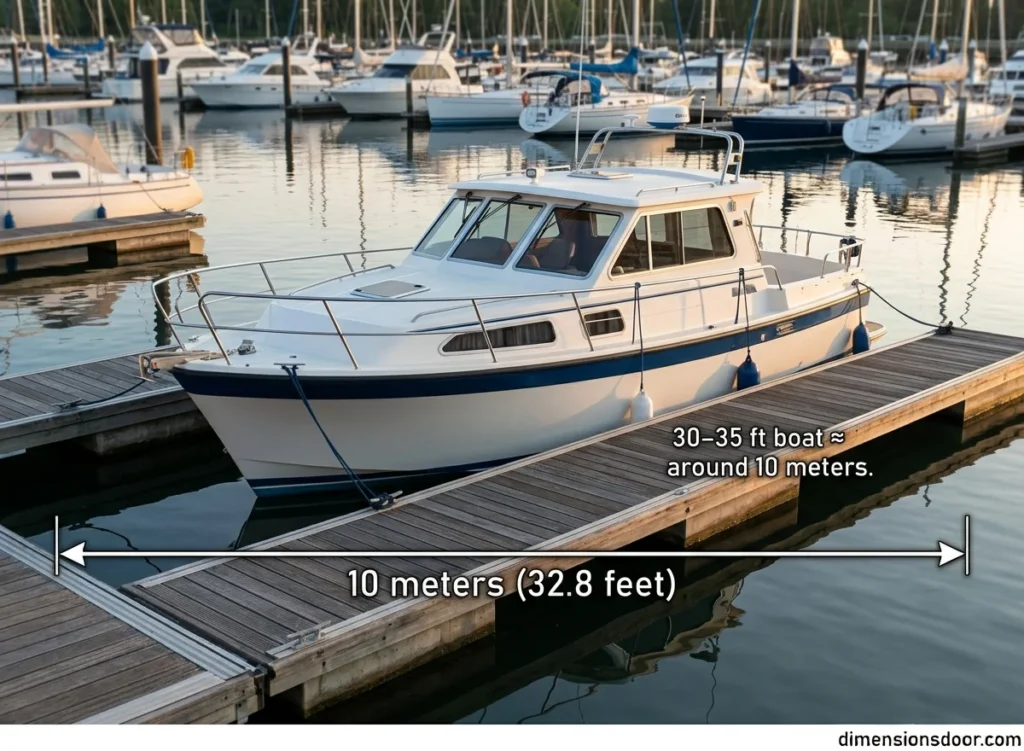
Compact recreational boats in the 30-to-35-foot range sit right around 10 meters, making them one of the most common boat sizes at US marinas. If you’ve ever walked a marina dock, you’ve likely stood next to a 10-meter boat without realizing it.
A wide suburban driveway, doubled
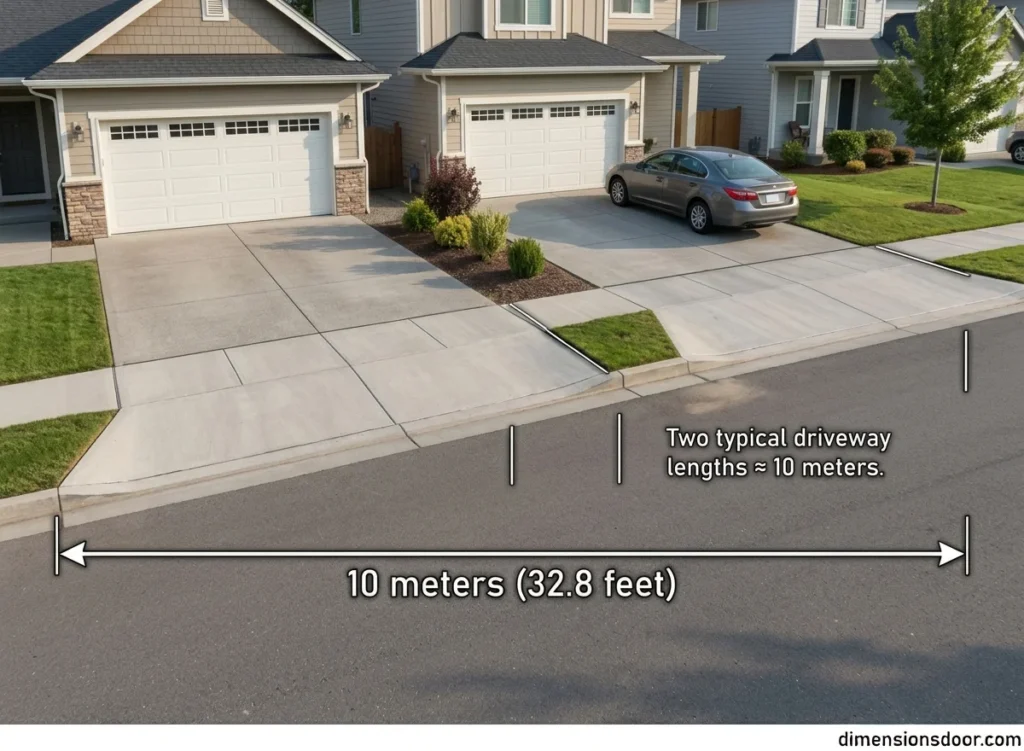
Extend a standard two-car driveway by roughly its own length again, and you’ve covered the distance. This one works especially well for homeowners, since it turns a familiar piece of property into an instant measuring tool.
Must Visit: How Long Is 40 Meters? 15 Real-Life Examples, Comparisons & Visual Guide
Is 10 Meters a Long Distance? (Context & Quick Takeaways)
Context decides the answer. Compared to a football field (91.4 meters) or a city block (roughly 80 to 100 meters in most US grids), 10 meters is short — barely a fraction of either.
Indoors, or in a sprint, it reads differently. Track athletes use 10-meter sprint zones to measure acceleration off the blocks, because even this short stretch reveals real speed differences. In everyday safety contexts, 10 meters is also close to the recommended following distance many defensive-driving courses teach for low-speed city traffic.
So: short on a map, noticeable on foot. That’s the honest, factual answer.
FAQs
How long is 10 meters in a room?
About the length of a large living room or a short hallway — roughly the distance from a front entryway to a back kitchen in a mid-size home.
What length is 10 meters in feet?
10 meters equals 32.8 feet, or just under 11 yards.
How far is 10 meters to walk?
At a normal pace, walking 10 meters takes about 7 to 12 seconds.
What is an example of 10 meters?
A school bus, two mid-size sedans parked end to end, or the Olympic 10-meter diving platform are all close, real-world examples.
How long is 10 meters in steps?
Around 13 to 14 average adult steps, depending on height and stride length.
Is 10 meters a long distance?
Not compared to a football field or city block — but indoors, or in a sprint, it’s a distance you’ll clearly feel and see.
Conclusion
10 meters breaks down to 32.8 feet, about 14 steps, and roughly 10 seconds of walking. Picture a school bus, two parked cars, or the stretch just past a football first-down marker, and the distance stops being an abstract number. Once you’ve matched it to something you see daily, you’ll spot 10 meters everywhere — from driveways to diving platforms.

William Ahad is the founder and lead writer at DimensionsDoor, where he researches and publishes verified measurement guides covering doors, furniture, appliances, and everyday objects. With a background in home improvement and product research, William has spent years cross-checking manufacturer specifications, industry standards, and real-world listings to help readers get accurate dimensions before they buy, build, or install anything.