Picture a centimeter without a ruler in your hand. Hard, right? Most people in the US grew up thinking in inches, not the metric system, so “1 cm” doesn’t mean much until you see it next to something real.
Here’s the short answer: 1 cm equals about 0.39 inches — a little more than a third of an inch. That’s roughly the width of a pencil eraser or the thickness of two stacked dimes.
This guide gives you real, touchable examples of how long is 1 cm actually is, plus simple tricks to measure it without any tools at all.
What Does 1 cm Look Like in Real Life?
A centimeter is small. It’s about as wide as a standard paperclip’s wire loop laid flat, or the gap between two ruled lines on notebook paper.
In inch terms, 1 cm equals 0.3937 inches, which rounds to almost 25/64 of an inch. That’s why people often describe it as “just under half an inch” — close, but not quite.
Here’s a simple trick: hold up a US penny. Its diameter is 19.05 mm, almost exactly two centimeters. Now picture half of that penny. That’s your 1 cm.
If you are interested to convert cm to feet then must visit this page.
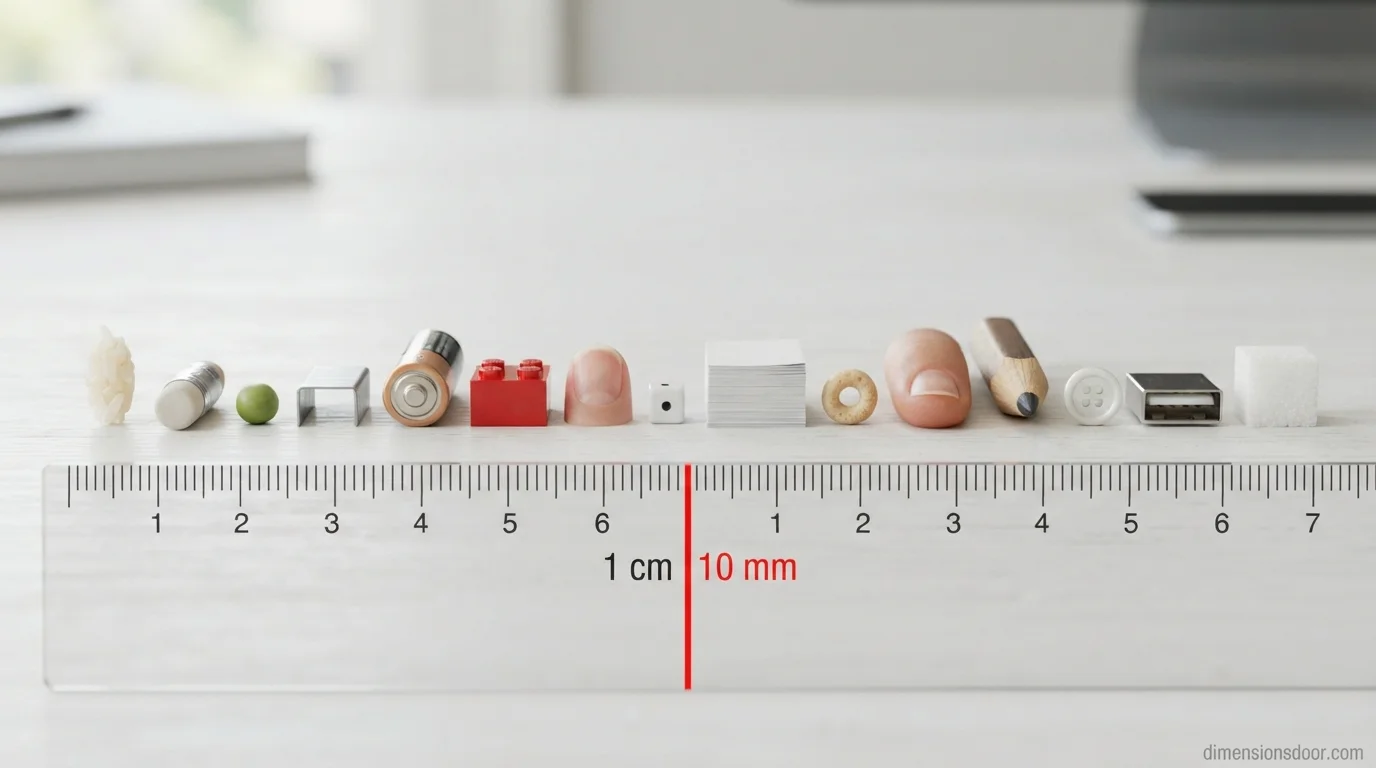
15 Everyday Objects That Are Exactly 1 Centimeter Long
Each of these items is something you likely already own or see daily. Looking at them side by side gives you a mental ruler for 1 centimeter that sticks far better than a plain number.
A grain of cooked rice
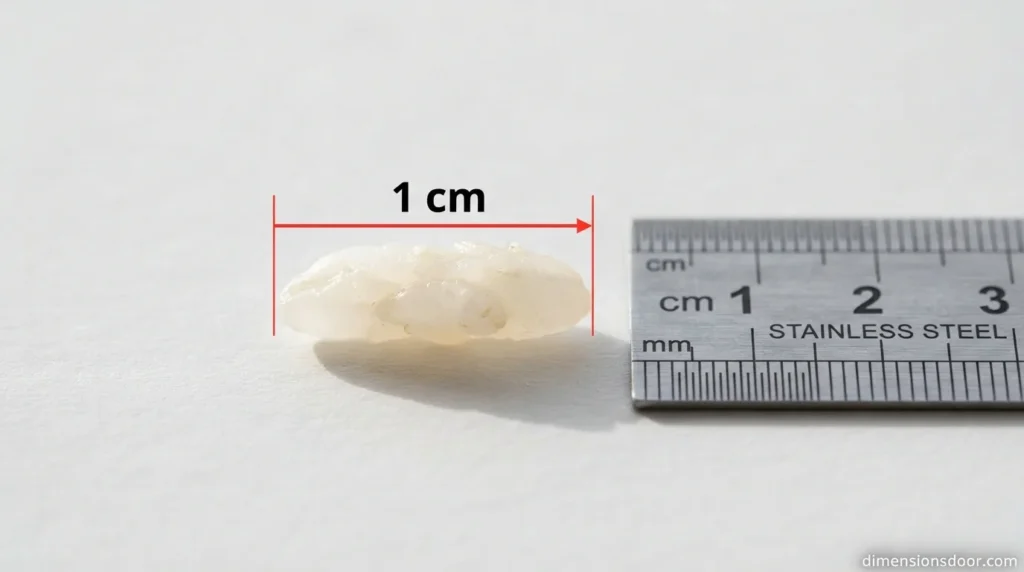
A single grain of white rice, once cooked, stretches out to close to 1 cm long. Raw rice is shorter, but cooking causes the grain to absorb water and expand in length, which is why cooked rice makes a slightly more accurate reference than dry rice from the bag.
The width of a standard pencil eraser
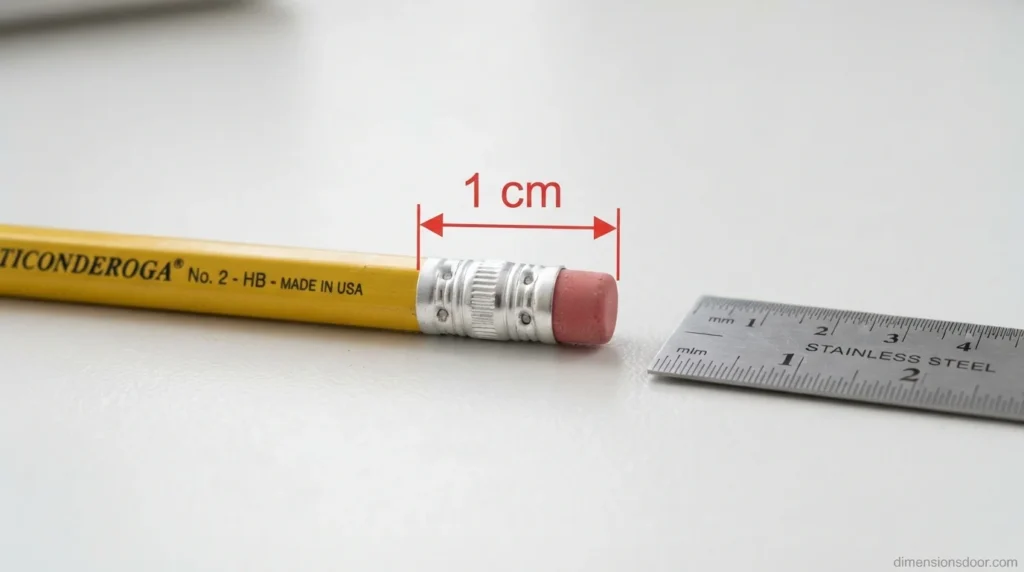
The pink eraser cap found on most No. 2 pencils measures close to 1 cm across. It’s one of the easiest references to check, since almost every household or office has a pencil within reach.
A pea
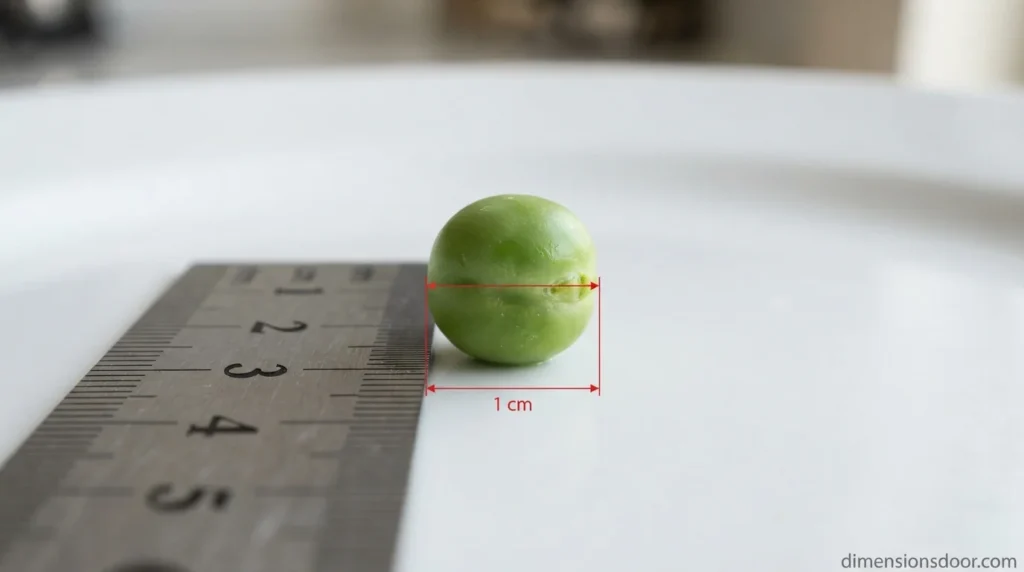
An average garden pea, whether fresh or frozen, measures close to 1 cm in diameter. Pea size does vary by variety, but a typical grocery-store pea lands right in this range, making it a handy kitchen-drawer comparison.
A staple, unfolded
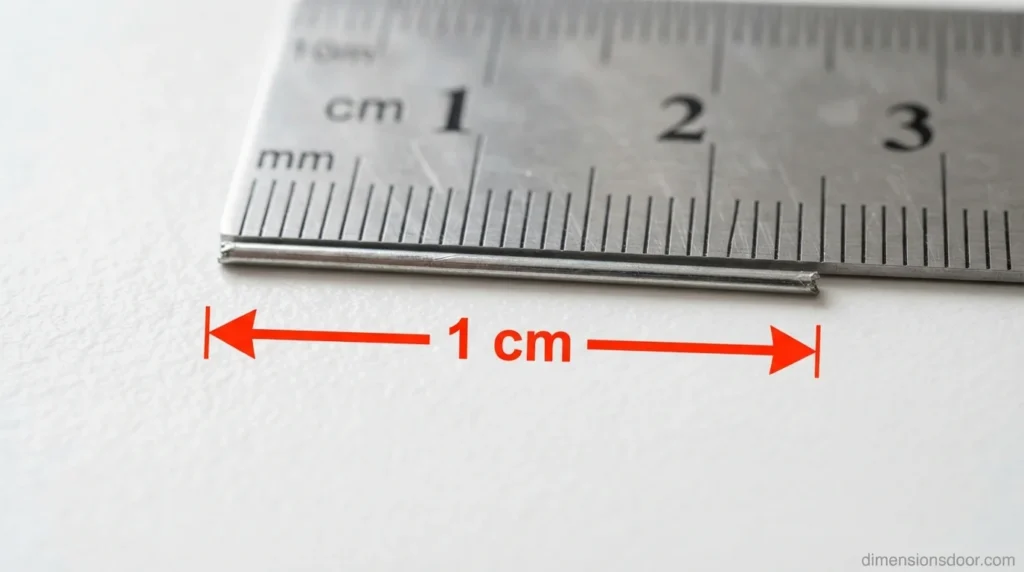
A standard office staple, once pulled out and straightened, measures close to 1 cm from end to end. This works well as a reference because staples are a fixed, mass-produced size, so the measurement barely changes from box to box.
The metal button on top of a AA battery
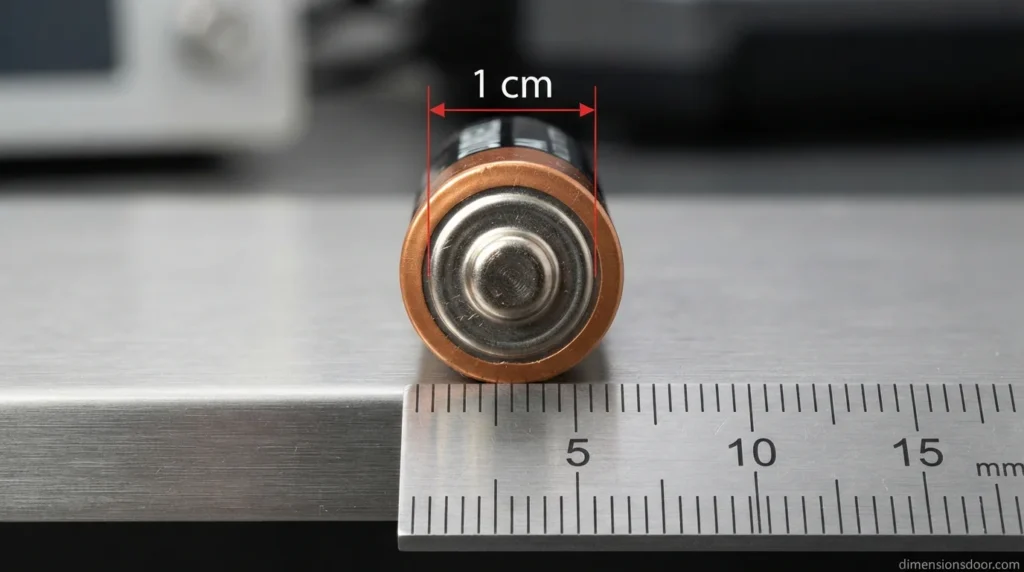
Every AA battery has a small raised circle on its positive end. That circle measures close to 1 cm across. Since AA batteries follow a strict international size standard, this reference stays consistent across brands.
A Lego brick stud
The small circular bump on top of a classic Lego brick measures very close to 1 cm in diameter. Lego has kept this measurement nearly unchanged since the 1950s, which is part of why older and newer sets still snap together.
A fingernail’s width
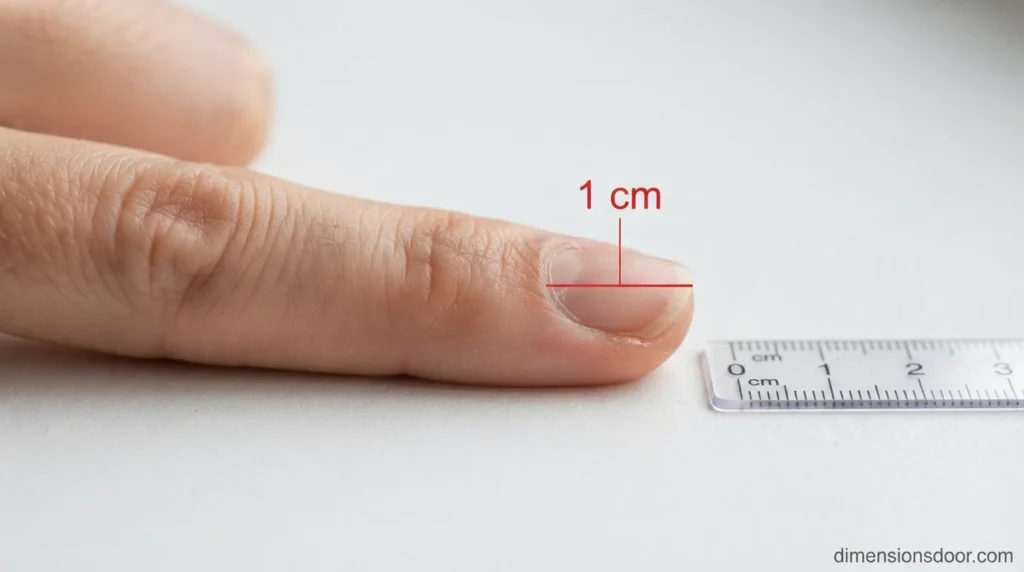
Most adult pinky fingernails measure around 1 cm across. This reference is convenient because it’s always with you, though exact width shifts slightly from person to person based on hand size.
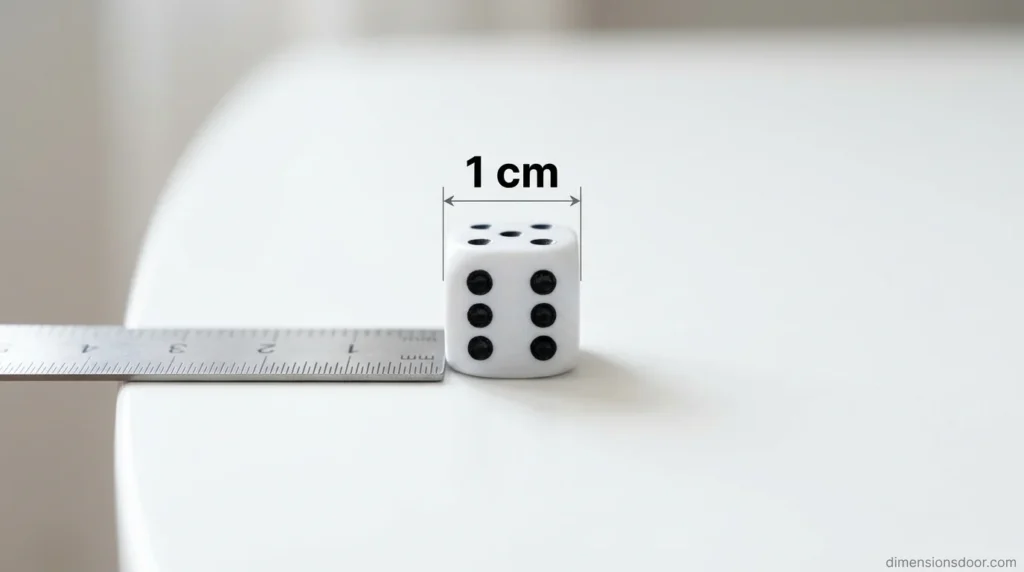
A mini travel dice
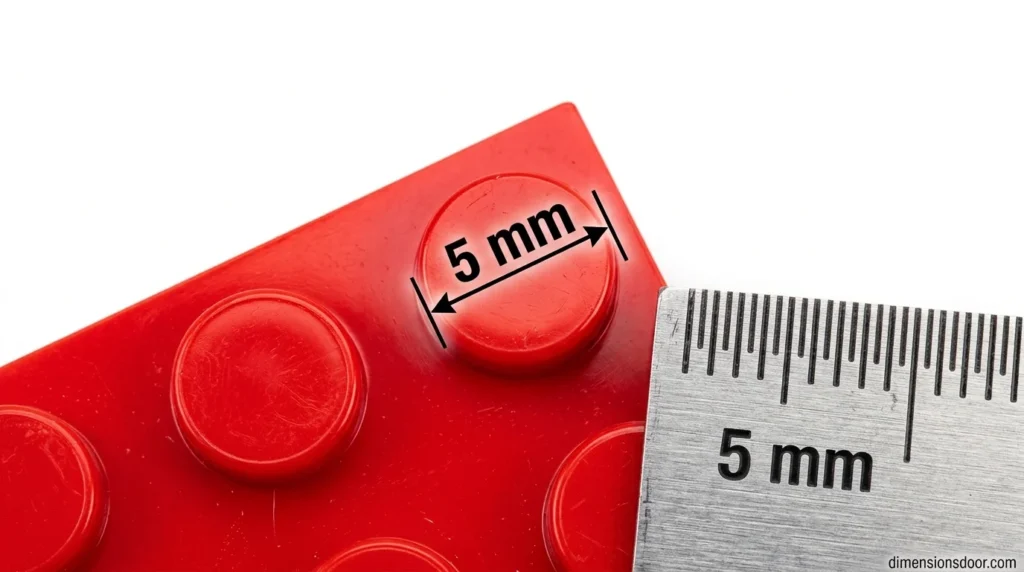
Small travel or board-game dice, the compact kind found in pocket game sets, often measure exactly 1 cm per side. Standard full-size dice are larger, closer to 1.6 cm, so the mini version is the better match here.
Ten stacked sheets of printer paper
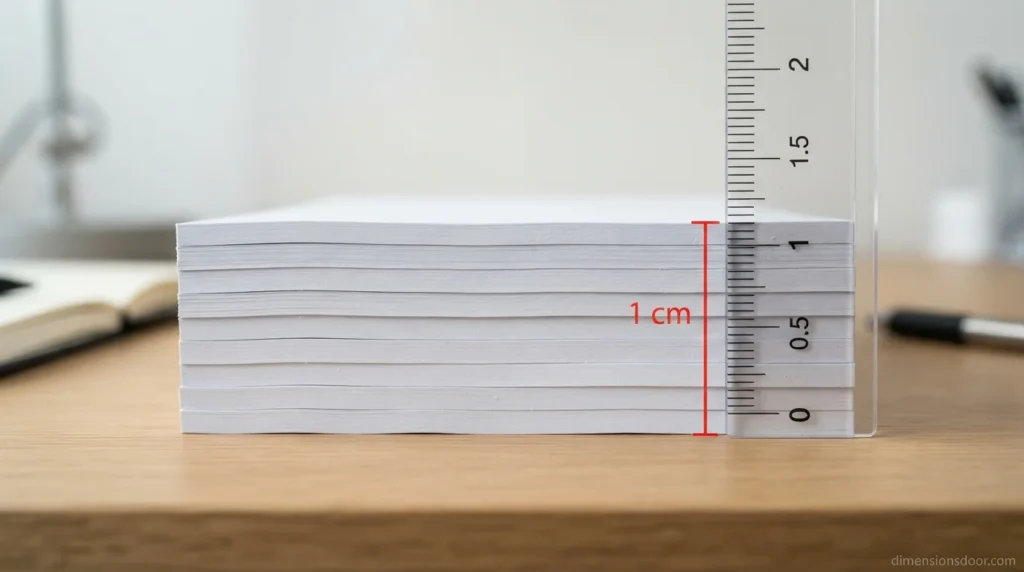
A single sheet of standard copy paper is about 0.1 mm thick. Stack ten sheets together and the pile reaches close to 1 cm high, which makes this a good reference for anyone working in an office or classroom.
A Cheerio
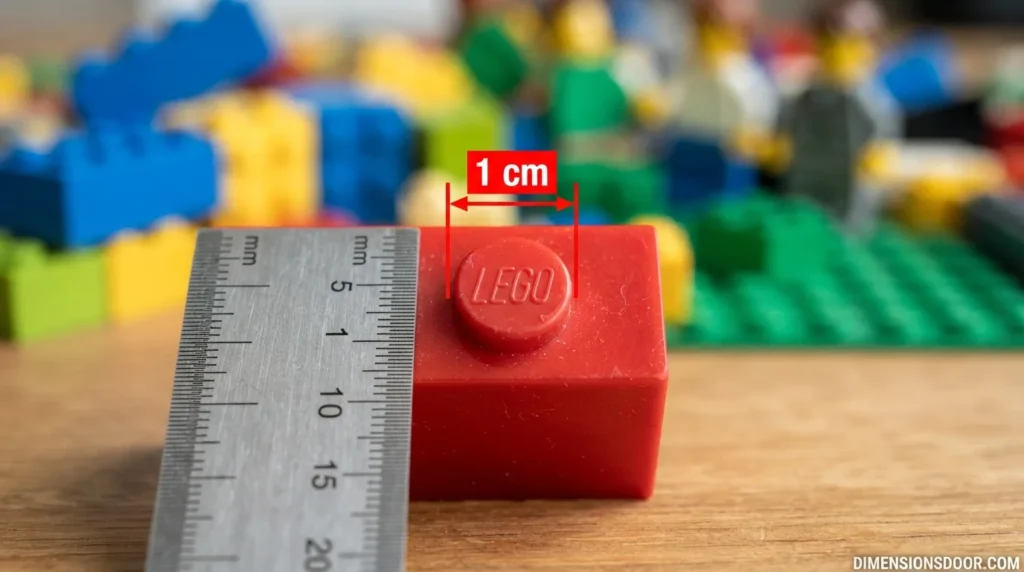
The average oat cereal ring measures close to 1 cm across. Cereal size can vary slightly by batch, but Cheerios are known for a fairly consistent diameter, which makes them a repeatable, low-cost way to visualize the measurement.
The tip of your index finger
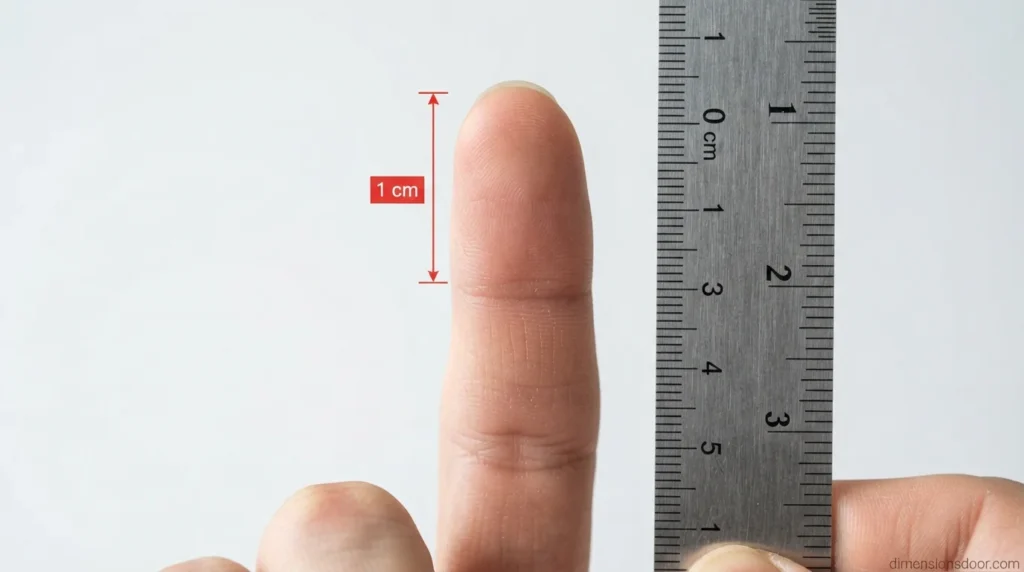
The distance from your fingertip to the first knuckle crease often lands close to 1 cm on smaller hands. This varies more than most items on this list since hand size differs widely between adults and children.
The diameter of a novelty pencil
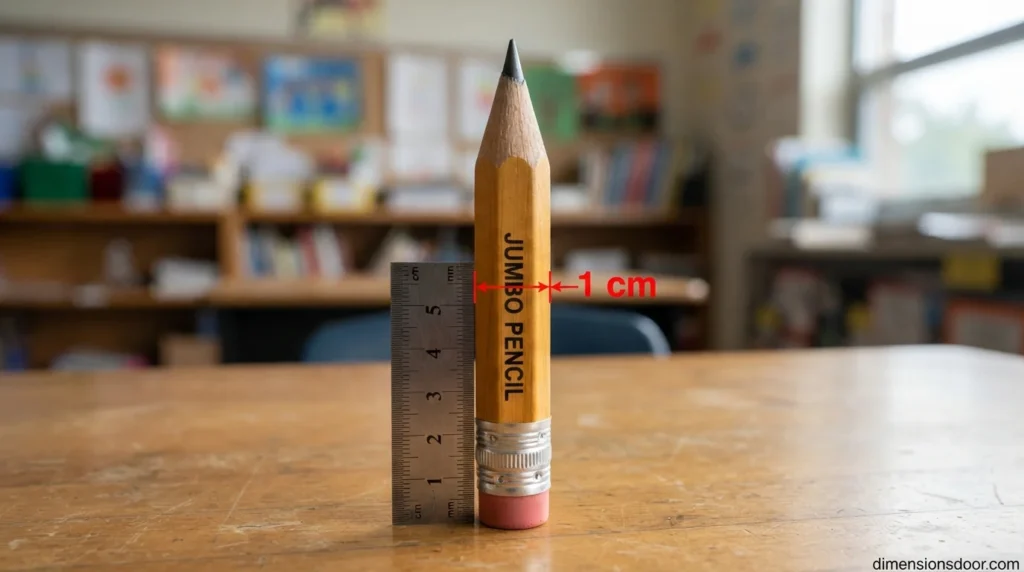
While a standard pencil measures 7 to 8 mm thick, thicker novelty or jumbo pencils, often sold for young children learning to write, reach close to 1 cm in diameter. This makes them a useful comparison if a standard pencil feels too thin.
A shirt button
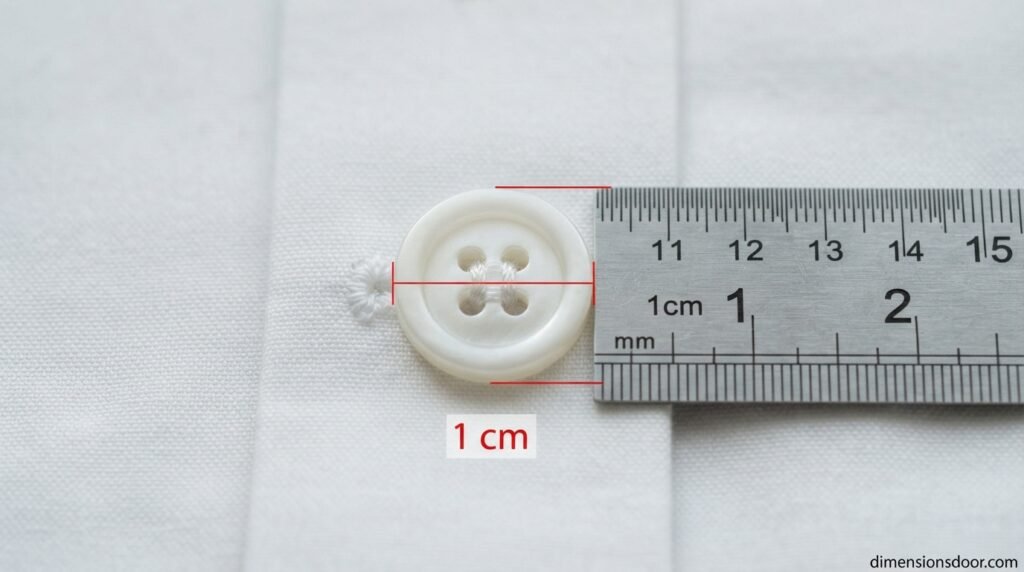
Small to medium shirt buttons, the kind found on dress shirts and blouses, typically measure close to 1 cm across. Larger coat buttons run bigger, so this reference works best with everyday shirt buttons rather than jacket buttons.
The height of a USB-A port opening
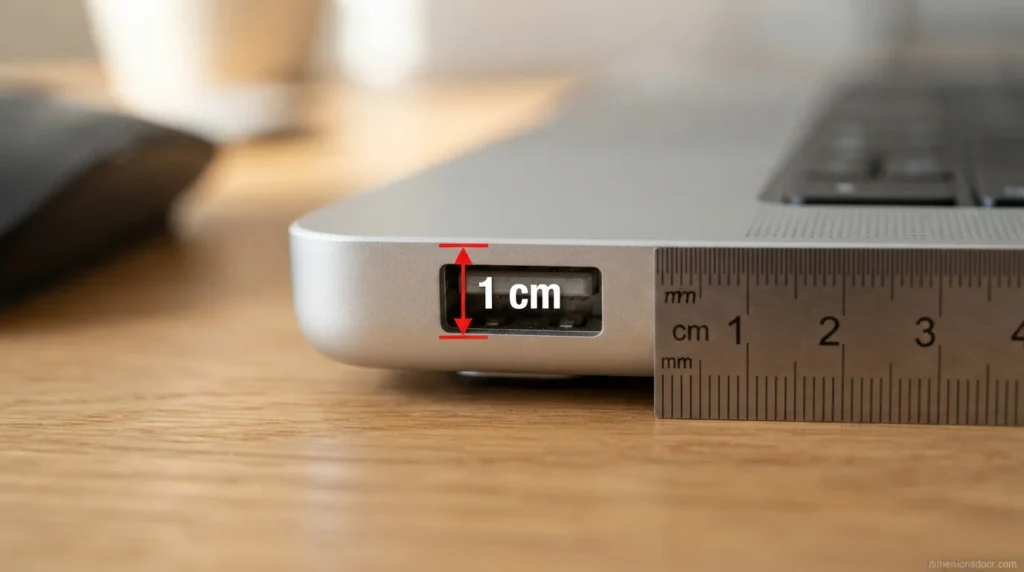
The rectangular opening on a USB-A port, the kind found on laptops and older phone chargers, measures close to 1 cm in height. Since USB-A is a standardized connector, this measurement stays the same across nearly every device that uses it.
A sugar cube
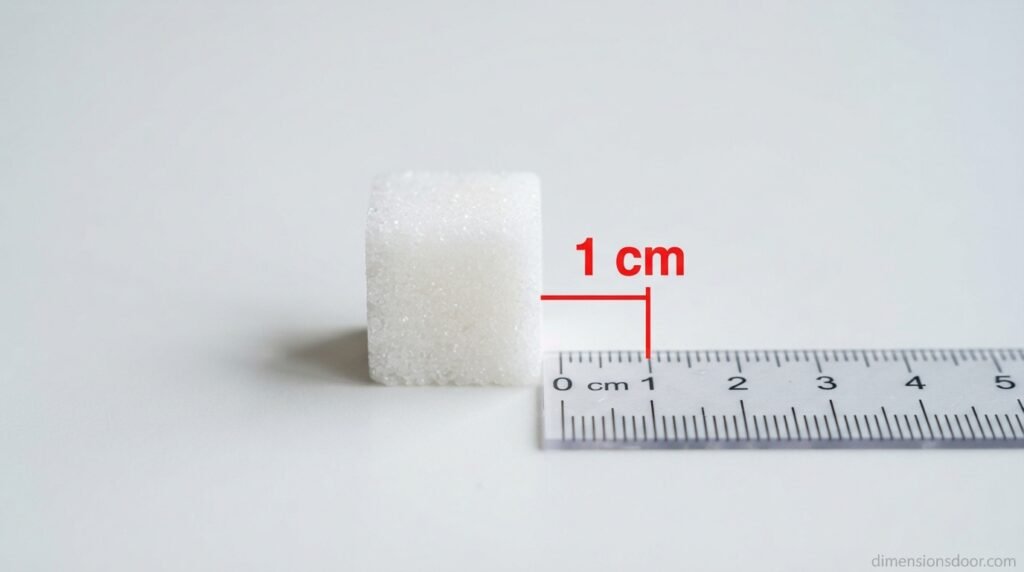
A single side of a standard sugar cube measures roughly 1 cm. Sugar cubes are molded to a fixed size for consistent packaging, so this reference tends to hold up well across different brands.
Use our free Length Measurement Tool to instantly convert and compare centimeters, inches, millimeters, feet, and other length units with precision.
How to Measure 1 cm Without a Ruler
You don’t always have a ruler nearby, but you can still estimate a centimeter with items you already carry.
Use your fingernail. As mentioned above, the width of an adult pinky fingernail is close to 1 cm. It’s not lab-precise, but it works for quick estimates.
Use a credit card. A standard credit card measures 8.56 cm long. Divide the card into eight rough sections, and each one lands close to 1 cm.
Use a coin. A US penny is about 1.9 cm across. Half of it is close to 1 cm.
Use your phone. Most smartphones today include a built-in measuring tool. iPhones have the Measure app pre-installed, and many Android phones include a similar feature through the camera app, sometimes called Google Measure. These use augmented reality (AR) to scan objects and return a reading in centimeters or inches, often within a few millimeters of accuracy according to Apple’s own product documentation.
Use an on-screen ruler. Several websites and apps display a ruler calibrated to your device’s actual screen size, which works as a backup if your phone doesn’t have a measuring app installed.
1 cm vs Inches: Quick Reference
The metric system and the US customary system rarely line up in round numbers, so a quick reference table helps.
| Centimeters | Inches (decimal) |
|---|---|
| 1 cm | 0.39 in |
| 2 cm | 0.79 in |
| 5 cm | 1.97 in |
| 10 cm | 3.94 in |
The formula behind this: divide centimeters by 2.54 to get inches, since 1 inch equals exactly 2.54 cm by international agreement, a standard set by the International Bureau of Weights and Measures.
FAQs
What is 1 cm on a finger?
On most adult hands, 1 cm lines up closely with the width of the pinky fingernail or the top segment of the index finger, from the tip to the first knuckle. It’s a rough guide, not an exact one, since hand size varies from person to person.
What is an example of a 1 cm?
A pea, a Cheerio, a shirt button, and the width of a pencil eraser are all everyday examples that measure close to 1 cm.
How does 1 cm look like?
It looks small — about a third of an inch, or roughly the width of a standard staple laid flat. Think of the smallest section on a metric ruler between two bold lines.
How long is 1 cm in actual size?
In actual size, 1 cm equals 10 millimeters, or about 0.3937 inches. It’s shorter than a US penny’s diameter and about half the width of a standard AA battery.
Is there a ruler on my phone?
Yes. iPhones include the Measure app by default, and most Android phones offer a similar AR-based measuring tool, either built in or available as a free download from the app store.
How can I measure 1 cm?
Use a ruler or tape measure for the most accurate result. Without one, a phone’s measuring app, a credit card divided into eighths, or a fingernail width all give a close estimate.
Conclusion
A centimeter is easier to picture once it’s tied to something you can hold — a pea, a button, a fingernail. The next time you come across a measurement in centimeters, you won’t need to reach for a calculator. You’ll already know what it looks like.

William Ahad is the founder and lead writer at DimensionsDoor, where he researches and publishes verified measurement guides covering doors, furniture, appliances, and everyday objects. With a background in home improvement and product research, William has spent years cross-checking manufacturer specifications, industry standards, and real-world listings to help readers get accurate dimensions before they buy, build, or install anything.