1 meter equals 3.28 feet, or 39.37 inches. That’s the direct answer. But if you grew up in the US, that number probably still feels foreign — your brain measures the world in feet and inches, not meters.
This guide fixes that gap. You’ll see exactly how long 1 meter is, what it looks like next to objects you already know, and how to estimate one without ever picking up a ruler.
Table of Contents
What Is 1 Meter? (Definition & Quick Answer)
A meter is the base unit of length in the metric system, the measurement standard used by nearly every country except the United States, Liberia, and Myanmar. Scientists define it with striking precision: the distance light travels through a vacuum in 1/299,792,458 of a second.
That definition sounds technical, but the everyday version is simple.
Quick answer: 1 meter = 3.28084 feet = 39.37 inches = 100 centimeters = 1,000 millimeters.
The meter’s definition has evolved over time. Back in 1793, French scientists set it as one ten-millionth of the distance from the North Pole to the equator, measured along a meridian running through Paris. Today’s light-based definition is far more precise, but the actual length has barely moved in over 200 years.
How Long Is 1 Meter in Feet, Inches, and Yards
This is where most of the confusion starts, so let’s settle it.
A meter runs slightly longer than 3 feet — closer to 3 feet and 3.4 inches. People round it down to “about 3 feet” for quick mental math, but it’s not a perfect match.
Here’s the full conversion breakdown:
| Unit | Equivalent to 1 Meter |
|---|---|
| Feet | 3.28084 ft |
| Inches | 39.37 in |
| Yards | 1.09361 yd |
| Centimeters | 100 cm |
| Millimeters | 1,000 mm |
A yard measures 36 inches. A meter measures 39.37 inches. That’s a gap of 3.37 inches — roughly the width of a smartphone. This small difference is exactly why the two units get mixed up so often, even though they aren’t interchangeable.
What Does 1 Meter Look Like? A Visual Guide
Numbers on a page rarely stick. Your body does.
For most adults, it’s close to the distance from the floor to your belly button, or the span of your arms stretched about halfway open. It also matches roughly one relaxed walking stride — not a giant step, just a normal pace.
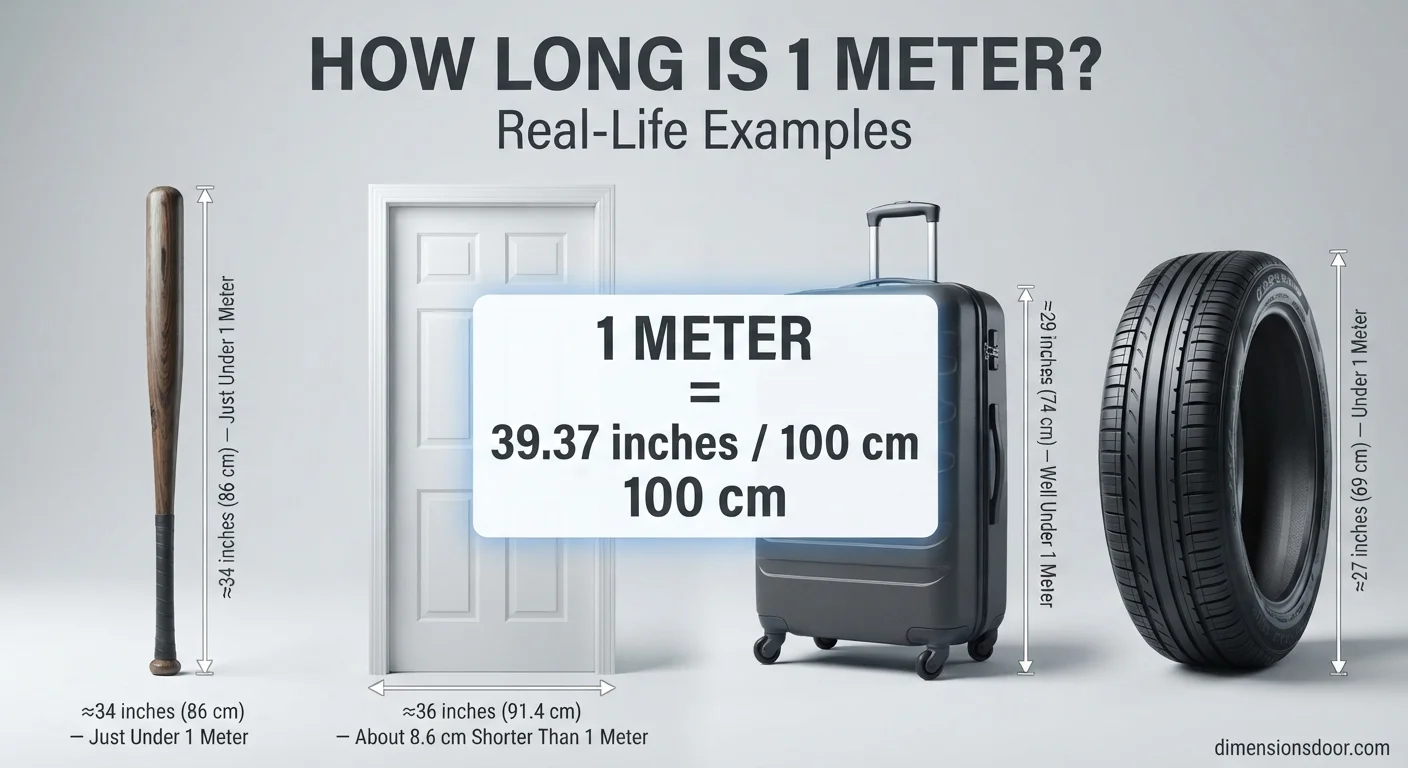
Here’s a fast mental trick: stand next to a standard interior door. Most US doors measure 36 inches wide. A meter beats that width by just over 3 inches. Now picture a yardstick with a few extra inches tacked onto the end — that’s your meter.
For children, this comparison lands even harder. A typical 5-year-old stands close to 1 meter tall. If you’ve ever marked a child’s height on a wall, you’ve already seen a meter without realizing it.
15 Real-Life Examples of Things That Are 1 Meter Long
Objects make measurement stick better than any formula ever could. Below are 15 common things that sit right around 1 meter in length, along with why each one lands where it does.
Baseball bat
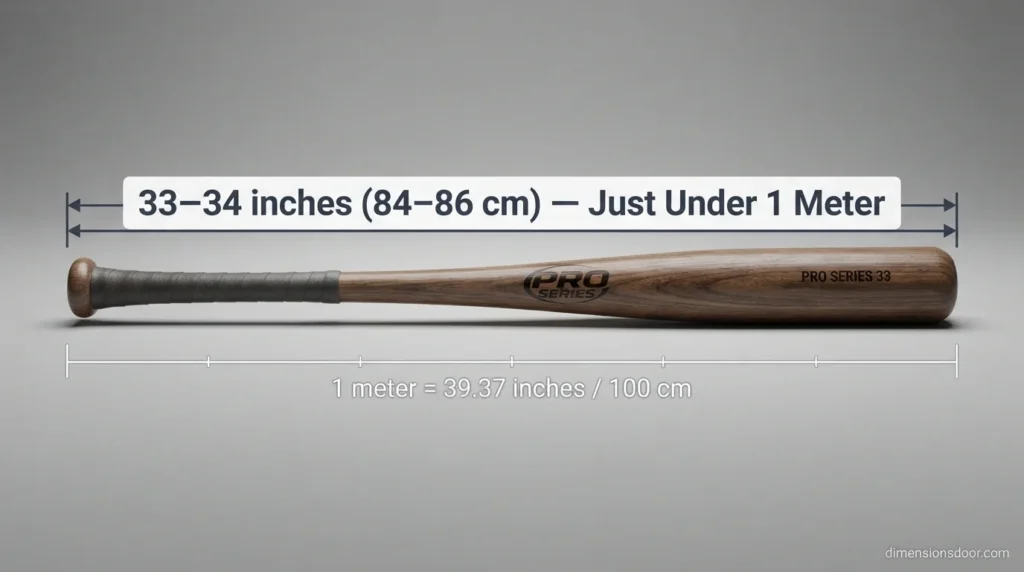
Most wooden and aluminum bats measure between 33 and 34 inches, so they fall just under a full meter. Youth bats run shorter, but adult bats used in high school and college leagues creep closest to the mark.
Golf club (driver)
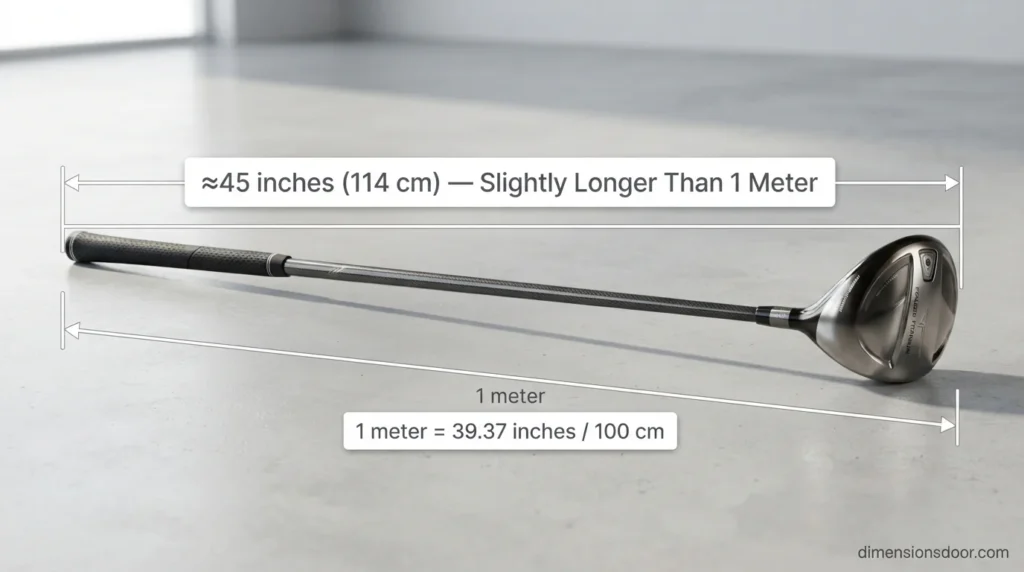
A standard driver measures around 45 inches for men and slightly shorter for women’s clubs, putting it a bit past a meter. Drivers are the longest club in a golf bag by design, since extra shaft length helps generate more swing speed.
Kitchen counter height
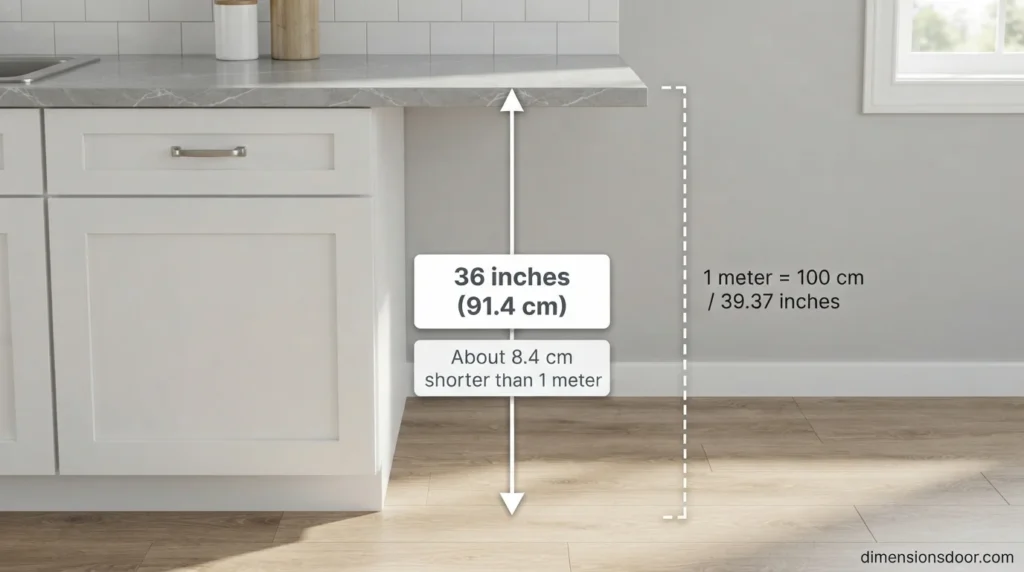
Most US kitchen counters sit at 36 inches off the floor, a height chosen so cooks of average height can prep food without bending. That’s a few inches short of a full meter, but close enough that a counter gives a solid, everyday visual reference.
Acoustic guitar
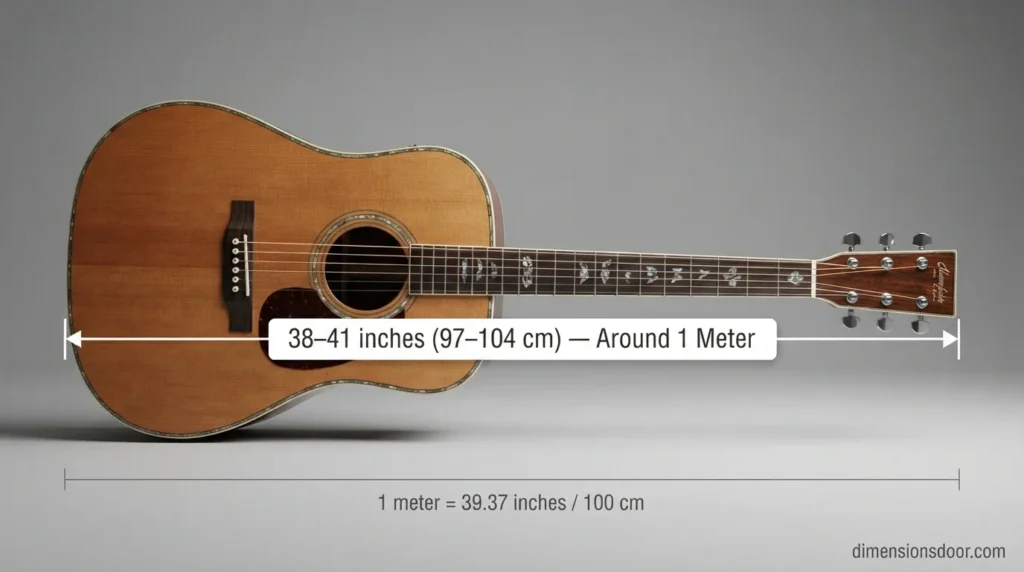
A full-size acoustic guitar typically measures between 38 and 41 inches from headstock to base, landing it right around a meter. This length isn’t arbitrary — it’s tied to string tension and the physics of sound produced by the guitar’s body and neck.
Interior door width
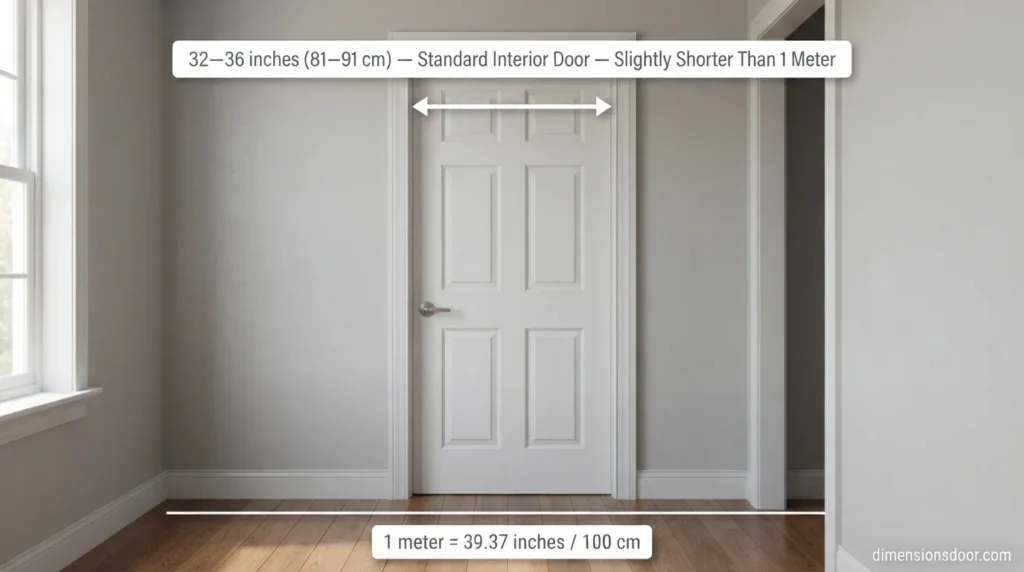
Standard US interior doors measure 32 to 36 inches wide, a range set by building codes for comfortable passage and furniture moving. Stand two of these doors’ widths side by side, and you’ll roughly cover two meters.
Dining chair height
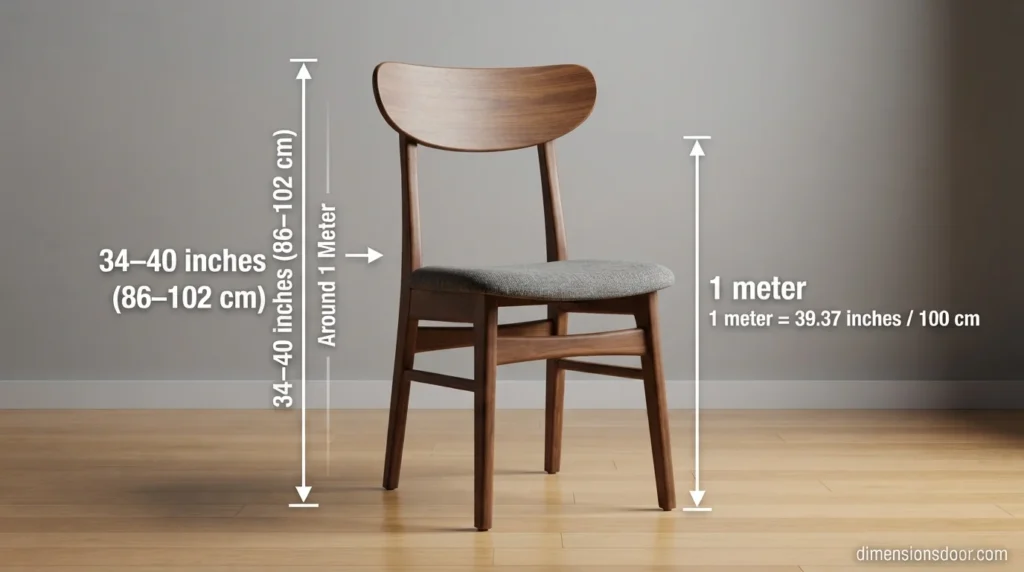
Most dining chairs measure 34 to 40 inches from floor to the top of the backrest, a range built around comfortable seated posture at standard table heights. This makes a chair back a surprisingly good stand-in for a meter stick.
Broom or mop handle
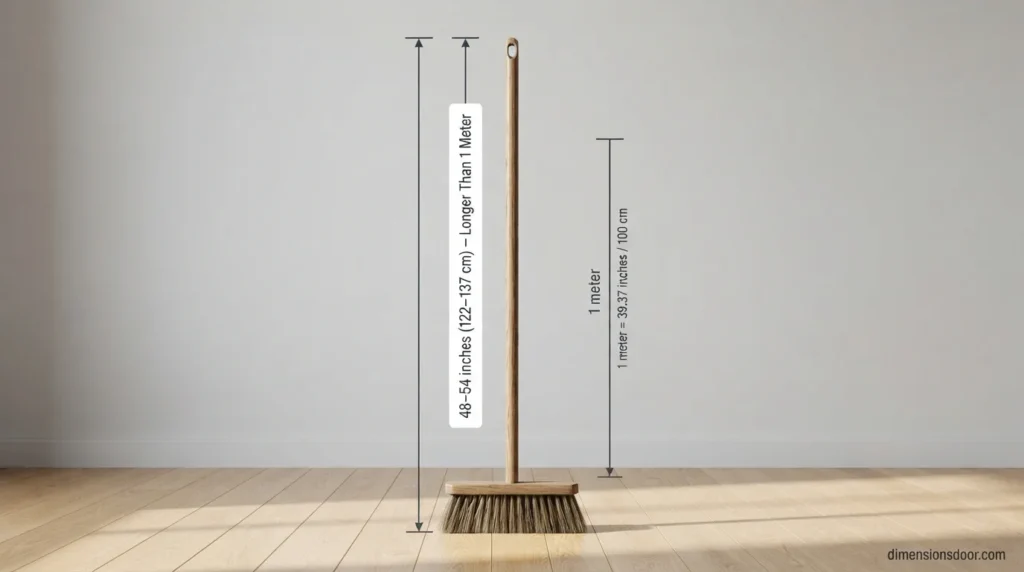
Handles typically run 48 to 54 inches, a length designed so users can clean floors without excessive bending. That puts a broom noticeably past a meter, making it a useful “slightly more than 1 meter” reference.
Toddler height (ages 3–4)
Children in this age range commonly measure 37 to 40 inches tall, according to standard US pediatric growth charts. This places an average toddler within an inch or two of a full meter — one of the closest natural matches on this list.
Skateboard length
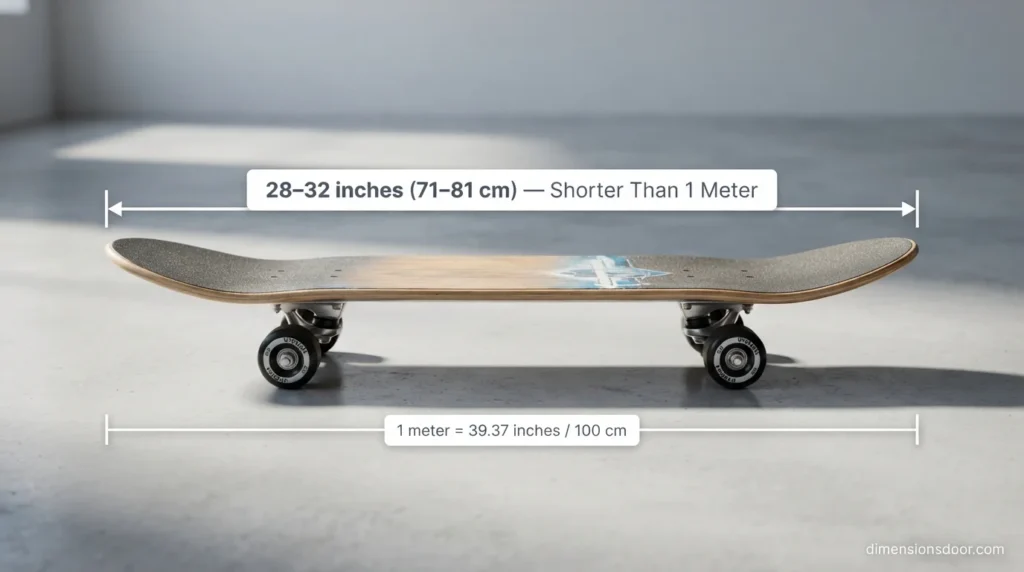
Most skateboard decks measure 28 to 32 inches long, shorter than a meter by a noticeable margin. Skaters choose deck length based on riding style, with longer boards favored for cruising and shorter ones for tricks.
Compact desk width
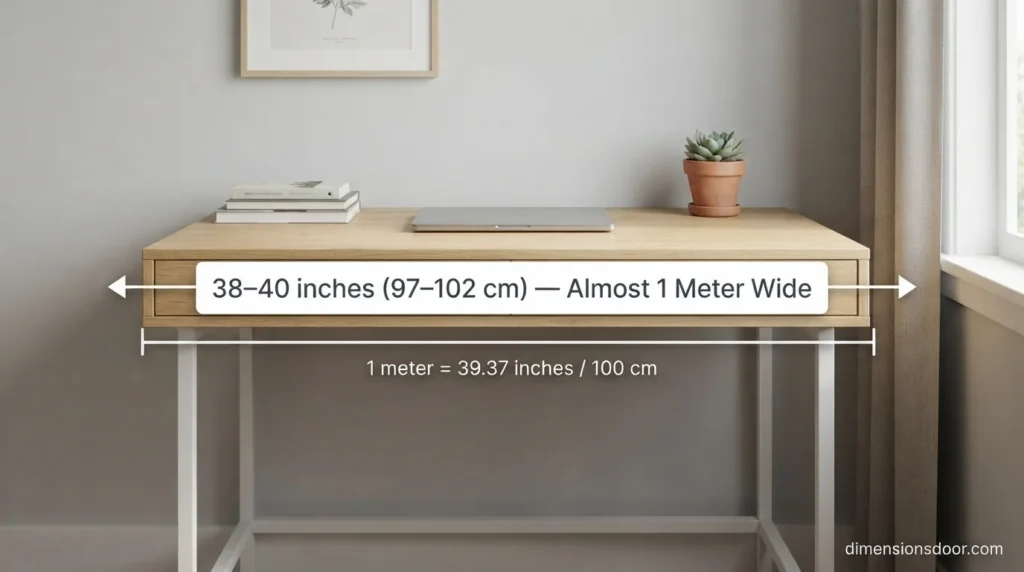
Small desks built for home offices or dorm rooms typically measure 38 to 40 inches wide, just shy of a full meter. This size balances enough surface area for a laptop and books without overwhelming a small room.
Large suitcase height
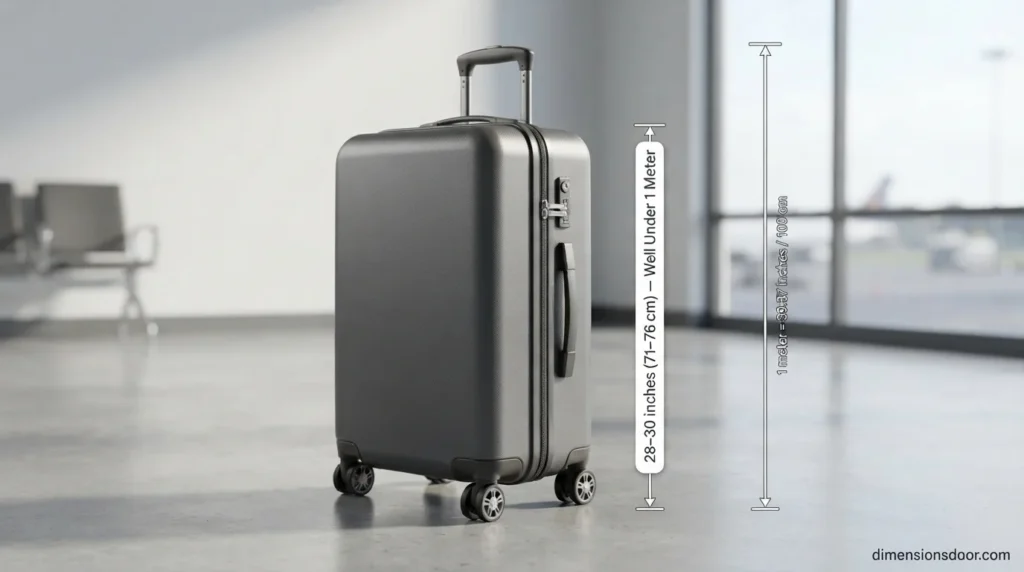
Standing upright, most large checked suitcases measure 28 to 30 inches tall, well under a meter on their own. Airlines generally cap checked luggage dimensions near 62 linear inches total, which keeps most suitcases in this shorter range.
Yardstick plus a hand’s width
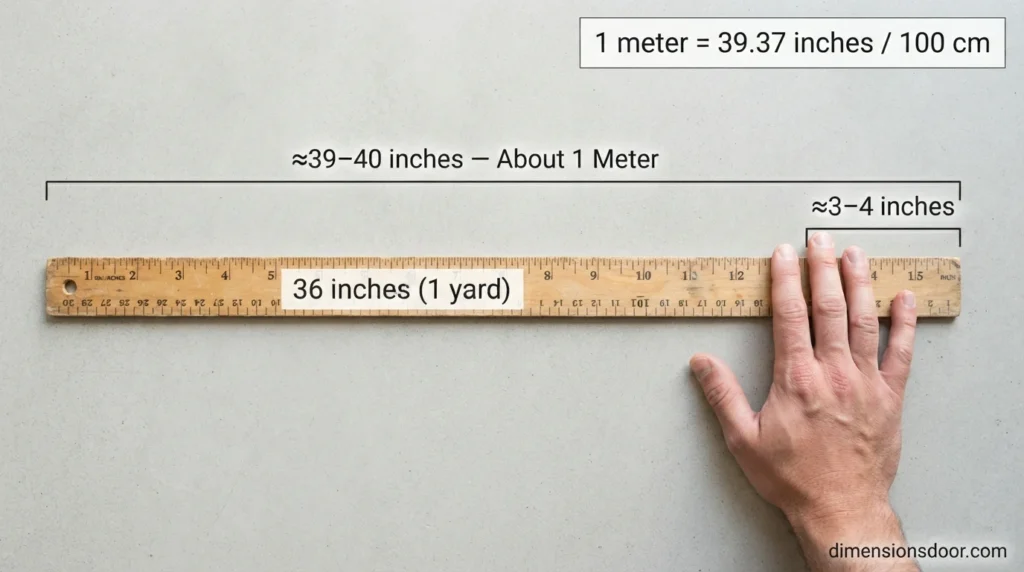
This one is a built-in cheat code. A yardstick measures exactly 36 inches. Add roughly one hand’s width — about 3 to 4 inches — and you land almost exactly on a meter.
Car tire diameter
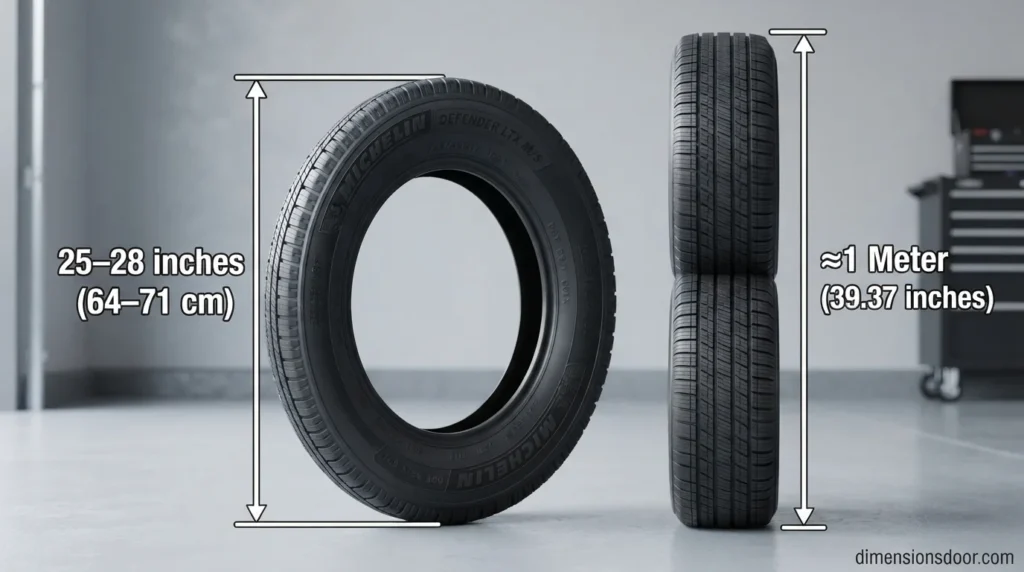
Passenger car tires typically measure 25 to 28 inches across, depending on the vehicle. Stack roughly one and a half tires end to end, and you’ve covered close to a meter — a comparison that works well for anyone picturing distance in a driveway or garage.
Crib length
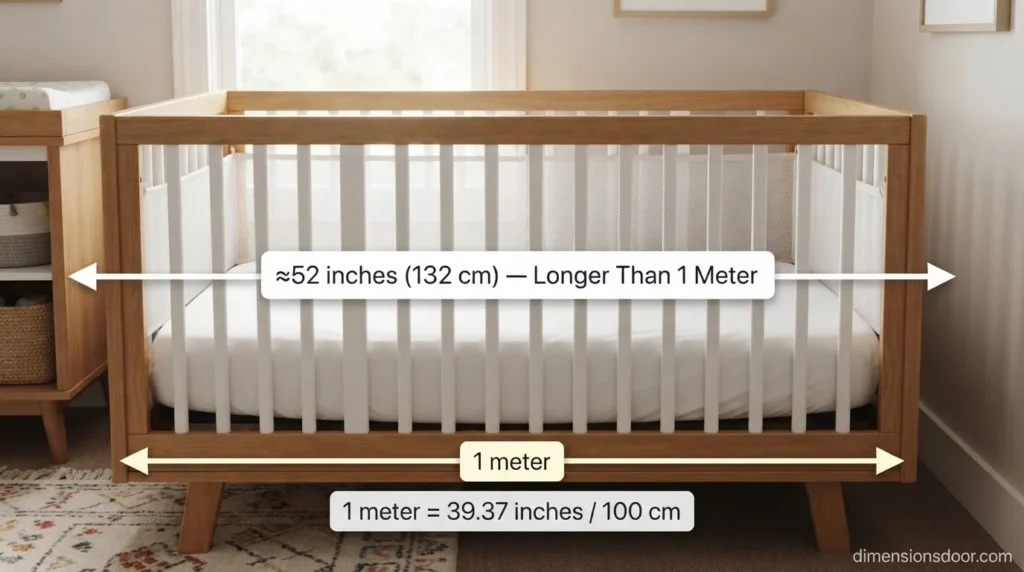
Standard US cribs measure about 52 inches long, based on federal crib safety regulations. That puts a crib well past a meter, useful for visualizing lengths slightly longer than the unit itself.
Standing floor mirror (compact size)
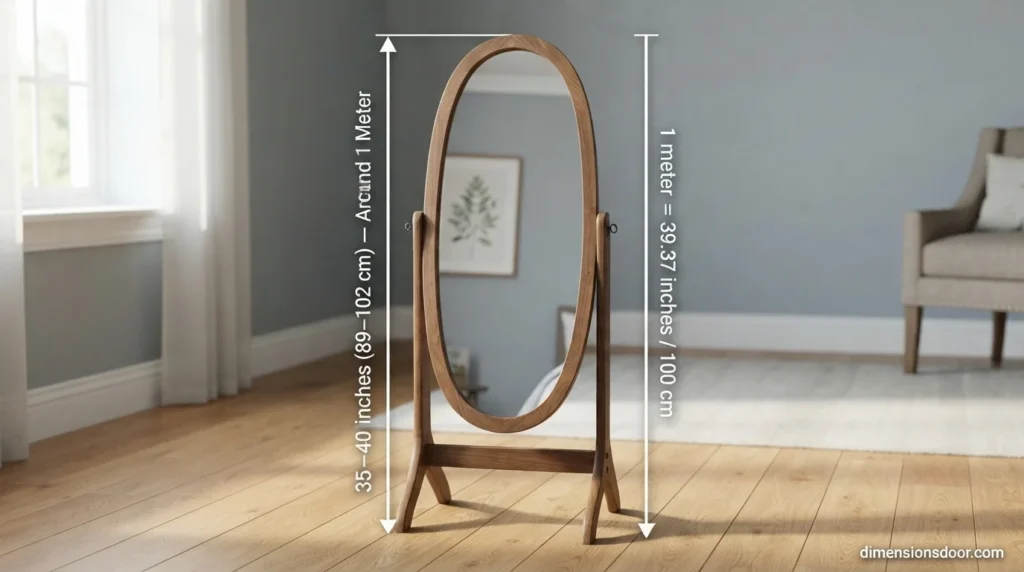
Smaller floor mirrors, common in bedrooms and dressing areas, typically measure 35 to 40 inches tall. This range sits close enough to a meter that a compact mirror doubles as a rough, everyday measuring stick.
None of these objects match a meter with mathematical precision. That’s actually the point — real-world items rarely land on round numbers, but each one gives your brain a physical anchor instead of an abstract figure to memorize.
Must visit: How Long Is 100 Feet? 17 Real-Life Examples, Comparisons & Visual Guide
How to Measure 1 Meter Without a Ruler
You don’t need a metric ruler sitting in a drawer to estimate a meter with reasonable accuracy. A few low-tech methods work surprisingly well.
Use your arm span
For most adults, the distance from the center of the chest to the fingertips, arm fully extended, lands close to half a meter. Double that distance, and you’re near a full meter.
Count hand spans
Stretch a hand from thumb tip to pinky tip. That distance usually measures 8 to 9 inches. Line up four to five hand spans, and you’ve roughly covered a meter.
Take one relaxed step
An average adult stride, walking normally rather than lunging, lands close to a meter. This trick works well outdoors when you need a rough distance estimate and have nothing else on hand.
Compare to a dollar bill
A US dollar bill measures 6.14 inches long. Line up about six and a half bills end to end, and you’ve got approximately one meter — an odd but genuinely handy office-desk trick.
None of these methods replace a tape measure for precise work. But for quick, everyday estimates, they get remarkably close.
FAQs About How Long 1 Meter Is
How long is 1 meter visually?
Picture a yardstick with about 3 extra inches added on. It’s also close to the height of a kitchen counter or the width of two standard doors placed side by side.
How long is 1 meter in feet?
1 meter equals 3.28084 feet, or 3 feet and roughly 3.4 inches.
Is 1 meter 3 feet?
Not quite. A meter runs a little longer than 3 feet — about 3.28 feet total. Rounding to “3 feet” works for casual estimates but isn’t exact.
How long is 1 meter in length?
1 meter equals 39.37 inches, 100 centimeters, or 1,000 millimeters.
What does 1 m look like?
It looks like the height of a kitchen counter, the length of a guitar, or roughly the distance from the floor to an adult’s waist.
How long is 1 meter in real life?
Think of a broom handle, a baseball bat and a half, or the height of an average 5-year-old child. All three land close to 1 meter.
Conclusion
A meter stops feeling like an abstract metric-system number once you connect it to things you already know — a doorway, a guitar, a toddler’s height, or a single walking stride. Next time you see “meters” on a label or a map, you’ll have a real picture in mind instead of just a conversion to calculate.

William Ahad is the founder and lead writer at DimensionsDoor, where he researches and publishes verified measurement guides covering doors, furniture, appliances, and everyday objects. With a background in home improvement and product research, William has spent years cross-checking manufacturer specifications, industry standards, and real-world listings to help readers get accurate dimensions before they buy, build, or install anything.