You hear “100 meters” all the time — in the Olympics, on road signs, in safety warnings. But most people can’t actually picture it. Is it short? Long? Somewhere in between?
This guide breaks 100 meters down into feet, steps, and everyday objects you already know. By the end, you’ll be able to spot 100 meters anywhere, no measuring tape required.
Table of Contents
How Long Is 100 Meters in Feet, Yards, and Miles?
100 meters equals 328.1 feet, 109.4 yards, 0.1 kilometers, and 0.0621 miles. It also equals 3,937 inches, if you want to get that specific.
Unit conversions:
Feet: 328.1 ft
Yards: 109.4 yd
Kilometers: 0.1 km
Centimeters: 10,000 cm
Inches: 3,937 in
Miles: 0.0621 mi
Here’s a common mix-up: is 100 meters equal to 1 km? No. It’s only one-tenth of a kilometer. You’d need ten separate 100-meter stretches, laid end to end, to make one full kilometer. People confuse the two because both numbers use “100” and “meters” close together in casual speech, but they’re not interchangeable.
Another quick myth-check: 100 meters is not the same as 100 yards. A meter is slightly longer than a yard, so 100 meters actually stretches about 9.4 yards further than 100 yards does.
How Long Is 100 Meters to Walk?
Most adults cover 100 meters in about 60 to 90 seconds at a normal walking pace. That’s roughly the time it takes to boil an egg partway, or wait for a short elevator ride.
In terms of steps, it usually takes 120 to 140 average strides to cross 100 meters, depending on your height and stride length. Taller walkers with longer legs will land closer to 110–120 steps, while shorter strides push that number toward 150.
Walking pace breakdown:
Slow, relaxed stroll: 90–100 seconds
Average walking pace: 60–75 seconds
Brisk walk: 45–55 seconds
If you jog it instead, that time drops to around 20–25 seconds for a casual runner. Elite sprinters, by comparison, do it in under 10 seconds — more on that below.
How Long Is 100 Meters Visually? (Football Field Comparison)
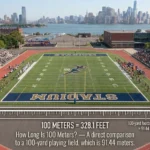
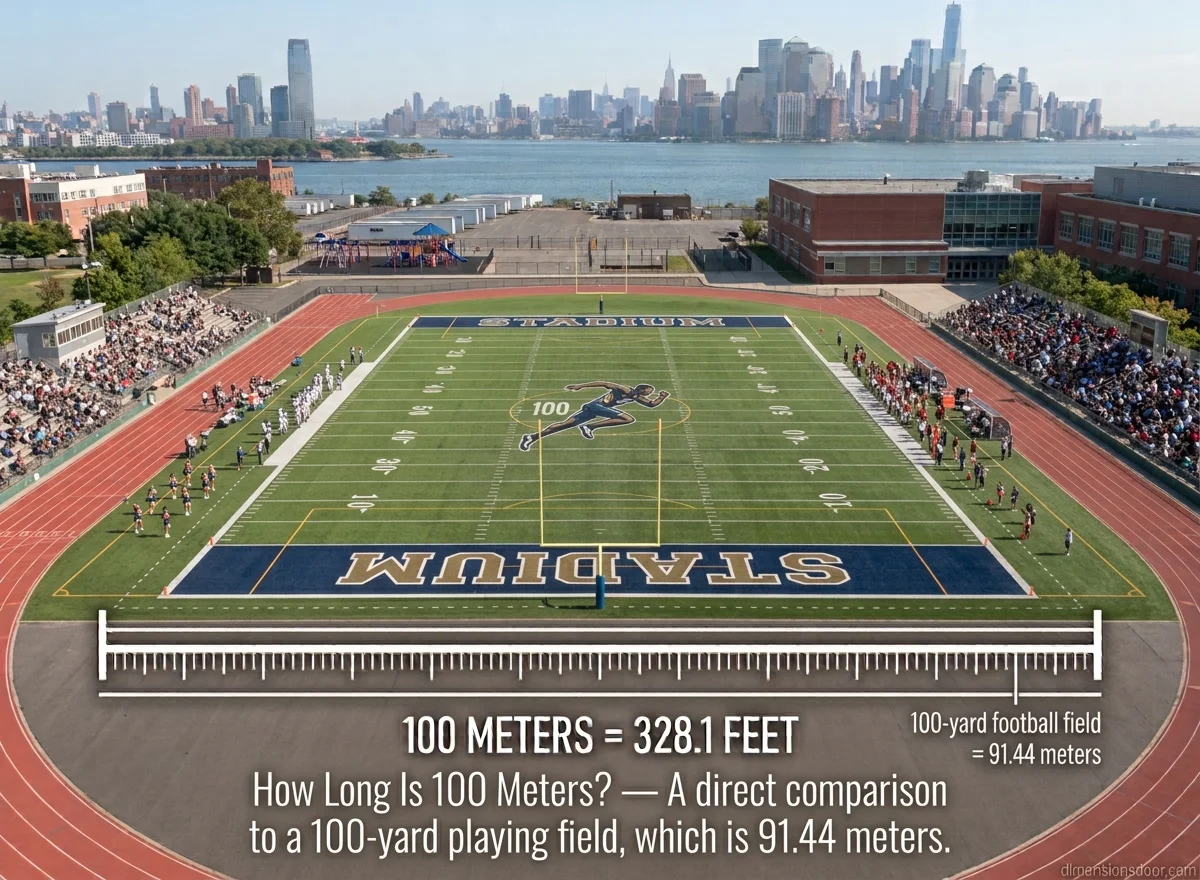
Is 100 meters as long as a football field? Almost exactly. An American football field measures 100 yards, or about 91.4 meters, between the goal lines. Add both end zones, and the full playing surface stretches very close to 100 meters total.
So if you’ve ever stood at one end zone and looked toward the other, you’ve already seen 100 meters visually. That’s the mental image to keep: goal line to goal line, plus a little extra.
A few other visual anchors:
A regulation soccer field (FIFA pitch) runs between 100 and 110 meters long, so most professional pitches sit right around this mark.
One full straightaway on an outdoor running track measures exactly 100 meters — this is why the 100-meter dash never involves a curve.
Two Olympic swimming pools placed end to end, since each pool measures 50 meters.
At that distance, a person on the other end starts to look small and their facial features blur out. You can still make out body shape and movement, but detail is gone. That’s a useful gut-check for judging the distance without a tape measure.
Our Inches to Feet Converter provides a quick and accurate way to convert measurements from inches into feet, making it easy to work with different units of length.
15 Real-Life Things That Are 100 Meters Long
A Football Field
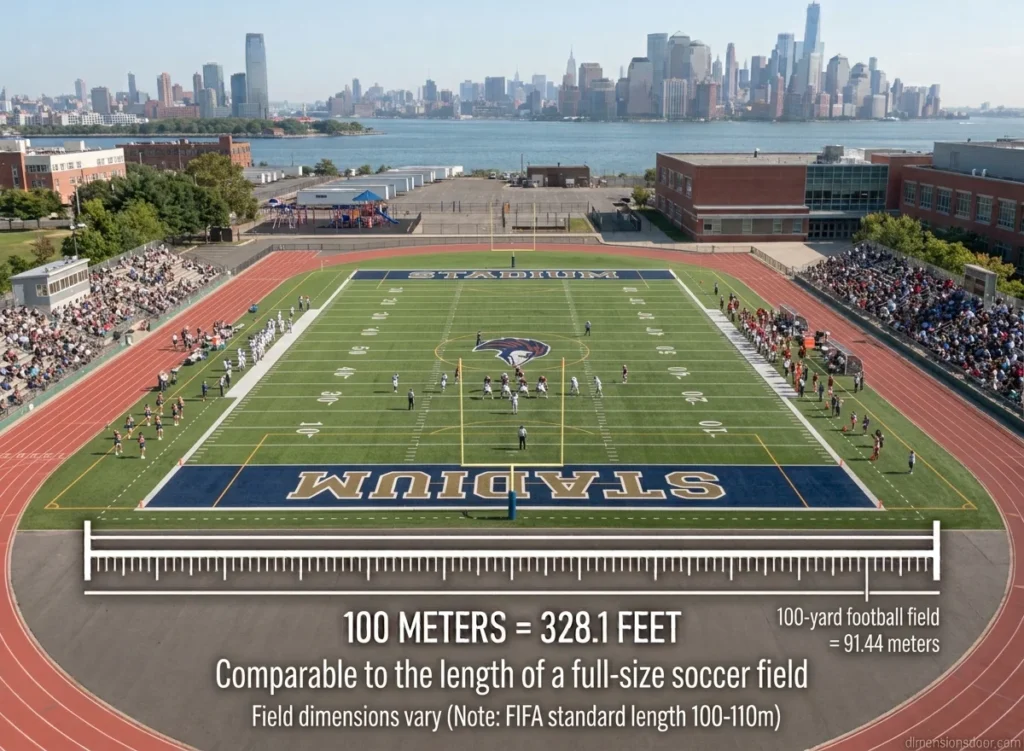
An American football field measures 100 yards, or about 91.4 meters, between the two goal lines. Once you add both end zones, the total playing surface stretches almost exactly 100 meters. This is the single most common comparison people use, mostly because nearly every American has stood on or watched a game on one.
A Soccer Field
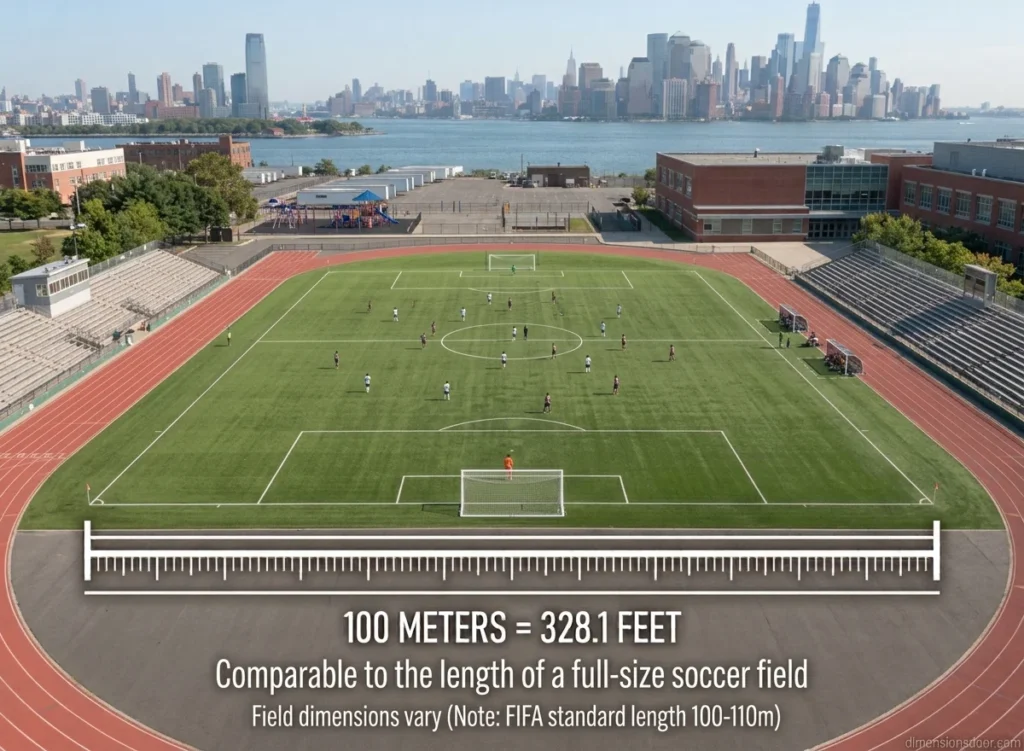
A regulation soccer pitch, under official FIFA rules, must run between 100 and 110 meters long. Most professional stadiums build their fields right at the shorter end of that range, which puts them almost exactly at 100 meters. Unlike football, the length here isn’t fixed to one number — it’s a range, but 100 meters sits right at the minimum.
Two Olympic Swimming Pools
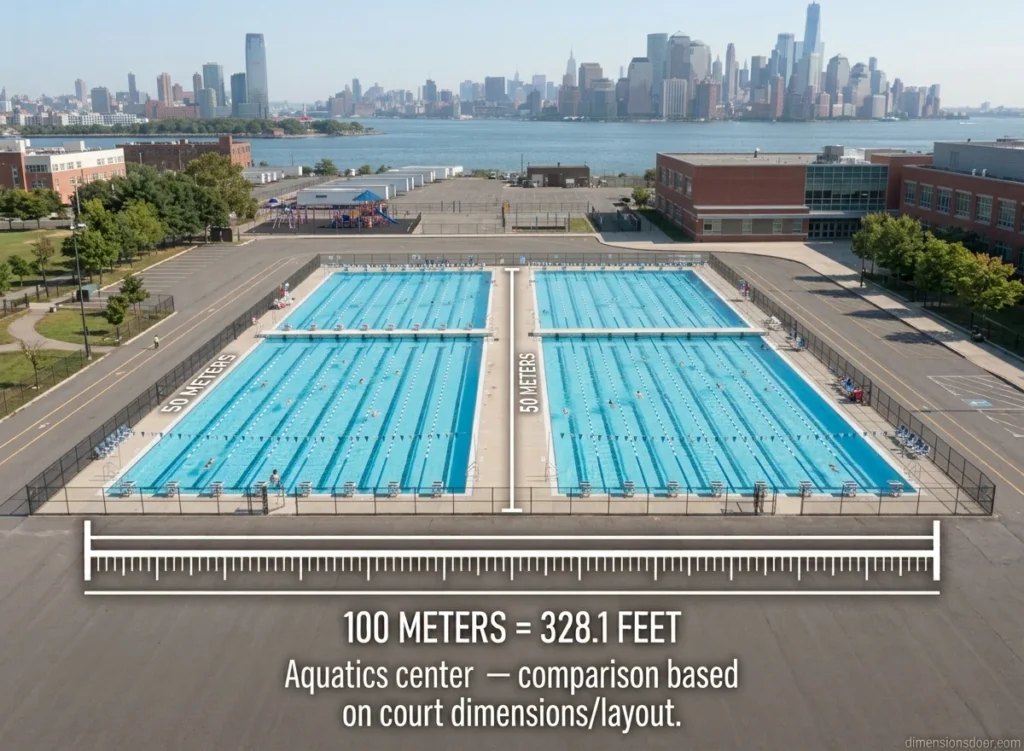
A regulation Olympic swimming pool measures exactly 50 meters long. Line up two of them end to end, and you land right at 100 meters. This is one of the easiest comparisons to do quick math with, since it’s a clean doubling rather than an odd fraction.
Twenty-Seven Tennis Courts
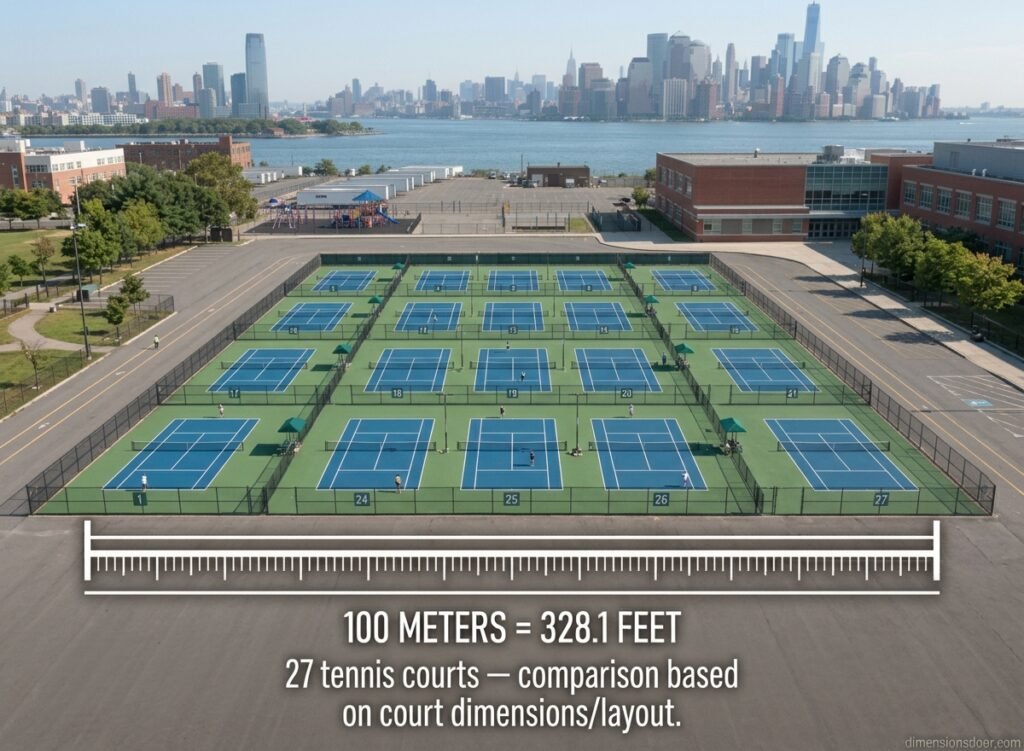
A single doubles tennis court measures about 23.8 meters long. Line up 27 of them end to end, and the total reaches 100 meters. It’s not a comparison most people picture instantly, but it’s useful if you’ve ever walked past a large tennis complex with multiple courts side by side.
About 7.5 School Buses
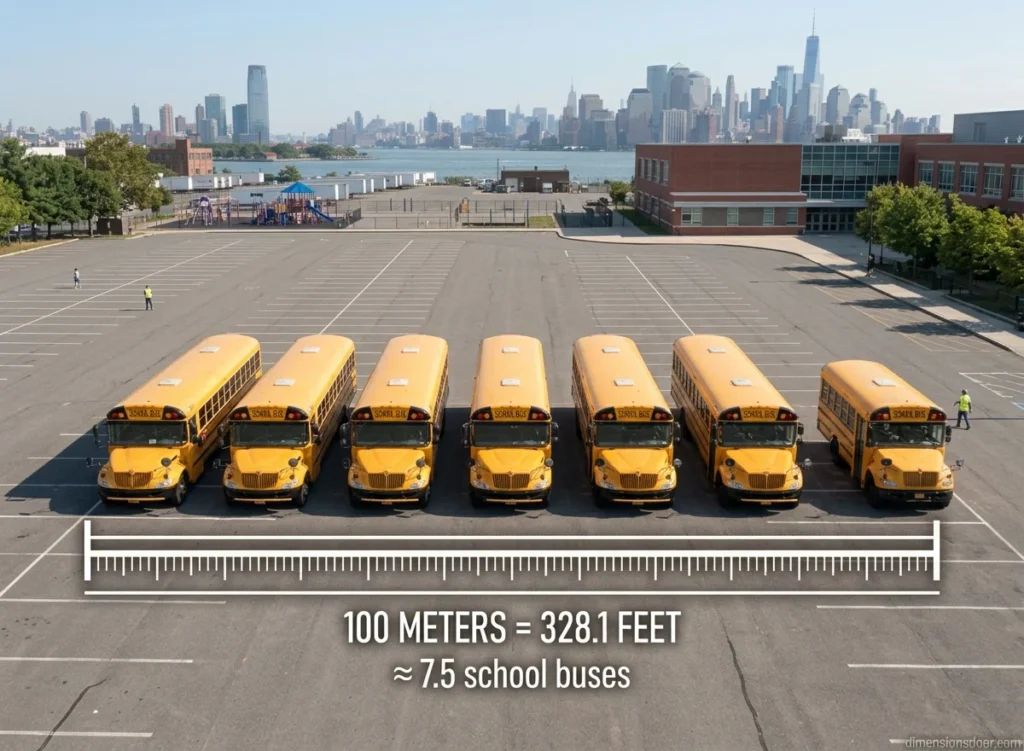
A standard school bus measures roughly 13.3 meters long. Line up about 7.5 of them bumper to bumper, and you’ve covered 100 meters. This comparison tends to stick with parents and drivers, since school buses are something most people size up regularly in daily traffic.
One and a Half Boeing 747s
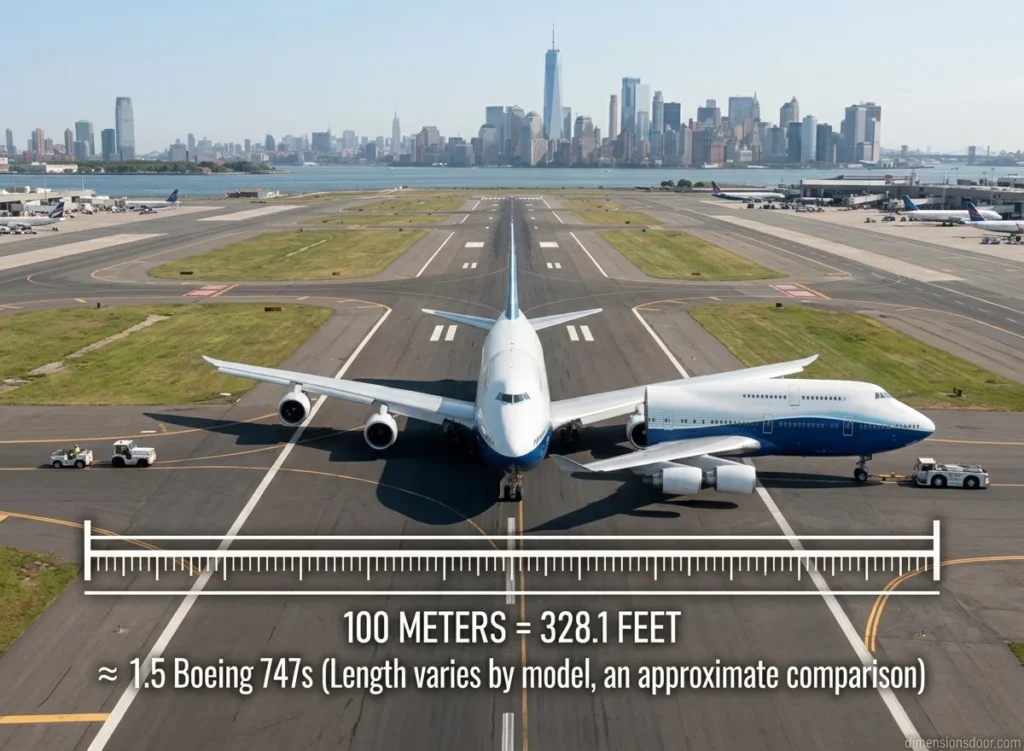
A Boeing 747, one of the largest passenger aircraft ever built, measures about 70.6 meters from nose to tail. One and a half of them, placed end to end, stretch across 100 meters. Picturing a jumbo jet and a half in a straight line gives a strong sense of just how much open space 100 meters actually covers.
About 6.7 Semi-Truck Trailers
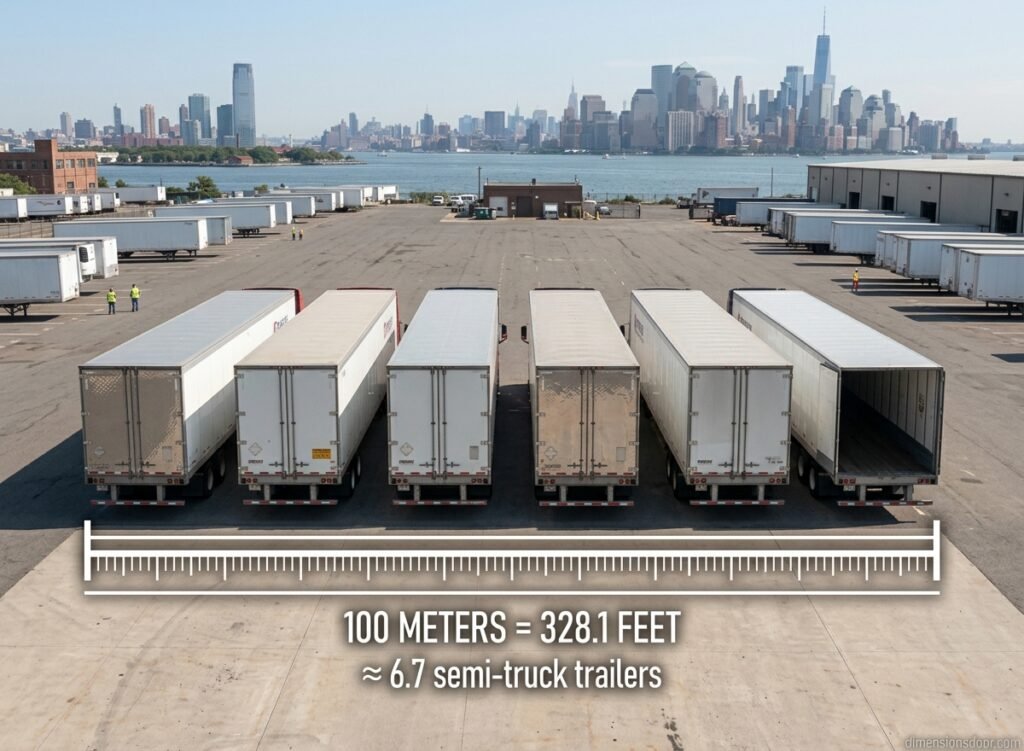
A semi-truck trailer, including the cab, runs somewhere between 14.9 and 16.15 meters long. Roughly 6.7 of them nose to tail equal 100 meters. If you’ve ever watched a long line of trucks at a rest stop, that row gives you a rough visual for the same distance.
The Statue of Liberty’s Height
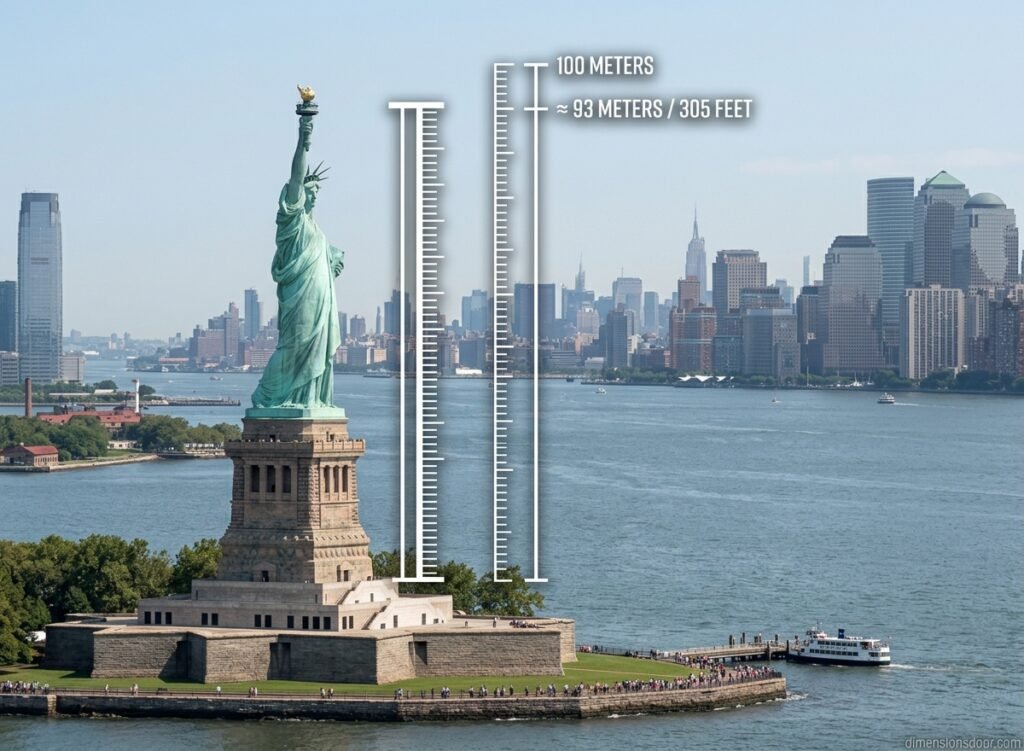
The Statue of Liberty, measured from its base to the torch, stands about 93 meters tall. That’s not quite 100 meters, but it’s close enough to use as a vertical comparison instead of a horizontal one. Picture the statue’s full height, then add just a little more, and you’re at 100 meters.
A Standard NYC City Block
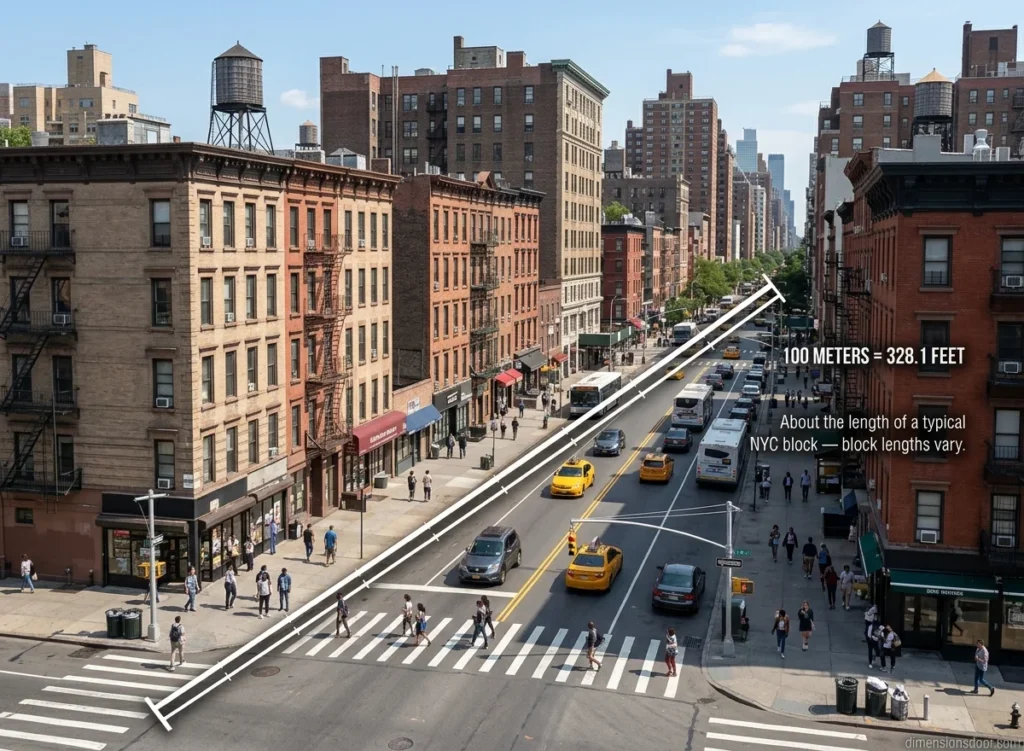
A typical New York City block running north to south measures around 80 meters. Blocks running east to west are much longer, closer to 274 meters, so the shorter north-south blocks give the nearest real-world match to 100 meters. This comparison works especially well for anyone who has walked city blocks and already has a feel for their length.
Four Blue Whales Lined Up
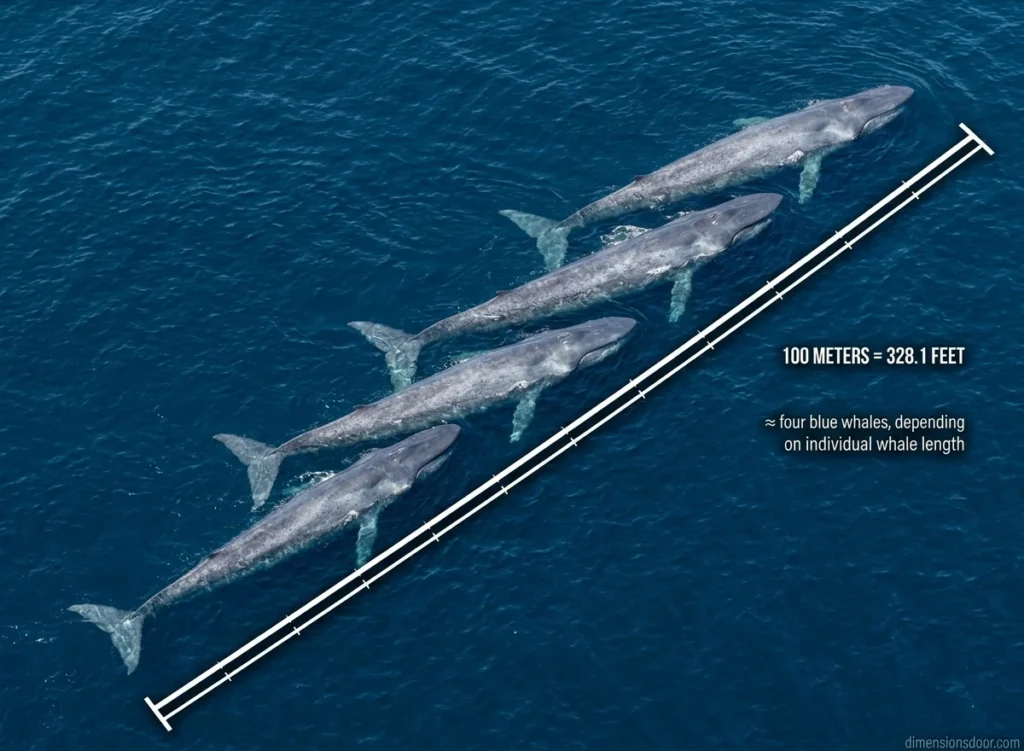
The blue whale, the largest animal on Earth, grows to about 24 to 30 meters long. Line up four of them nose to tail, and the total stretches close to 100 meters. Few animal comparisons carry this much visual weight, since a single blue whale is already massive on its own.
A Giant Redwood Tree
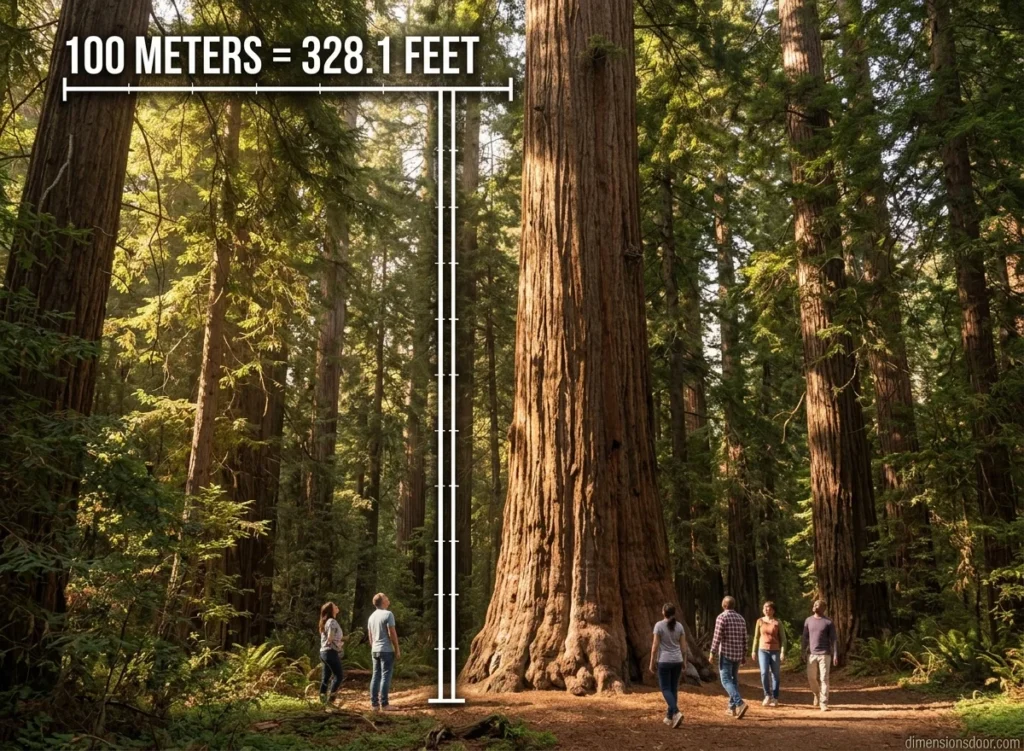
Coastal redwood trees, found mostly in California, can reach heights close to 100 meters, with the tallest confirmed specimens topping 115 meters. These trees rank among the tallest living organisms on the planet, so a single redwood can nearly match 100 meters entirely on its own, no lineup required.
About 55 to 60 Adults Lying Head to Toe
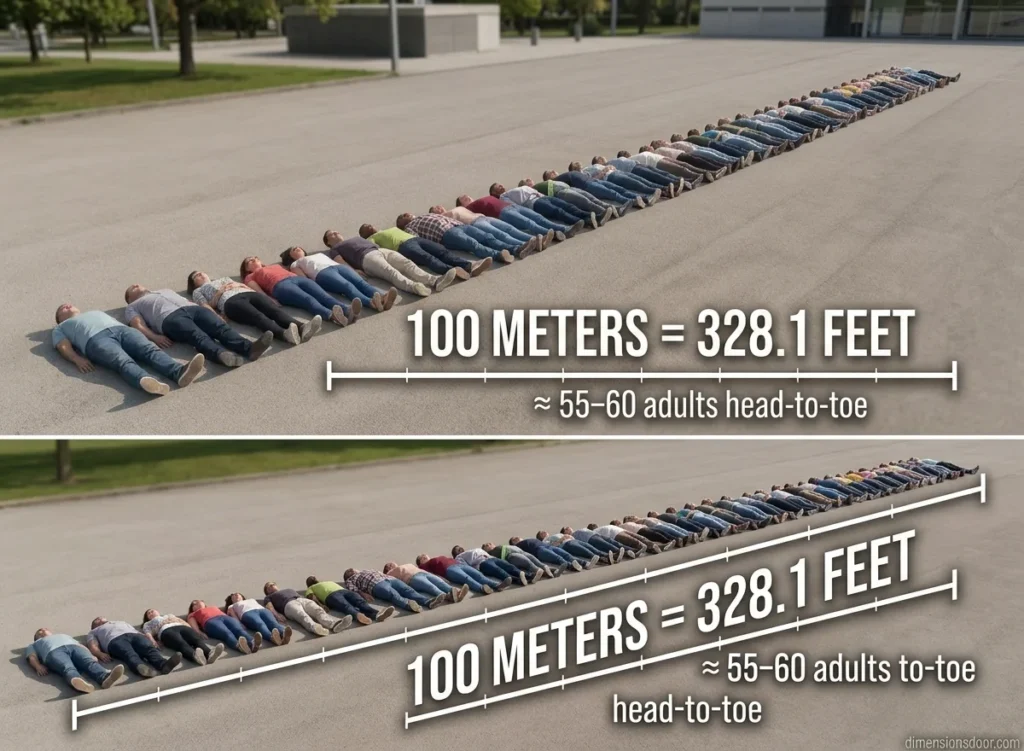
The average adult in the United States stands close to 1.7 meters tall. Lay about 55 to 60 people head to toe, one after another, and the row stretches 100 meters. It’s an odd image, but it turns an abstract number into something built entirely from human scale.
About 4.7 Bowling Lanes
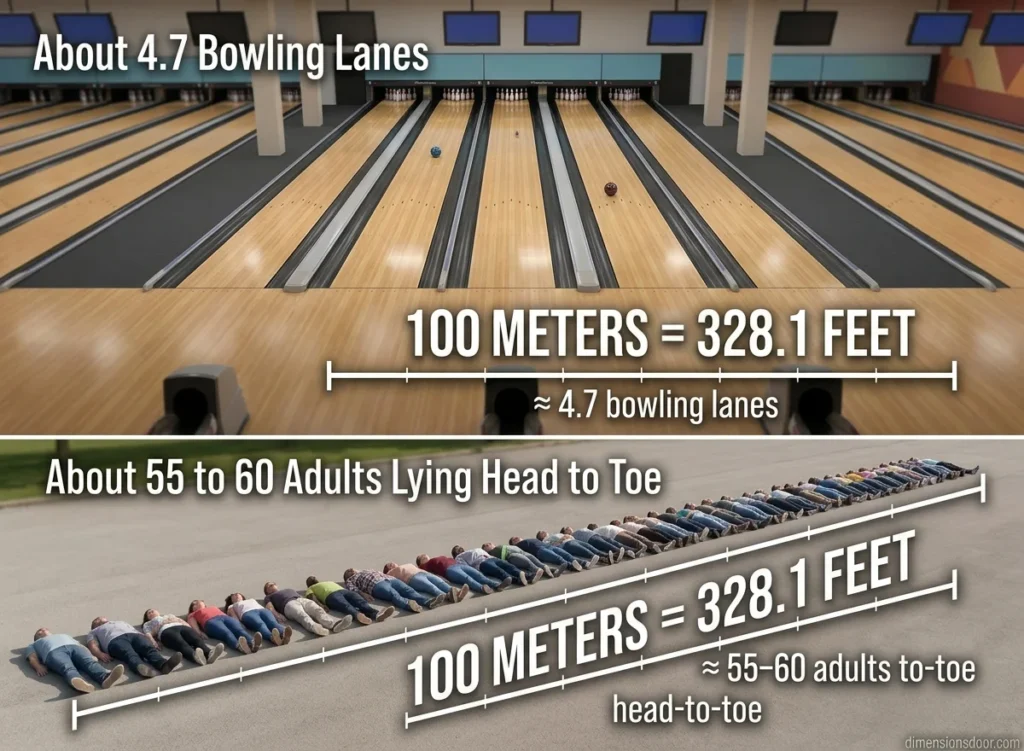
A single regulation bowling lane, measured from the foul line to the head pin, runs 21.3 meters long. Roughly 4.7 lanes placed end to end equal 100 meters. Anyone who has stood at a bowling alley and looked down the lane already has a rough sense of this comparison, just multiplied by nearly five.
A Full Running Track Straightaway
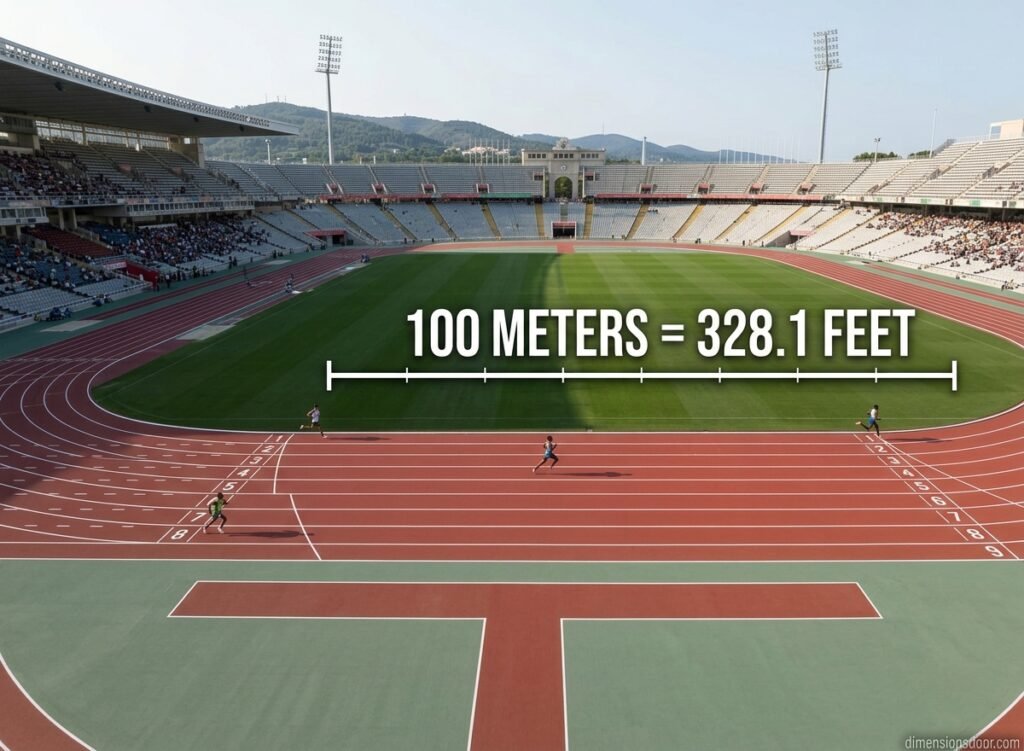
One straightaway on a standard outdoor running track measures exactly 100 meters. That’s precisely why the 100-meter dash is run entirely in a straight line, with no curve involved anywhere in the race. If you’ve ever seen a track meet, the straight section from start to finish line is a perfect real-world model of the distance.
The Recommended Whale-Watching Safety Distance
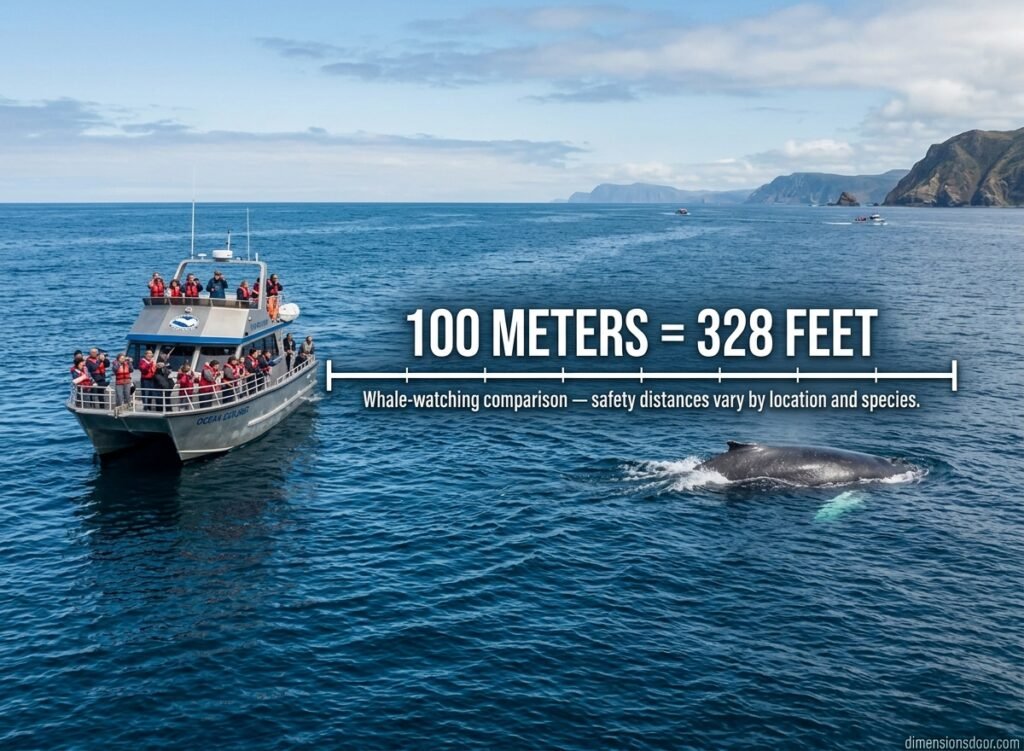
Wildlife agencies, including Canada’s Department of Fisheries and Oceans, recommend that boats stay at least 100 meters away from whales in open water. This distance is meant to reduce stress and injury risk to marine mammals while still allowing safe, respectful observation. It’s one of the few real-world examples where 100 meters isn’t just a comparison — it’s an actual enforced safety guideline.
These 15 comparisons span sports, transportation, landmarks, nature, and safety, so no matter what’s around you, there’s likely a 100-meter reference point close by.
Must Visit: How Long Is 15 Meters? 15 Real-Life Examples, Comparisons & Visual Guide
Is 100 Meters a Long Distance?
It depends entirely on what you’re measuring it against.
For a sprinter, 100 meters is short but brutal. The men’s world record stands at 9.58 seconds, set by Jamaica’s Usain Bolt at the 2009 World Championships in Berlin. The women’s record is 10.49 seconds, set by Florence Griffith-Joyner in 1988. Sprinters usually hit top speed somewhere between 50 and 60 meters into the race, then hold on as their pace naturally drops toward the finish.
For a car, 100 meters barely registers. At 40 mph, a vehicle covers that distance in about 5–6 seconds.
For a walker, it’s a short but noticeable stretch — roughly a minute of steady movement, as covered above.
For a swimmer, it’s a real challenge. Competitive 100-meter swim events require serious endurance and technique, unlike the sprint dash, which is over almost as soon as it starts.
So is 100 meters a long distance? Not for a vehicle. Moderate for walking. Short but intense for running. The honest answer changes with the activity, which is exactly why comparisons matter more than the raw number alone.
FAQs
How many football fields is 100 meters?
Just about one. An American football field’s playing area, including end zones, measures very close to 100 meters total.
How many steps is 100 meters?
Around 120 to 140 average adult steps, depending on stride length.
Is 100 meters the same as 100 yards?
No. 100 meters is about 9.4 yards longer than 100 yards, since a meter is slightly larger than a yard.
How fast is the world record for 100 meters?
9.58 seconds for men (Usain Bolt, 2009) and 10.49 seconds for women (Florence Griffith-Joyner, 1988), according to World Athletics records.
Is 100 meters far to swim?
It’s a standard competitive swimming distance that takes trained swimmers under a minute, but it demands real stamina compared to a casual dip in the pool.
Conclusion
100 meters equals 328 feet, about a minute of walking, and roughly one football field end to end. Whether you’re picturing a school bus lineup, a sprinting Olympian, or a safe whale-watching distance, the same 100 meters shows up again and again in everyday life. Once you connect it to something familiar, you’ll never have to guess the distance again.

William Ahad is the founder and lead writer at DimensionsDoor, where he researches and publishes verified measurement guides covering doors, furniture, appliances, and everyday objects. With a background in home improvement and product research, William has spent years cross-checking manufacturer specifications, industry standards, and real-world listings to help readers get accurate dimensions before they buy, build, or install anything.