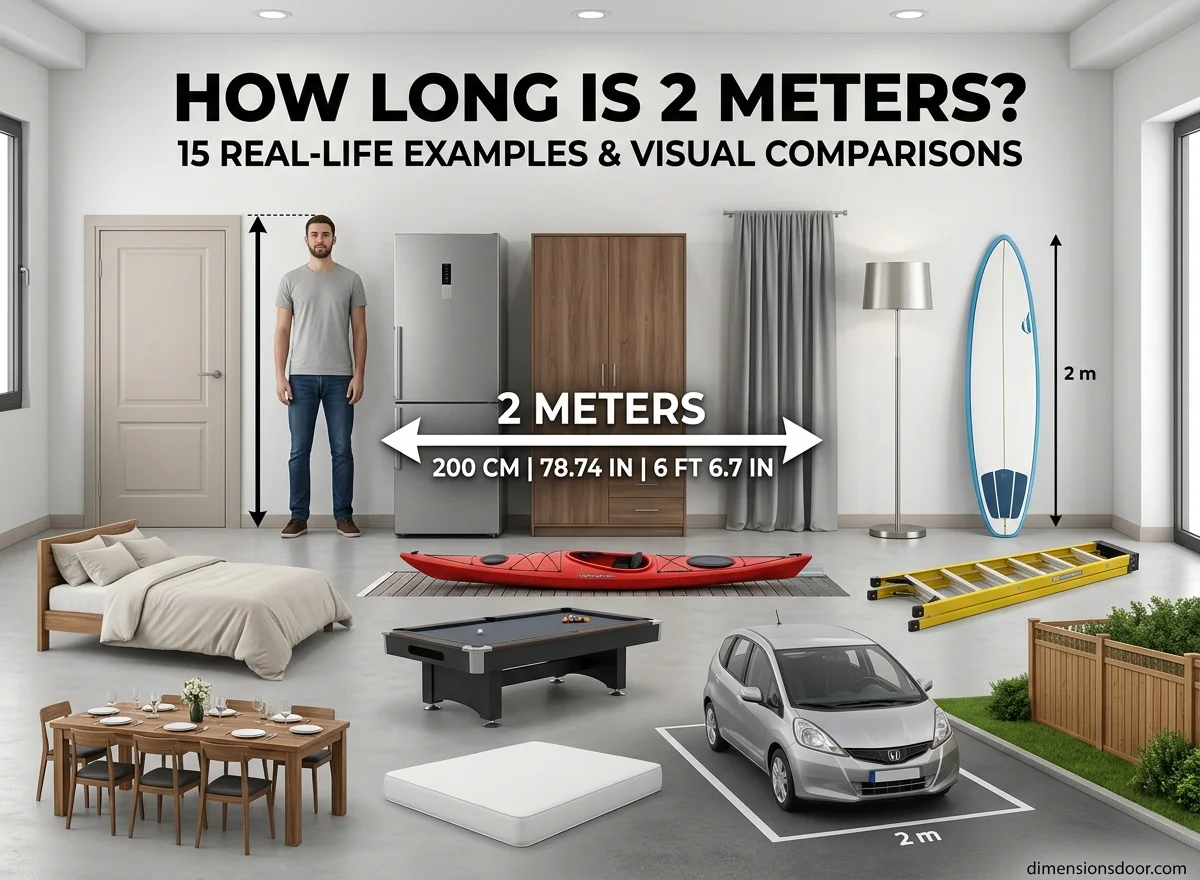
Two meters shows up everywhere, from doorways to social distancing signs, but most people can’t picture it right away. This guide turns that number into something you can actually see and feel.
By the end, you’ll know exactly how long is 2 meters, what it looks like next to everyday objects, and how to estimate it without ever touching a ruler.
Table of Contents
How Long Is 2 Meters in Feet and Inches?
2 meters equals 6.56 feet, or 6 feet and 6.7 inches. In other units, that’s 78.74 inches, 200 centimeters, and 2,000 millimeters.
The meter is the base unit of length in the International System of Units (SI), the measurement system used by scientists worldwide and by most countries outside the United States. The foot, on the other hand, belongs to the imperial system, which is still the everyday standard across the USA.
To convert, multiply the meter value by 3.28084. That’s the fixed conversion factor between the two systems, and it never changes.
| Unit | Value |
|---|---|
| Feet | 6.56 ft |
| Inches | 78.74 in |
| Centimeters | 200 cm |
| Millimeters | 2,000 mm |
| Yards | 2.19 yd |
This math is grounded in the internationally agreed definition of the meter set by the International Bureau of Weights and Measures, the global authority on measurement standards.
What Does 2 Meters Look Like? A Visual Guide
Numbers alone don’t tell the full story. What size is 2 meters in feet really means is: picture something roughly as tall as your front door, or a bit taller than most adults.
Here’s a simple way to visualize it. Stand next to a doorway. Now imagine stretching a few inches above the top frame. That’s your 2-meter mark.
Another trick: think of two adult strides placed heel to toe. Most people’s natural walking stride lands close to one meter, so two steps in a straight line gets you near the full 2-meter span.
This visual approach matters because measurement, at its core, is about spatial reasoning, not just arithmetic. Once your brain has a physical anchor, the number sticks.
15 Real-Life Examples of a 2 Meter Long Object
Here’s what is a 2 meter long example you can spot in daily life. Each one below breaks down why it matches, and how close the real-world size actually gets to 2 meters.
Standard interior door
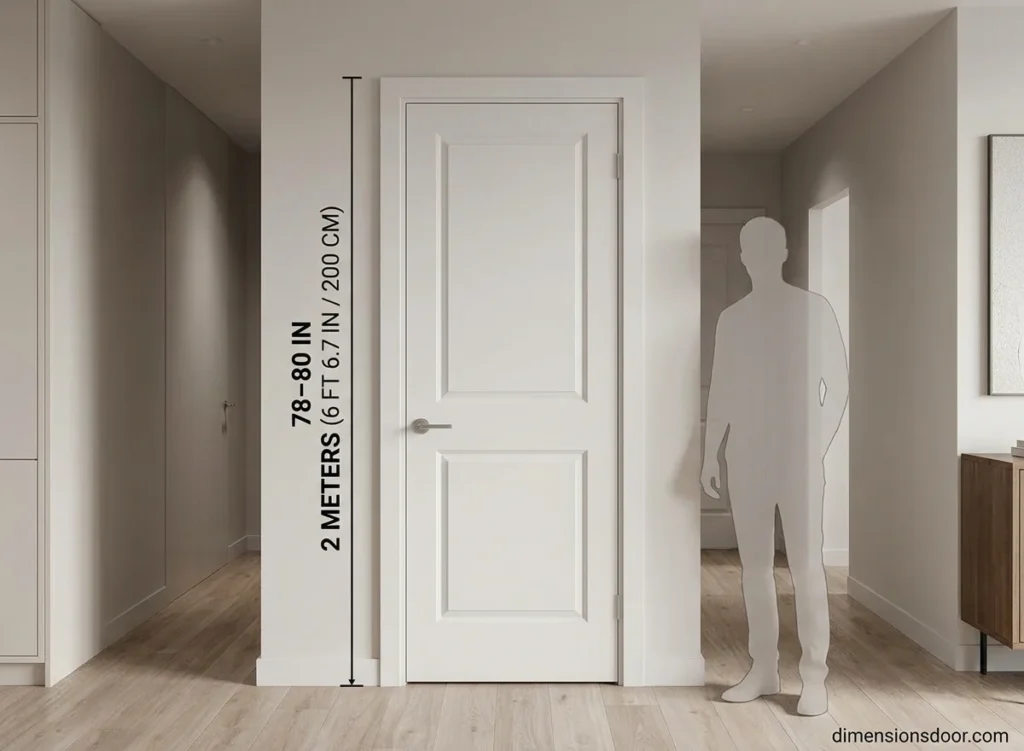
Most U.S. interior doors stand between 78 and 80 inches tall, which lands almost exactly at the 2-meter mark. Builders settled on this height decades ago because it comfortably fits the average adult with headroom to spare. Next time you walk through a doorway, you’re passing through a nearly perfect 2-meter reference point.
Queen or double bed length
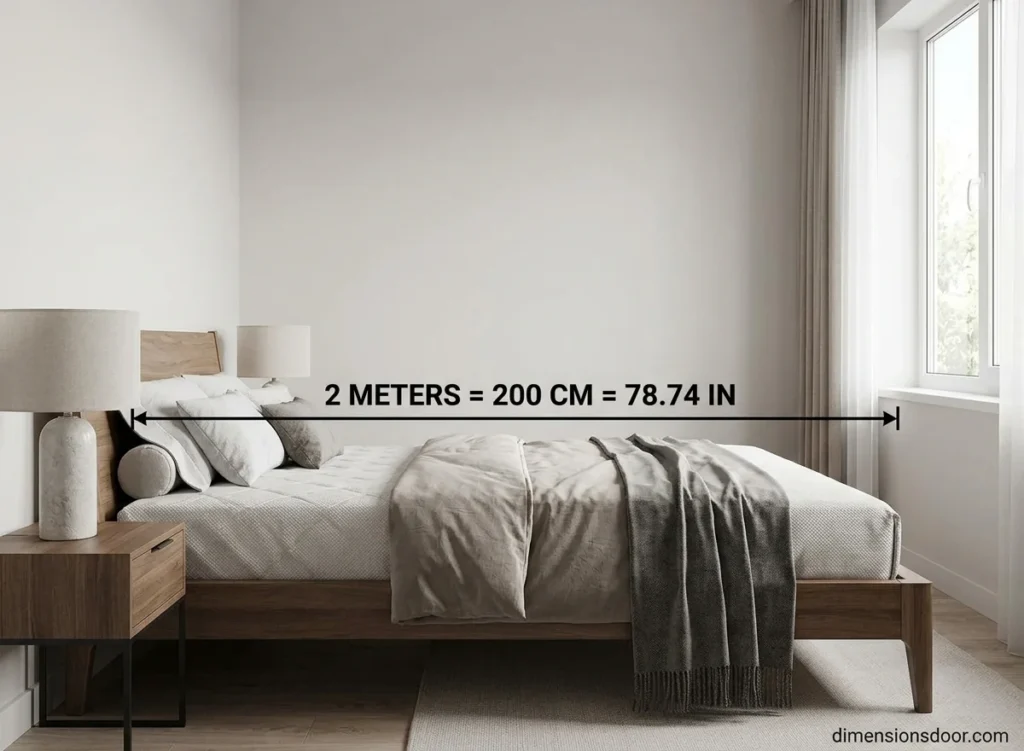
A typical queen bed frame measures 75 to 80 inches long, close enough that stretching out fully nearly covers the entire span. Mattress makers size beds this way to fit taller sleepers comfortably without wasting bedroom floor space. If you’ve ever stretched out and still had a few inches of mattress left at your feet, you’ve felt this measurement firsthand.
Refrigerator height
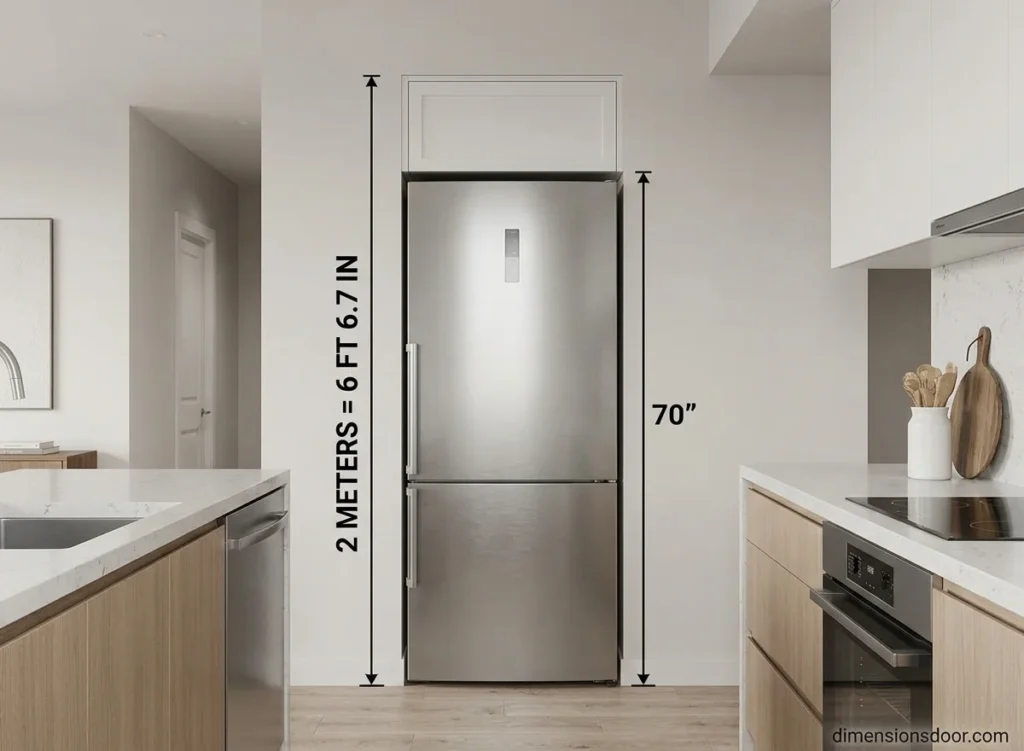
Tall, full-size refrigerators reach 66 to 72 inches, which falls a bit short of 2 meters on its own. Add a small cabinet or storage box on top, a common setup in U.S. kitchens, and you close that final gap. This makes fridges a useful, though not exact, everyday size reference.
Wardrobe or closet unit
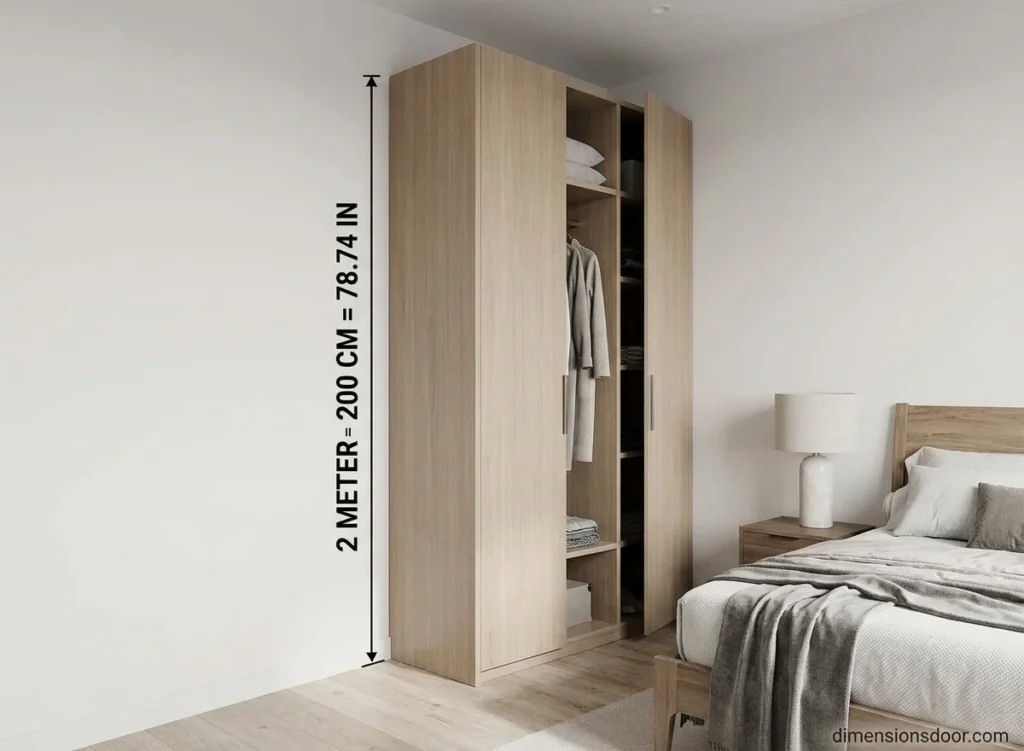
Freestanding wardrobes often measure 78 to 84 inches tall, making them one of the closest household matches to 2 meters. Furniture designers build wardrobes this tall specifically to maximize hanging space while still fitting under standard 8-foot ceilings. Open one up, and you’re looking at nearly the full 2-meter height in usable storage.
Large dining table length
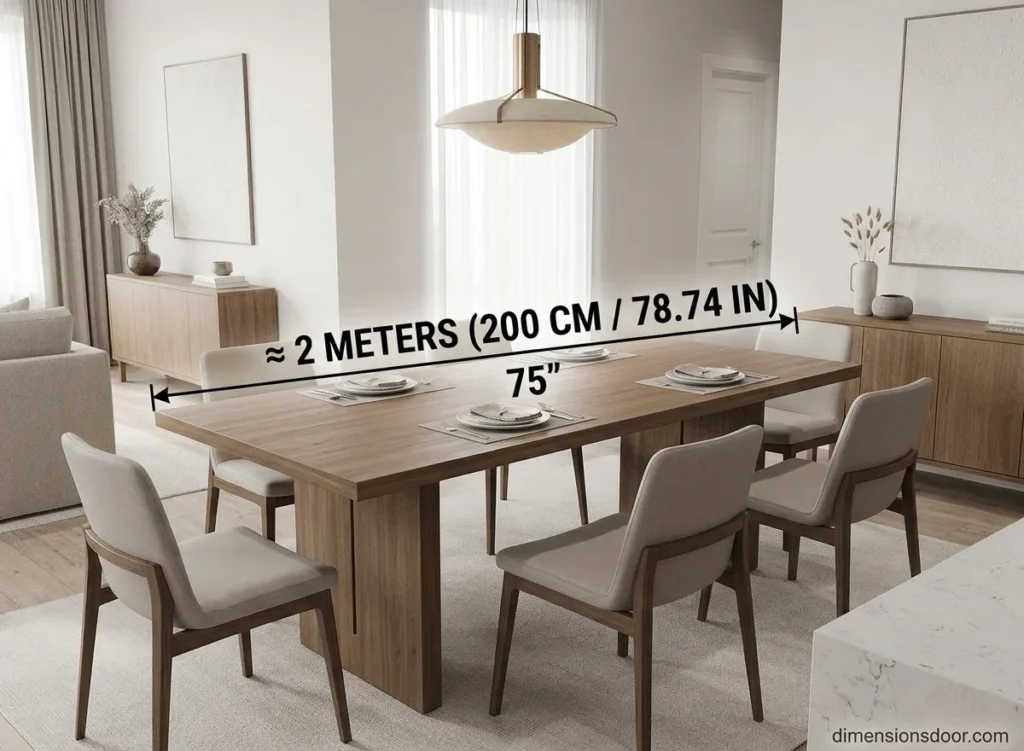
A table built to seat six to eight people usually spans 70 to 80 inches from end to end. That length gives each person enough elbow room without the table overwhelming the room. Picture a long table set for a holiday dinner, and you’re picturing something close to 2 meters across.
Tall floor lamp
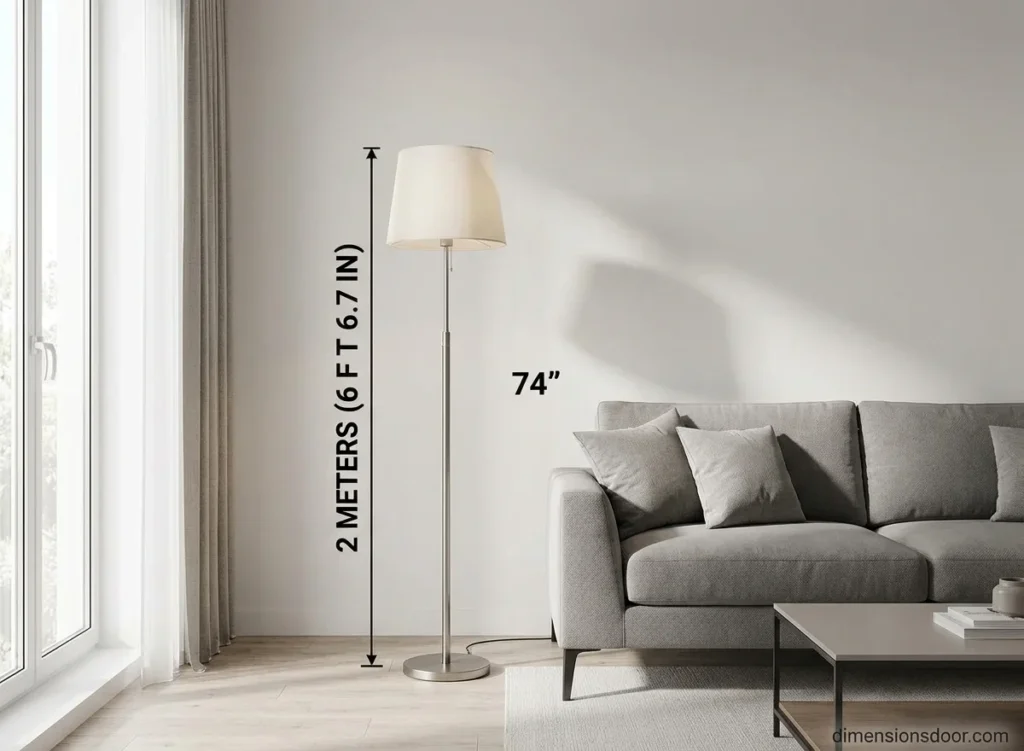
Standing lamps used in living rooms and reading corners typically reach 70 to 78 inches, sitting just under ceiling height. Lighting designers keep lamps in this range so the light spreads evenly across a seating area. It’s a subtle but reliable indoor size cue for this measurement.
A very tall adult
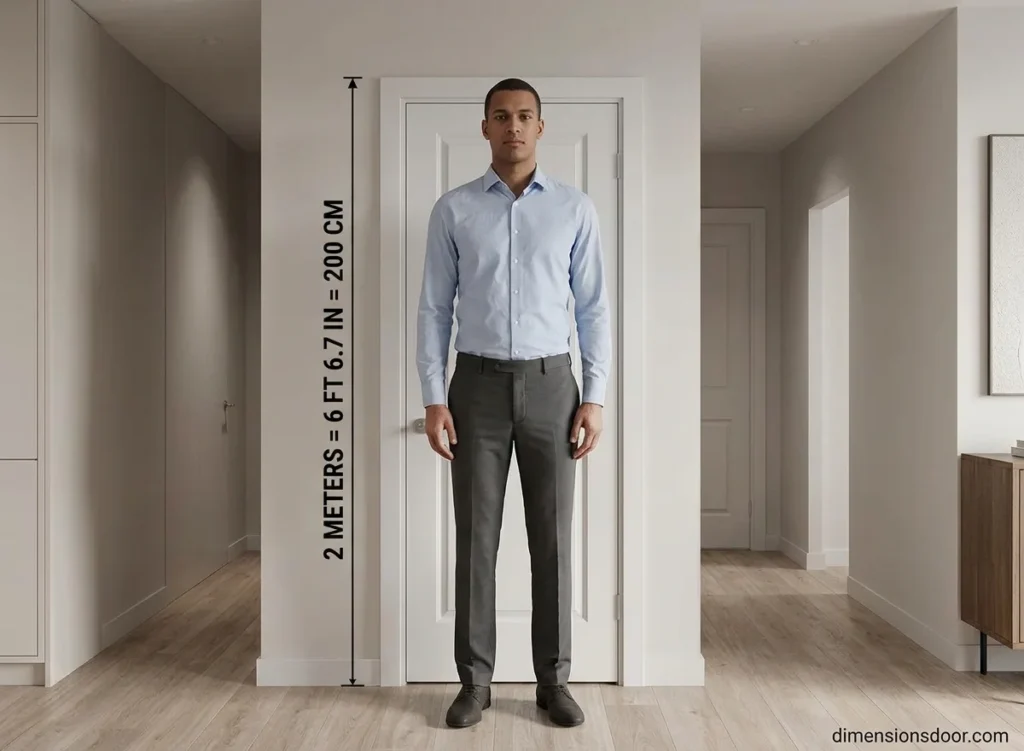
People at the upper end of human height, generally around 6 feet 6 inches, are essentially walking, talking 2-meter examples. This height is rare, statistically found in a small percentage of the population, which is part of why very tall individuals stand out so noticeably in a crowd.
Curtain panels
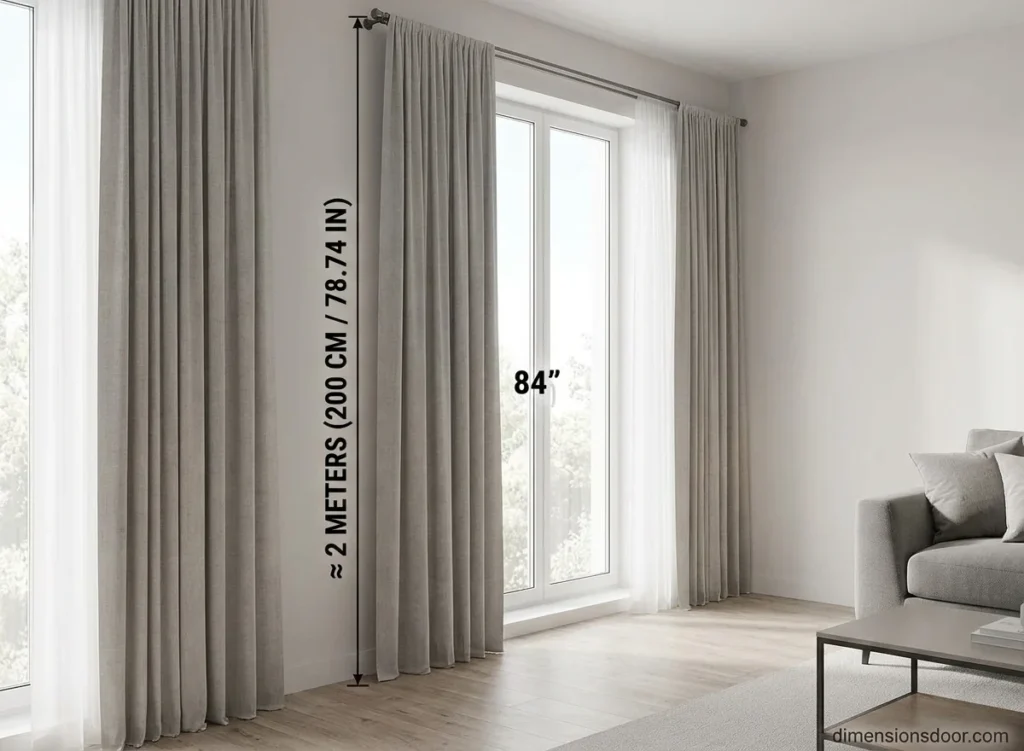
Long drapery panels sold for high-ceiling rooms often run 84 inches, slightly past the 2-meter mark. Interior designers use this extra length intentionally, so curtains pool slightly at the floor for a more finished look. That small overhang is why curtains often outmeasure the doors right beside them.
Extension ladder, retracted
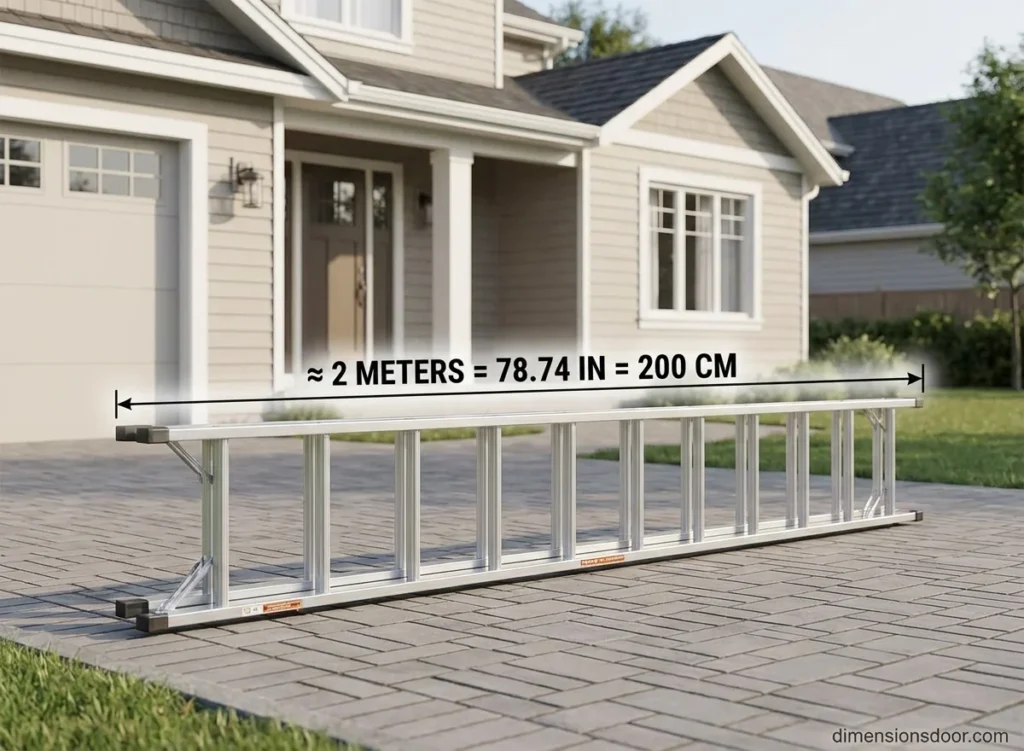
A small household ladder, folded down to its shortest usable length, measures close to 78 inches. Homeowners use this size for basic tasks like changing lightbulbs or cleaning gutters on single-story homes. Fully retracted, it’s a compact but accurate stand-in for 2 meters.
Standard parking space width
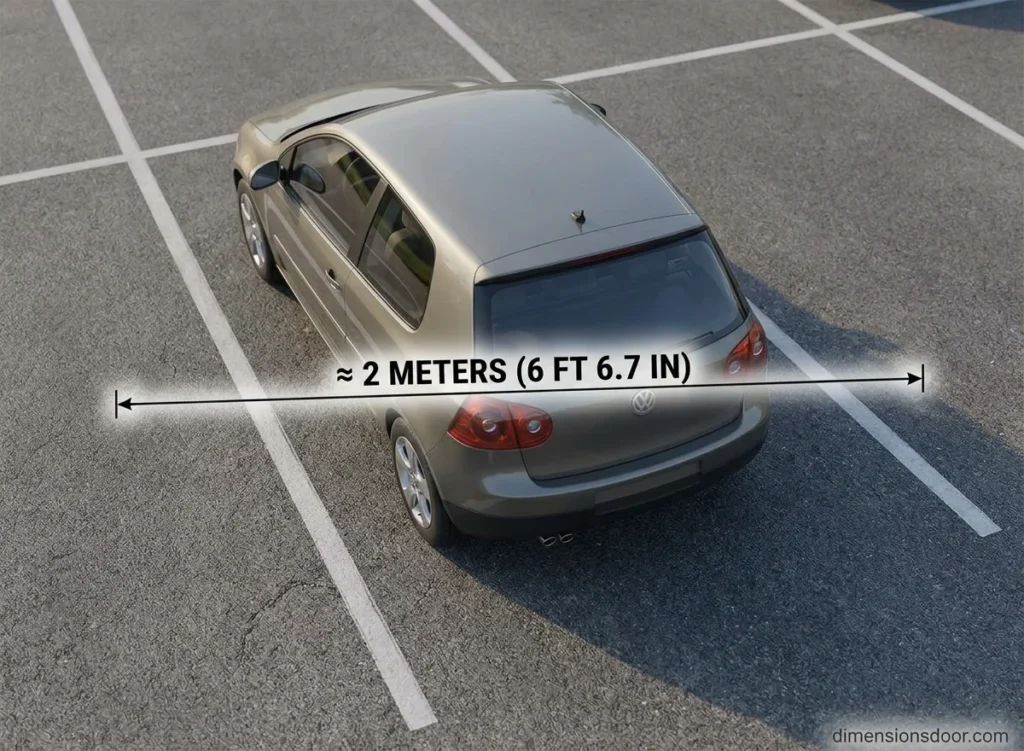
Parking stalls in many U.S. cities measure around 8 to 9 feet wide, but compact or economy spaces can dip closer to the 2-meter range. City planners size these smaller stalls for tight urban lots where space comes at a premium. Next time you park in a compact spot, you’re working with roughly this measurement on either side.
Kayak length, short touring model
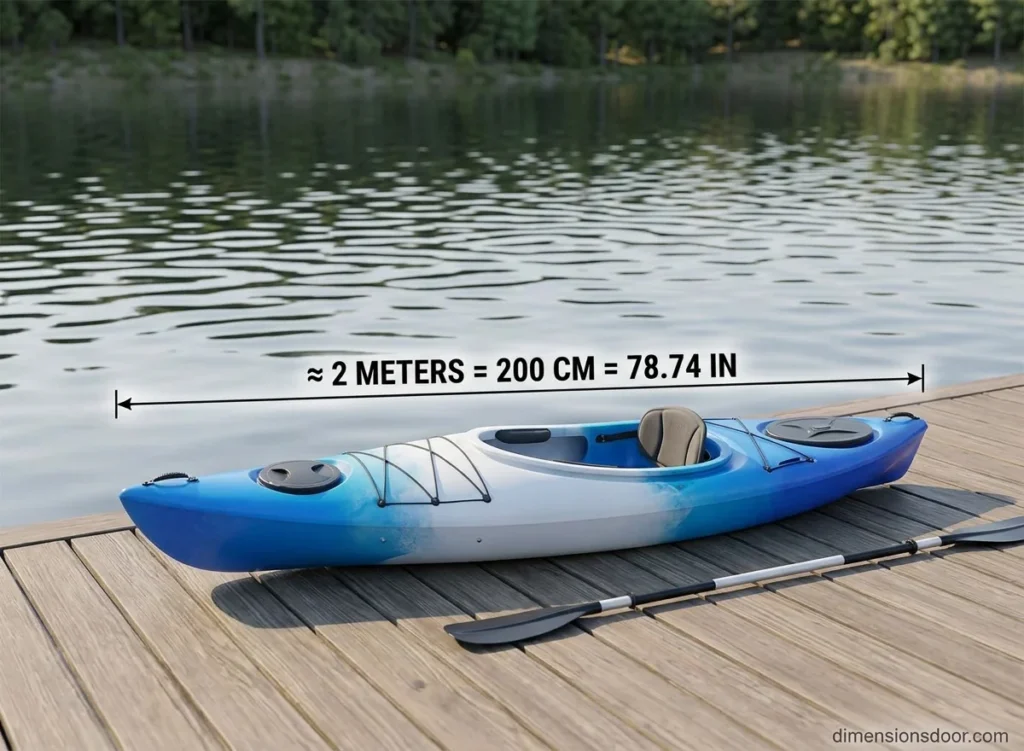
Compact recreational kayaks designed for calm lakes and slow rivers start around 6 to 7 feet long. Manufacturers keep these models short and light specifically so solo paddlers can carry and maneuver them with ease. It’s one of the few sporting goods examples that lands almost exactly at 2 meters.
Surfboard, funboard style
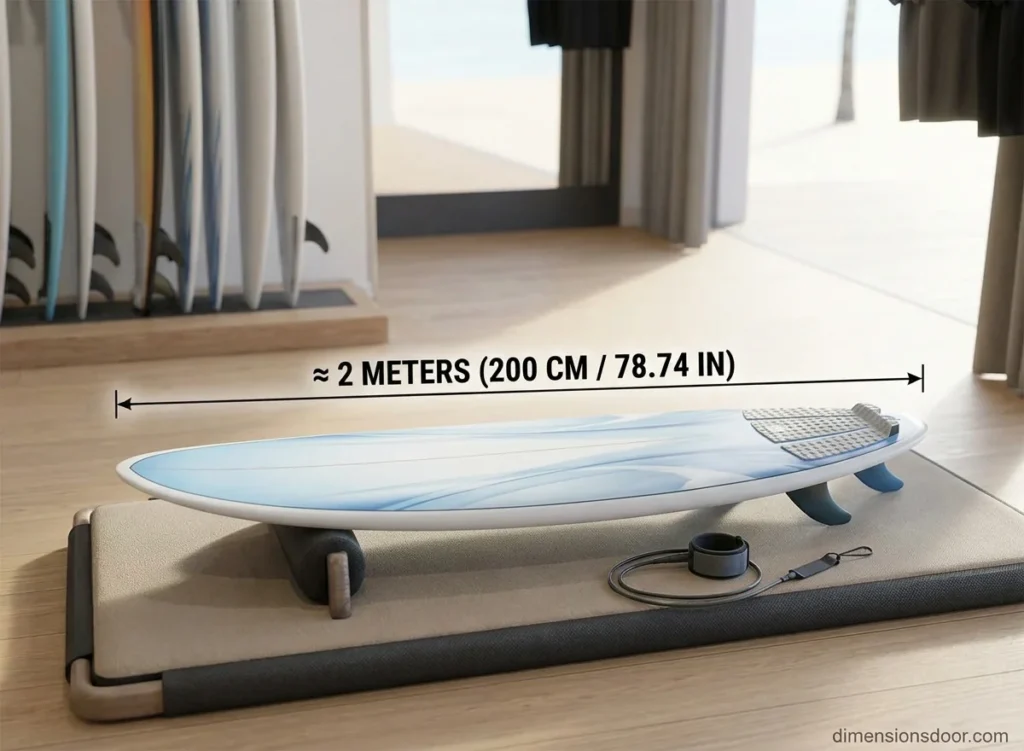
While longboards typically run 8 to 10 feet, shorter funboards land much closer to the 2-meter zone. Surf shops recommend these mid-length boards to beginners because they balance stability with easier handling in the water. A funboard leaning against a garage wall is a solid visual for this length.
Pool table width
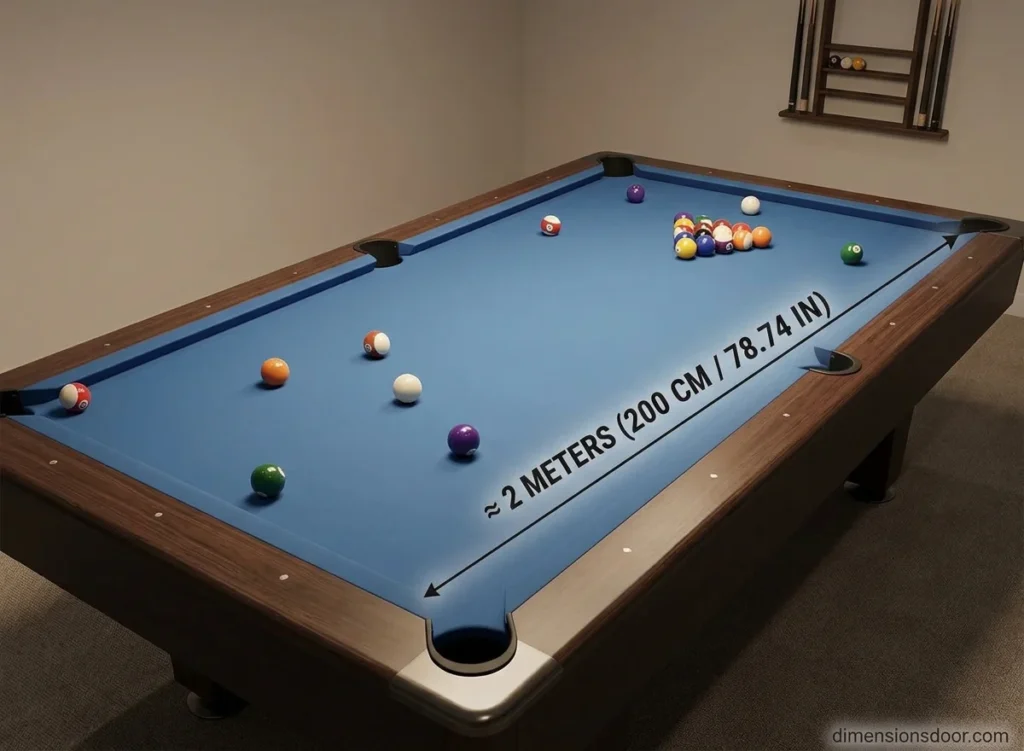
A regulation pool table measures about 4.5 feet wide, but the diagonal reach across common table models approaches 2 meters. Players judging a difficult corner-to-corner shot are essentially eyeing a distance close to this measurement. It’s a size reference that billiard players develop an intuitive feel for over time.
King mattress diagonal
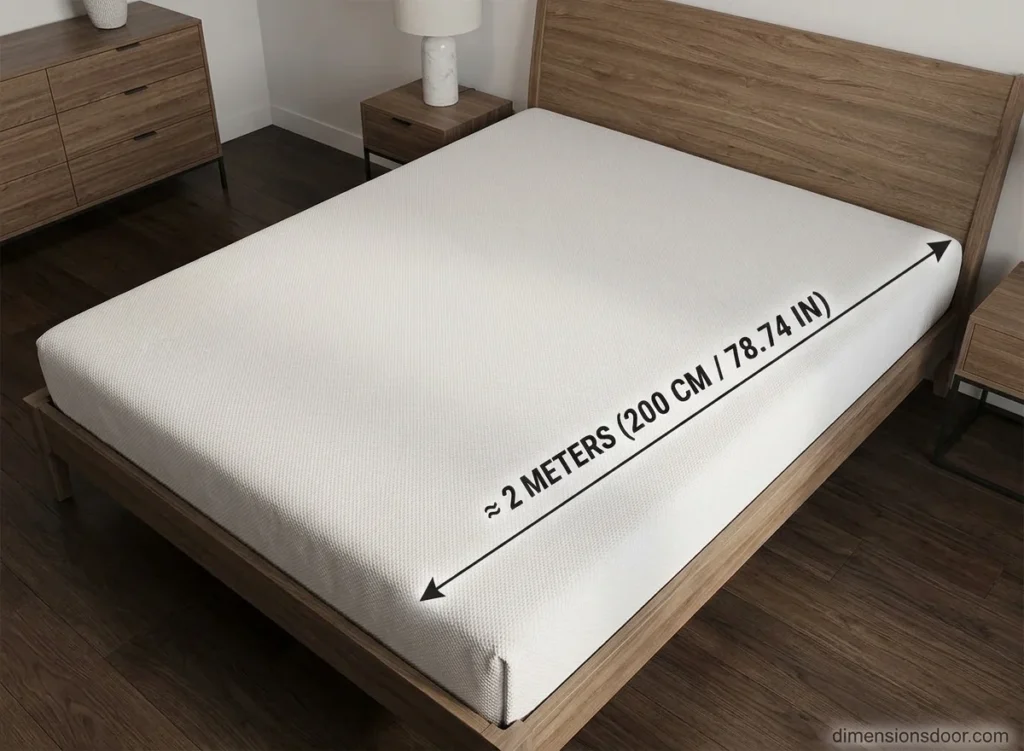
Measuring corner to corner across a king-size mattress puts you in the same range as 2 meters. This diagonal is longer than the mattress’s straight length or width alone, which is why moving a king mattress through a doorway at an angle can be surprisingly tricky. It’s a practical example that shows up during any furniture move.
Garden fence panel
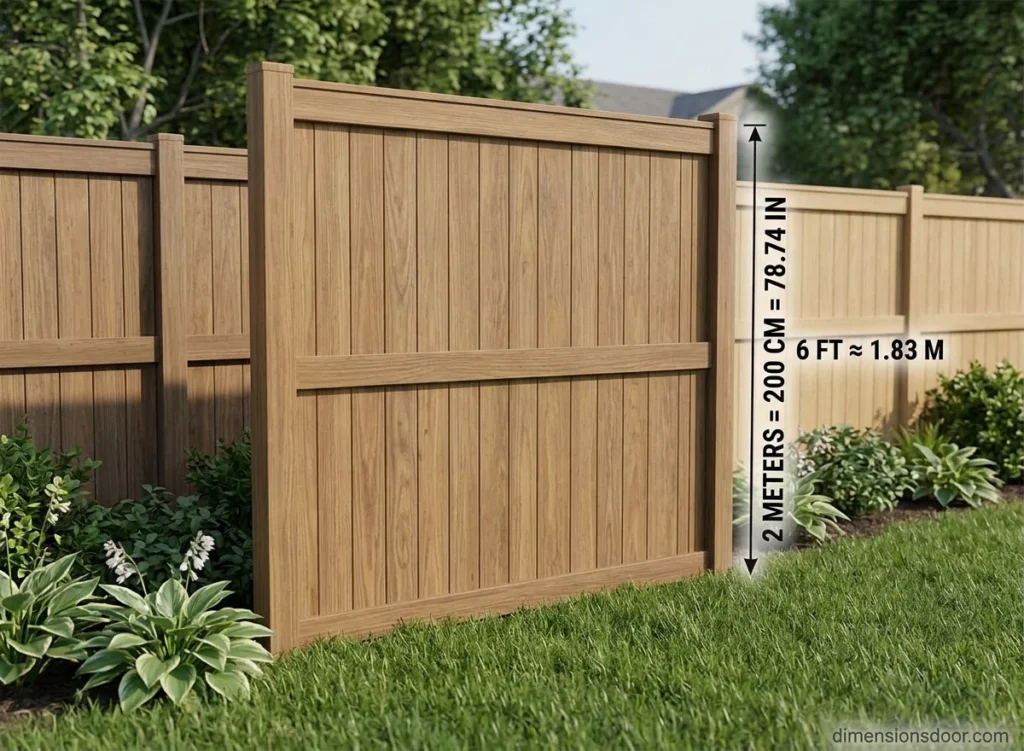
Standard privacy fence panels sold at U.S. hardware stores commonly come in 6-foot heights, just shy of the full 2-meter figure. Homeowners choose this height because most local zoning codes cap backyard fence height around this range for privacy without blocking too much light. Standing next to one gives a fairly accurate outdoor sense of the measurement.
Seeing all fifteen side by side answers how big is 2m long far better than any single number could on its own.
How to Estimate 2 Meters Without a Measuring Tool
You don’t need a tape measure every time. The estimation method below uses your own body as a reference point.
Use your height
If you’re between 5.5 and 6 feet tall, 2 meters is just a bit taller than you, roughly a hand’s width above your head.
Use your arm span
For most adults, arm span closely matches height. Stretch both arms out, and you’re looking at a rough 2-meter benchmark.
Use a hand span
One hand span, from thumb tip to pinky tip, averages 8 to 9 inches. Repeating that motion about nine or ten times covers the full distance.
Use walking strides
Two confident adult steps, placed one after another, land close to 2 meters. This trick works well outdoors or in open rooms.
These techniques give a fast, practical answer whenever you need a quick length estimate without digging out equipment.
Must Visit: How Long Is 5 Meters? 15 Real-Life Examples, Comparisons & Visual Guide
Is 2 Meters the Same as 6 Feet? Comparing Nearby Measurements
Is 2 m equal to 6 ft? Not quite. 2 meters equals 6.56 feet, which is about 6 feet and 7 inches, so it’s noticeably longer than a flat 6-foot mark.
This mix-up happens often because people round the meter figure down in casual conversation. But in construction, sports, and medical fields, that half-foot difference actually matters.
Here’s how 2 meters stacks up against nearby measurements:
| Measurement | In Feet | Difference from 2m |
|---|---|---|
| 1 meter | 3.28 ft | 3.28 ft shorter |
| 1.8 meters | 5.91 ft | 0.66 ft shorter |
| 2 meters | 6.56 ft | — |
| 6 feet | 6.00 ft | 0.56 ft shorter |
| 3 meters | 9.84 ft | 3.28 ft longer |
Knowing this gap helps avoid errors in everything from furniture shopping to reading international height and distance charts, since the metric system and imperial system don’t align at clean, round numbers.
FAQs
How Long Is 2 Meter Visually?
Visually, 2 meters looks like a standard doorway height, or roughly the height of a very tall adult standing with arms slightly raised above their head.
What Size Is 2 Meters in Feet?
2 meters equals 6.56 feet, which breaks down to 6 feet and about 6.7 inches.
What Is 2 M Long in Feet?
2 m is 6.56 feet long, calculated using the standard conversion factor of 3.28084 feet per meter.
Is 2 M Equal to 6 Ft?
No. 2 meters is longer than 6 feet by roughly 0.56 feet, or about 6.7 inches.
What Is a 2 Meter Long Example?
A standard interior door, a queen-size bed, or a tall wardrobe are all everyday objects close to 2 meters long.
How Big Is 2m Long?
2m is about as tall as a very tall adult or as long as a large dining table, making it a noticeably large, room-scale measurement.
Conclusion
Once you connect 2 meters to a door frame, a bed, or your own arm span, the number stops being abstract. It becomes something you can spot in any room, on any street, without ever picking up a measuring tape.

William Ahad is the founder and lead writer at DimensionsDoor, where he researches and publishes verified measurement guides covering doors, furniture, appliances, and everyday objects. With a background in home improvement and product research, William has spent years cross-checking manufacturer specifications, industry standards, and real-world listings to help readers get accurate dimensions before they buy, build, or install anything.