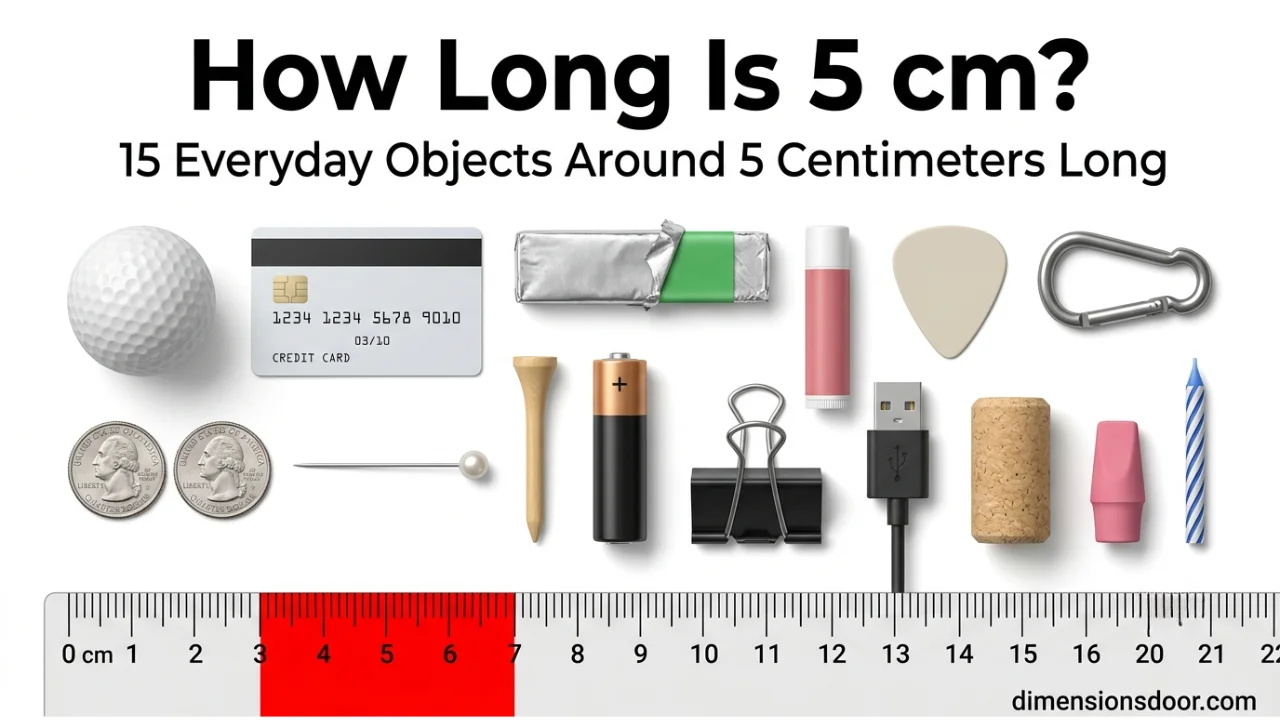
You come across “5 cm” on a product listing, a recipe card, or a school worksheet, and the figure means little until it’s tied to something you can actually picture. This guide gives you exactly that — a precise conversion, plus 15 real-world objects that show how long is 5 cm truly is.
Short answer: 5 cm equals 1.97 inches, just under 2 inches. It also equals 50 mm, 0.164 feet, and 0.05 meters. Once that number is anchored to something familiar, it’s easy to recall for good.
How Long Is 5 cm in Inches, MM, and Feet?
Here’s the quick-reference conversion for 5 centimeters across every common unit of measurement:
| Unit | Value |
|---|---|
| Centimeters | 5 cm |
| Millimeters | 50 mm |
| Inches | 1.97 in |
| Feet | 0.164 ft |
| Meters | 0.05 m |
The conversion rests on a fixed international standard: one inch equals exactly 2.54 cm, as defined by the International Bureau of Weights and Measures. To convert 5 cm to inches, divide by 2.54: 5 ÷ 2.54 = 1.9685 inches, which rounds to 1.97.
The reverse calculation works too. One centimeter equals 0.3937 inches, so multiplying that figure by 5 produces the same result. Either method confirms it: 5 cm sits about 2 inches long, falling short of the exact 2-inch mark by only 1.6 millimeters.
Use our CM to Feet Converter Tool for fast, accurate conversions and instantly switch between metric and imperial measurements.
15 Everyday Objects That Are About 5 Centimeters Long
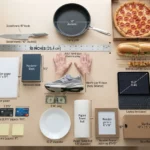
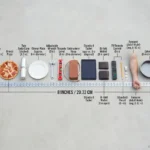
A number fades from memory quickly. An object doesn’t. Below are 15 items, each examined individually, that measure close to 5 cm long — spanning sports equipment, stationery, food, currency, and everyday tools.
Golf Ball
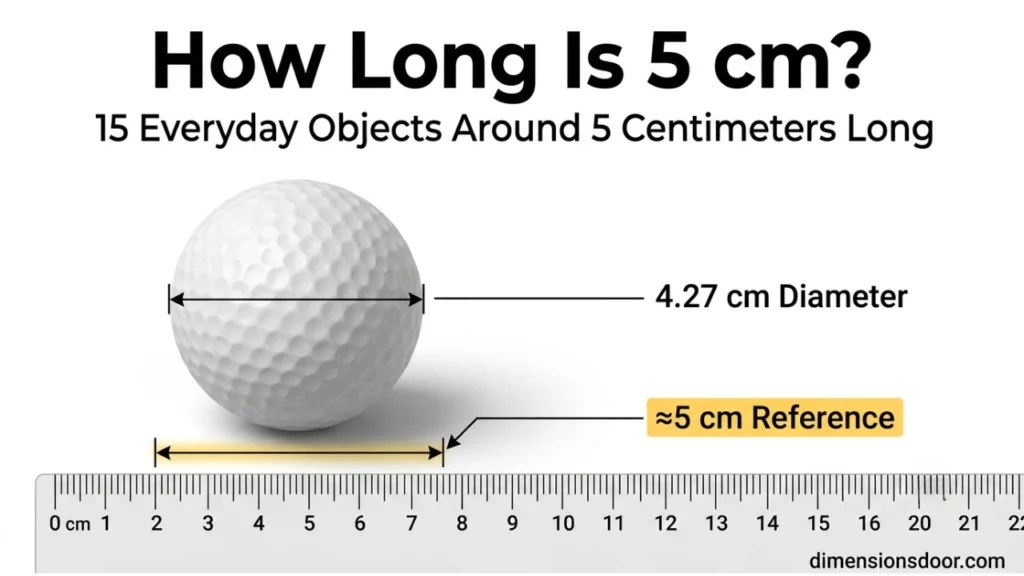
A regulation golf ball measures 4.27 cm in diameter, a fixed specification set jointly by the USGA and R&A, the two governing bodies for the sport worldwide. This makes it the smallest object on the list, sitting roughly 7 mm under the 5 cm mark. Despite that gap, it remains one of the most recognizable reference points for size estimation, since the dimpled surface and dense weight are familiar to nearly everyone, golfer or not. Held in the palm, it feels comparable to a large marble, just slightly heavier for its size.
Credit Card (Short Side)
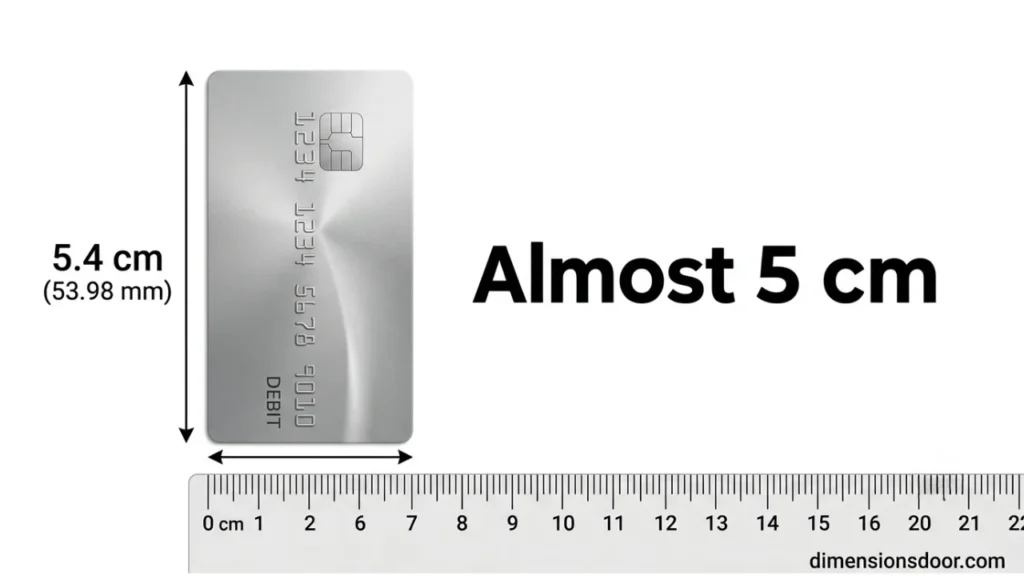
The short side of a standard credit card offers one of the most precise 5 cm references available. Under the ISO/IEC 7810 ID-1 standard, that edge measures exactly 53.98 mm, or 5.4 cm. This dimension has been locked in globally for decades, which is why every card reader, ATM slot, and wallet compartment on the planet accommodates the same rectangle without modification. Turning any card upright and viewing its height provides an almost exact visual of 5 cm.
Stick of Gum
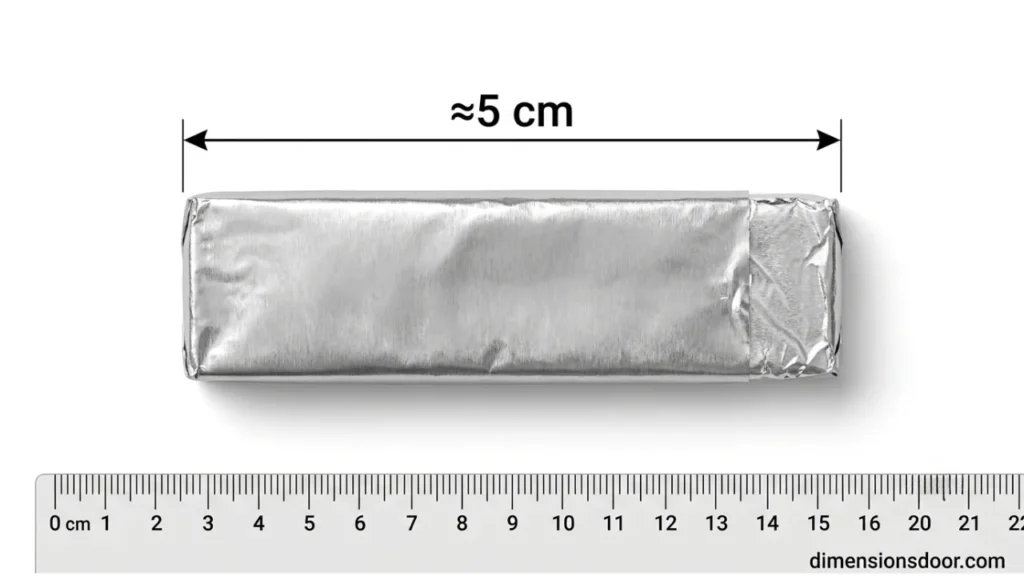
A single stick of gum pulled from a standard five-piece foil pack typically measures close to 5 cm in length. This isn’t an arbitrary size — the length is engineered to fold once inside the mouth without bunching or breaking, while the overall pack is shaped to hang cleanly on retail peg hooks at checkout counters. Before folding, the foil-wrapped stick feels rigid and flat, roughly the thickness of a thin ruler.
Lip Balm Tube
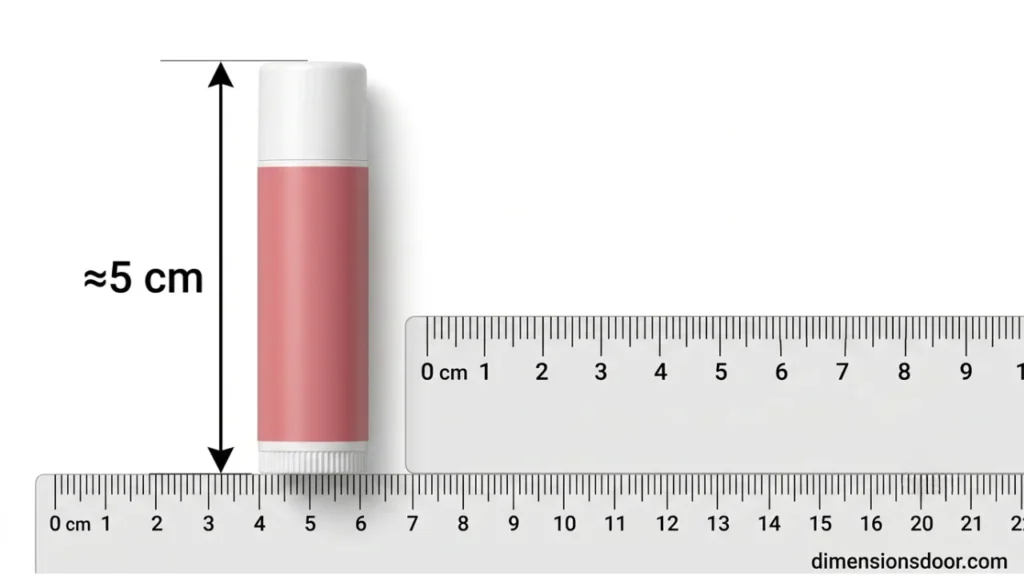
A classic lip balm tube, cap included, measures approximately 5 cm from top to bottom. The size is intentional: short enough to disappear into a coin pocket or small bag compartment, yet long enough to grip firmly even when hands are cold or dry. Standing it upright next to a die shows it’s only slightly taller, making it a useful pocket-sized comparison object.
Large Triangle Guitar Pick
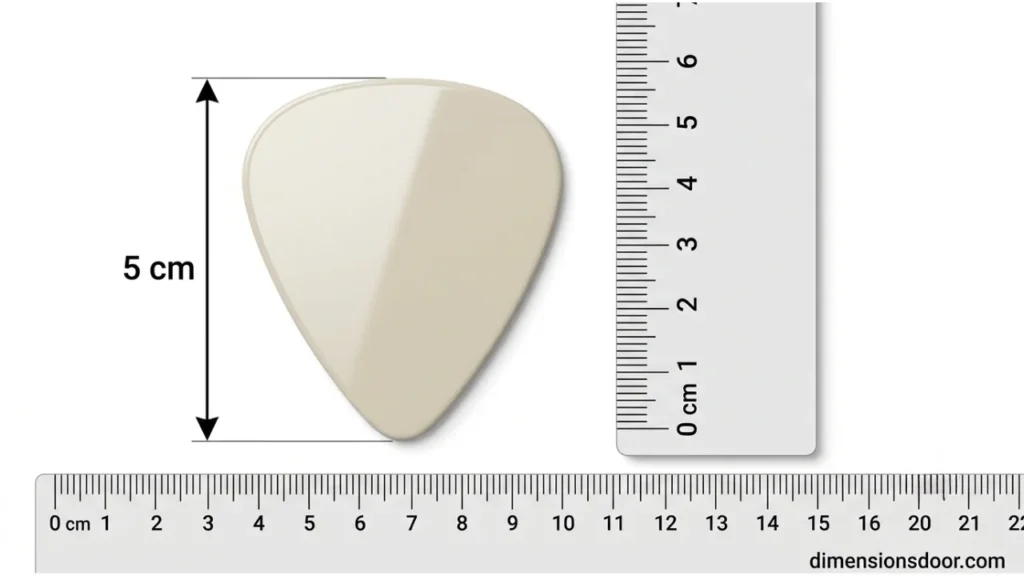
The large triangle guitar pick, favored by bassists and players who strum with heavier force, measures exactly 5.0 cm along each side. This is larger than the common teardrop pick, and the added surface area exists for a functional reason — it provides a wider grip zone so the pick doesn’t spin or slip when string tension is high and fingers are damp with sweat. The flat, rigid plastic feels similar in stiffness to a thick playing card.
Keychain Carabiner
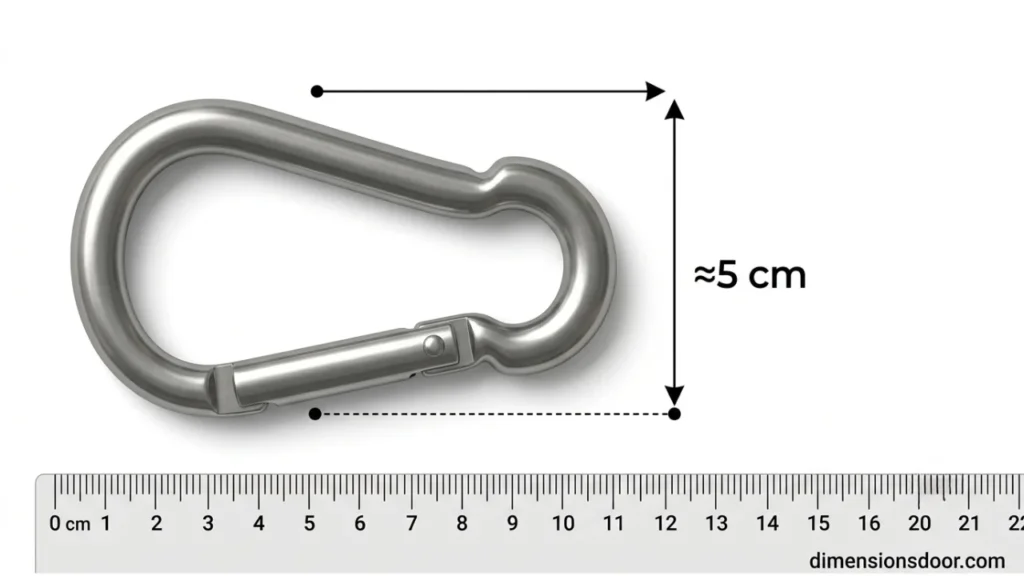
A standard keychain carabiner, the metal clip found on water bottles and backpack zipper pulls, generally measures between 4.5 and 5.2 cm across its spine. That width range isn’t accidental; it allows a standard key ring to slide freely along the loop without catching, while remaining narrow enough to lie flat against a belt loop or bag strap. Pinched between the thumb and index finger, the width lines up closely with the first knuckle.
Two U.S. Quarters Side by Side
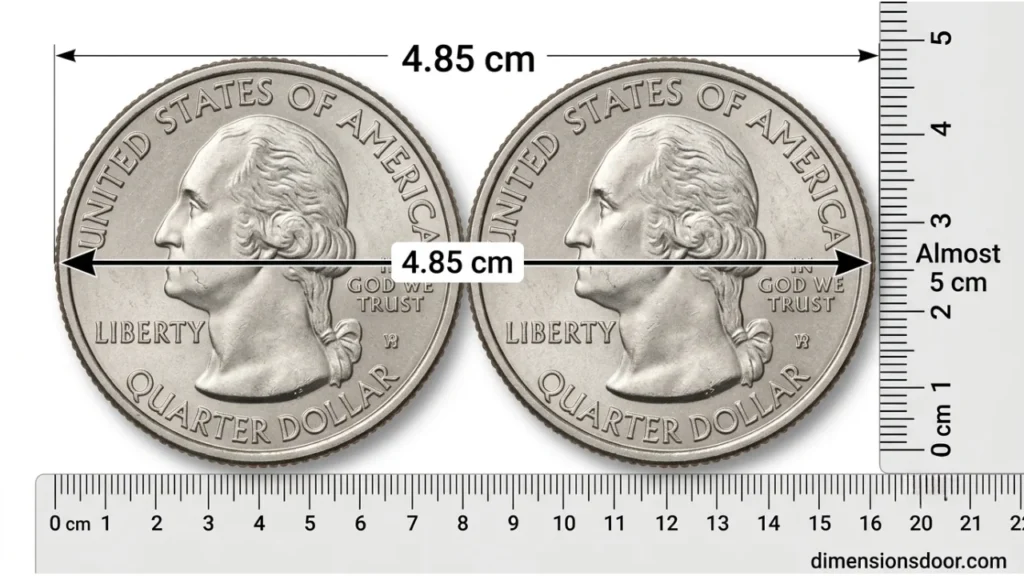
Lining up two U.S. quarters edge to edge produces a combined width of 4.85 cm. Each quarter measures 24.26 mm in diameter, according to official U.S. Mint specifications, so two together land just 1.5 mm short of the 5 cm mark. This makes the quarter method one of the most accessible field techniques for approximating the measurement, since most people carry coins more often than a ruler.
Pearl-Head Quilting Pin
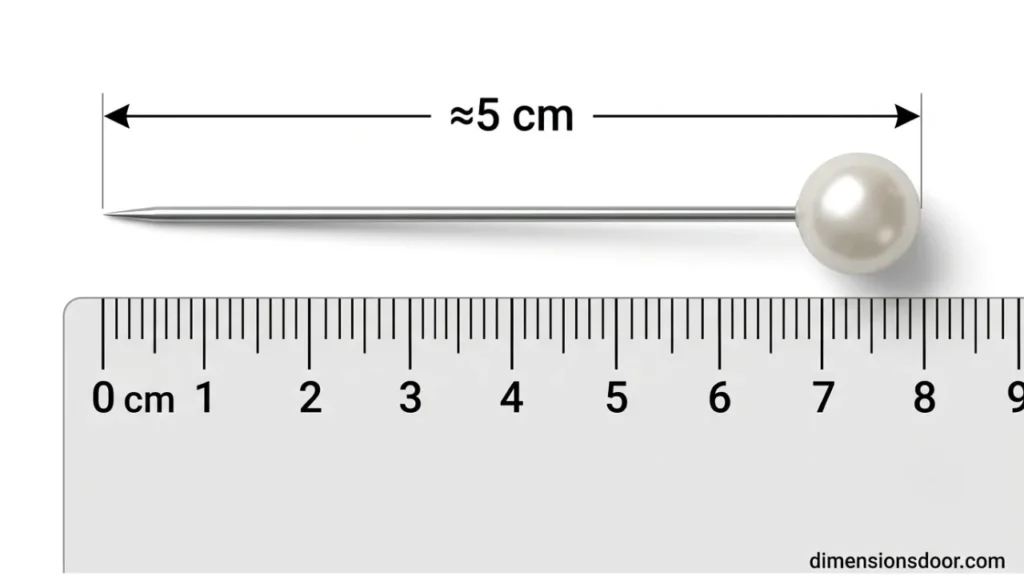
A pearl-head quilting pin, identifiable by the small colored ball at one end, typically measures around 5 cm from tip to head. That length serves a specific purpose in sewing and quilting: it needs to be long enough to pass cleanly through multiple stacked layers of fabric without bending mid-pierce, yet short enough to avoid snagging on a sewing machine’s feed mechanism. The slender steel shaft is easy to underestimate visually until it’s held directly against a ruler.
Standard Golf Tee
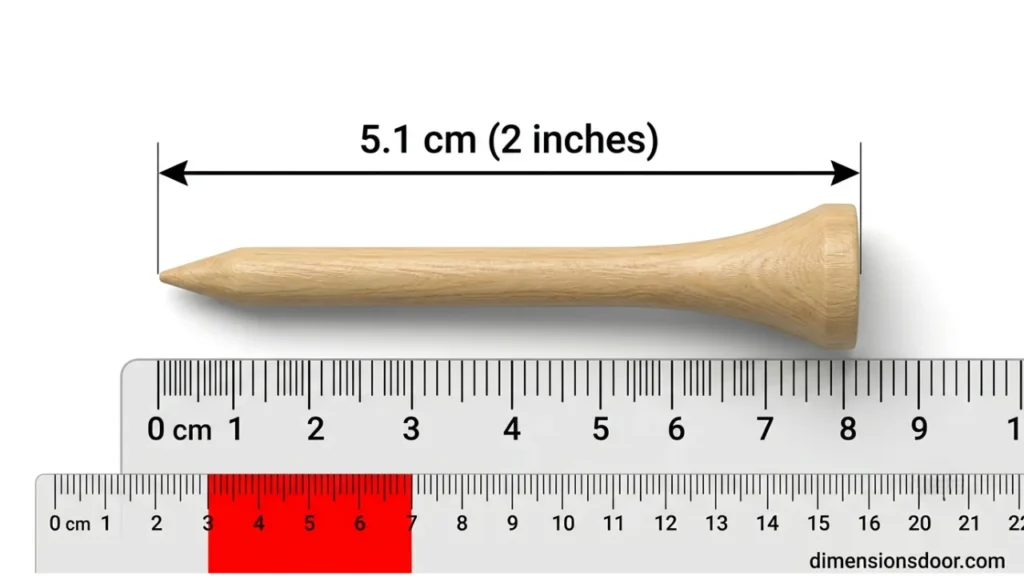
A standard medium golf tee measures 5.1 cm, or 2.0 inches, a USGA-compliant length designed for iron shots and fairway wood play. The flared cup at the top cradles the ball while the pointed shaft anchors into the turf, giving just enough lift without elevating the ball excessively. It’s a thin, lightweight sliver of wood or plastic that appears smaller than it actually is until measured directly.
AA Battery
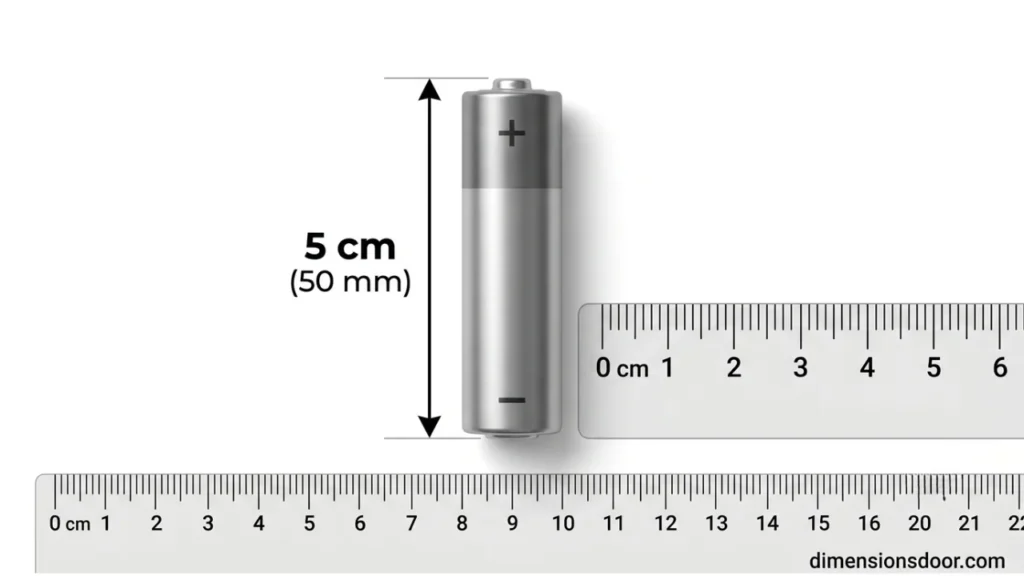
A standard AA battery measures 5.0 cm in height, a dimension fixed by International Electrotechnical Commission (IEC) standards to ensure consistent compatibility across remotes, flashlights, and toys manufactured anywhere in the world. Because this size is standardized rather than approximate, the AA battery ranks among the most reliable and repeatable 5 cm references on this list.
Medium Binder Clip
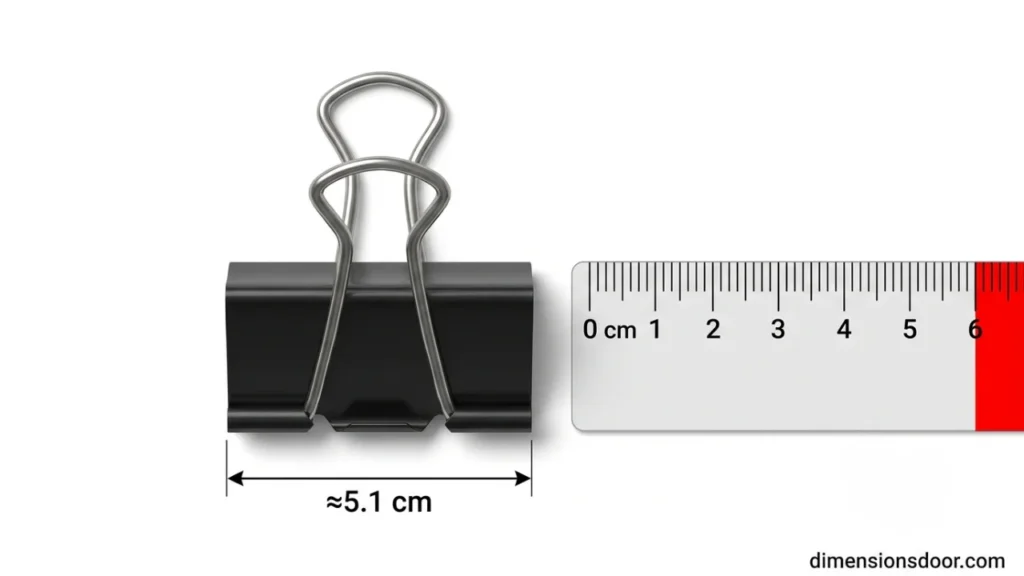
A medium binder clip, the most commonly stocked size in office supply drawers, spans approximately 5.1 cm across its metal jaws. This size is chosen specifically because it holds a moderate stack of paper securely without the folded metal handles overwhelming a standard sheet. Held closed, its width closely mirrors the AA battery’s height, making the two useful cross-reference points for each other.
USB-A Plug
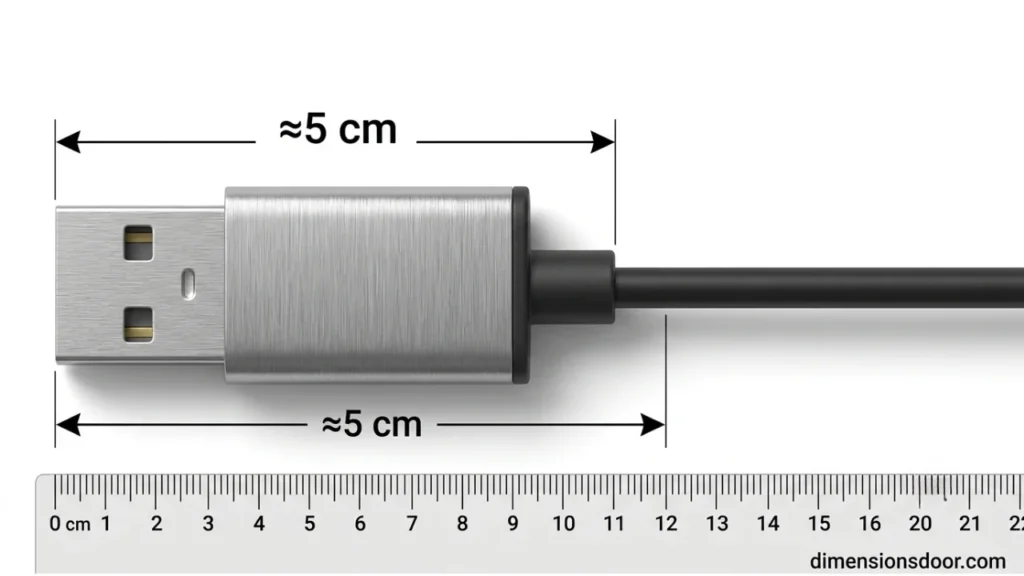
The USB-A plug, the rectangular metal-and-plastic connector found on the majority of charging and data cables, measures close to 5 cm from its tip to the point where the cable housing begins. Because USB-A has remained a dominant connector standard for decades, it’s a size nearly every household object relates to instinctively, even without conscious measurement.
Wine Cork
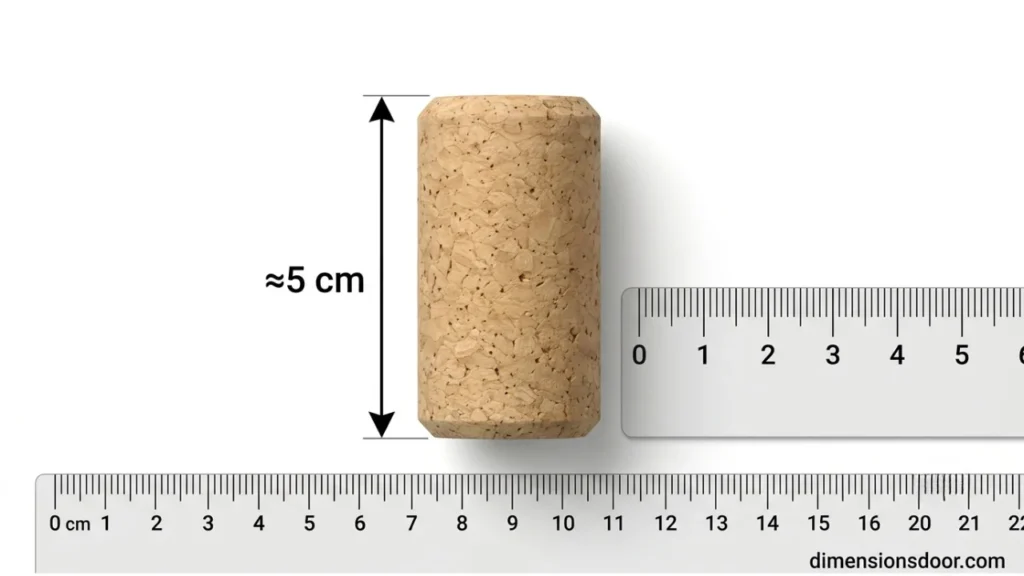
A wine cork stands roughly 4.5 to 5 cm tall, though the exact figure depends on whether it’s natural cork or a synthetic alternative, as natural corks show slightly more size variation due to the material’s organic origin. Stood on its end, a wine cork offers a close, tactile approximation of the 5 cm mark, particularly useful for anyone working in a kitchen or entertaining setting.
Pencil Eraser Cap
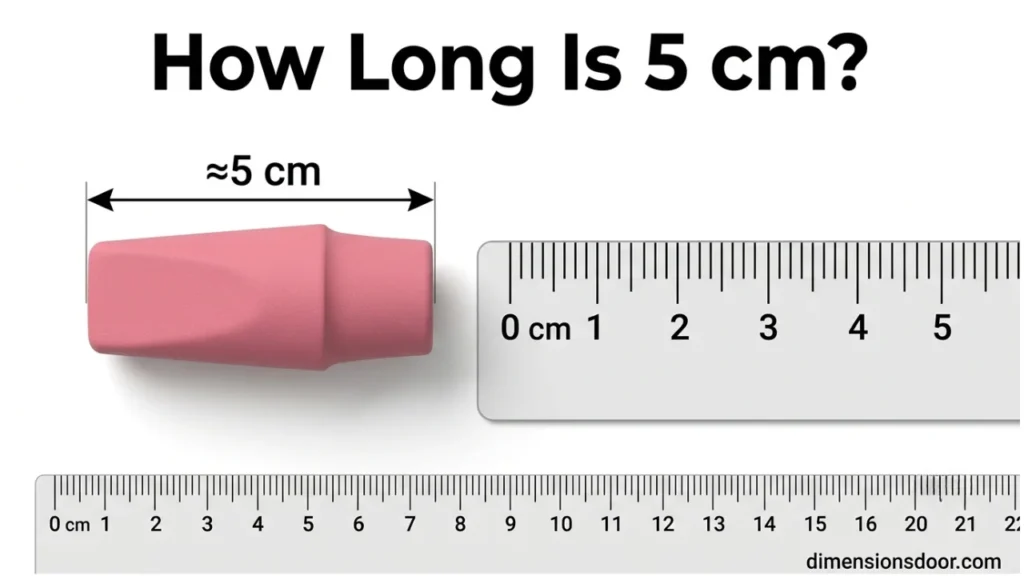
A standard pencil eraser cap, the pink cap-style eraser sold separately from pencils, measures close to 5 cm in length when new. With repeated use, the length gradually shortens as the rubber wears down, meaning a fresh, unused cap is the most accurate reference for the full 5 cm measurement.
Birthday Candle
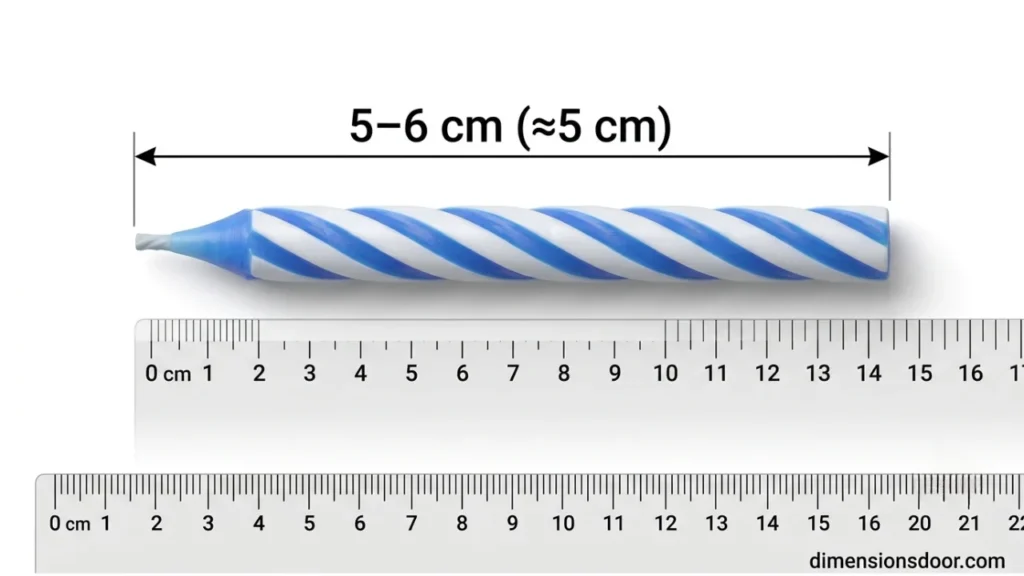
An unlit birthday candle typically measures between 5 and 6 cm, a length calculated to hold steadily upright in frosting without tipping, while still burning long enough to allow for a proper blow-out moment. Because candles are seasonal rather than a daily-use object, this reference works best as a mental snapshot tied to a specific memory, such as a recent celebration.
Must Visit: How Long Is 2 cm? 15 Everyday Objects That Are About 2 Centimeters Long
How Big Is 5 cm Compared to Fruit and Fingers?
A small strawberry, measured across its widest point, lands close to 5 cm. A large grape or cherry tomato falls short of that mark, typically measuring 2 to 2.5 cm, meaning two would need to sit side by side to approximate the full 5 cm length. A whole kumquat, by contrast, often measures right around 5 cm on its own, making it one of the more precise fruit-based comparisons available.
The most dependable body-based reference is the distance from the index finger’s tip to its first knuckle. On most adult hands, that segment measures between 4.8 and 5.2 cm. Hand size naturally varies from person to person, so this isn’t a laboratory-precise measurement, but it remains accurate enough for everyday estimation tasks — checking fabric length, judging produce size, or approximating a gap when no tool is available.
How to Measure 5 cm Without a Ruler
The finger method
Press the index finger flat against a surface and mark where the fingertip and first knuckle land. That distance approximates 5 cm within a couple of millimeters for most adults.
The coin method
Place two U.S. quarters side by side. Their combined width, 4.85 cm, is close enough for the majority of household tasks, from hanging a shelf bracket to sizing a craft component.
The card method
Stand a credit card upright and observe its short edge, which measures 5.4 cm. Since nearly everyone carries a card, this doubles as one of the most convenient visual anchors available.
What Is Comparable to 5 cm? — Similar Sizes at a Glance
What is comparable to 5 cm? The table below places it alongside neighboring measurements for quick context:
| Measurement | In cm | Compared to 5 cm |
|---|---|---|
| 3 cm | 3.0 cm | 2 cm shorter |
| 4 cm | 4.0 cm | 1 cm shorter |
| 5 cm | 5.0 cm | Target size |
| 6 cm | 6.0 cm | 1 cm longer |
| 7 cm | 7.0 cm | 2 cm longer |
| 10 cm | 10.0 cm | Double the size |
FAQs
How big is 5cm visually?
Picture the short edge of a credit card or a stick of gum lying flat. Both measure close to 5 cm and are handled daily by most people, which makes the size easy to recall without needing a ruler.
How to measure 5 cm without a ruler?
Use the index finger, measuring from the tip to the first knuckle, which typically spans about 5 cm on an adult hand. Two quarters side by side (4.85 cm) or a credit card’s short edge (5.4 cm) serve as reliable backup references.
How big is 5 cm compared to fruit?
A small strawberry or a whole kumquat measures close to 5 cm. A single grape or cherry tomato falls short of that mark, typically closer to 2–2.5 cm.
What is comparable to 5 cm?
A golf ball (4.27 cm), a credit card’s short side (5.4 cm), a stick of gum, a lip balm tube, and a AA battery all measure close to 5 cm.
How long is 5 cm in fingers?
About the length of one index finger from the tip to the first knuckle, typically 4.8 to 5.2 cm on an adult hand.
What is an object that is 5 cm?
A AA battery is one of the most precise matches, measuring exactly 5.0 cm by international standard, making it a dependable everyday reference point.
Conclusion
Five centimeters stops being an abstract figure once it’s tied to something tangible. Whether it’s the short edge of a credit card, a strawberry resting in the palm, or the stretch of an index finger to its first knuckle, these 15 references now provide a clear, lasting answer to how long 5 cm really is.

William Ahad is the founder and lead writer at DimensionsDoor, where he researches and publishes verified measurement guides covering doors, furniture, appliances, and everyday objects. With a background in home improvement and product research, William has spent years cross-checking manufacturer specifications, industry standards, and real-world listings to help readers get accurate dimensions before they buy, build, or install anything.