Ever read “2 cm” on a label and had no idea what that actually looks like? You’re not alone. Two centimeters is a tiny but common measurement — you’ll see it on product tags, recipes, craft patterns, and even medical charts.
The fastest way to picture it: 2 cm equals 0.79 inches, or about 20 millimeters. But numbers alone don’t help much. This guide breaks down exactly how long is 2 cm is, using everyday objects, quick finger tricks, and clear conversions — no ruler required.
How Big Is 2 cm? Quick Visual Answer and Conversions
Here’s the direct answer: 2 cm = 0.787 inches = 20 millimeters = 0.02 meters.
That’s roughly three-quarters of an inch — just shy of the width of a standard AA battery when measured across its round end. If you’re picturing something small enough to balance on a fingertip, you’re on the right track.
| Centimeters | Inches | Millimeters | Feet |
|---|---|---|---|
| 2 cm | 0.79 in | 20 mm | 0.066 ft |
The reason 2 cm trips people up is simple: the metric system (used almost everywhere outside the U.S.) measures length in centimeters and meters, while the US customary system relies on inches and feet. A centimeter is one-hundredth of a meter, which is why it’s such a small, precise unit — perfect for measuring things like beads, screws, or the thickness of a phone case.
Since 1 inch equals 2.54 cm, dividing 2 by 2.54 gives you the 0.787-inch figure. That math holds true no matter what you’re measuring.
Convert centimeters to feet instantly with our accurate cm to feet calculator—simply enter any length in centimeters to get precise results in feet within seconds.
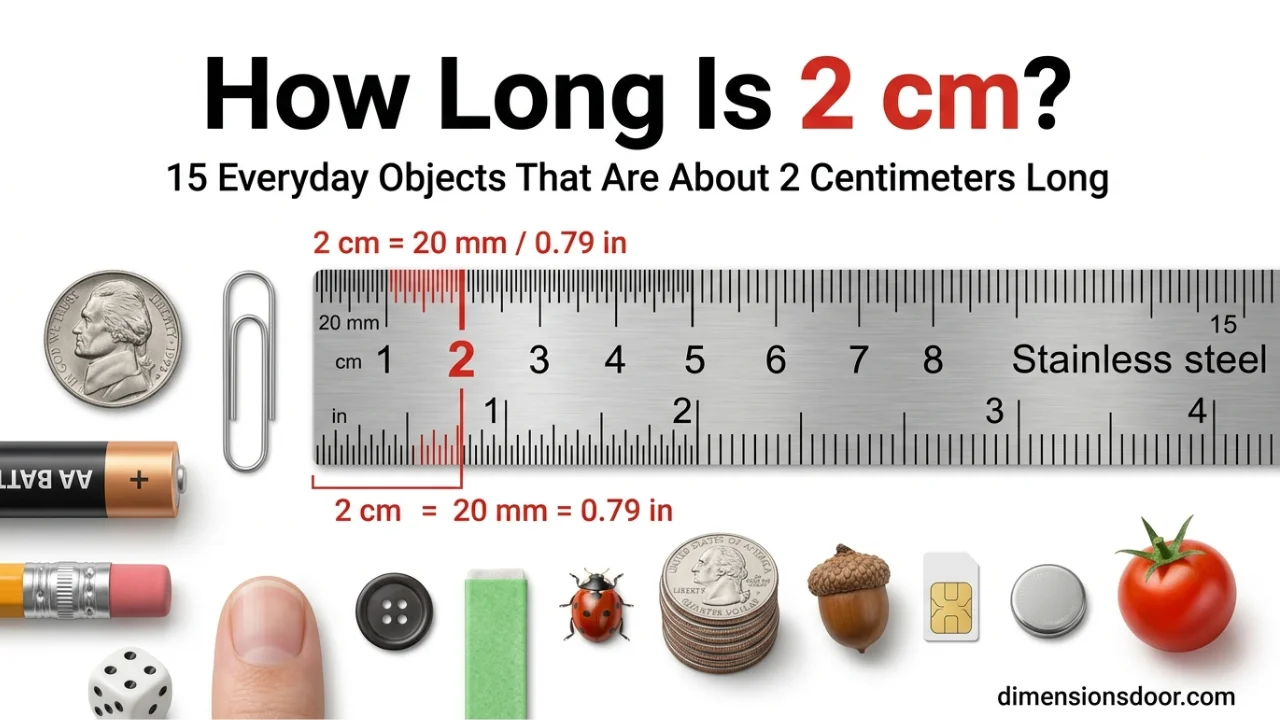
15 Everyday Objects That Are About 2 Centimeters Long
Numbers are easy to forget. Objects aren’t. Here are 15 things you’ve probably touched today that are close to 2 centimeters in length or width.
A US nickel
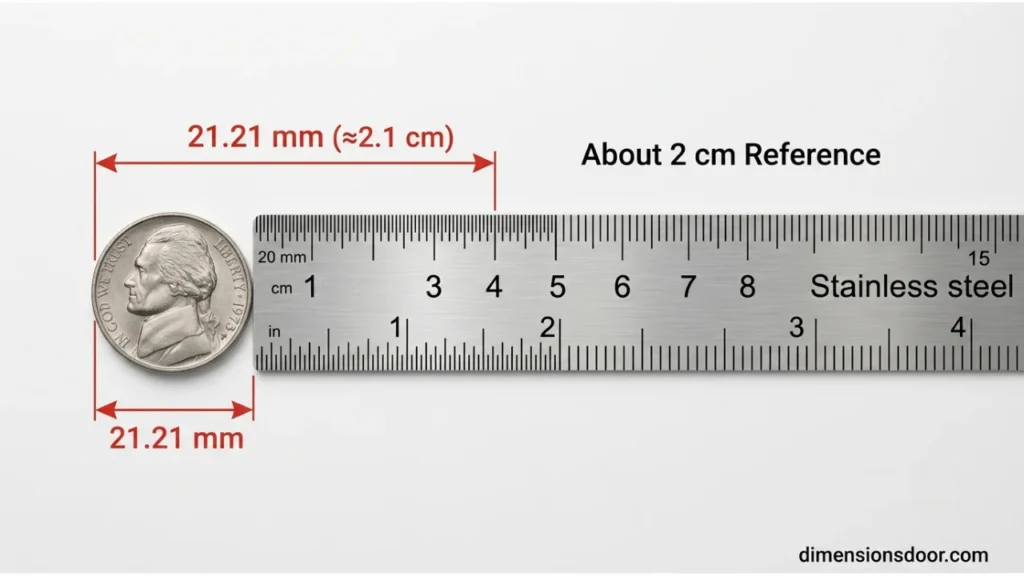
A nickel measures 21.21 mm across — just over 2 cm. It’s one of the most reliable pocket-sized rulers you already own.
A large paperclip
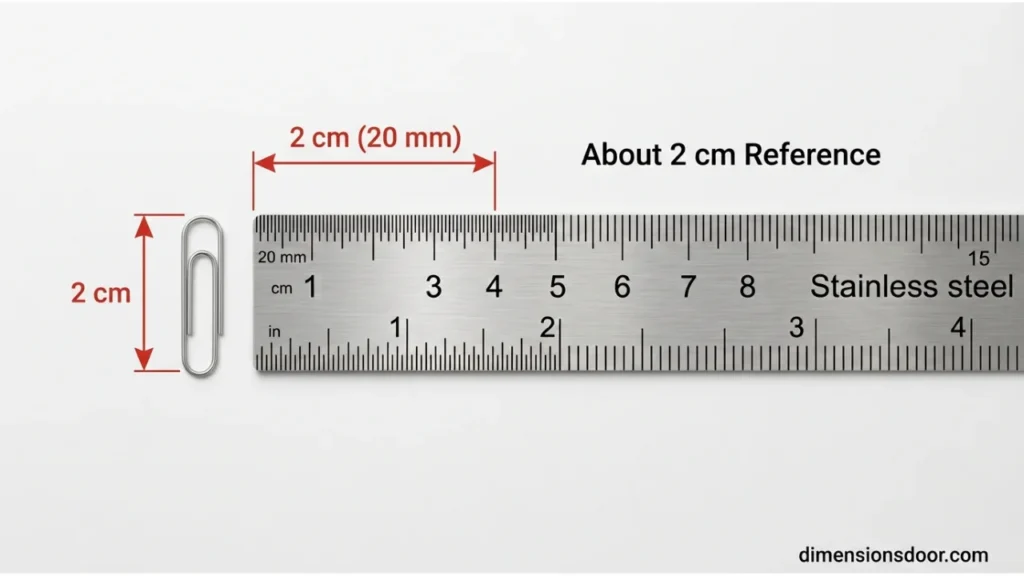
The width of a standard jumbo paperclip is almost exactly 2 cm, making it a go-to visual reference in classrooms.
An AA battery’s diameter
Look at the round end of an AA battery — that width sits right around 2 cm.
A grape. A medium seedless grape typically measures about 2 cm across its widest point.
A pencil eraser cap
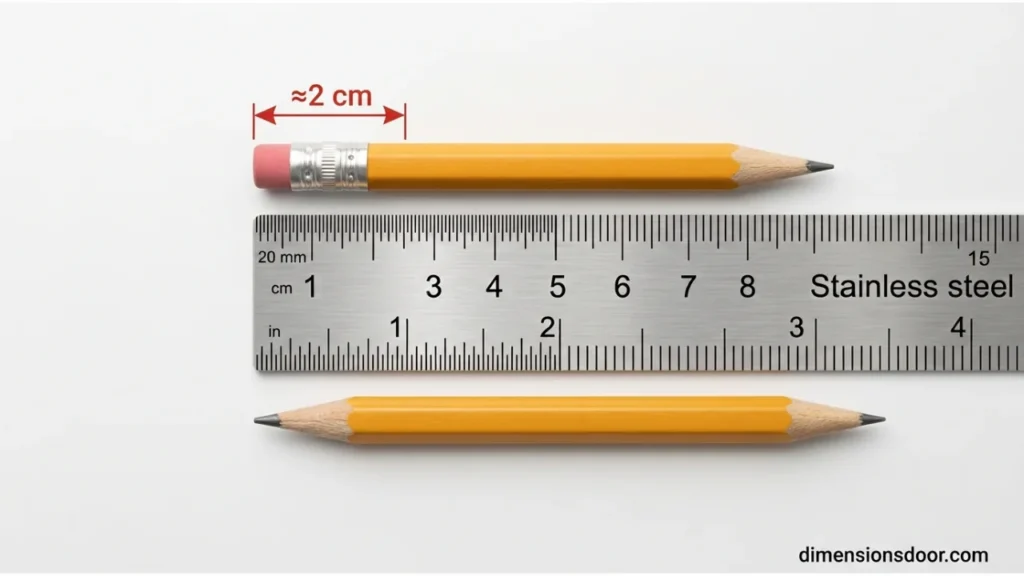
The pink eraser topping most pencils is close to 2 cm long, sometimes slightly under.
A standard die (dice)
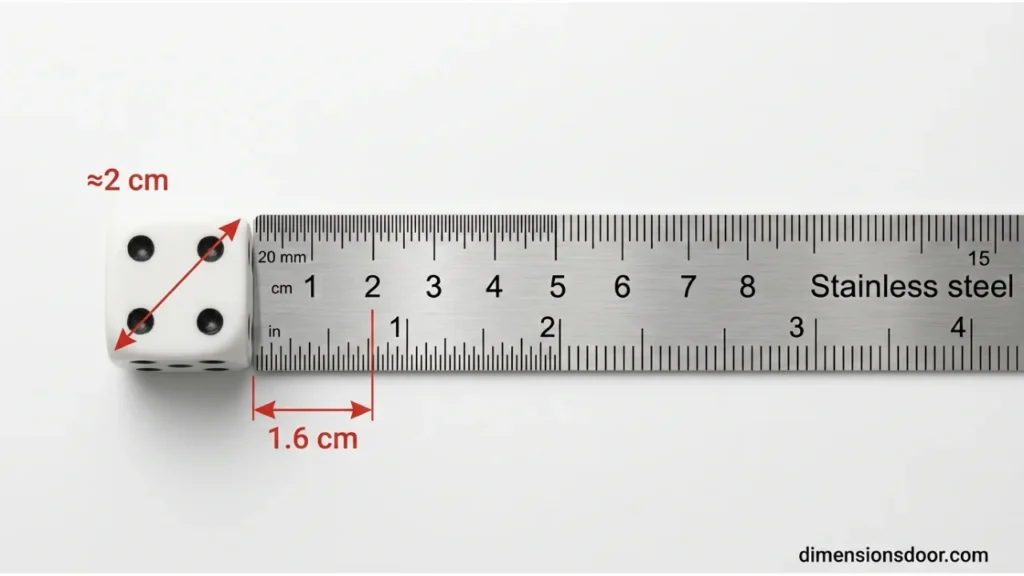
A typical six-sided die used in board games measures about 1.6 cm per side, edging close to 2 cm on the diagonal.
Your fingernail’s width
For most adults, the width of the thumbnail lands close to 2 cm — a handy built-in measuring tool.
A small button
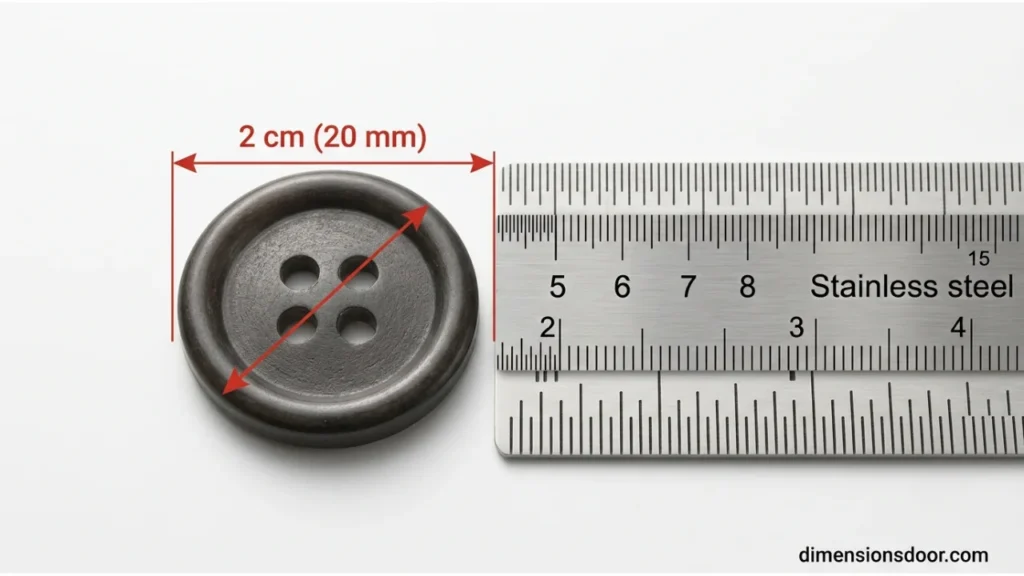
Shirt buttons, particularly the larger ones used on coats, often measure 2 cm across.
A stick of gum’s width
Most gum sticks are about 2 cm wide, though lengths vary by brand.
A large ladybug
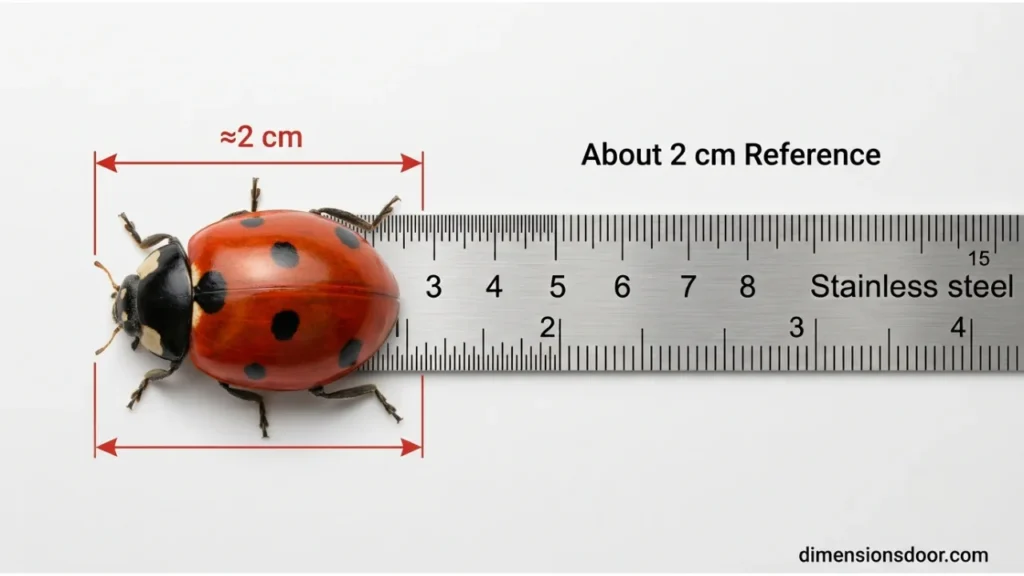
While most ladybugs are smaller, the larger beetle species can reach close to 2 cm in body length.
A U.S. quarter’s thickness stacked
Roughly 10 quarters stacked together reach close to 2 cm in height.
A small acorn
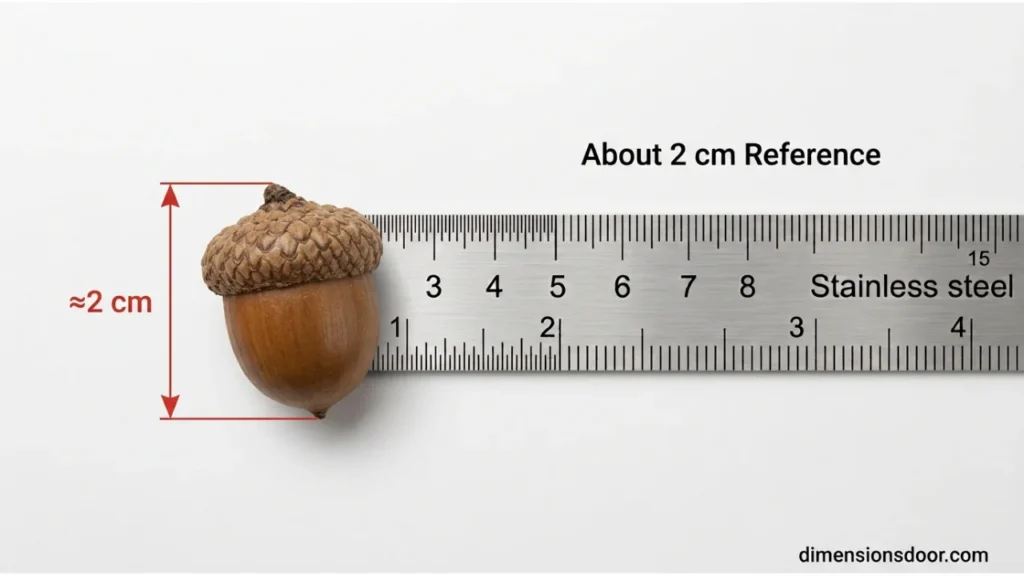
Many acorns, cap included, measure around 2 cm from top to bottom.
A SIM card
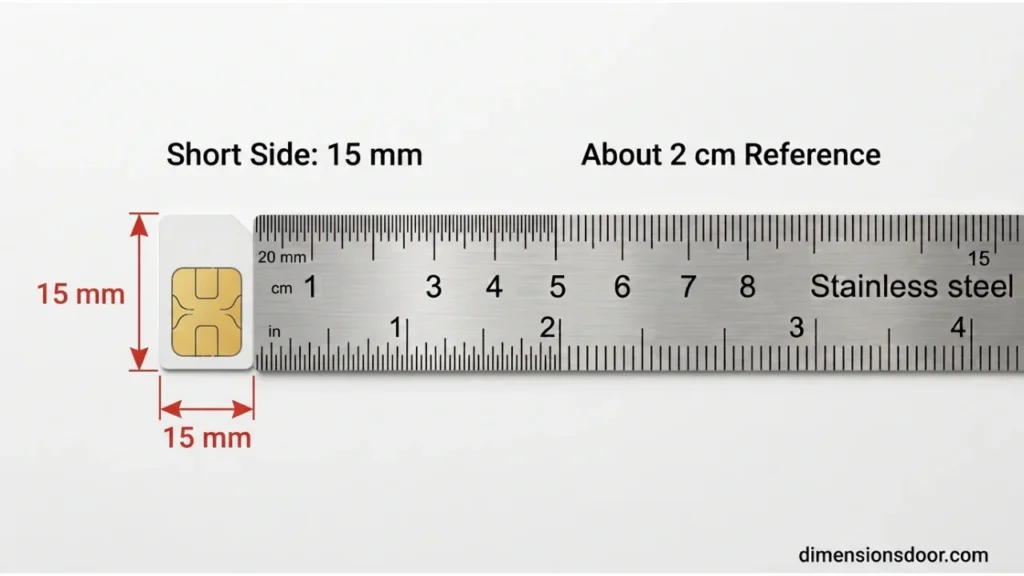
The standard-size SIM card used in older phones measures 2.5 cm by 1.5 cm, with its shorter side close to 2 cm.
A watch battery (button cell)
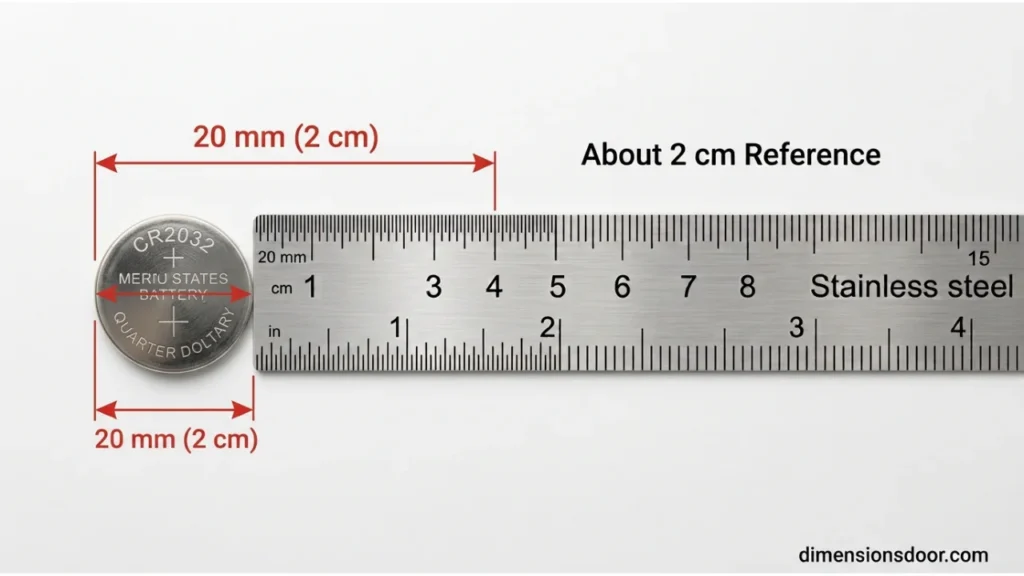
Many common button-cell batteries, like the CR2032, measure 2 cm across.
A cherry tomato
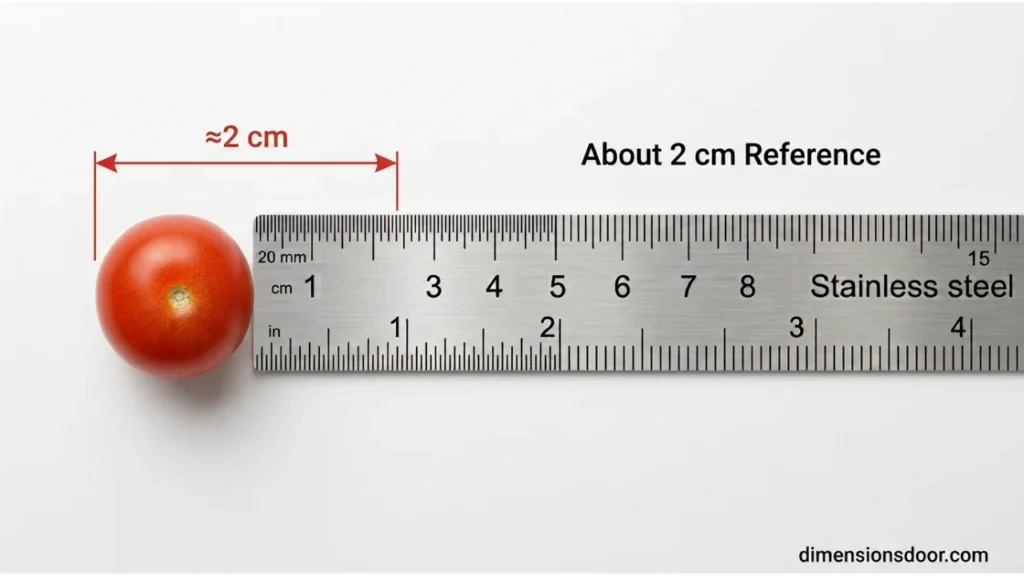
A medium cherry tomato typically measures around 2 cm in diameter, making it a familiar kitchen reference.
Must Visit: How Long Is 1 cm? 15 Everyday Objects That Are Exactly 1 Centimeter Long
How Big Is 2 cm on Your Finger? Easy Ways to Measure Without a Ruler
No ruler nearby? Your hands are more accurate than you’d think.
The width of an average adult thumb measures close to 2 cm at its base. Press your thumb sideways against the object you’re measuring — if it matches the thumb’s width, you’re looking at roughly 2 cm.
The first knuckle joint on your index finger is another handy reference. For most adults, the distance across the top knuckle is close to 2 cm.
A credit card’s short edge, divided in half, gives you almost exactly 2 cm — credit cards are a standardized 8.56 cm by 5.4 cm under ISO/IEC 7810 guidelines, so half the short edge lands near 2.7 cm, useful as a rough visual anchor even if not exact.
These tricks won’t replace a real ruler for precise work, but they’re reliable enough for quick estimates — sizing craft beads, checking gaps, or judging produce at the grocery store.
Is 2 cm the Size of a Pea? Common Size Comparisons Explained
Short answer: no, 2 cm is bigger than a pea.
A typical garden pea measures about 7.5 to 8.5 millimeters in diameter — under 1 cm. That means 2 cm is more than double the size of an average pea, closer to the size of a peanut or a large grape.
This mix-up happens often because “pea-sized” is used loosely in everyday language — think skincare instructions or medical descriptions of lumps. But when it comes to an actual 2-centimeter measurement, you’re looking at something noticeably larger than a pea: think a cherry tomato, a large button, or a nickel.
Getting this distinction right matters, especially in contexts like health checks, where accurately describing a lump or mark’s size can affect how it’s assessed.
FAQs
How big is 2 cm visually?
Visually, 2 cm is about the width of a large paperclip or a US nickel. It’s small enough to fit on a fingertip but noticeably bigger than a grain of rice or a pea.
What does 2 cm look like?
2 cm looks like a short line just under an inch long — picture the diameter of a AA battery or the width of your thumb at its base.
How big is 2 cm on your finger?
On most adult hands, 2 cm matches the width of the thumb at its base or the span across the first knuckle of the index finger.
How long is 2 cm in length?
In length, 2 cm equals 0.787 inches, 20 millimeters, or 0.02 meters — roughly three-quarters of an inch.
How big is 2 cm?
2 cm is a small unit of length equal to 0.79 inches, comparable in size to a nickel, a grape, or a large button.
Is 2 cm the size of a pea?
No. A pea measures roughly 0.8 cm across, so 2 cm is more than double the size of an average pea — closer to a cherry tomato or peanut.
Conclusion
Two centimeters isn’t a hard measurement to picture once you connect it to something familiar. Whether it’s a nickel in your pocket, the width of your thumb, or a cherry tomato on your plate, you now have several reliable ways to estimate 2 cm without ever reaching for a ruler.

William Ahad is the founder and lead writer at DimensionsDoor, where he researches and publishes verified measurement guides covering doors, furniture, appliances, and everyday objects. With a background in home improvement and product research, William has spent years cross-checking manufacturer specifications, industry standards, and real-world listings to help readers get accurate dimensions before they buy, build, or install anything.