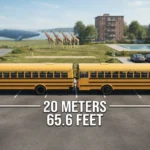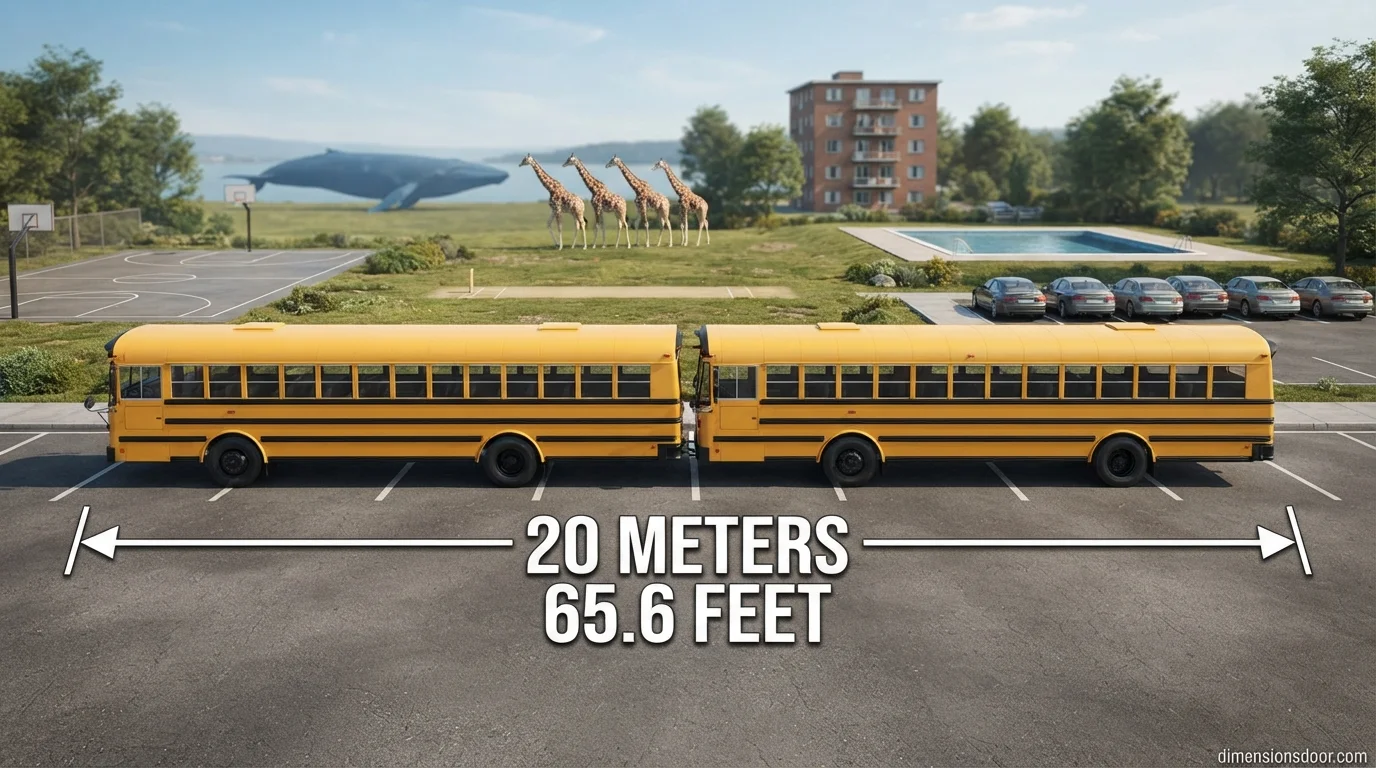
Picture two school buses parked end to end. That is roughly 20 meters, one of the most common distances you will run into in sports, construction, and everyday American life. This guide breaks down exactly how long 20 meters is, explains 15 real objects that match it, and answers the questions people actually search for.
Table of Contents
How Long Is 20 Meters? (Quick Answer)
20 meters equals 65.6 feet, or 65 feet and 7.4 inches when broken into feet and inches. In other units, 20 meters is 787.4 inches, 2,000 centimeters, and about 21.9 yards.
A meter is the base unit of length in the metric system. It is formally defined as the distance light travels in a vacuum during 1/299,792,458 of a second, a standard set by the International Bureau of Weights and Measures. One meter equals 39.37 inches, so multiplying by 20 gets you to the 787.4 inch figure.
20 Meters to Feet, Inches & Yards: Full Conversion Breakdown
If you need 20 meters in feet or any other imperial unit, here is the full breakdown in one place.
| Unit | Value |
|---|---|
| Feet | 65.6 ft |
| Feet and inches | 65 ft, 7.4 in |
| Inches | 787.4 in |
| Yards | 21.87 yd |
| Centimeters | 2,000 cm |
| Millimeters | 20,000 mm |
The conversion formula is simple: multiply meters by 3.281 to get feet, or by 39.37 to get inches. Since 1 inch equals exactly 2.54 centimeters, every metric-to-imperial conversion traces back to that fixed number, which is why these figures never change no matter which calculator you use.
Our Inches to Feet Converter provides a quick and accurate way to convert measurements from inches to feet, making it easy to work with dimensions for art, design, construction, and everyday projects.
15 Real-Life Examples of 20 Meters (What Does 20 Meters Look Like?)
Numbers alone rarely stick. Seeing 20 meters next to familiar objects makes the distance click instantly. Here are 15 real-world examples, explained one at a time.
Two school buses parked end to end
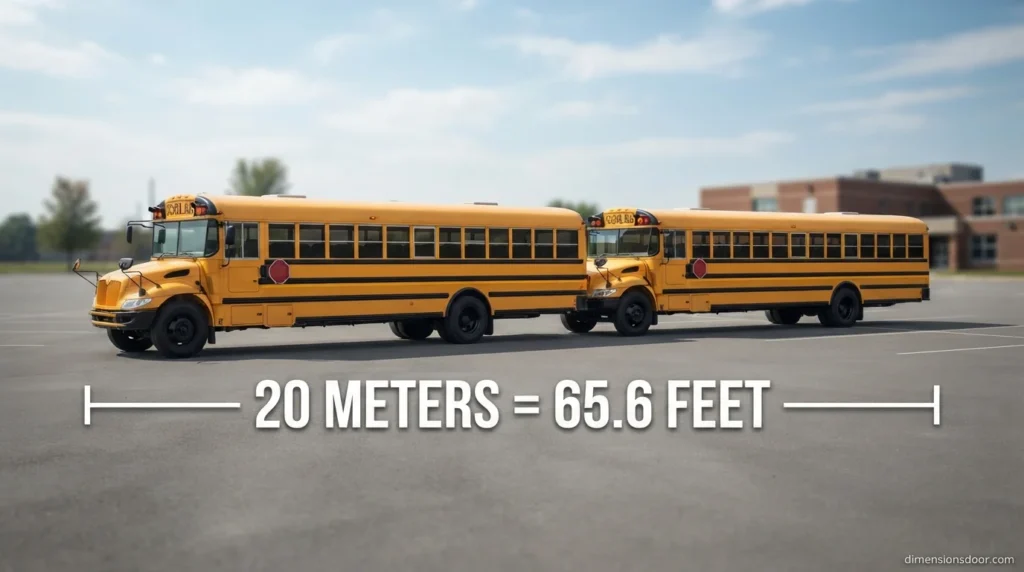
A standard American school bus runs about 35 to 40 feet long. Line up two of them nose to tail and you land almost exactly on 65 to 70 feet, close enough to 20 meters that it is the single easiest mental image for the distance.
A blue whale
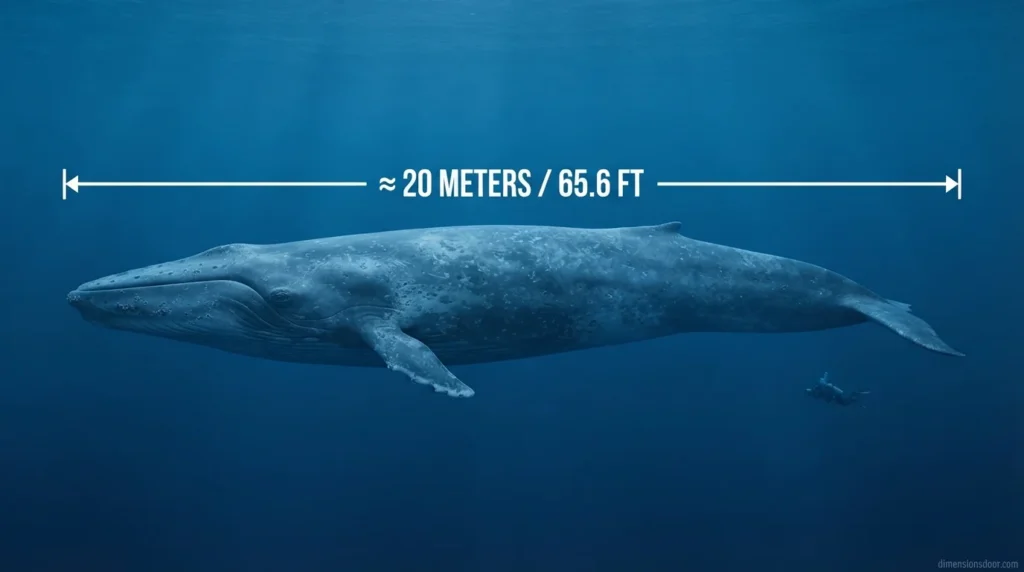
The blue whale is the largest animal to ever exist, and adults regularly reach lengths close to 20 meters, sometimes even longer. It is one of the rare cases where a single living creature can stand in for the entire distance on its own.
A basketball court
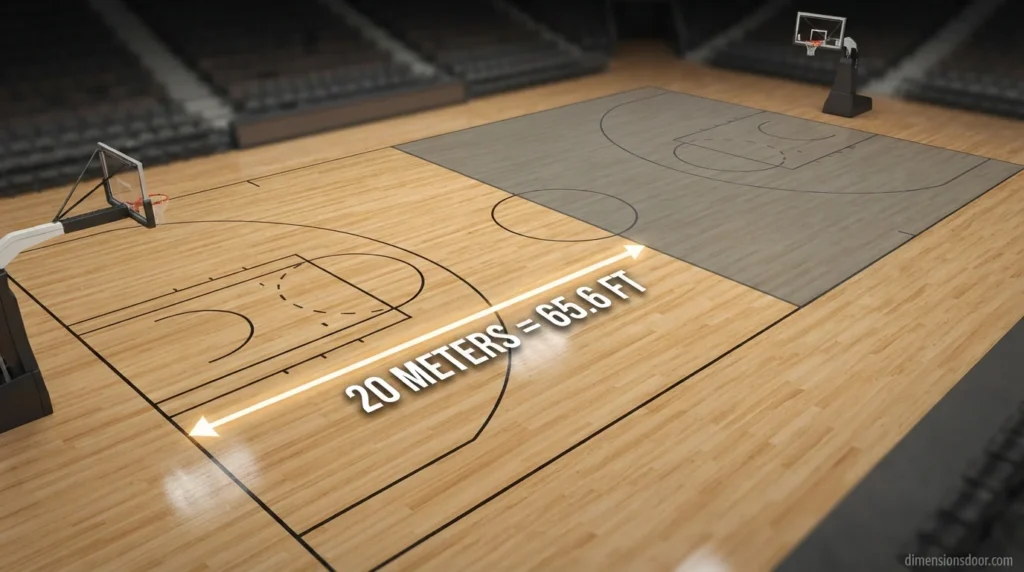
An NBA basketball court measures 94 feet from baseline to baseline. Twenty meters covers about 65.6 feet of that, meaning it stretches across roughly two-thirds of the full court, well past both three-point lines.
Four adult giraffes nose to tail
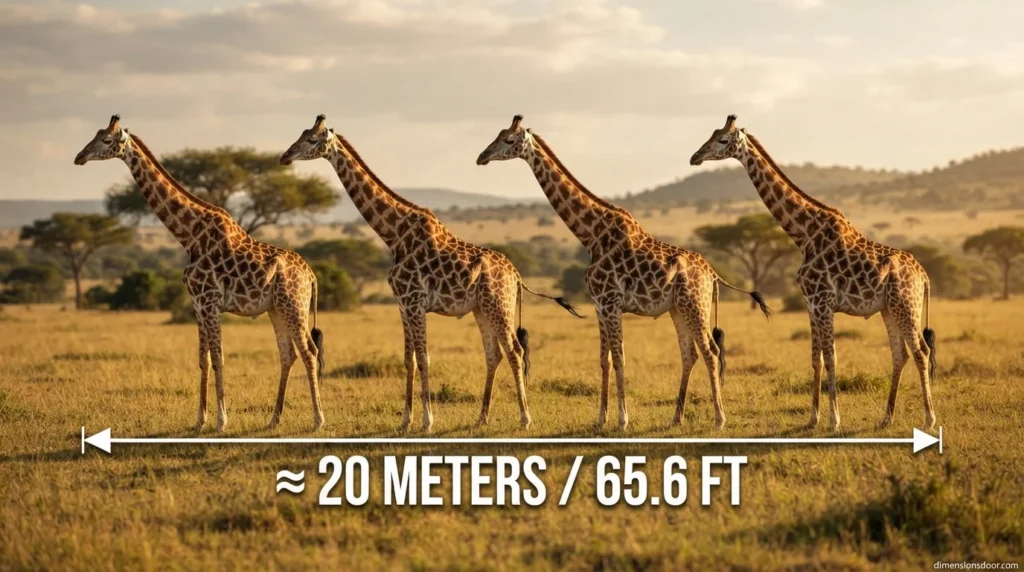
Giraffes average around 16 to 18 feet in height. Laid end to end rather than standing, four of them add up to close to 65 feet, making this one of the more vivid animal comparisons for the distance.
A six-story building
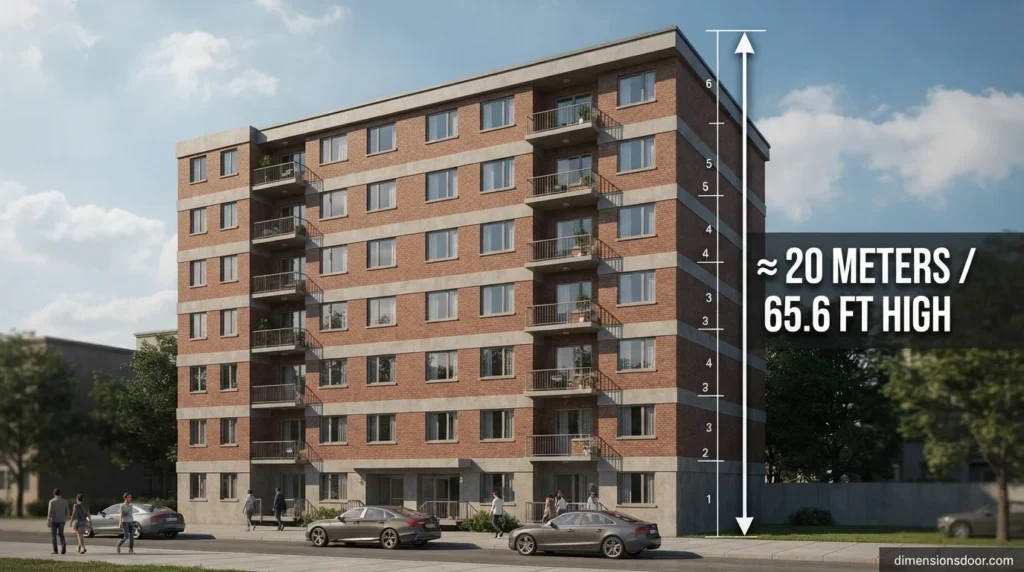
Commercial and residential floors typically run 10 to 11 feet each, including the floor slab. Stack six of them and you reach roughly 60 to 66 feet, putting 20 meters right around the height of a modest six-story building.
A standard swimming pool length
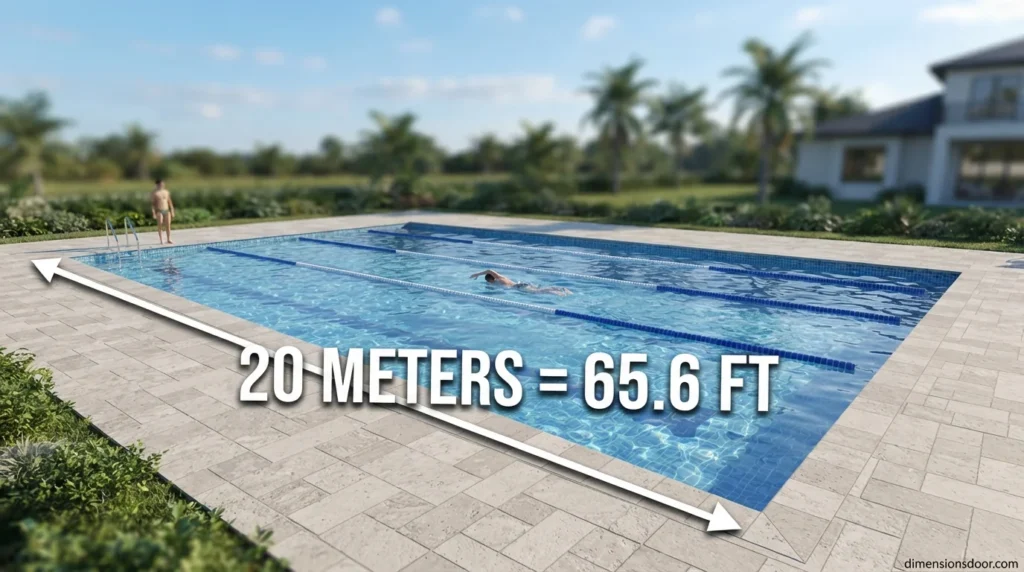
Many backyard and recreational lap pools in the US are built close to 60 to 66 feet long. Swimming a single length in one of these pools covers almost exactly 20 meters, which is why this comparison shows up often in fitness and swim training content.
Six mid-size sedans bumper to bumper
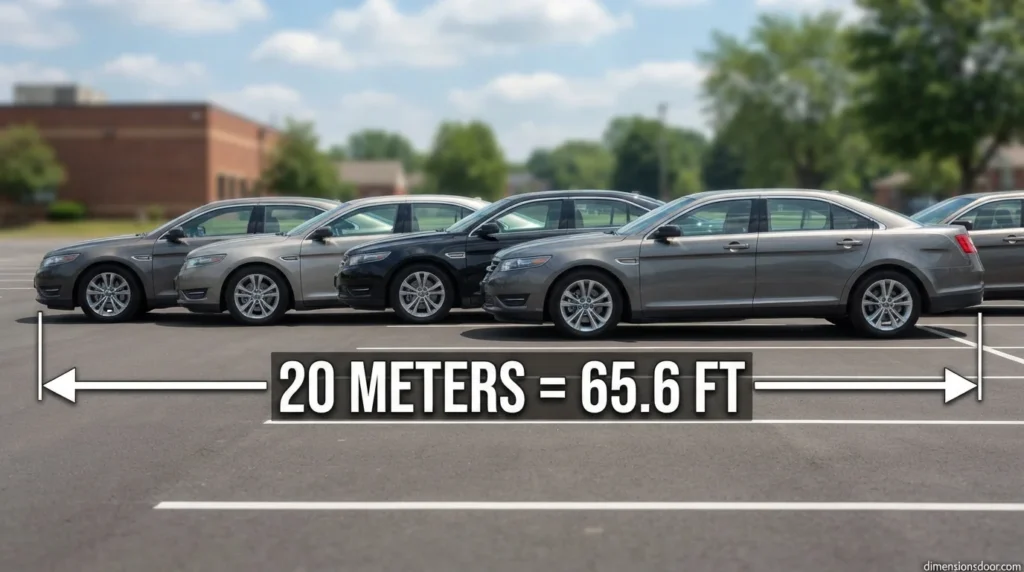
The average mid-size sedan measures around 15 to 16 feet long including bumpers. Six of them parked in a row add up to roughly 90 to 96 feet, so five to six cars is the more precise match for 20 meters, useful for picturing the distance in a parking lot.
A tennis court plus a bit more
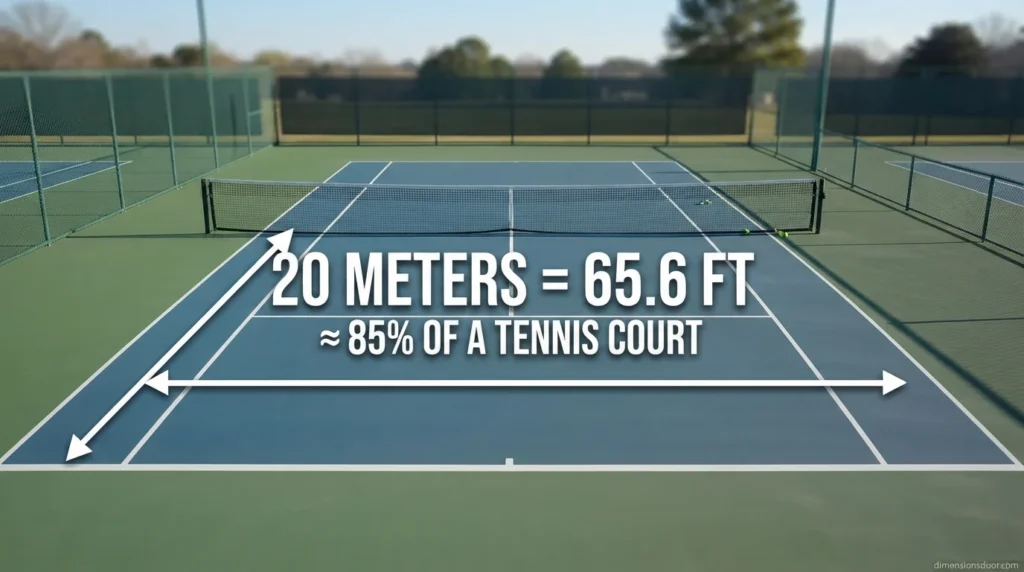
A full tennis court measures 78 feet from baseline to baseline. Twenty meters at 65.6 feet falls just short of the full court, roughly 85 percent of the way from one baseline toward the other.
Three highway lanes laid end to end
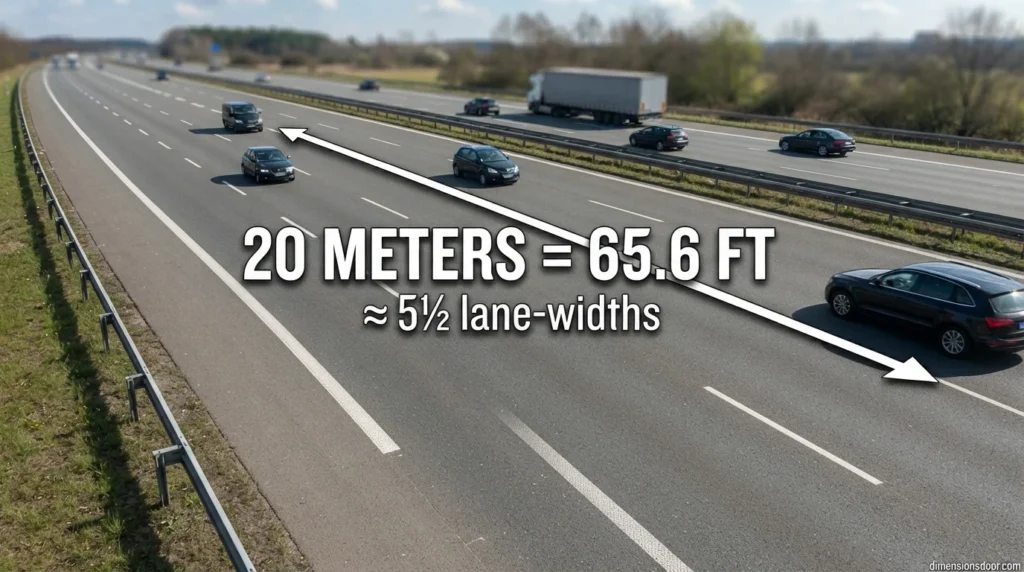
A standard US highway lane is 12 feet wide. Three lanes placed end to end total 36 feet, so it actually takes closer to five and a half lanes to reach 65.6 feet, giving a useful sense of scale for road and traffic distances.
A large moving truck and a half
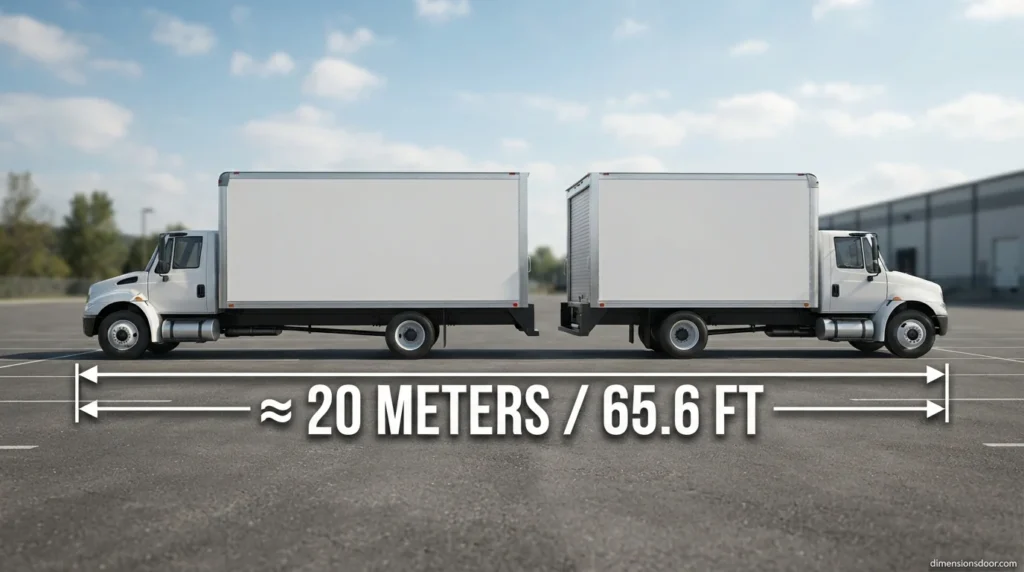
Box trucks used for moving typically run 20 to 26 feet long. One and a half to two trucks parked end to end land close to the 65.6 foot mark, a comparison that resonates with anyone who has rented one for a move.
Two bowling lanes
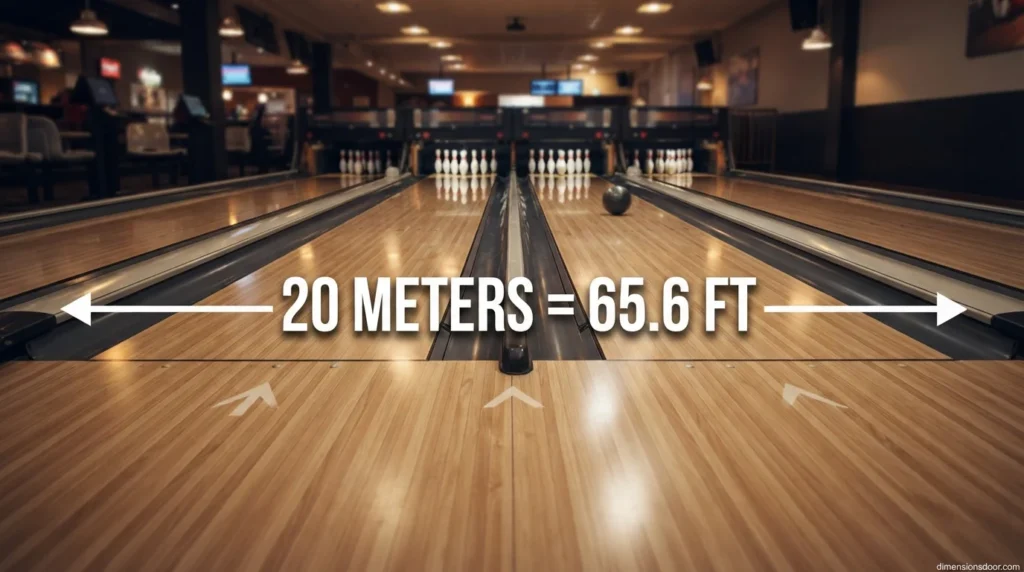
A regulation bowling lane measures about 60 feet from the foul line to the head pin, plus additional approach space that brings the full lane closer to 80 feet. Two lanes side by side roughly bracket the 20 meter distance.
A cricket pitch
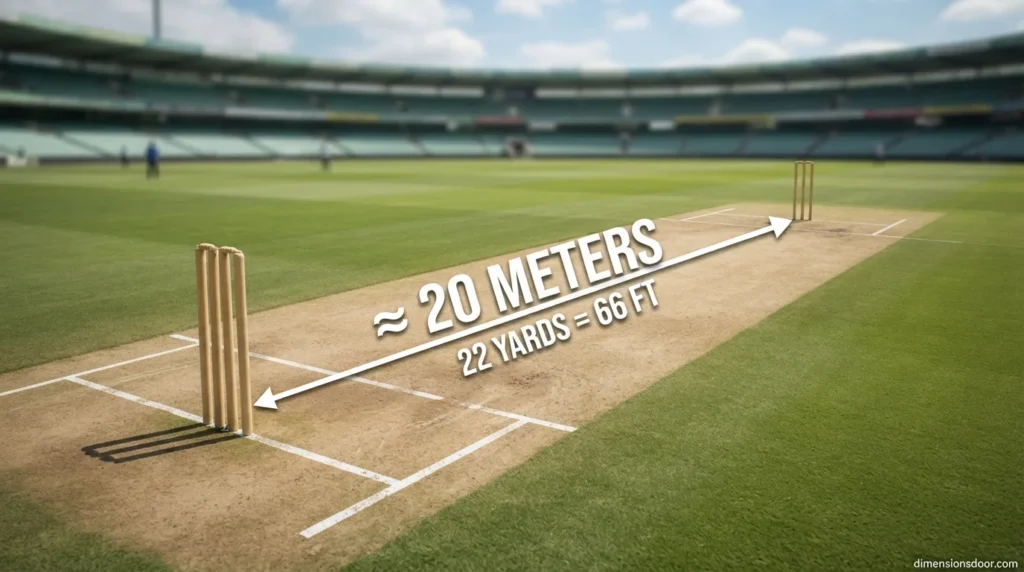
The pitch between the two sets of stumps in cricket measures exactly 22 yards, or 66 feet. That is almost identical to 20 meters, making cricket one of the few sports where the field marking and the metric distance line up almost perfectly.
The wingspan of a small private plane
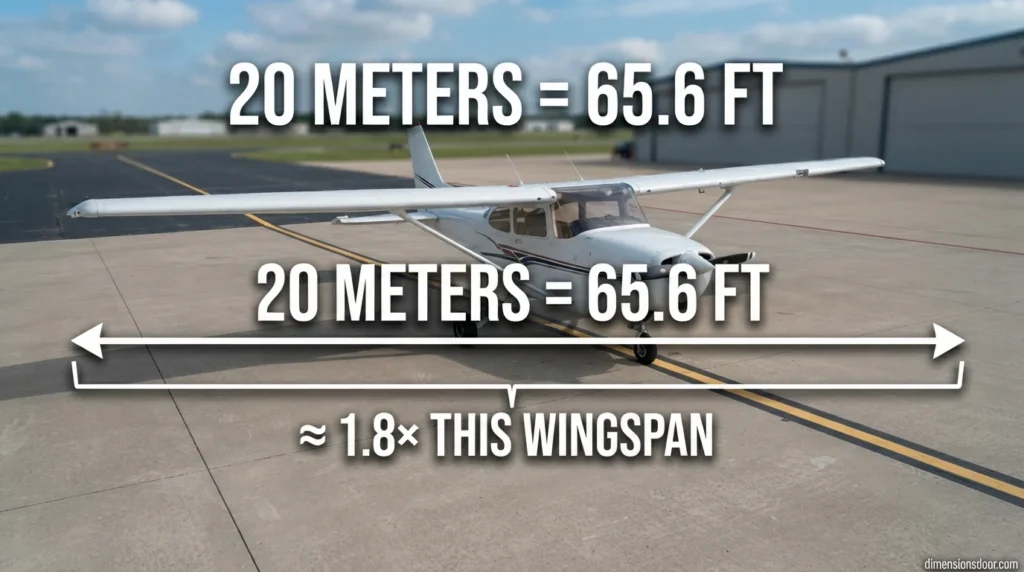
A Cessna 172, one of the most common small aircraft in the US, has a wingspan of about 36 feet. Roughly one and three-quarter wingspans placed end to end reach 20 meters, a useful reference for aviation enthusiasts.
About 13 refrigerators laid on their sides
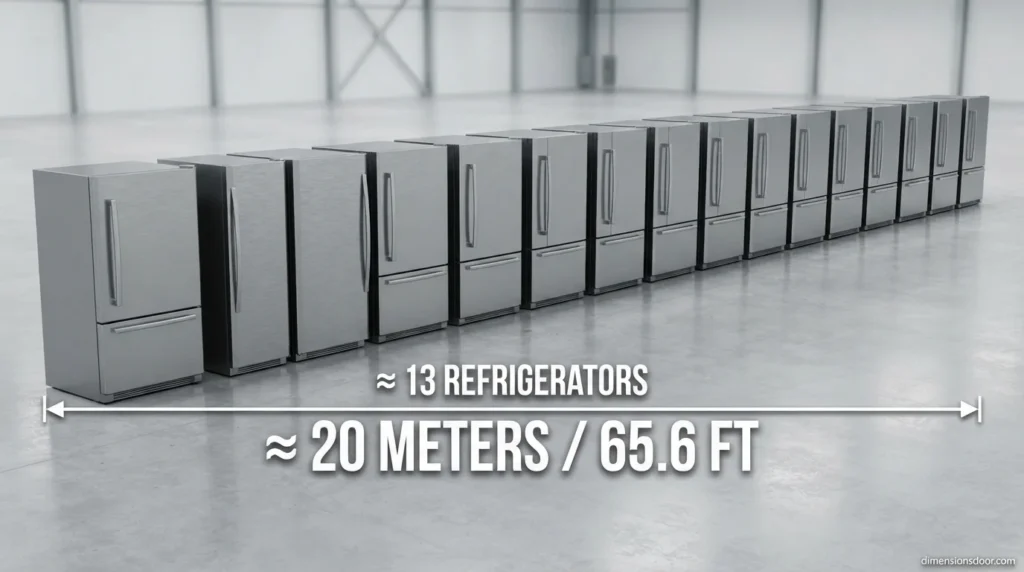
A standard American refrigerator stands around 5 to 5.5 feet tall. Laid on its side and placed end to end, it takes roughly 12 to 13 of them to stretch the full 65.6 feet, an unusual but memorable household comparison.
A modest suburban front yard
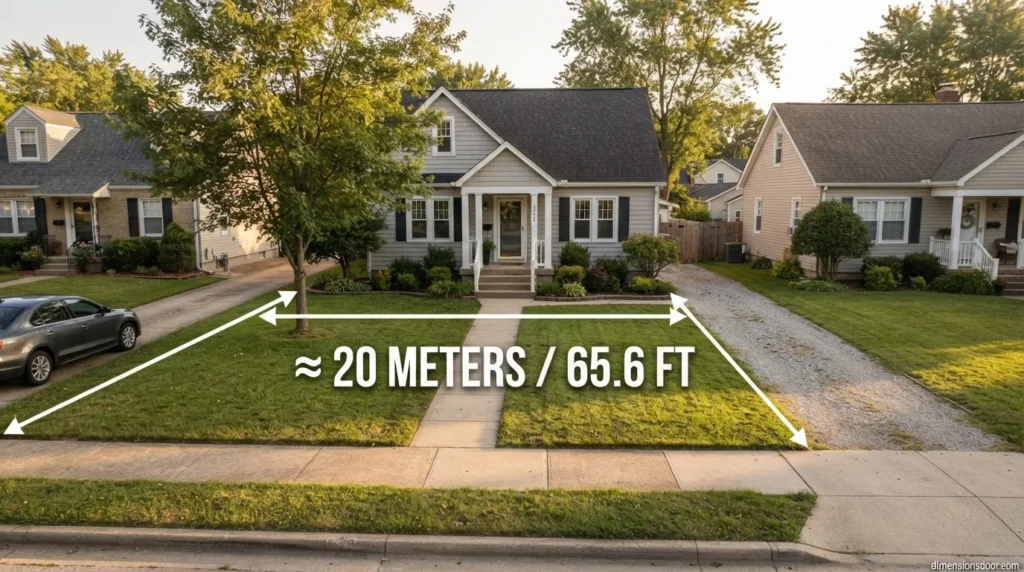
On many standard US residential lots, the depth from the sidewalk to the front porch runs somewhere between 40 and 70 feet depending on the neighborhood and lot size. A deeper suburban front yard often lands close to 20 meters, making it one of the more relatable everyday examples.
These comparisons answer one of the most common questions people ask: what does 20 meters look like in terms you can actually picture without a tape measure.
Must Visit: How Long Is 100 Meters? 15 Real-Life Comparisons, Examples & Visual Guide
How Far Is 20 Meters to Walk? Steps & Time
20 meters takes about 24 to 26 average adult steps to walk, and it takes roughly 13 to 15 seconds at a normal walking pace.
The average adult stride length runs between 2.1 and 2.5 feet, according to research compiled by the Centers for Disease Control and Prevention on gait and mobility. Dividing 65.6 feet by an average 2.5-foot stride lands you close to 26 steps. Walking speed for most healthy adults sits around 3 to 3.5 miles per hour, which works out to roughly 4.5 to 5 feet per second, putting the full 20 meter walk at well under 20 seconds for most people.
This is useful context for how far 20 meters is to walk in practical settings like parking lots, fitness tests, or physical therapy exercises, where short-distance walking tests are a common clinical benchmark.
Is 20 Meters a Long Distance? Visual Perspective
20 meters is considered a short to moderate distance, not long by everyday standards, but far enough to matter in sports, safety, and design.
In athletics, 20 meters is a fraction of a 100 meter sprint, just a fifth of the total distance, yet it is the exact length used in the well-known 20-meter shuttle run fitness test found in schools and military training programs. In home and workplace safety, 20 meters is often cited as a minimum viewing or evacuation distance. In construction, it roughly matches the width of a small commercial lot. Context changes everything: 20 meters feels short on a running track but significant when it is the gap between you and an oncoming vehicle.
So how many feet is 20 meters visually? Think two city buses, or two-thirds of a basketball court, and the scale becomes immediate rather than abstract.
FAQs About 20 Meters
What does 20 meters look like?
20 meters looks like two school buses parked end to end, or about two-thirds the length of a basketball court. It is close to 65.6 feet, a distance most people can picture using everyday objects like vehicles or sports courts.
How long is a 20 meters example?
A clear example of 20 meters is a blue whale, one of the few animals long enough to match the distance on its own. Six mid-size sedans in a row or two bowling lanes are also solid real-world examples.
How far is 20 meters in steps to walk?
20 meters takes about 24 to 26 average adult steps, based on a typical stride length of roughly 2.1 to 2.5 feet per step.
How many feet is 20 meters visually?
20 meters equals 65.6 feet, or 65 feet and 7.4 inches. Visually, that is close to two-thirds of a basketball court or four giraffes standing nose to tail.
Is 20 meters a long distance?
20 meters is a short to moderate distance. It is short compared to a 100 meter sprint but long enough to serve as a standard measurement in fitness tests, construction, and safety guidelines.
How far is 20 metres in feet to walk?
20 metres is 65.6 feet, which takes most adults about 13 to 15 seconds to walk at a normal pace of 3 to 3.5 miles per hour.
Conclusion
20 meters equals 65.6 feet, or about 787.4 inches, a distance easiest to picture as two school buses or two-thirds of a basketball court. Whether you are estimating a walk, a yard, or a fitness test, these real-world comparisons make the number instantly usable.

William Ahad is the founder and lead writer at DimensionsDoor, where he researches and publishes verified measurement guides covering doors, furniture, appliances, and everyday objects. With a background in home improvement and product research, William has spent years cross-checking manufacturer specifications, industry standards, and real-world listings to help readers get accurate dimensions before they buy, build, or install anything.