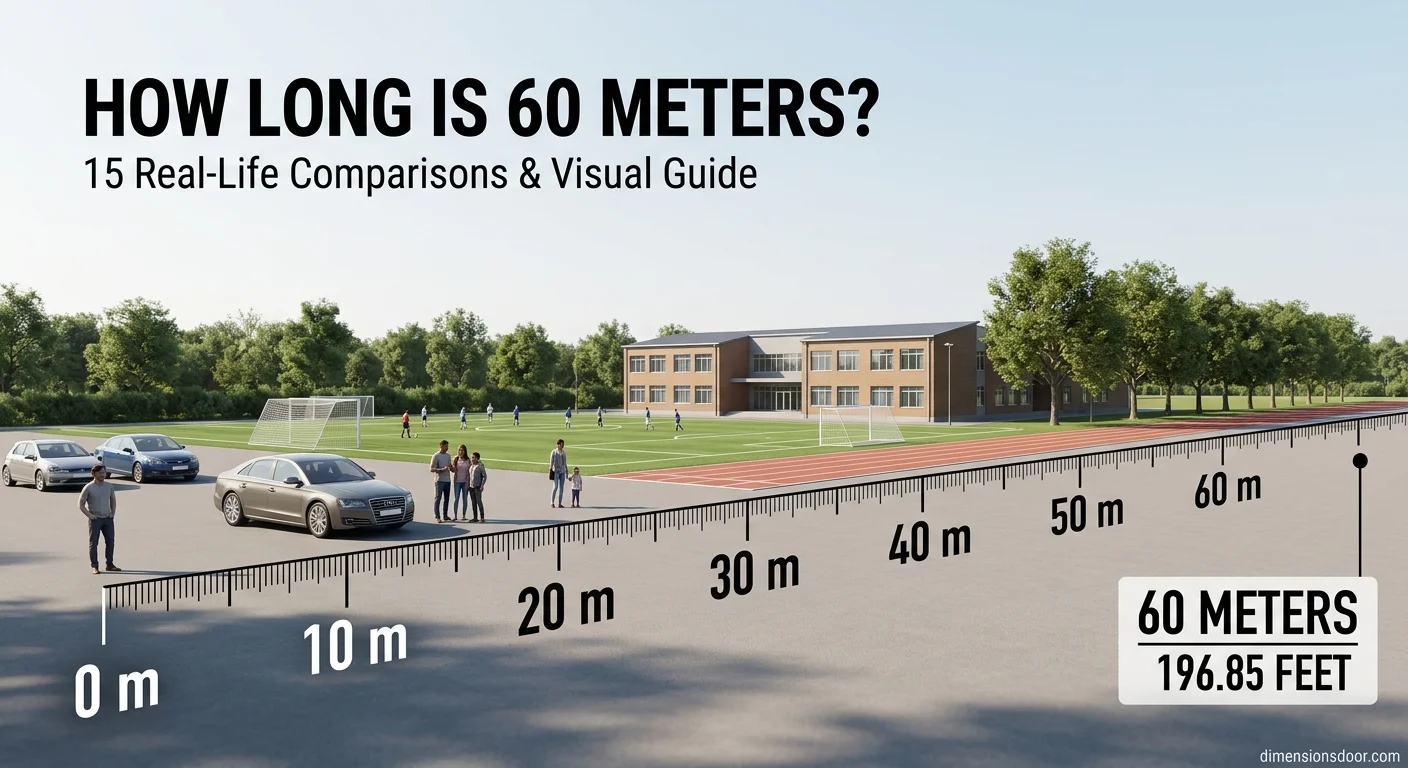
Sixty meters sounds simple on paper. But until you picture it next to something real, the number stays abstract. How long is 60 meters? It’s about 196.85 feet, or roughly 65.6 yards — a little more than half the length of a standard soccer pitch.
This guide breaks that number down into something you can actually picture. You’ll get the exact conversion, walking time, step count, 15 fully explained real-world comparisons, and even the sports events where 60 meters is the official distance.
Table of Contents
What Is 60 Metres in Feet? (Exact Conversion)
What is 60 metres in feet? The math is straightforward: one meter equals 3.28084 feet. Multiply that by 60, and you land on 196.85 feet — just a few inches shy of 197 feet.
Here’s the same distance across the units people search for most:
| Unit | Value |
|---|---|
| Feet | 196.85 ft |
| Yards | 65.6 yd |
| Inches | 2,362.2 in |
| Miles | 0.037 mi |
| Kilometers | 0.06 km |
| Centimeters | 6,000 cm |
A quick trick for mental math: double the meters, then add a bit less than 10%. Sixty meters doubled is 120; add roughly 76 more, and you get close to 196 feet. It’s not exact, but it’s fast enough for everyday estimates.
Metric-to-imperial conversion trips people up because the two systems evolved separately — meters come from the International System of Units (SI), while feet trace back to old British imperial standards. That’s why the conversion factor (3.28084) isn’t a clean, round number.
How Far Is 60 Meters to Walk? (Time, Pace & Steps)
How far is 60 meters to walk? At a normal, relaxed walking pace — about 5 km/h (3.1 mph) — most adults cover 60 meters in roughly 43 to 45 seconds. That’s less time than it takes to read this paragraph out loud twice.
How far is 60 meters in steps? The answer depends on stride length, but the average adult stride is about 0.76 meters (2.5 feet). Divide 60 by that average stride, and you get roughly 79 steps.
How far is 50 metres in steps to walk? Using the same average stride length, 50 meters comes out to about 66 steps — a helpful reference point if you’re comparing shorter distances.
A few things shift these numbers:
- Height — taller people naturally take longer strides, so they’ll need fewer steps
- Terrain — walking on sand, gravel, or an incline slows pace and shortens stride
- Age and mobility — stride length tends to shorten gradually with age
Fitness trackers and pedometers often use this same stride-based math to estimate distance from your daily step count, which is why your app’s numbers might shift slightly when you switch shoes or walking surfaces.
Must Visit: How Long Is 20 Meters? 15 Real-Life Examples, Comparisons & Visual Guide
15 Real-Life Things That Are 60 Meters Long, Tall or Wide
What are some things that are 60 meters tall? Numbers on their own don’t stick. Comparisons do. Below are 15 real, everyday-relatable examples, grouped by category, each explained so you understand why it matches up with 60 meters — not just that it does.
Buildings & Structures
A 20-story office building

Most commercial buildings average about 3 meters per floor, once you account for ceiling height and the structure between floors. Multiply that by 20, and you land almost exactly on 60 meters. So next time you’re near a 20-floor building, you’re looking straight at this distance, just turned vertical.
2. A mid-sized church spire or clock tower
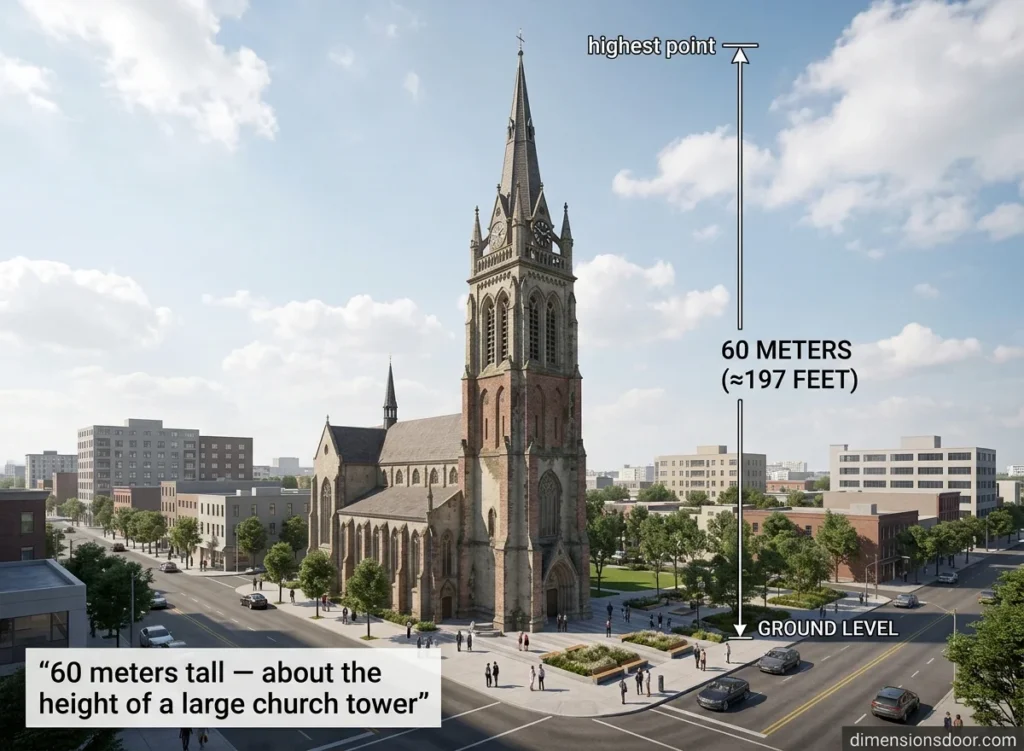
Many historic town-center spires and clock towers across the U.S. and Europe were built in the 40–70 meter range, since builders wanted the structure visible from a distance without the engineering demands of a true skyscraper. A 60-meter spire sits right in that sweet spot — tall enough to anchor a skyline, short enough to build with older construction methods.
3. Two-thirds of the Statue of Liberty
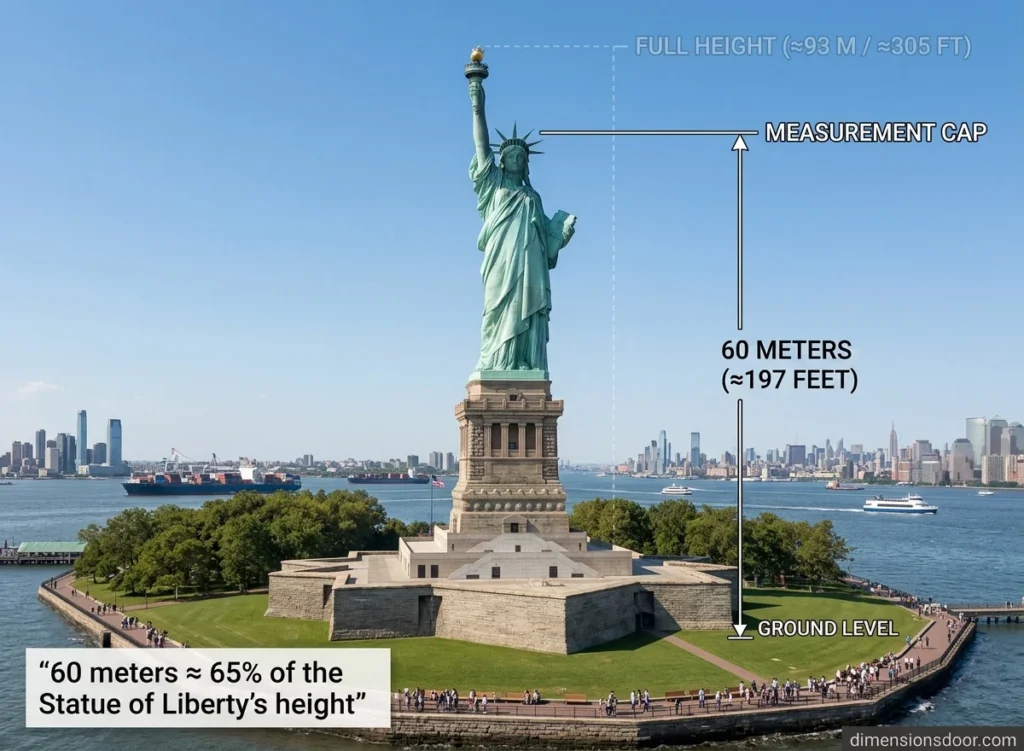
The Statue of Liberty stands about 93 meters tall from the ground to the tip of the torch, including its pedestal. Sixty meters gets you roughly two-thirds of the way up — past the pedestal and well into the statue’s robe, just short of her raised arm.
Sports & Field Distances
4. Just over half a soccer pitch
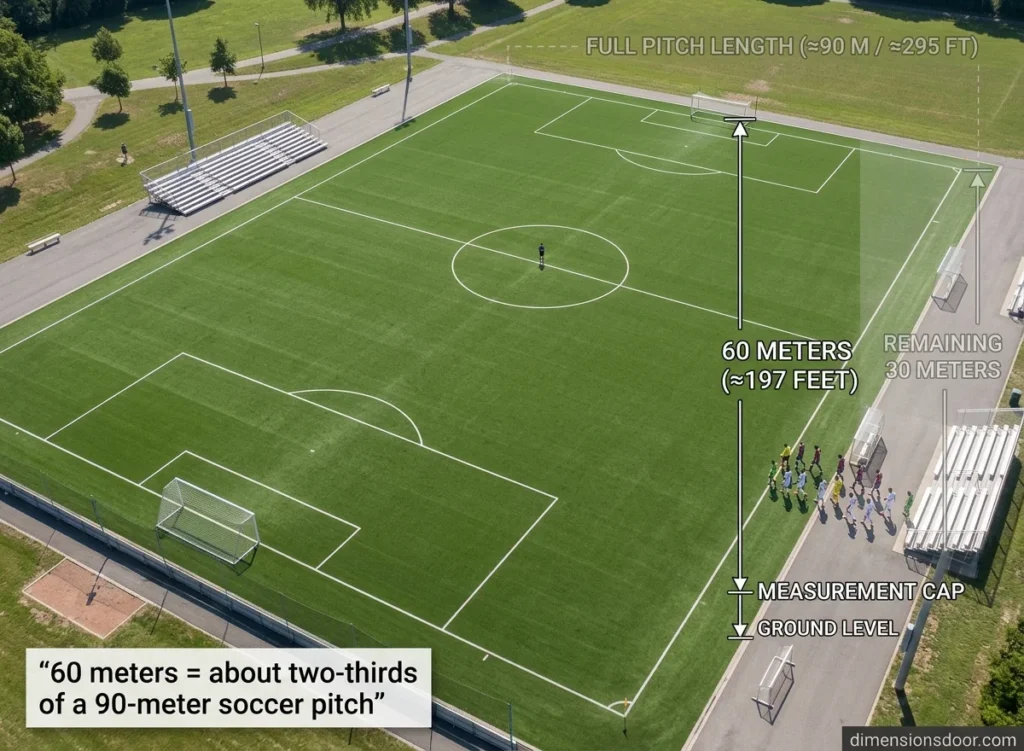
A regulation soccer pitch runs between 90 and 120 meters long, per official rules. Sixty meters lands you past the halfway line and into the opposing team’s territory — close enough to see the far goal clearly, but still a real sprint away from it.
5. One Olympic pool length, plus a bit more
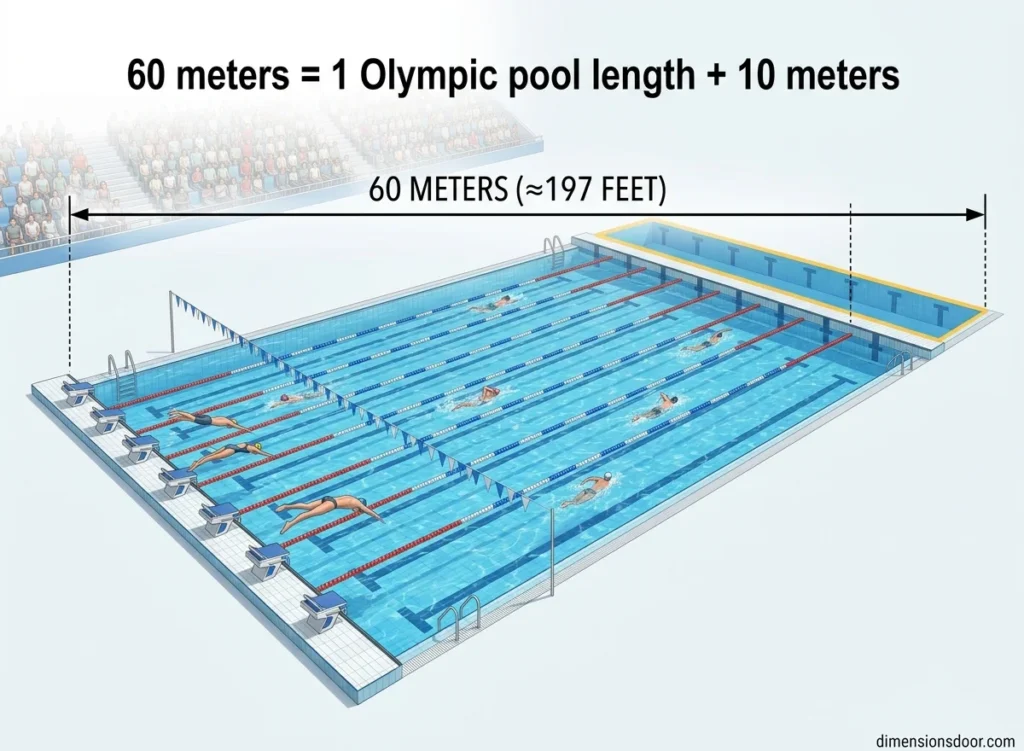
An Olympic swimming pool measures exactly 50 meters end to end. Sixty meters is that same pool length plus another 10 meters tacked on — imagine swimming a full lap and then continuing for two more strokes before stopping.
6. About two-thirds of an NFL field
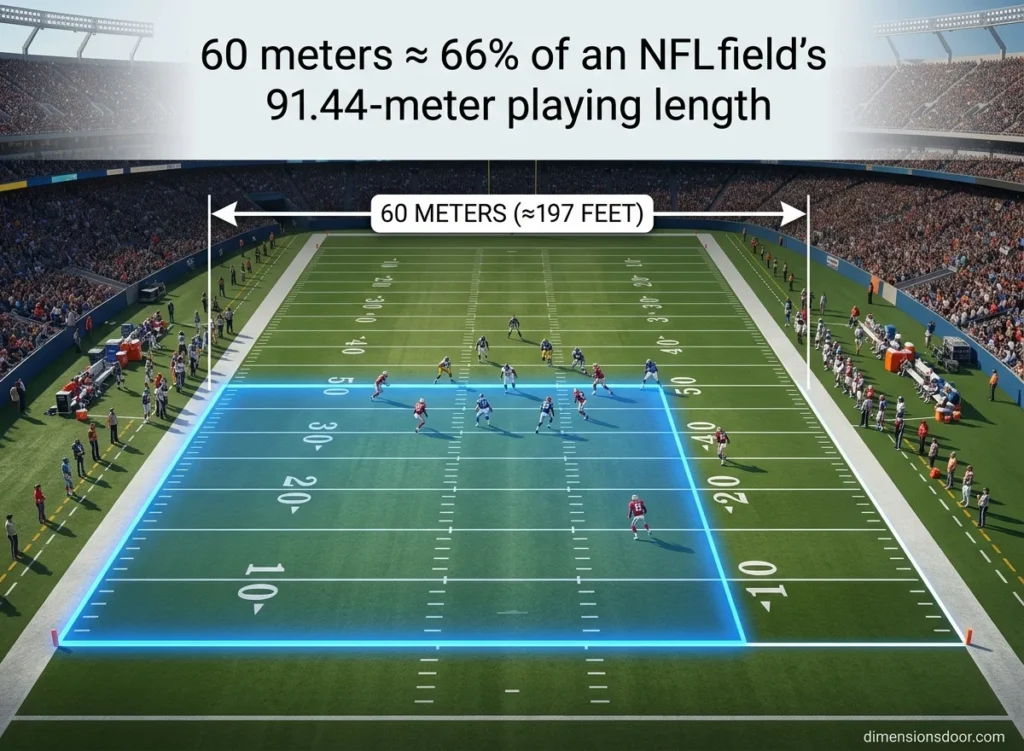
An American football field measures 109.7 meters from end zone to end zone. Sixty meters covers a little more than half that distance — roughly from one goal line to the opponent’s 35-yard line.
Everyday & Nature Comparisons
7. Five city buses parked end to end
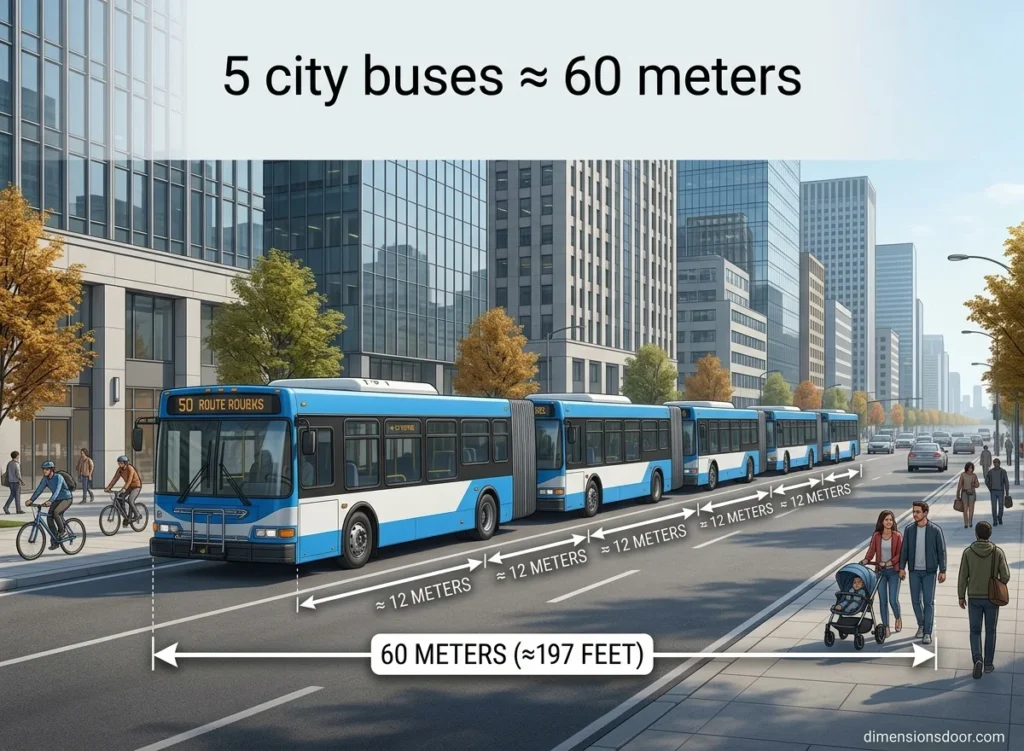
A standard city transit bus runs about 12 meters long. Line up five of them nose to tail, and you’ll hit 60 meters almost exactly — a comparison that works well if you commute or live in a city with regular bus routes.
8. Close to two blue whales
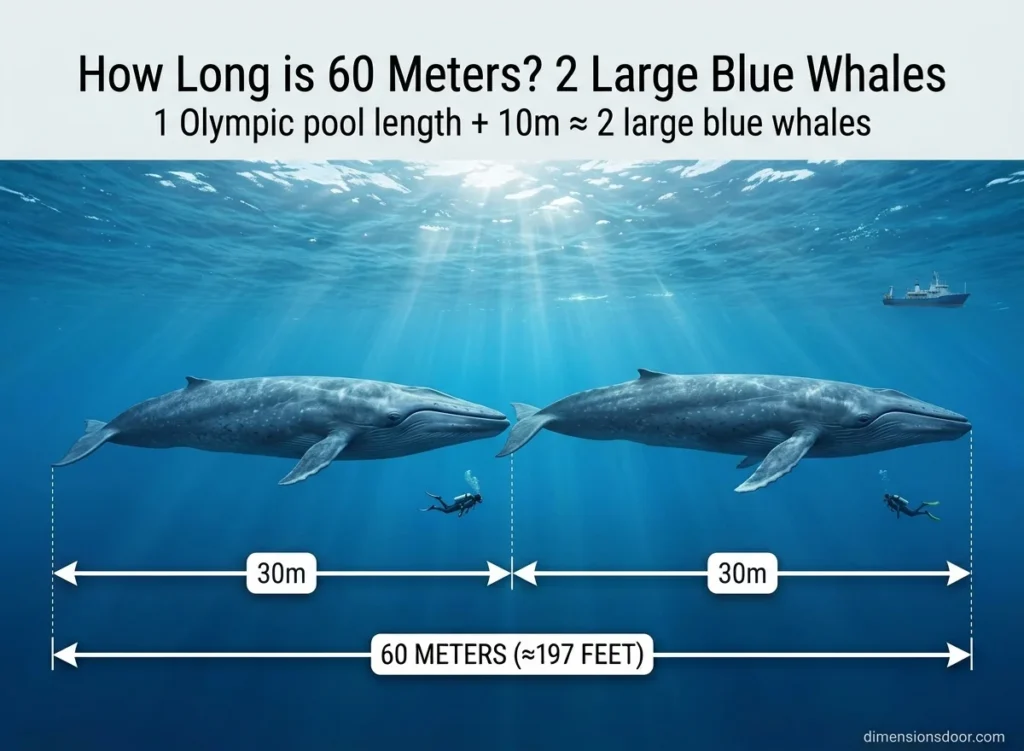
The blue whale, the largest animal ever known to exist, typically measures between 24 and 30 meters long. Two of them, placed head to tail, would stretch close to 60 meters — a useful way to grasp just how massive this creature really is.
9. Four school buses in a row
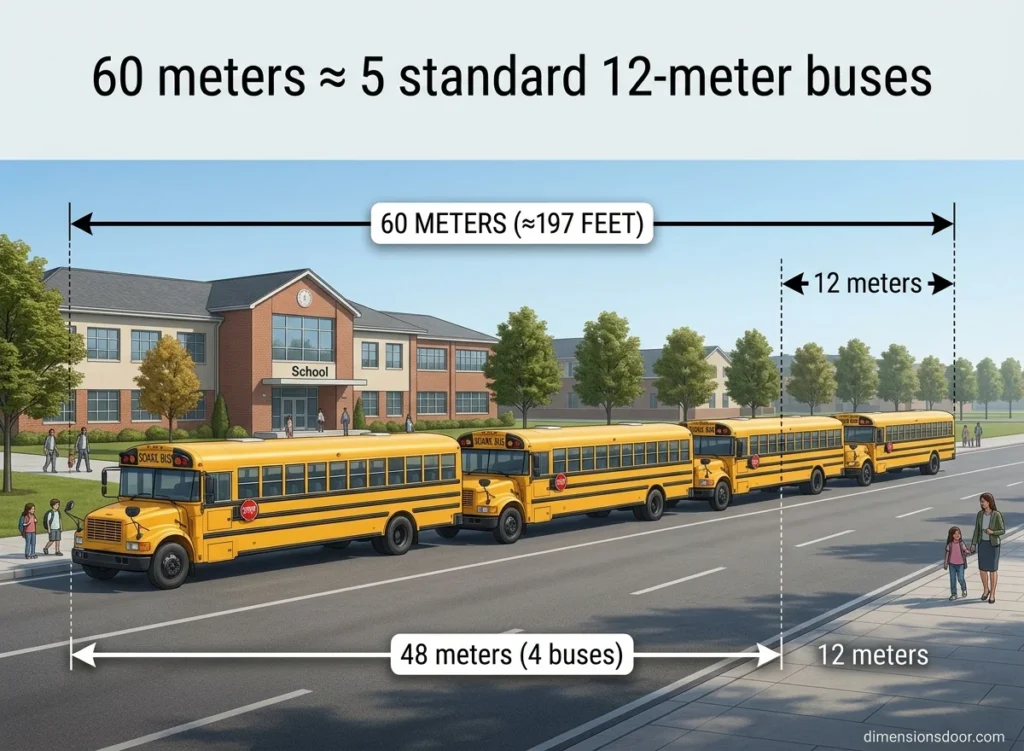
Slightly shorter than city buses, school buses average around 12–13 meters. Four of them end to end land you close to 60 meters, which makes this a familiar visual for anyone who grew up riding one to school.
10. Twelve standard parking spaces

A single U.S. parking space is typically about 5 meters long, including the painted margin. Twelve of them in a row — roughly one full side of a mid-sized parking lot — adds up to 60 meters.
11. The playing area of a football field, minus the end zones
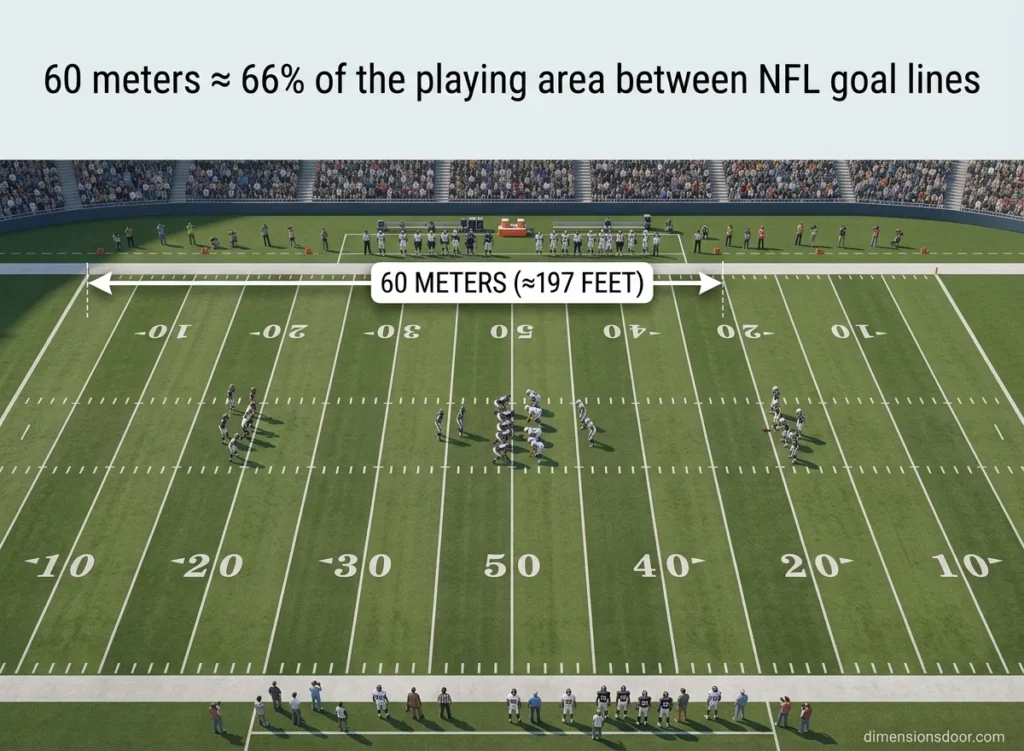
Strip away the two 9.1-meter end zones from an NFL field, and the remaining playing field measures close to 91 meters. Sixty meters covers about two-thirds of that stretch — from one goal line well past midfield.
Vertical Comparisons
12. Taller than most parking garages

Multi-level parking garages typically rise about 3 meters per level, similar to office buildings. A six-story garage tops out around 18 meters — meaning 60 meters is more than three times taller than a typical structure of that kind.
13. Close to a mature oak tree’s height
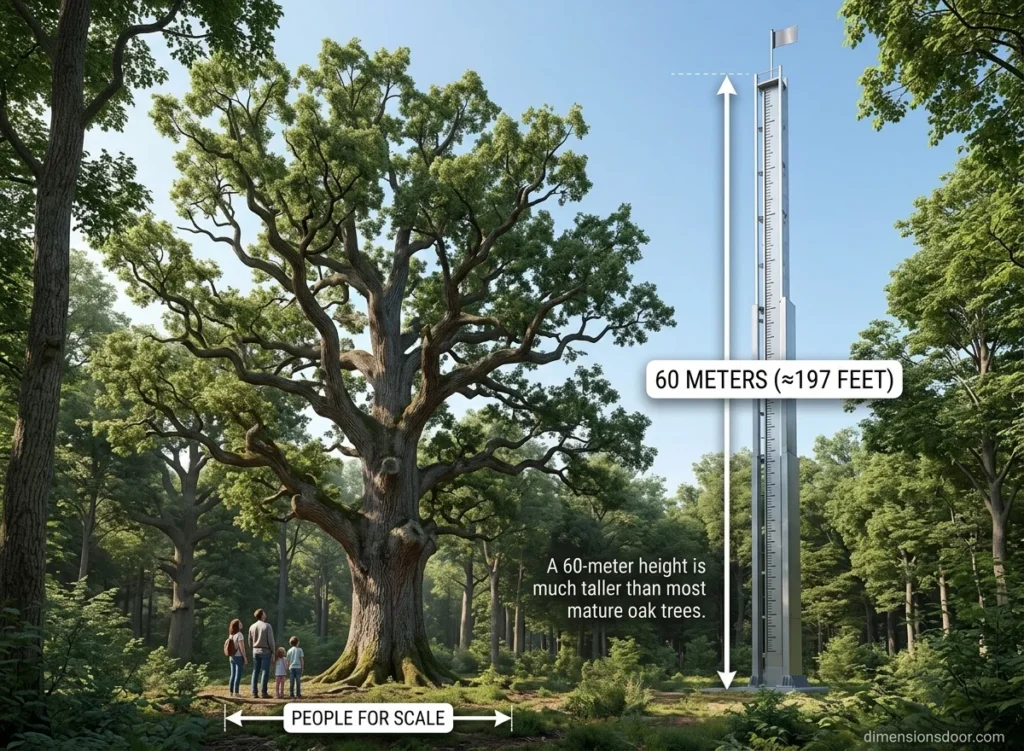
Under ideal growing conditions, a fully mature oak tree can reach heights of 20–25 meters over many decades. Sixty meters is more than double that, putting it closer to the height range of the tallest hardwood trees found in old-growth forests.
14. Near the wingspan of a Boeing 747 The Boeing 747,

one of the most recognizable commercial aircraft ever built, has a wingspan of about 68.5 meters tip to tip. Sixty meters comes in just under that — close enough that picturing the jet’s wingspan gives you a very accurate sense of the distance.
15. About the length of an Olympic sprint straightaway used in training
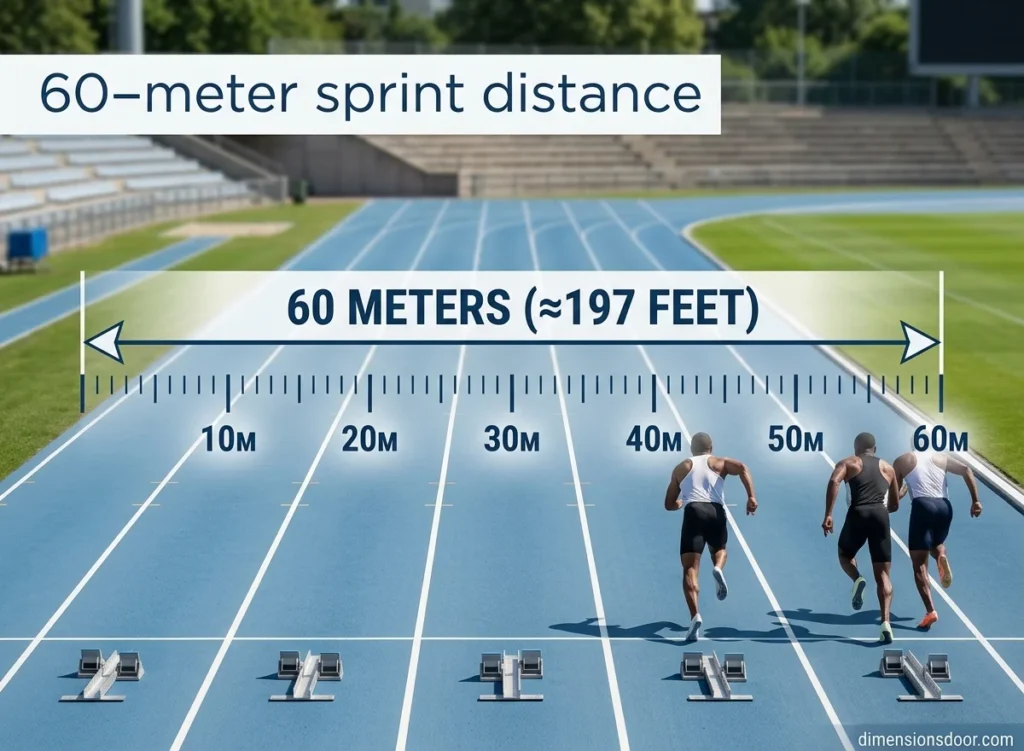
Indoor training facilities often mark out a 60-meter straightaway specifically because it matches the official indoor sprint distance covered in the next section. If you’ve ever seen lane markings on an indoor track, you’ve already seen this exact distance measured out in real life.
write a sentence professionally for my inches to feet tool which i want to provide in my article
What Does 60 Meters Look Like? A Visual Size Guide
How far is 60 meters visually? Stand at one end of a football field (the American kind) and look toward the far 40-yard line — that gap is close to 60 meters. It’s a distance you can see clearly across, but you’d need to raise your voice to be heard at the other end.
Here are a few quick visual anchors that make the distance easier to “see” in your mind:
- About four city buses lined up bumper to bumper
- Roughly half a soccer pitch, from goal line to just past the center circle
- One Olympic pool length, plus about a tenth more
If you’ve ever stood at one end of a track and field stadium and looked across to the far straightaway, that visual — a clear, walkable distance that still takes real effort to shout across — is a solid mental model for 60 meters.
60 Meters in Sports & Athletics
This is where 60 meters stops being just a comparison and becomes an official distance.
The 60-meter dash is a standard indoor track and field sprint event, run during the winter indoor season by high school, college (NCAA), and professional athletes through organizations like USA Track & Field (USATF) and World Athletics. Because outdoor 100-meter tracks don’t fit inside most arenas, the 60m sprint became the go-to indoor alternative — short enough for a straightaway, long enough to separate serious sprinters.
Elite times are remarkably fast. Top male sprinters have run the 60m dash in around 6.3 seconds, while elite female sprinters have clocked times close to 6.9 seconds. For context, that’s covering nearly 10 meters per second — faster than most people can process the distance visually.
Swimming has its own 60-meter connection too. While 50 meters is the standard Olympic pool length, many training sets and short-course events use 60-meter equivalents in longer pools, making it a familiar benchmark for competitive swimmers.
This sports context is often missing from basic conversion tools, but it’s one of the most practical, real-world reasons people search for this exact distance in the first place.
FAQs
Is 60 meters far?
It depends on context. For walking, it’s a short stretch you’d cover in under a minute. For sprinting, it’s a serious test of top speed. Compared to a football field or a city block, it’s a moderate, easy-to-picture distance.
How many meters are in 60 feet?
Reversing the conversion, 60 feet equals about 18.29 meters — roughly a third of the 60-meter distance covered in this guide.
What’s bigger, 60 meters or 60 yards?
60 meters is bigger. Since one meter equals about 1.09 yards, 60 meters converts to roughly 65.6 yards — about 5.6 yards more than 60 yards.
How long does the average person take to run 60 meters?
A recreational runner typically covers 60 meters in 9 to 11 seconds, compared to the sub-7-second times posted by elite sprinters.
Conculsion
Sixty meters is easy to picture once you connect it to something familiar — half a soccer pitch, five city buses, or a fast 6-second sprint at the elite level. Whether you’re converting units, estimating a walk, or picturing a distance for a project, the comparisons and numbers above give you a fast, accurate reference point you can actually visualize.

William Ahad is the founder and lead writer at DimensionsDoor, where he researches and publishes verified measurement guides covering doors, furniture, appliances, and everyday objects. With a background in home improvement and product research, William has spent years cross-checking manufacturer specifications, industry standards, and real-world listings to help readers get accurate dimensions before they buy, build, or install anything.