You don’t need a ruler to understand how long is 1 inch is. You just need the right reference points — and you probably have most of them in your pocket right now.
This guide breaks down 1 inch in plain terms: what it looks like, what everyday objects match it, and how to measure it using nothing but your fingers or your phone.
Table of Contents
What Is 1 Inch?
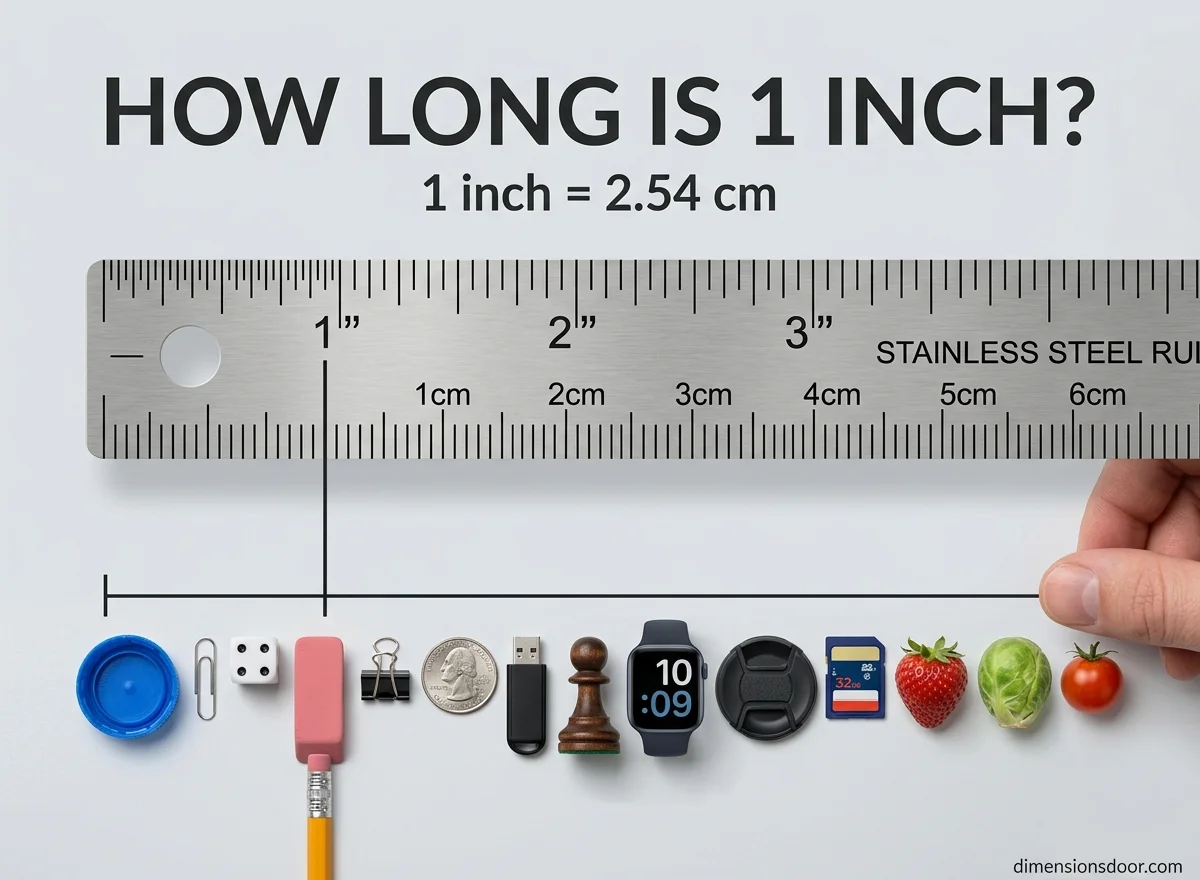
1 inch is a unit of length used in the imperial system and the US customary system — the measurement system used daily across the United States. In exact terms, 1 inch equals 2.54 centimeters, or 25.4 millimeters. That conversion isn’t rounded — it’s the internationally agreed exact value, fixed since 1959 when the US and several other English-speaking countries standardized the inch against the metric system.
Here’s the quick snapshot:
| Unit | Value |
|---|---|
| Centimeters | 2.54 cm |
| Millimeters | 25.4 mm |
| Feet | 0.083 ft |
| Yard | 0.028 yd |
The tricky part isn’t the math. It’s that most people don’t have a natural, built-in sense of how long is 1 inch actually is — unlike a foot (close to a shoe length) or a yard (close to a big stride). An inch is small enough that you need a real object to compare it to. That’s exactly what the next sections give you.
How Long Is 1 Inch Visually?
Picture a short line, just under the width of a AA battery. That’s roughly 1 inch.
Visually, 1 inch is small — small enough that tiny size differences matter. This is why online shopping for things like phone cases, jewelry, or hardware can go wrong: a listing that’s off by even half an inch can look identical on a screen but feel very different in your hand.
One important warning: if you’re using an on-screen ruler graphic to check 1-inch sizing, don’t fully trust it. Phone and laptop screens have different pixel densities, so a “1-inch” line on one screen can display slightly larger or smaller on another. Always confirm with a physical object before trusting a digital measurement for anything that needs precision — like ring sizing or screw dimensions.
Our Inches to Feet Converter provides a quick and accurate way to convert measurements from inches to feet, making length calculations simple and convenient for everyday and professional use.
15 Real-Life Examples of Things That Are 1 Inch
Once you connect 1 inch to objects you already touch every day, you stop needing a ruler to “eyeball” small measurements. Here’s how 1 inch looks across five categories of everyday items.
Household Items
Bottle Cap
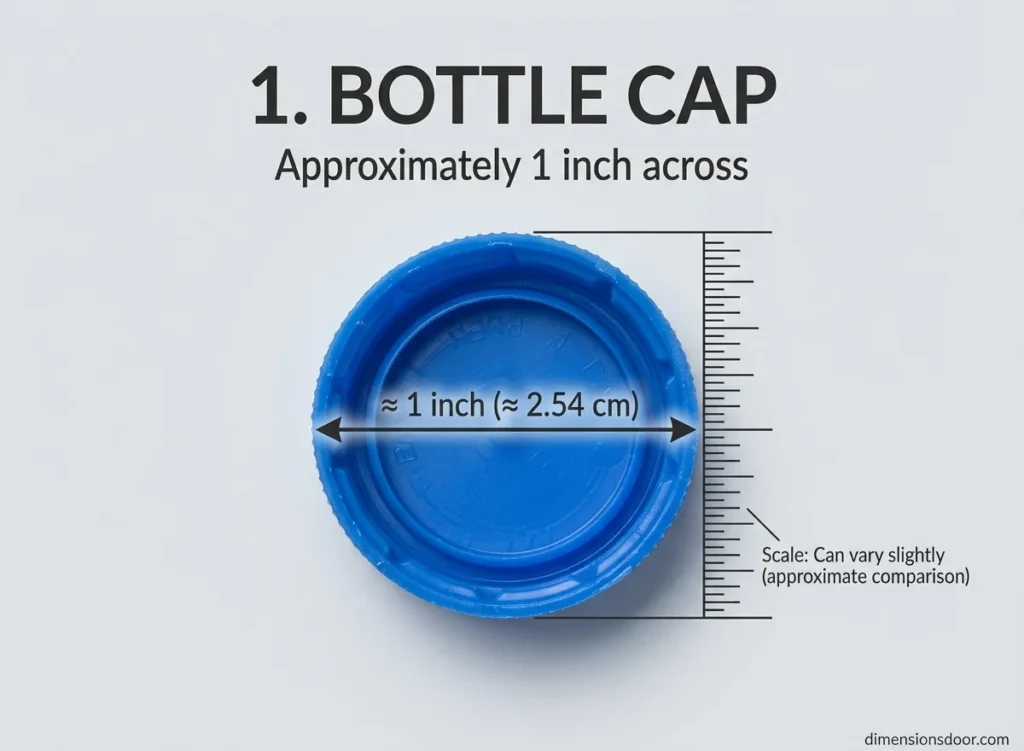
The cap on a standard plastic water or soda bottle measures close to 1 inch across. It’s one of the most reliable pocket-sized references because bottle caps are nearly identical in size across brands.
Standard Paperclip
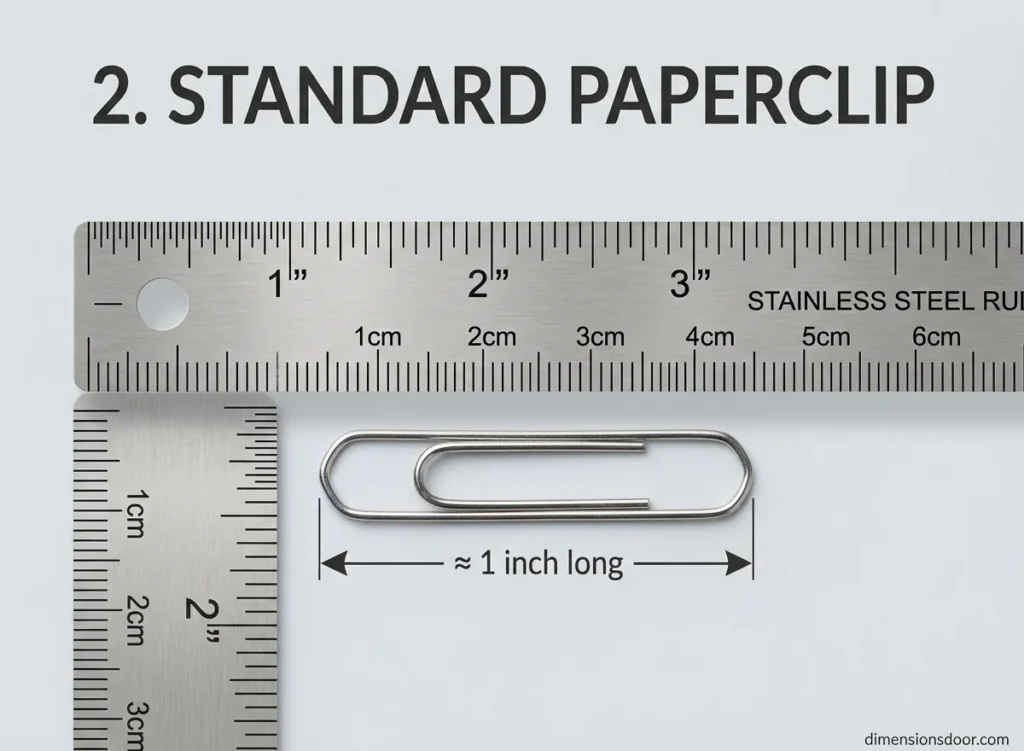
A regular-sized paperclip (not the jumbo kind) runs almost exactly 1 inch long, making it a handy desk-drawer measuring tool.
A 1-Inch Die
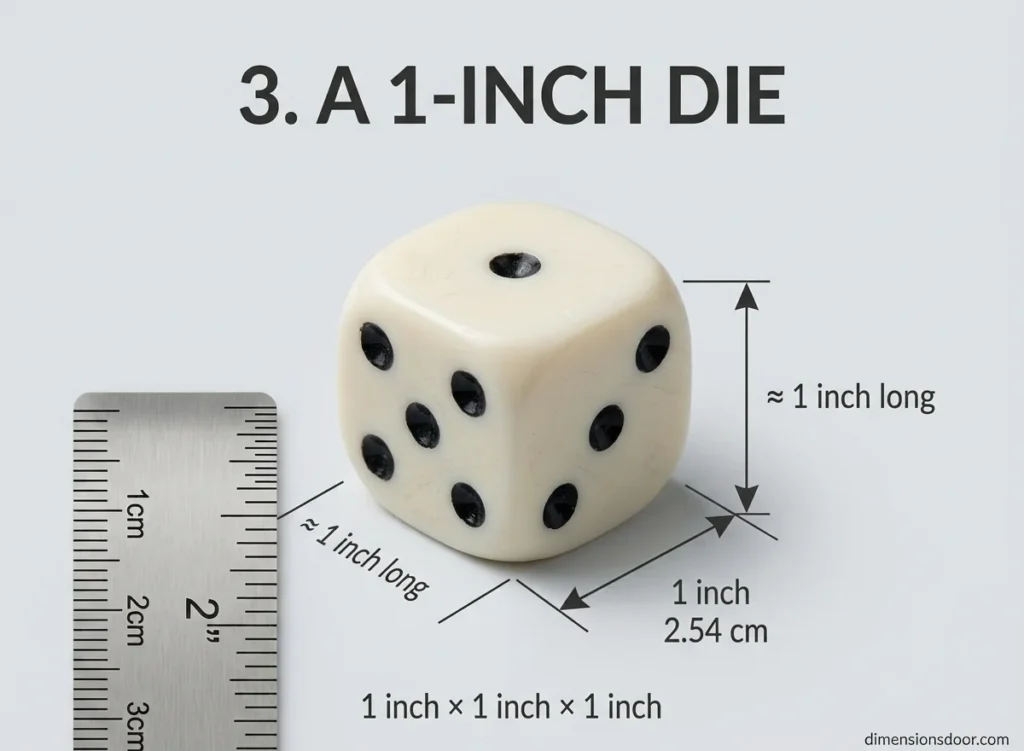
Standard board-game dice run smaller (around ⅝ inch), but the “large format” dice used in casino and specialty sets are manufactured at a true 1-inch cube — a good visual if you own a set.
Pencil Eraser (With Ferrule)
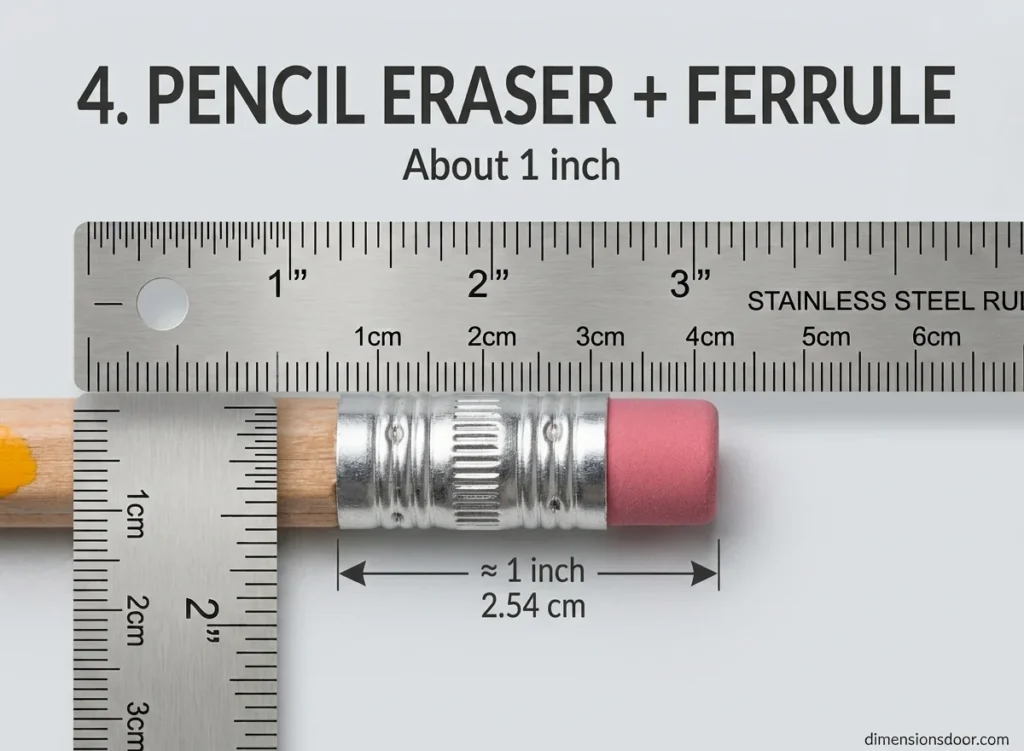
The pink eraser plus its metal band at the end of a wooden pencil adds up to roughly 1 inch — a comparison most people can check without leaving their desk.
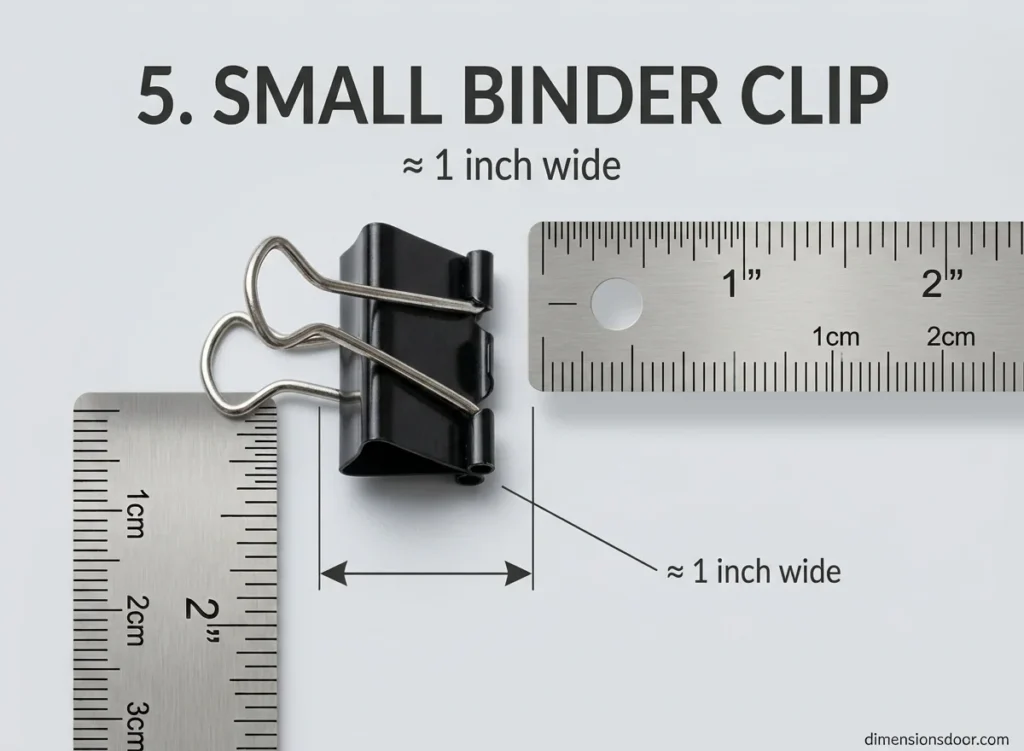
Small Binder Clip
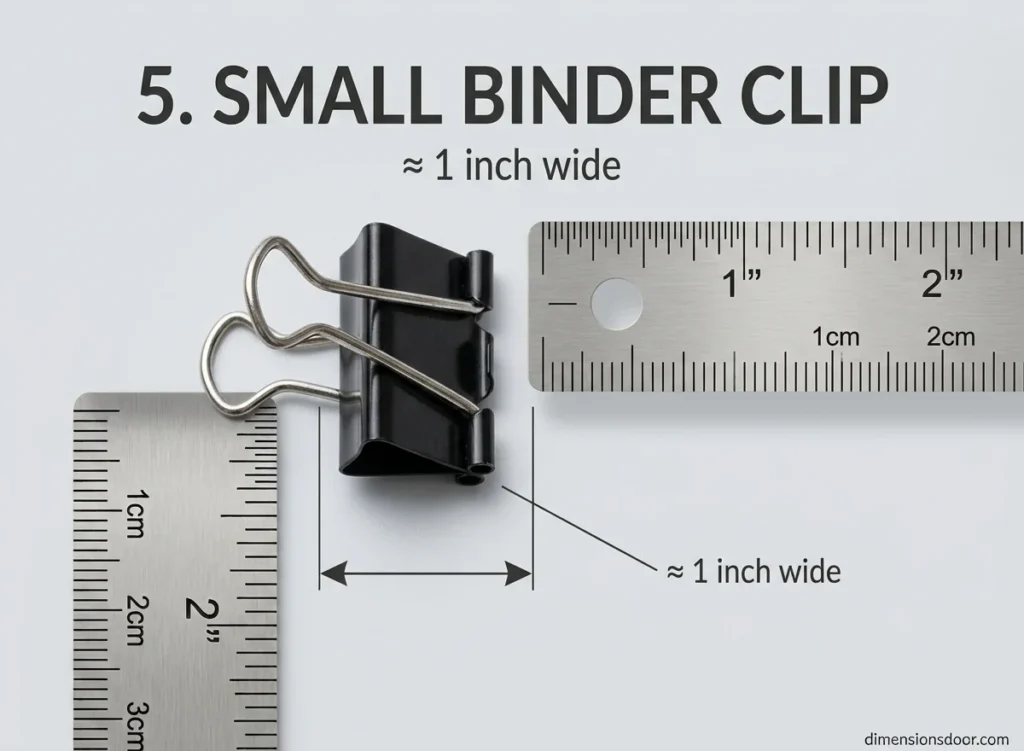
The small size of binder clip (not the mini or medium) measures about 1 inch across the base, making it a common office-supply reference point.
Money & Pocket Items
A US Quarter
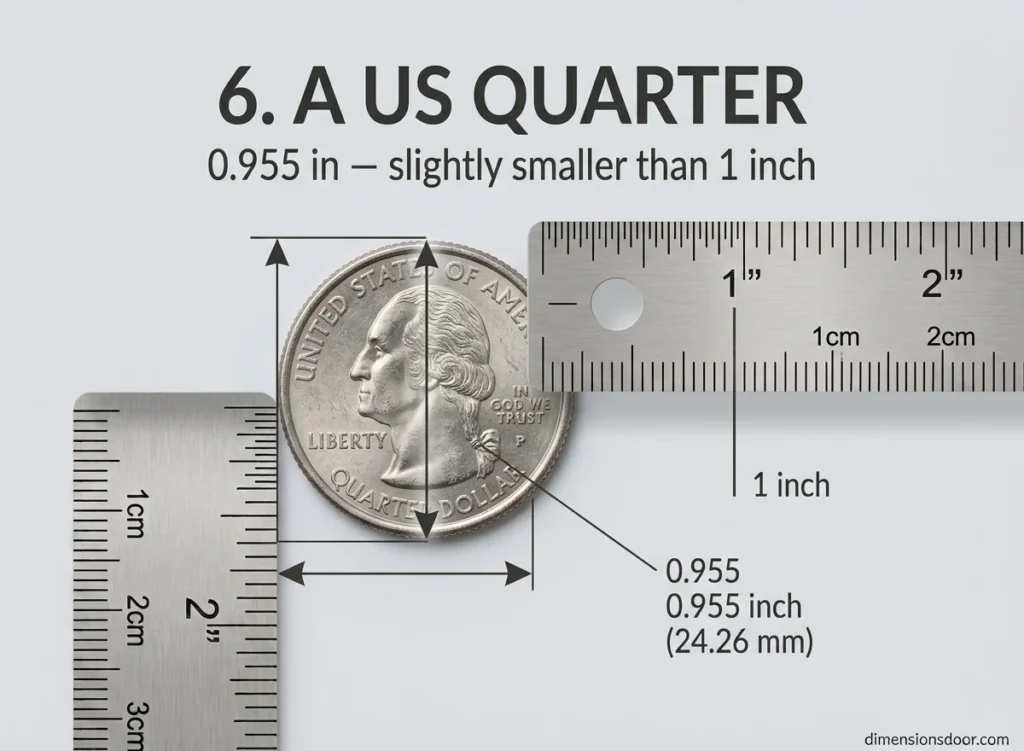
A quarter’s diameter is 0.955 inches — just shy of a full inch, but close enough that it’s one of the most-cited comparisons for 1 inch because almost everyone has a coin nearby.
USB Flash Drive (Width)
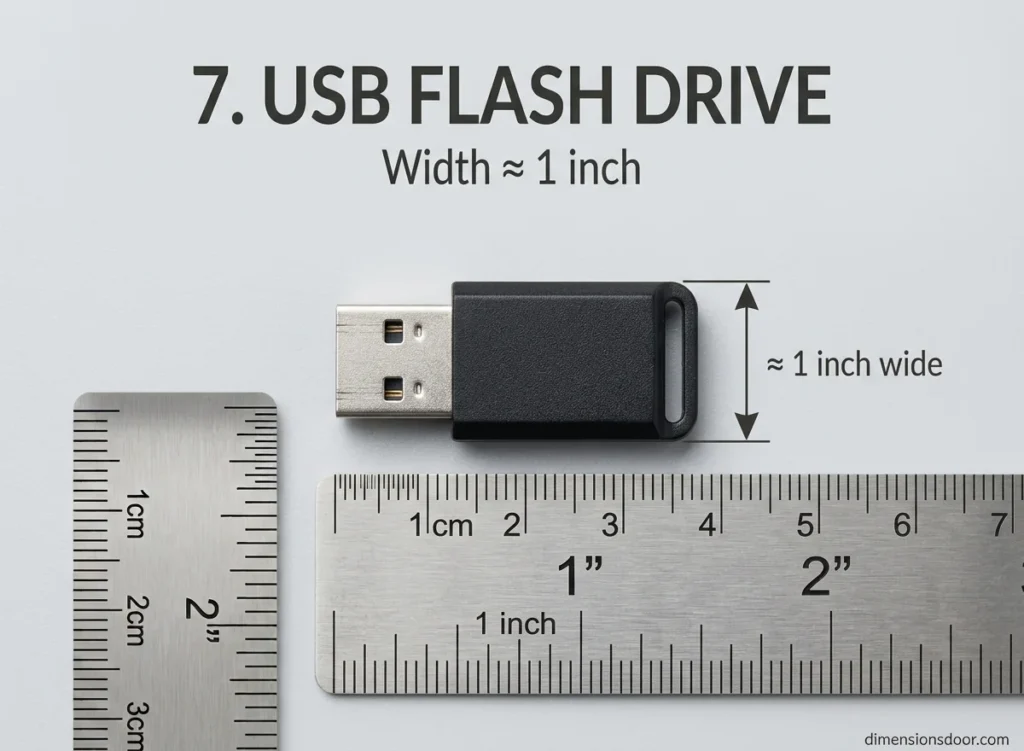
Most standard USB flash drives are about an inch wide at the connector end, though total length varies by design.
Chess Pawn Base
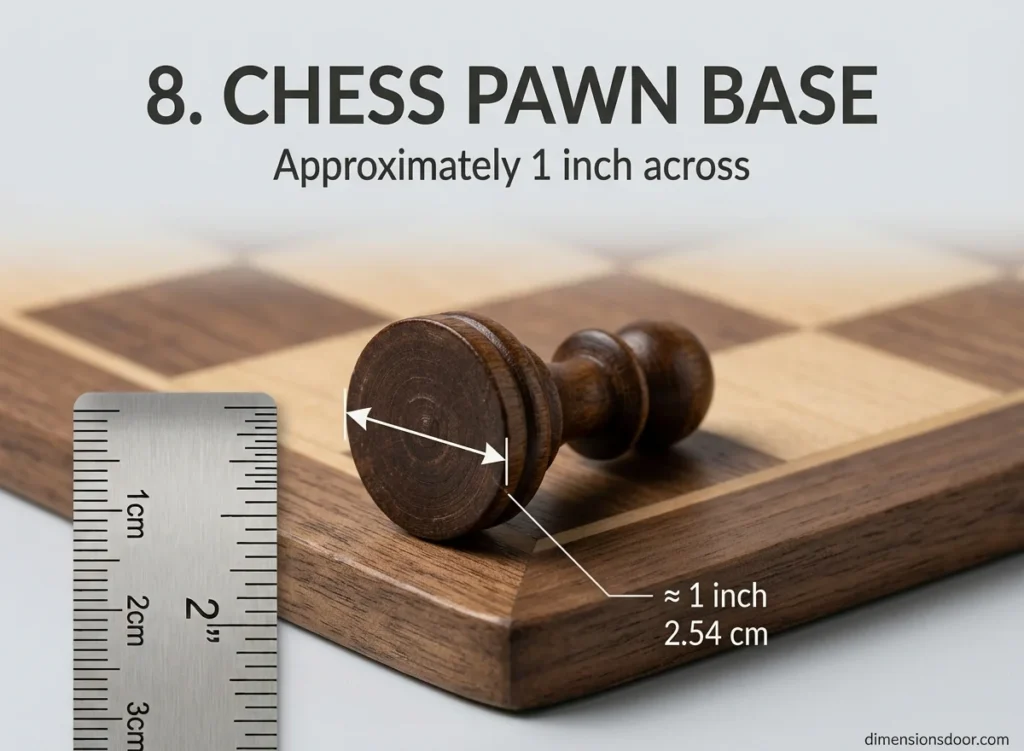
On a standard tournament chess set, the base diameter of a pawn is approximately 1 inch — useful if you’re a hobbyist or have a board handy.
Tech & Gadgets
Smartwatch Display Width
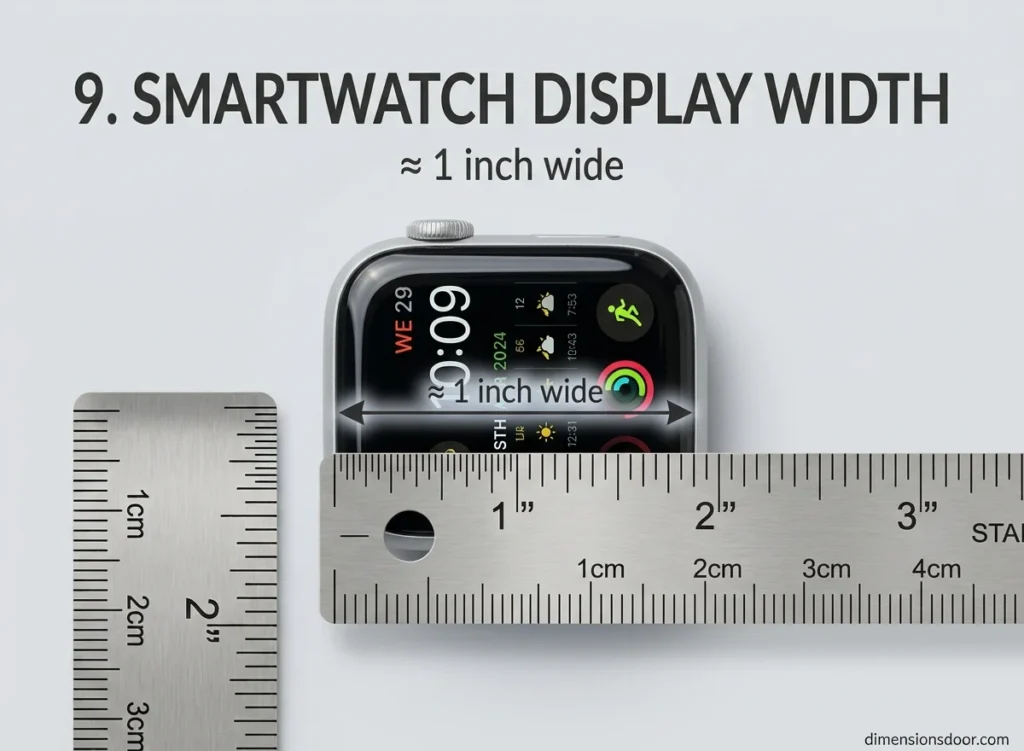
Many smartwatch screens (Apple Watch, budget fitness trackers) measure close to 1 inch across the width of the display face — relevant if you’re comparing wearable tech sizes online.
Compact Camera Lens Cap
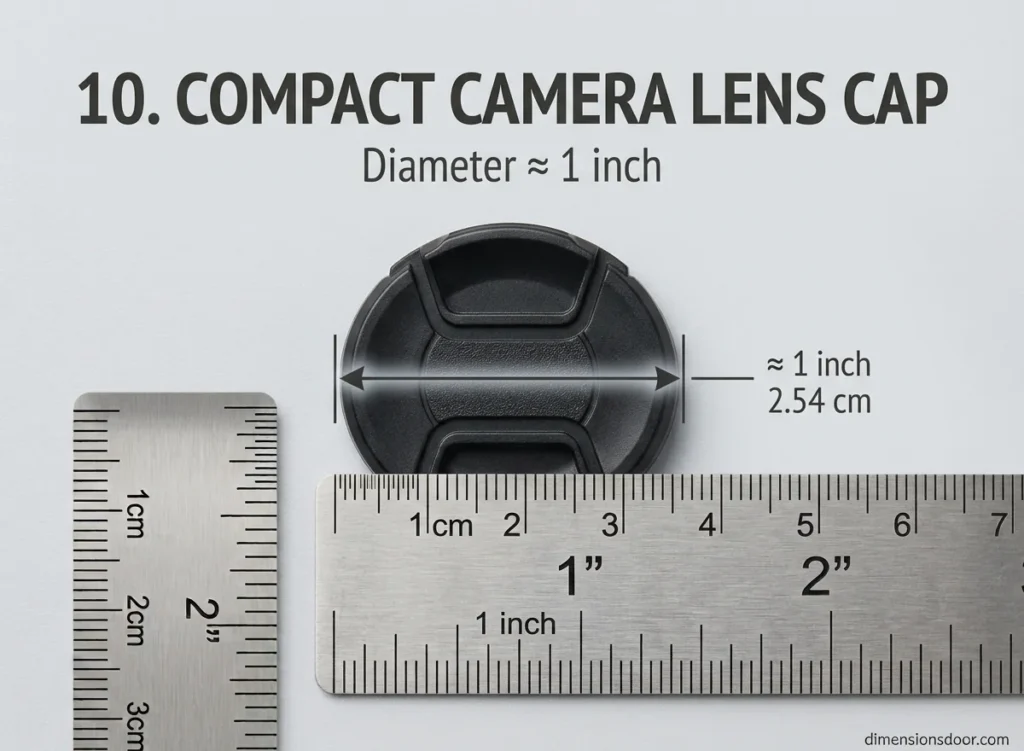
The plastic lens cap on point-and-shoot and older compact digital cameras is frequently close to 1 inch in diameter.
SD Memory Card (Width)
A standard SD card is about 0.94 inches wide — just under 1 inch, and a reference many people already have sitting in a laptop or camera bag.
Food-Based Comparisons
A Medium Strawberry
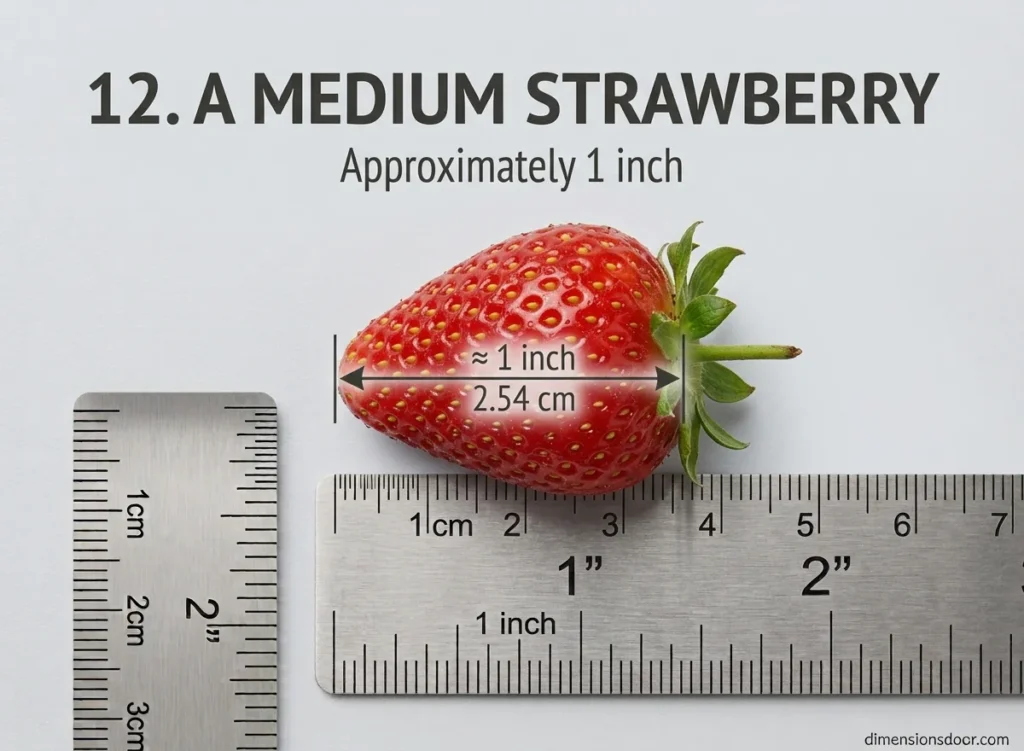
A typical grocery-store strawberry measures roughly 1 inch in diameter at its widest point — an easy comparison at the produce aisle.
A Brussels Sprout
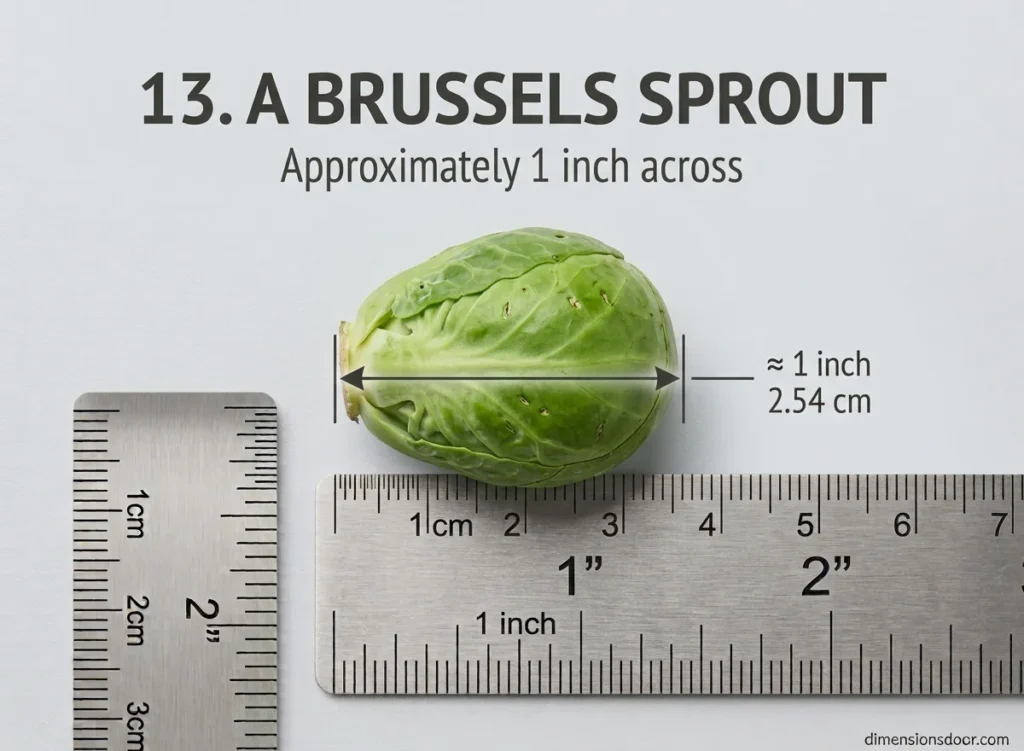
Whole Brussels sprouts, before halving, are usually around 1 inch in diameter — a comparison that works well for cooking and recipe measurements.
A Cherry Tomato
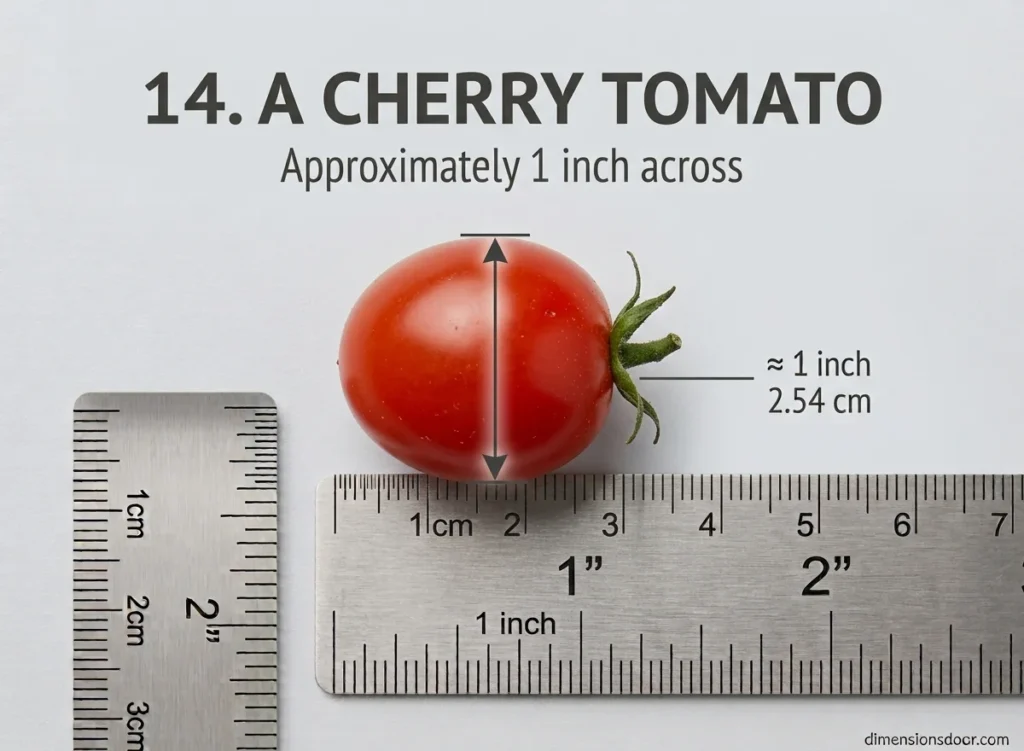
Standard cherry tomatoes run close to 1 inch across, making them a quick kitchen-counter reference when a recipe calls for “1-inch pieces.”
Body Reference
Width of an Adult Thumb
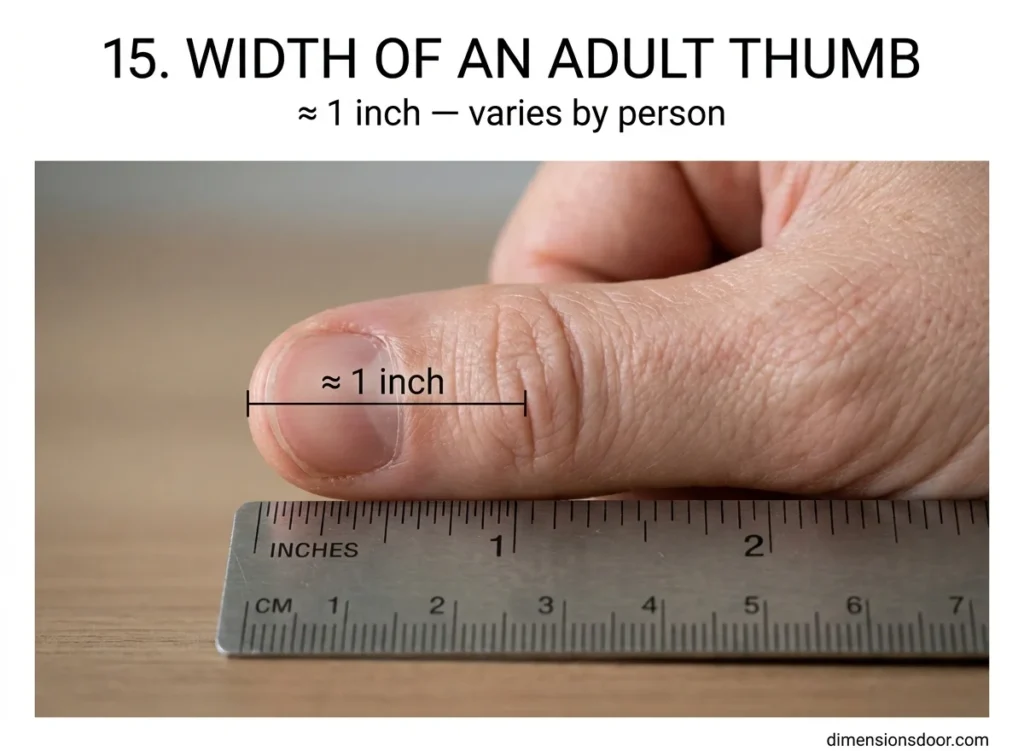
The most universally cited comparison: the width of an average adult thumb — measured across the nail, not the tip — lands close to 1 inch. It’s not perfectly precise (thumb width varies by person), but it’s the fastest built-in reference you’ll always have with you. (We break down exactly how to use this — and correct a common myth about using two fingers instead — in the next section.)
Must Visit: How Long Is 60 Meters? 15 Real-Life Comparisons, Examples & Visual Guide
How Long Is 1 Inch by Fingers?
Your thumb is the closest thing to a built-in ruler. Measured across the nail — not the fingertip — the average adult thumb width lands close to 1 inch. This trick has been used for centuries; it’s actually part of why the inch exists at all. The word “inch” comes from the Latin uncia, meaning “one-twelfth,” and historical measuring systems long relied on thumb width as a rough, portable standard.
Is 2 fingers 1 inch? Not quite — and this is a common myth worth correcting. Two fingers held together (index and middle) typically measure closer to 1.5 to 2 inches, not 1. The confusion comes from people mixing up finger width with finger joint length. If you want an accurate reference, stick to a single thumb width, not two fingers side by side.
A quick tip: calibrate your own thumb once against a real ruler. Everyone’s hands are a slightly different size, so knowing your personal “thumb-to-inch” ratio makes this trick far more reliable going forward.
How to Measure 1 Inch Without a Ruler
No ruler nearby? These methods work in order of accuracy, from most reliable to least.
Can I use my phone as a ruler? Yes — with caveats. Both iPhones (via the built-in Measure app) and most Android phones (via Google’s Measure app) use augmented reality to estimate real-world length fairly accurately for casual use. For tighter precision, some ruler apps let you calibrate the on-screen scale against a credit card or coin first, which corrects for screen-size differences. Phone measuring is convenient, but it shouldn’t replace a physical ruler for tasks like framing, sewing, or anything needing exact 1-inch tolerances.
Other no-tool methods:
- Credit card width — a standard credit card is 3.375 inches wide; roughly a third of that width is close to 1 inch.
- Folded paper — folding a standard sheet of paper in sections creates rough 1-inch segments once flattened.
- Coin comparison — a quarter’s diameter (0.955 inches) is a fast, near-exact stand-in for 1 inch.
1 Inch Conversion Chart & Quick FAQs
| Inches | Centimeters |
|---|---|
| 1 in | 2.54 cm |
| 2 in | 5.08 cm |
| 3 in | 7.62 cm |
| 6 in | 15.24 cm |
| 12 in | 30.48 cm (1 foot) |
What is an example of 1 inch
A bottle cap, a standard paperclip, or the width of an adult thumb are all close, everyday examples of 1 inch.
FAQs
What is an example of 1 inch?
A bottle cap, a standard paperclip, a quarter, or the width of an adult thumb are all close, everyday examples of 1 inch.
How does 1 inch look like?
It looks like a short line about the width of a AA battery or a large paperclip — small enough that even tiny differences in size are noticeable.
Is 1 inch the same as 2.5 cm?
Not exactly. 1 inch equals 2.54 cm, not 2.5 — a small but meaningful difference when precision matters.
How many inches are in a foot?
There are 12 inches in 1 foot, and 36 inches in 1 yard.
Is 2 fingers 1 inch?
No. Two fingers side by side usually measure between 1.5 and 2 inches. A single thumb width is the closer match to 1 inch.
How long is 1 inch by fingers?
The width of an adult thumb, measured across the nail, is the closest single-finger match to 1 inch.
Conclusion
1 inch is one of those measurements that feels abstract until you connect it to something real. Once you know that a bottle cap, a thumb width, or a cherry tomato all sit close to 1 inch, you’ll never need to squint at a tiny ruler marking again. Keep these comparisons in mind next time you’re shopping online, cooking, or tackling a quick DIY fix — accurate estimation is often just a glance away.

William Ahad is the founder and lead writer at DimensionsDoor, where he researches and publishes verified measurement guides covering doors, furniture, appliances, and everyday objects. With a background in home improvement and product research, William has spent years cross-checking manufacturer specifications, industry standards, and real-world listings to help readers get accurate dimensions before they buy, build, or install anything.