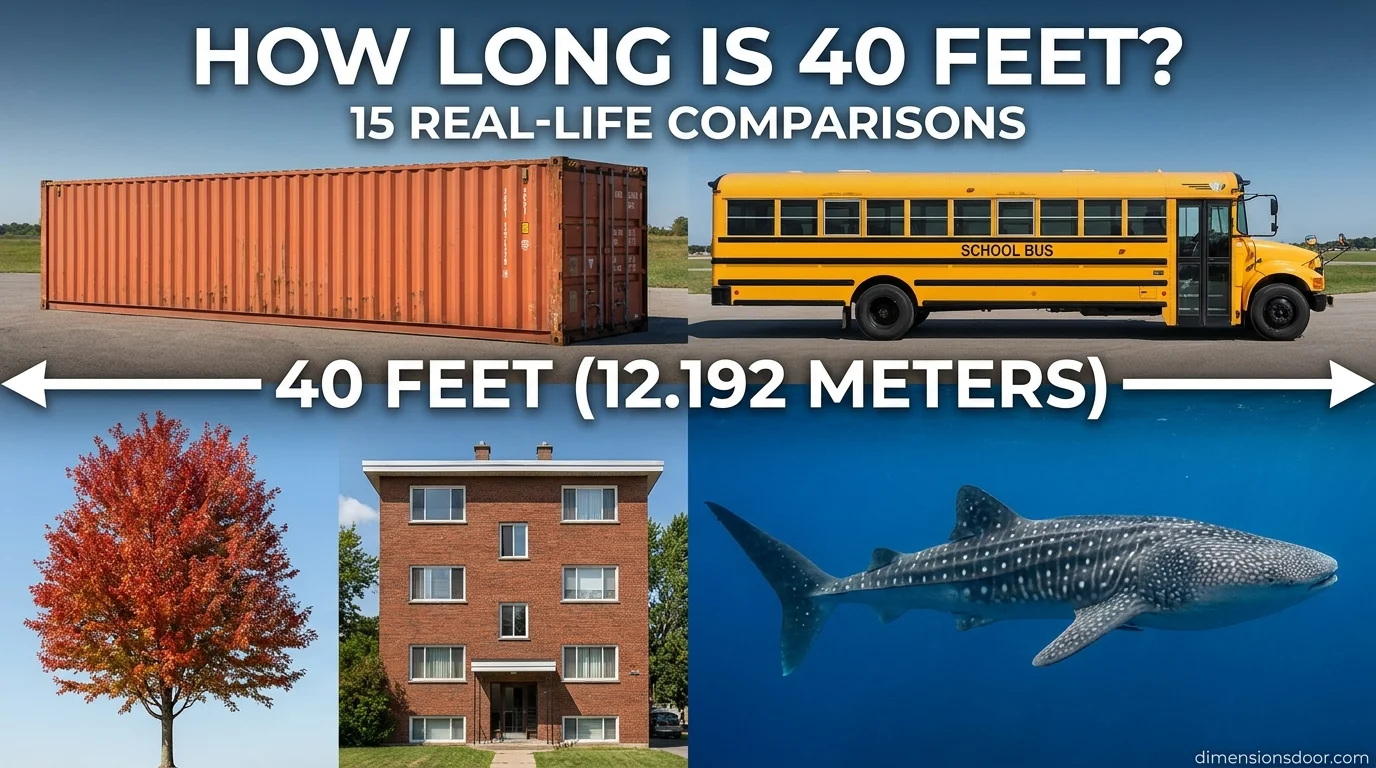
Forty feet sounds simple until someone asks you to point at it. Is it a school bus? A backyard fence line? A tall tree?
40 feet equals 480 inches, or about 12.19 meters. That single fact does not help much on its own, so this guide anchors it to 15 real objects, structures, and animals you already know, plus quick conversions and a visual comparison chart you can use anywhere.
Table of Contents
How Long Is 40 Feet? Quick Conversion Chart
40 feet in inches, meters, and yards breaks down into a few clean numbers worth memorizing.
| Unit | Value |
|---|---|
| Inches | 480 in |
| Meters | 12.192 m |
| Centimeters | 1,219.2 cm |
| Yards | 13.33 yd |
| Kilometers | 0.0122 km |
| Miles | 0.00758 mi |
40 feet in inches is the conversion most people search for first, and the math is straightforward: multiply feet by 12. Forty times 12 gives you 480 inches, every time, no rounding needed.
Use our Feet to Inches Converter to quickly and accurately convert any measurement in feet into inches, making length calculations simple and hassle-free.
40 Feet to Meters, Explained
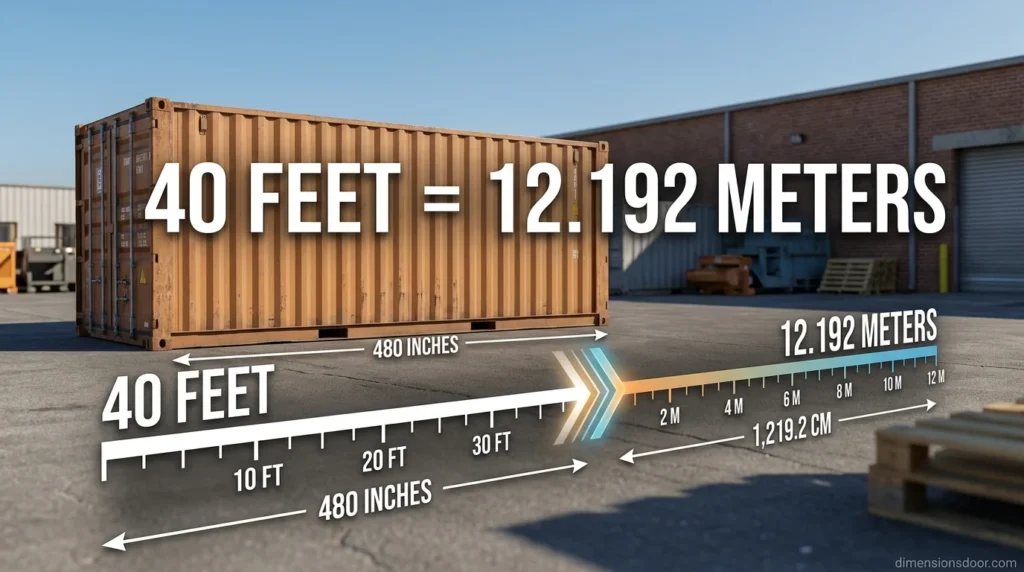
Metric conversions trip up more people than feet-to-inches does. Multiply feet by 0.3048, the official conversion factor set by the National Institute of Standards and Technology (NIST), and 40 feet lands at 12.192 meters. Shipping manifests, marine charts, and international construction drawings almost always use this metric figure instead of feet.
What Does 40 Feet Look Like? 15 Everyday Examples
Numbers alone rarely stick. Things that are 40 feet long span vehicles, animals, buildings, and sports fields, and grouping them by category makes the scale click faster.
Vehicles and Transportation
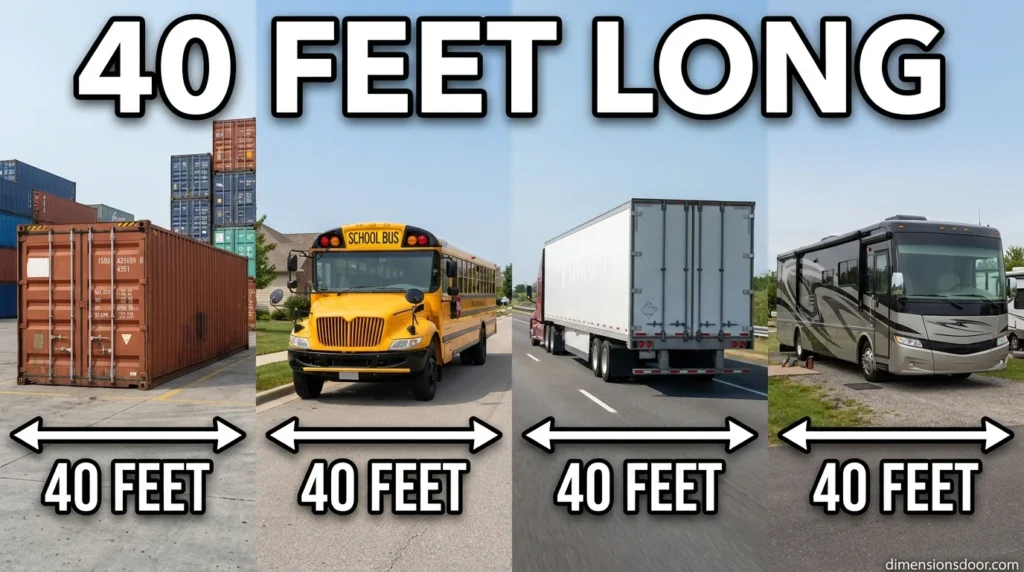
A standard shipping container is the most exact reference on this list. ISO regulations fix its length at precisely 40 feet, and one container can carry up to roughly 26,300 kilograms of cargo across ships, rail cars, and flatbed trucks without ever being resized.
A Type C school bus, the classic long yellow kind, runs 35 to 40 feet depending on the manufacturer. Blue Bird, Thomas Built Buses, and IC Bus all build full-size models that sit right at this mark, which is why a school bus remains one of the most familiar 40-foot objects in American neighborhoods.
A semi-truck trailer measures 40 to 48 feet, with the 40-foot configuration common in regional freight. These trailers are sized to clear federal highway limits while still filling loading docks efficiently.
A Class A motorhome at 40 feet sits at the top end of the RV market. Models like the Tiffin Allegro Bus 40AP pack full kitchens, slide-outs, and king-size sleeping areas into that length, and campgrounds often reserve special pull-through sites just for RVs this size.
Animals and Nature
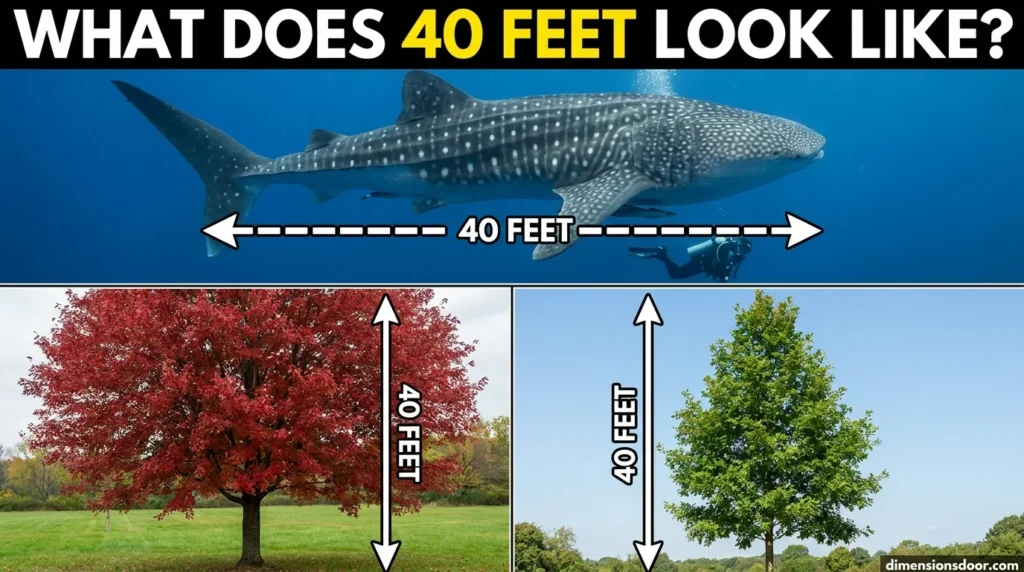
The whale shark (Rhincodon typus), the largest fish species alive, regularly reaches 40 feet in length according to the World Wildlife Fund. Despite the size, it feeds only on plankton and small fish, making it one of the ocean’s gentlest giants.
A mature Red Maple (Acer rubrum) stands 40 to 60 feet tall and grows across nearly the entire eastern United States, turning brilliant red and orange each autumn.
An English Oak (Quercus robur) begins its mature phase around 40 to 50 feet, though centuries-old specimens eventually pass 100 feet. A young oak at 40 feet represents roughly 80 to 100 years of steady growth.
Buildings and Structures
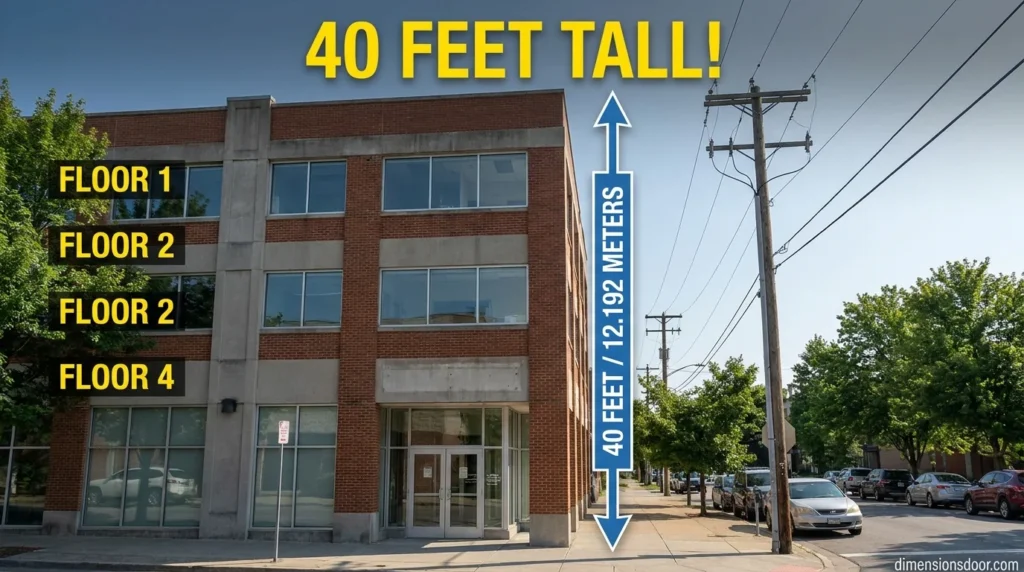
A four-story building lands close to 40 feet tall, since U.S. commercial and residential construction averages about 10 feet per floor. This is why four-story buildings dominate mixed-use zoning in cities like Chicago and Philadelphia, balancing density with a human-scale streetfront.
A utility pole, specifically a Class 4 or Class 5 wooden pole, measures 35 to 45 feet, with 40 feet being the most common height for suburban installations carrying power and telecom lines.
Sports and Recreation
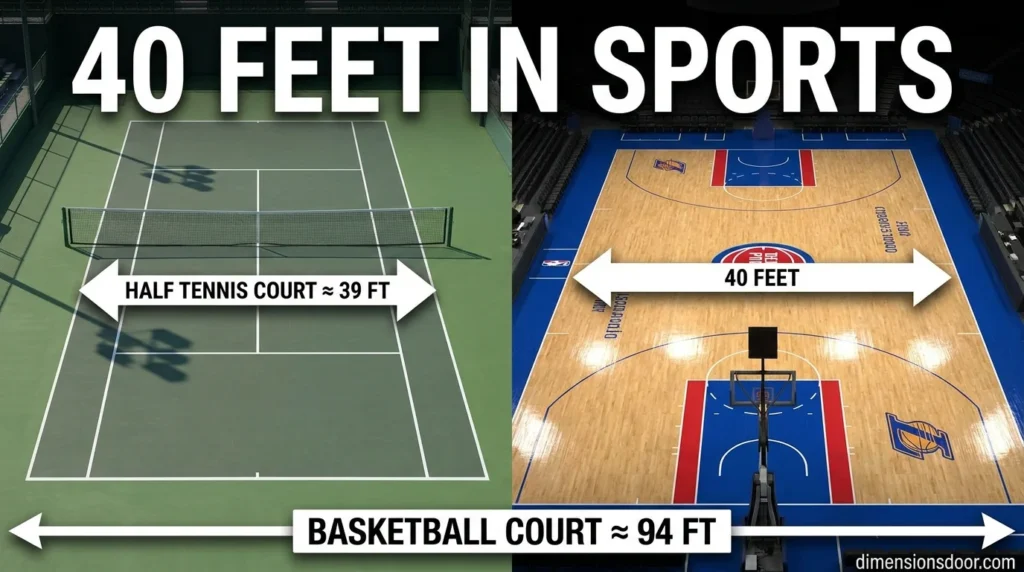
Half a tennis court gets you almost exactly to 40 feet. A regulation court runs 78 feet end to end, a standard the International Tennis Federation locked in back in 1875, so the midpoint sits just under 39 feet.
Half a basketball court is close but not exact. An NBA court measures 94 feet, so 40 feet covers a bit less than half the length, while nearly spanning the full 50-foot width, leaving only about 10 feet uncovered.
Everyday Objects and Tools
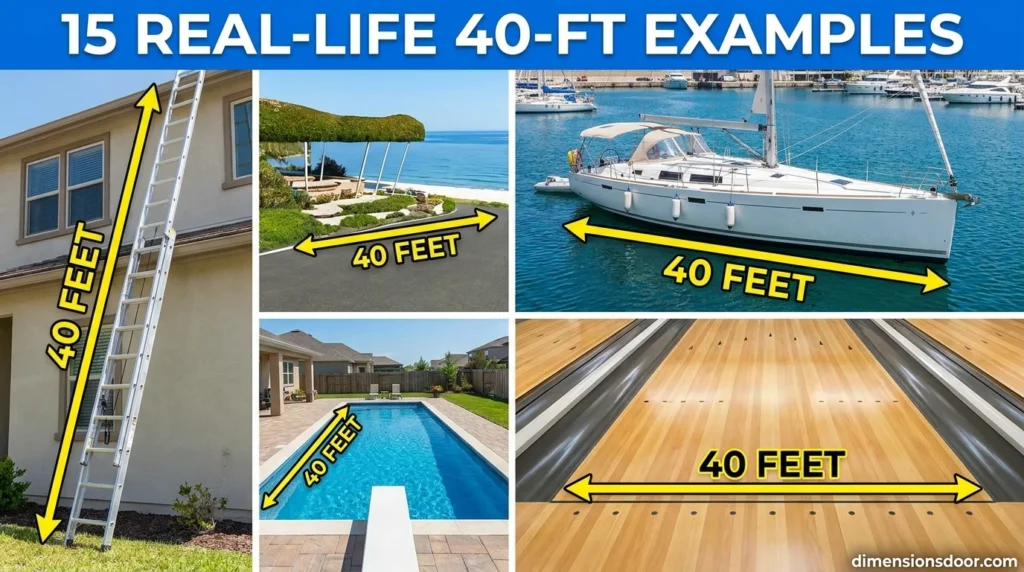
A 40-foot extension ladder is standard gear for fire departments and commercial electricians. Werner and Louisville Ladder both manufacture fiberglass models built to reach four-story rooflines safely.
A large yacht in the 38 to 42-foot range is common at U.S. marinas, offering multiple cabins and seating areas while still being small enough for a single owner to operate.
A residential lap pool built for serious swimming often runs close to 40 feet, long enough for real laps without the footprint of a competition pool.
Two-thirds of a standard 60-foot bowling lane also lands at 40 feet, roughly the distance from the foul line to just past the arrows before the pins.
Must visit: How Long Is 30 Feet? 15 Common Things That Are About 30 Feet Long
40 Feet Visual Comparison: How It Stacks Up
Context from nearby measurements makes 40 feet easier to place on a mental ruler.
40 Feet vs. 10, 20, and 100 Feet
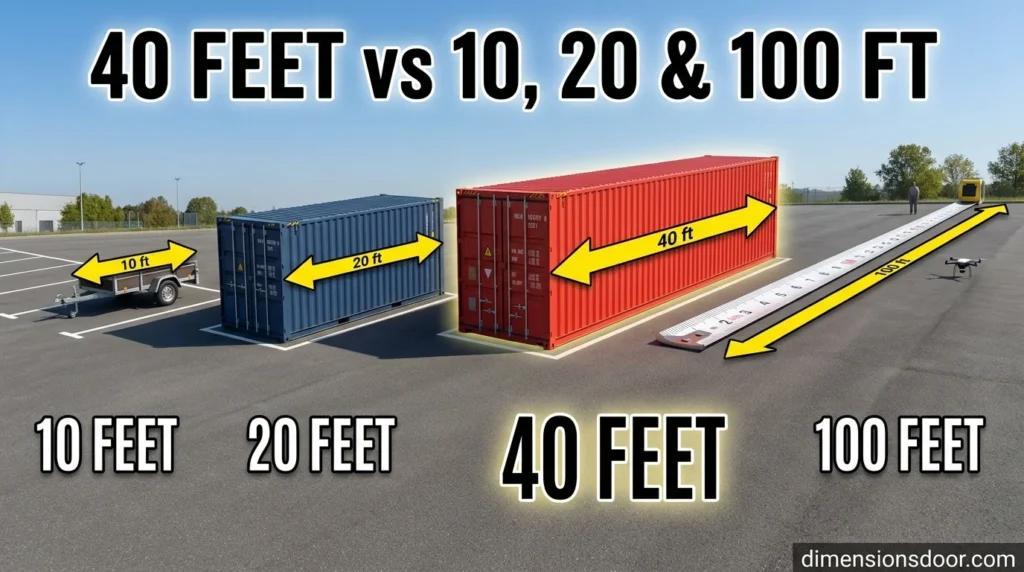
40 feet is exactly four times the length of a 10-foot object, like a small utility trailer or a standard parking space. It is double a 20-foot shipping container, the smaller sibling of the 40-foot version. And it is less than half of 100 feet, roughly the length of an Olympic swimming pool.
40 Feet vs. 40 Inches
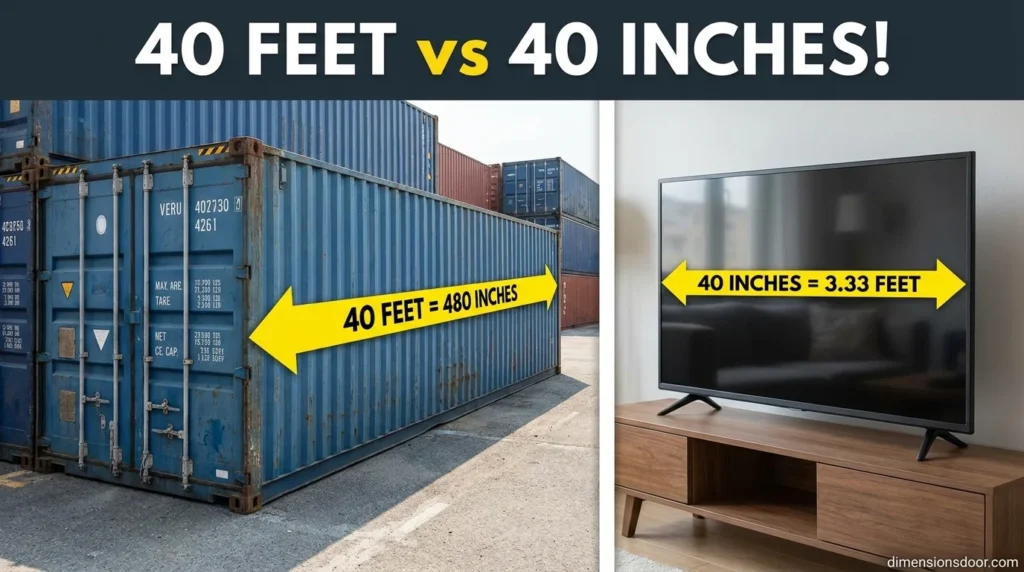
These two get confused constantly because the numbers match. 40 inches equals just 3.33 feet, about a tenth of 40 feet. A 40-inch object, like a flat-screen TV measured diagonally or a walking cane at full extension, fits comfortably in one room. A 40-foot object needs a driveway, a field, or an ocean.
How to Estimate 40 Feet Without a Tape Measure
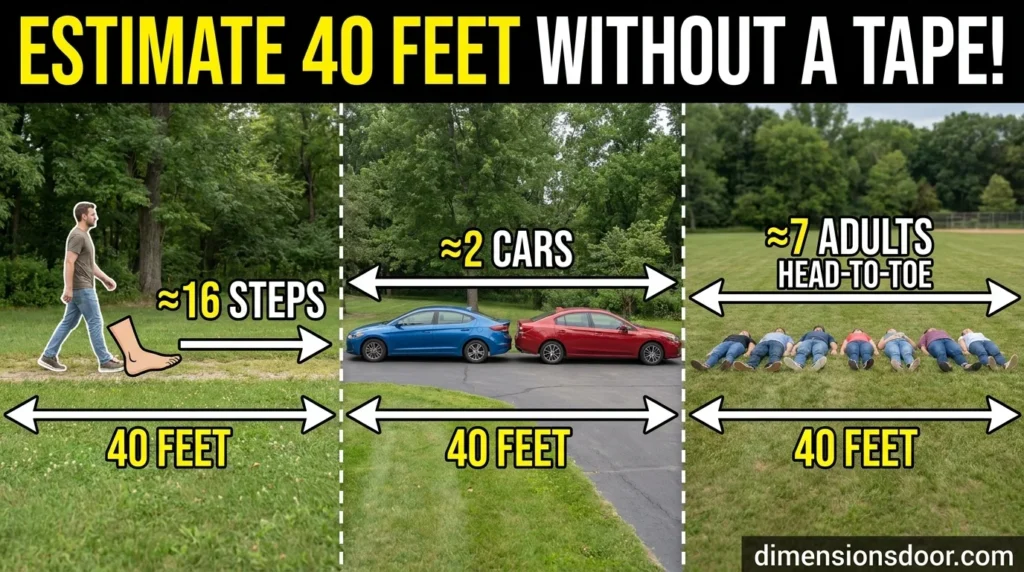
Construction crews and surveyors rely on body-based estimates constantly, and the same tricks work for anyone.
Walking pace is the fastest method. At an average adult stride of about 2.5 feet, covering 40 feet takes roughly 16 steps. At a normal walking speed of 3 feet per second, that same distance takes about 13 to 15 seconds to cross.
Stacking known objects works just as well. Two mid-size sedans parked bumper to bumper run close to 40 feet. So do about seven adults lying head to toe, using an average height of 5.5 to 6 feet per person.
For indoor estimates, picture a large hallway or hotel ballroom wall. Most span 35 to 45 feet, close enough for a fast visual check before you reach for an actual tape measure.
FAQs
How far is 40 feet visually?
Forty feet is roughly the length of a full-size school bus or a standard shipping container. Picture two sedans parked end to end, or the distance it takes to cross a small classroom in about 13 to 15 steps.
How long is a 40 foot comparison?
The clearest 40-foot comparisons are a 40-foot ISO shipping container, a Type C school bus, half a regulation tennis court, and a mature Red Maple tree. Each gives a slightly different way to picture the same distance, whether you are thinking about vehicles, sports, or nature.
What does 40 feet look like?
40 feet looks like a four-story building standing on end, or a whale shark swimming past a diver. On the ground, it looks like the length of a large RV or the width of a small backyard pool.
How long is 40 inches visually?
40 inches is about hip-height on an average adult, roughly the size of a 40-inch flat-screen TV measured diagonally or a walking cane extended to its full length. It equals 3 feet 4 inches, far shorter than 40 feet.
How long is 14 inches visually?
14 inches is close to the length of a standard laptop screen measured diagonally, or slightly longer than a size 10 shoe. It is just over a foot, a little longer than a standard ruler.
How long is 40 feet in inches?
40 feet equals 480 inches. Multiply any figure in feet by 12 to convert to inches, since one foot always equals 12 inches by definition.
Conclusion
Forty feet is not an abstract number once you connect it to a shipping container, a school bus, or a whale shark cruising through open water. Next time someone mentions this length, you will already have a picture in mind.

William Ahad is the founder and lead writer at DimensionsDoor, where he researches and publishes verified measurement guides covering doors, furniture, appliances, and everyday objects. With a background in home improvement and product research, William has spent years cross-checking manufacturer specifications, industry standards, and real-world listings to help readers get accurate dimensions before they buy, build, or install anything.