Fifty feet is one of those numbers everyone has heard but almost no one can picture. Is it long? Short? Somewhere in between or some are think that how long is 50 feet?
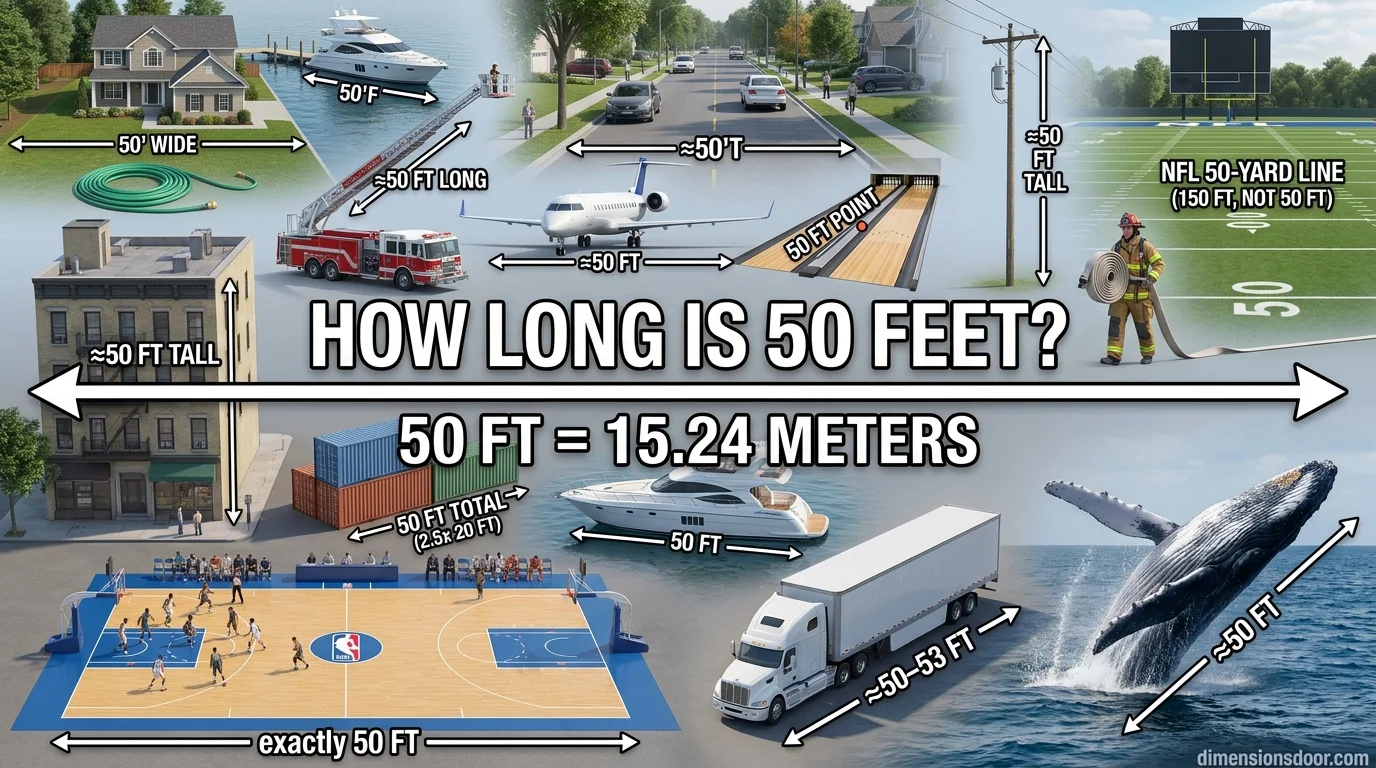
Here’s the short answer: 50 feet equals 600 inches, 15.24 meters, and 1,524 centimeters. That’s about the width of an NBA basketball court, or three parked cars lined up bumper to bumper. Keep reading, and this number will stop being abstract.
Table of Contents
How Long Is 50 Feet in Feet, Meters, Inches & Steps?
Before comparing 50 feet to real objects, it helps to see it in every common unit side by side. This is the number people search for most, and it’s the foundation for every comparison below.
| Unit | Value |
|---|---|
| Feet | 50 ft |
| Inches | 600 in |
| Yards | 16.67 yd |
| Meters | 15.24 m |
| Centimeters | 1,524 cm |
| Millimeters | 15,240 mm |
How many steps is 50 feet? A normal adult stride covers roughly 2.5 feet, so it takes about 20 walking steps to cover 50 feet on flat ground. That single fact is one of the most useful semantic keywords tied to this topic, because it turns an abstract number into something your body can measure without a single tool.
Use our Feet to Inches Converter to quickly and accurately convert any measurement in feet into inches, making length calculations simple and hassle-free.
15 Real-Life Examples of Things That Are 50 Feet Long
These are real, verifiable objects, structures, and distances that measure close to 50 feet. Each one gives you a different mental anchor — pick whichever one sticks.
A basketball court’s width
An NBA and NCAA court is exactly 50 feet wide, sideline to sideline. The length (94 feet) gets the attention, but the width is your cleanest visual reference, since courts appear constantly on TV at a consistent camera angle.
A five-story building
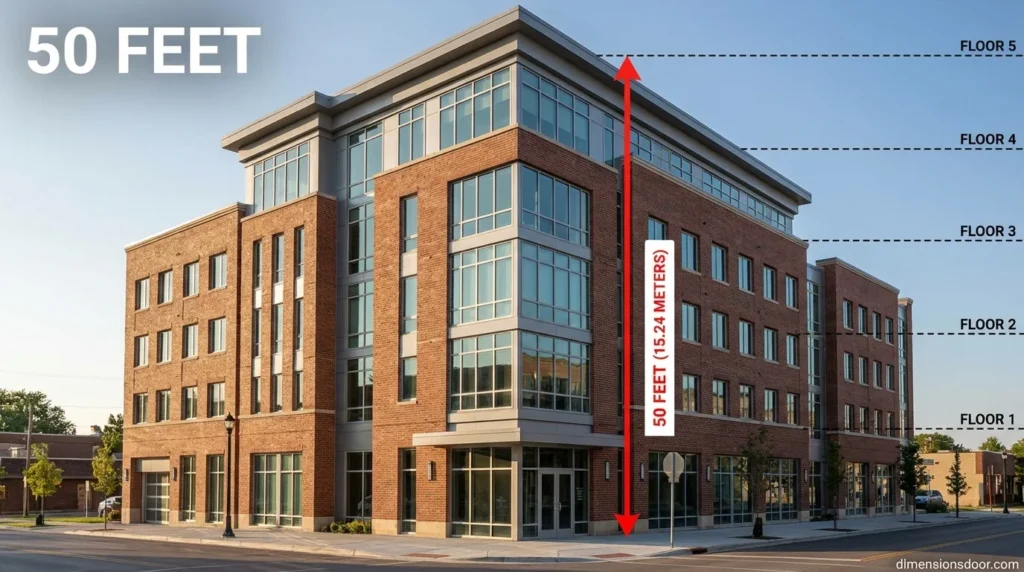
A standard commercial or residential floor runs about 10 feet from finished floor to finished ceiling. Stack five of them, and you land at roughly 50 feet — about the height most municipal fire codes treat as the ceiling for standard aerial-ladder rescue.
A semi-trailer
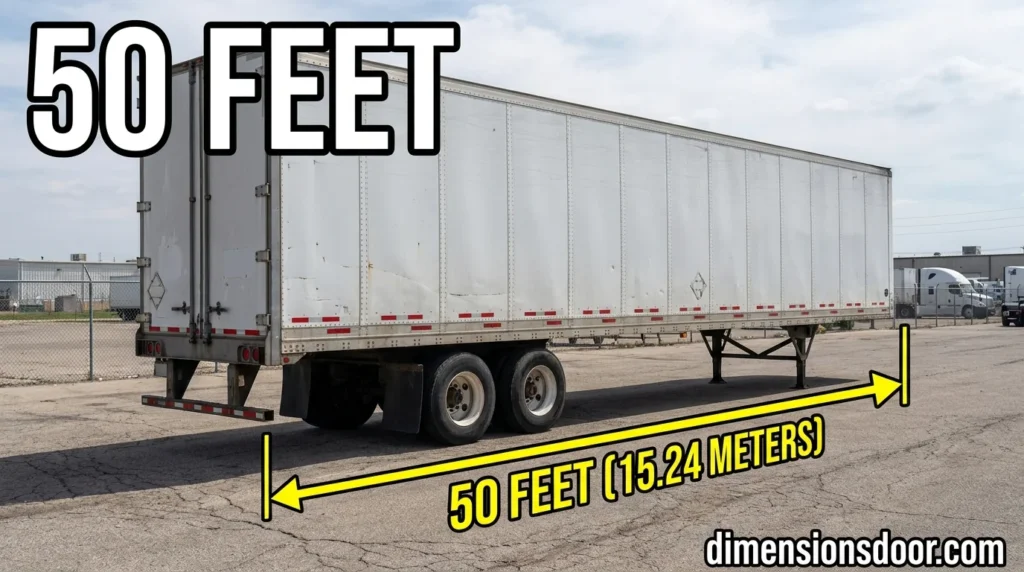
The typical American semi-trailer measures around 50 to 53 feet long. Next time one passes you on the highway, that’s your 50-foot yardstick rolling by at 65 miles an hour.
A standard fire hose section
Fire departments across the U.S. use hose sections that run exactly 50 feet from coupling to coupling. Crews connect multiple sections for longer reach, but that first pull off the truck is a single, complete 50-foot length.
An aerial fire truck
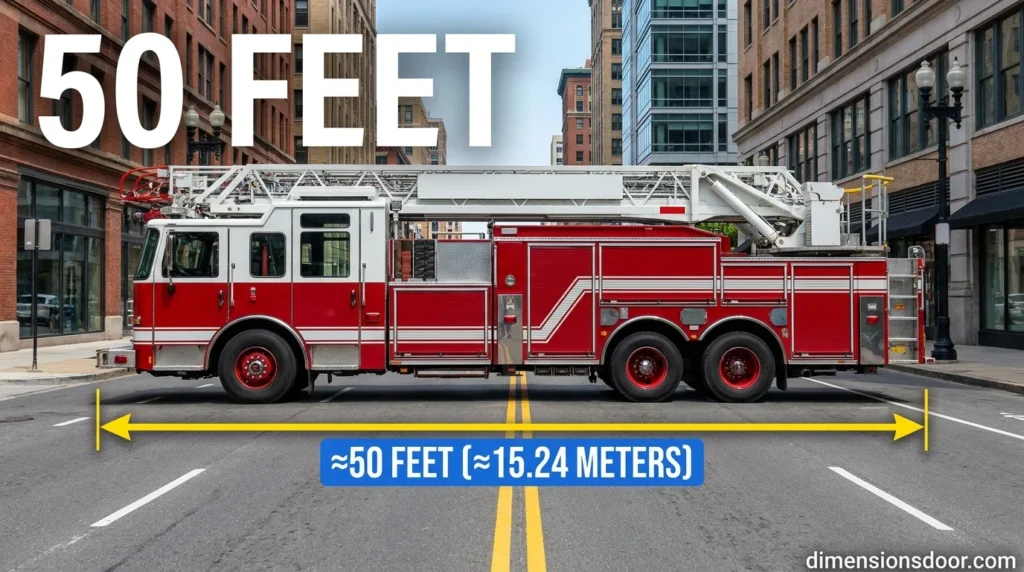
The big ladder trucks used in American cities run close to 50 feet in total vehicle length, cab to rear platform. Parked on a city block, one of these eats up the space of three or four cars.
Two and a half shipping containers
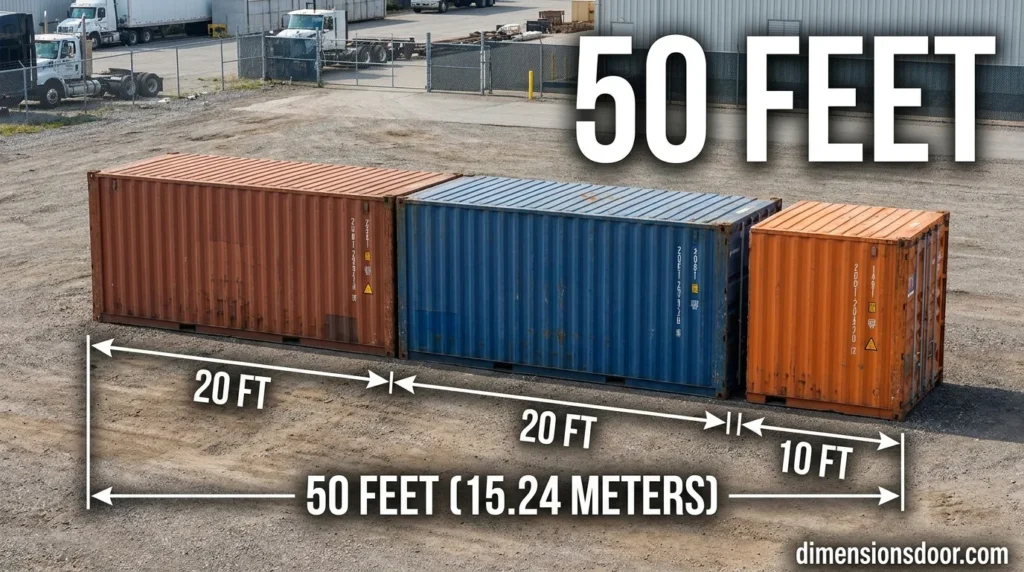
A standard intermodal shipping container is 20 feet long. Line up two full containers and half of a third, and you’re at 50 feet — a comparison logistics and freight professionals use constantly.
An adult humpback whale
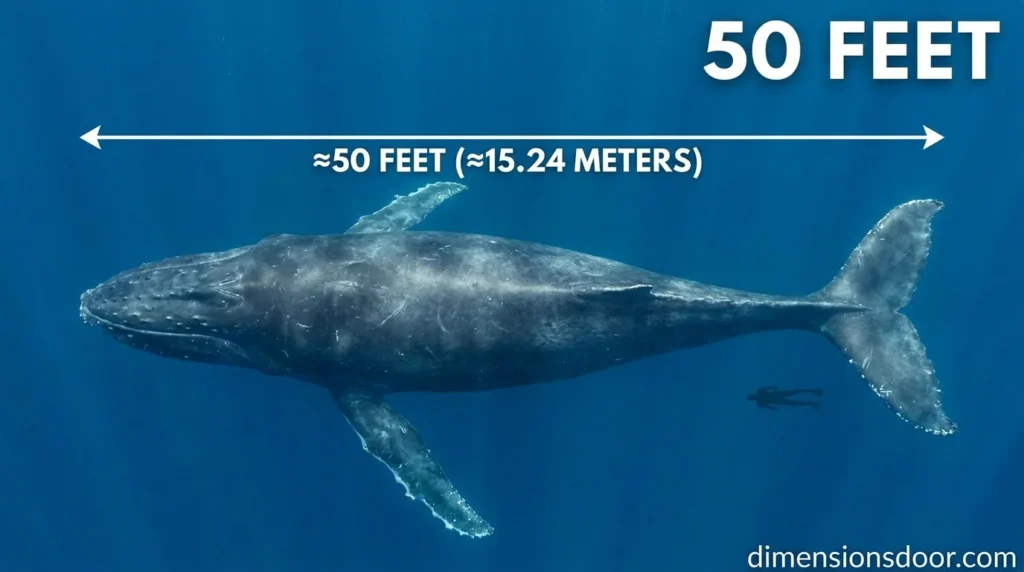
Fully grown humpbacks stretch to around 50 feet from rostrum to tail fluke, according to NOAA Fisheries. Lay one flat across an NBA court, and it would touch both sidelines.
A suburban home lot
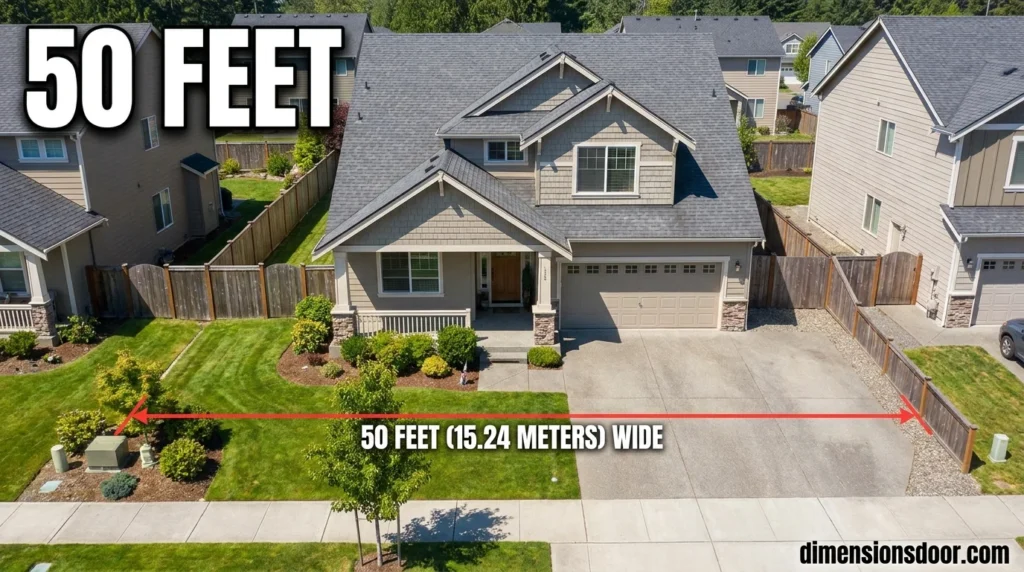
Older American neighborhoods, especially homes built between 1880 and 1940, were platted on 50-foot-wide lots. City planners settled on that width because it divided cleanly into a square mile while still giving every house a front-facing door, porch space, and a side path.
A standard garden hose
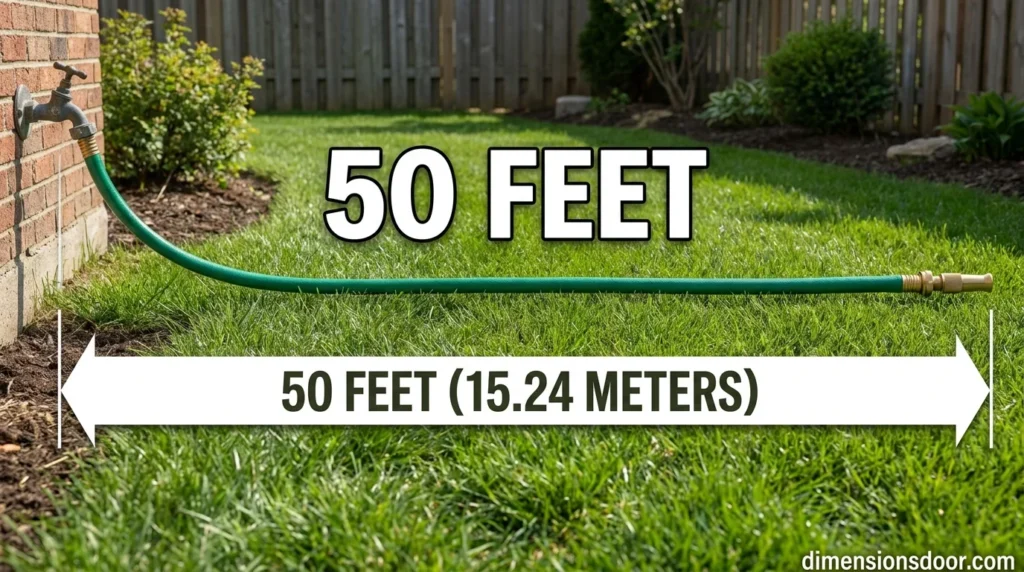
Walk into any hardware store, and the 50-foot hose sits in the middle of the shelf — longer than the compact 25-footer, shorter than the heavy-duty 100-footer. It’s the most common retail length sold in the U.S. because it reaches most backyard spigots to fence lines without losing water pressure.
A regional jet’s wingspan
Smaller commercial aircraft, like the Bombardier CRJ200, have wingspans in the 47- to 52-foot range, tip to tip. That width lets them fit into tighter regional airport gates.
A bowling lane
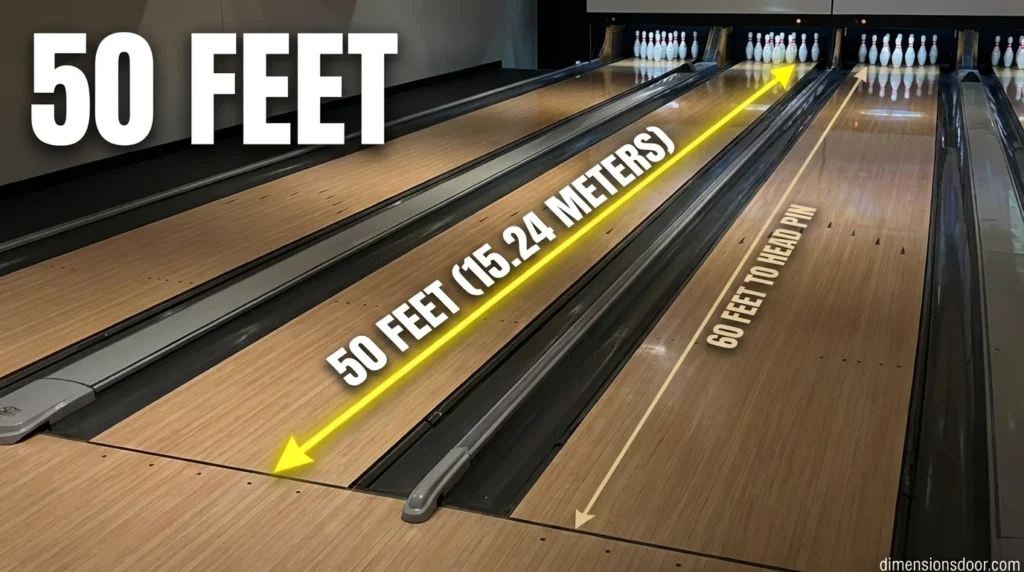
A regulation bowling lane, from the foul line to the head pin, measures 60 feet — but the approach and the first two-thirds of the lane alone put you well past the 50-foot mark, making it one of the few indoor spaces long enough to hold this measurement under one roof.
A residential street’s width
A typical two-lane neighborhood street, including curbs and sidewalks on both sides, spans about 50 feet of public right-of-way. That width is intentional: it fits two travel lanes, one row of parallel parking, and safe pedestrian space without pushing anyone into traffic.
A telephone pole
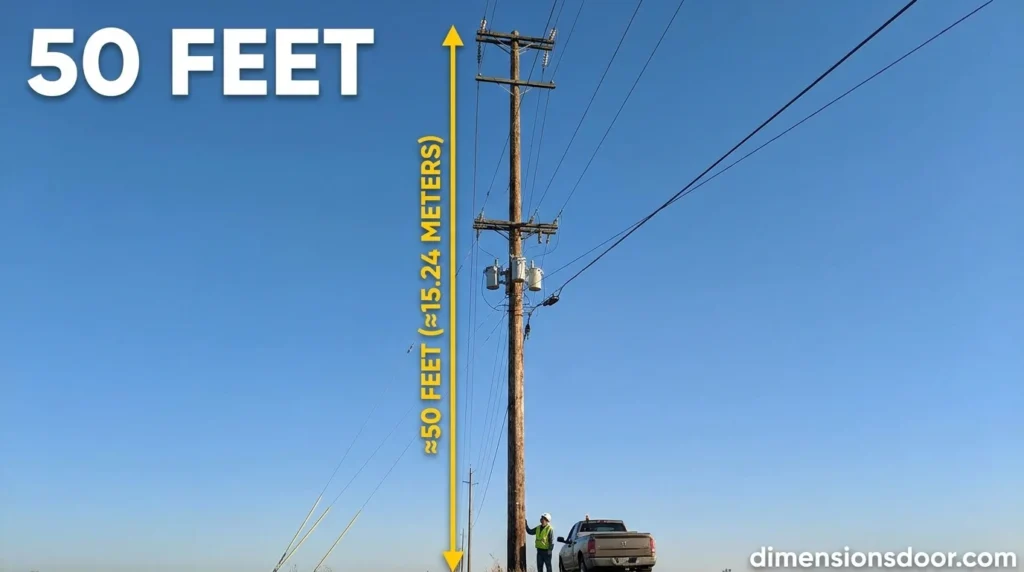
Standard wooden utility poles used across the U.S. reach roughly 40 to 50 feet in height above ground, depending on the voltage they carry and local terrain.
A 50-foot recreational yacht
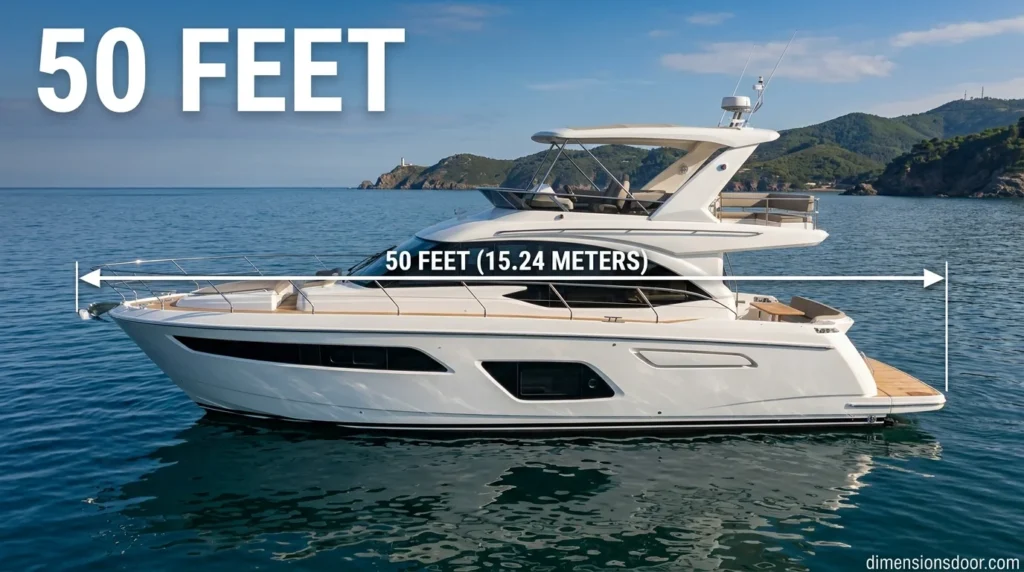
In boating, “fifty-footer” is its own category. A yacht of this length can typically sleep six to eight people and carry enough range for extended coastal cruising.
The NFL’s 50-yard line marker
While a football field is measured in yards, the number 50 is baked into the sport’s most iconic marking — the midfield line. It’s a useful cultural anchor for American readers, even though the unit differs (50 yards equals 150 feet, so keep this one as a memory trick, not a direct conversion).
50 Feet Visual Guide: How It Looks in Different Settings
Numbers alone don’t build intuition — context does. Fifty feet reads completely differently depending on where you’re standing.
Indoors, 50 feet is a lot of distance. Most rooms in a house top out around 15 to 20 feet, so 50 feet stretches across two or three full-size rooms combined. That’s why the comparison to a bowling lane or a long commercial hallway works so well.
Outdoors, 50 feet shrinks. On a street, a parking lot, or a field, your eyes have more open space to calibrate against, so the same distance feels shorter and less dramatic.
From a moving car, 50 feet passes in under a second at highway speed. This is exactly why the 15-foot fire hydrant clearance law (more on that below) and highway billboard sightlines are engineered around how much distance a driver’s eyes can process in a short window.
How to Measure 50 Feet Without a Tape Measure
You don’t need a tool to get a close estimate. These methods work in a driveway, a backyard, or a job site.
Step counting is the most reliable no-tool method. Take 20 relaxed, natural steps on flat, level ground. For most adults, that lands within a foot or two of 50 feet. It breaks down on slopes, since walking uphill shortens your effective horizontal distance even if your step count doesn’t change.
Car lengths offer a fast visual gut check. A mid-size sedan runs about 15 feet bumper to bumper, so three cars parked end to end gets you close to 45 feet — add roughly one more car-length’s worth of space, and you’re at 50.
Arm spans work with a helper. The average adult’s arm span, fingertip to fingertip, roughly equals their height — about 5.5 to 6 feet. Nine arm spans laid end to end covers 49 to 54 feet.
Phone-based estimation is the modern shortcut none of the older step-counting guides mention. Google Maps’ built-in measuring tool lets you drop two pins and get an instant distance reading, and most modern smartphones include an AR-based measuring app (Apple’s Measure app, or Android’s equivalent) that uses the camera to estimate real-world distances in seconds.
How far is 50 feet to walk? At a normal walking pace of roughly 3 to 4 feet per second, covering 50 feet takes about six to eleven seconds — barely enough time to glance at your phone before you’ve already crossed it.
Must Visit: How Long Is 40 Feet? 15 Everyday Examples, Visual Comparison & Easy Conversion
50 Feet in U.S. Law, Zoning & Safety Codes
This is the part most measurement guides skip entirely, but it’s exactly where the number 50 feet shows up with legal teeth in American life.
Boating no-wake zones. In states like Virginia, personal watercraft operators are legally required to maintain no-wake, idle-speed operation whenever they’re within 50 feet of docks, piers, boathouses, boat ramps, or people in the water, according to Virginia’s Department of Wildlife Resources. Other states set the buffer wider — North Carolina uses 50 yards for general boat traffic and 100 feet for personal watercraft — so the exact number always depends on the state, but 50 feet is a genuine, codified legal threshold in several jurisdictions.
Property setbacks and zoning. Many residential zoning codes tie building setbacks and lot widths to round numbers like 50 feet, especially in older American subdivisions platted before 1940. If you’re buying a home on a 50-foot-wide lot, that number directly determines how much yard, fencing, and driveway space you actually have before hitting the property line.
A common misconception worth correcting: fire hydrant clearance in the U.S. is not 50 feet — most states require just 15 feet of clearance for parking, with a few states allowing as little as 5 to 10 feet, according to the National Fire Protection Association. It’s easy to conflate hydrant rules with other 50-foot buffers, so if you’re checking local parking law, don’t assume the two numbers are the same.
FAQs
How long is 50 feet visually?
Visually, 50 feet is close to the width of an NBA basketball court, or three parked cars lined up end to end. Indoors, it spans two to three average-sized rooms.
How big is 50 feet compared to a human?
It’s about the height of eight to nine average adults stacked on top of each other — roughly the height of a five-story building.
What is 50 ft compared to?
It’s comparable to a semi-trailer, a standard fire hose section, two and a half shipping containers, or an adult humpback whale measured nose to tail.
How far is 50 feet to walk?
Walking 50 feet takes about six to eleven seconds at a normal pace, or roughly 20 walking steps.
What does 50 feet away look like?
In a parking lot, it’s about three parking spaces in a row. Outdoors, it can look deceptively short; indoors, it feels like a long hallway.
What is something 50 feet long?
A standard garden hose, a semi-trailer, a fire hose section, and an NBA court’s width are all everyday examples that measure close to 50 feet.
Conclusion
Once 50 feet is attached to something real — a hose, a court, a whale, a legal boating buffer it stops being an abstract number. The next time someone mentions 50 feet, you’ll have more than one image ready, and probably a fact or two worth sharing along with it.

William Ahad is the founder and lead writer at DimensionsDoor, where he researches and publishes verified measurement guides covering doors, furniture, appliances, and everyday objects. With a background in home improvement and product research, William has spent years cross-checking manufacturer specifications, industry standards, and real-world listings to help readers get accurate dimensions before they buy, build, or install anything.